

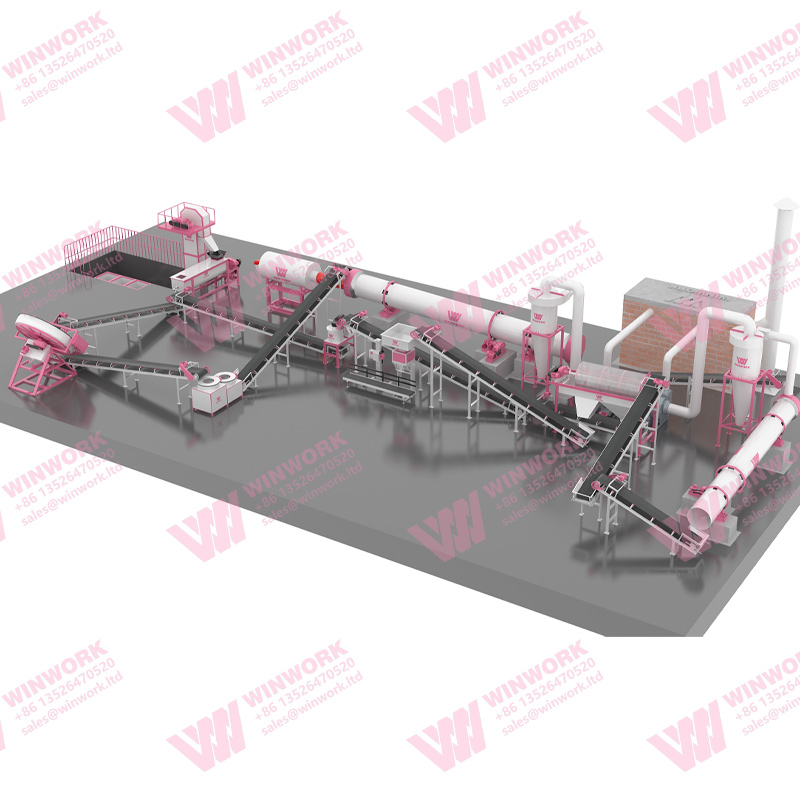
The global demand for cat litter continues to grow steadily, driven by rising pet ownership, urbanization, and increased attention to hygiene and convenience. For new investors, regional manufacturers, and start-up brands, a 1–2 T/H Cat Litter Production Line offers a practical entry point into the cat litter industry. This capacity range balances manageable investment costs with stable output, making it suitable for pilot projects, local distribution, and early-stage brand development.
Unlike large-scale systems designed for mass production, a 1–2 T/H Cat Litter Production Line focuses on flexibility, equipment efficiency, and adaptability to different raw materials. From bentonite and clay-based formulas to natural or blended cat litter products, this production scale can support a wide range of formulations while maintaining consistent product quality.
This article provides a comprehensive overview of the production process, core equipment configuration, operational considerations, and future scalability of a 1–2 T/H cat litter production line from an equipment-oriented perspective.
Understanding the Role of a 1–2 T/H Cat Litter Production Line
A 1–2 T/H Cat Litter Production Line is typically designed for manufacturers who are entering the market or expanding from manual or semi-automatic operations. At this production level, the emphasis is not only on output but also on process stability, ease of operation, and cost control.
Compared with higher-capacity systems, this production line allows manufacturers to:
- Test market demand with limited financial risk
- Adjust formulations and product types more flexibly
- Optimize production parameters before large-scale expansion
- Reduce labor intensity through partial or full automation
Because of these advantages, the 1–2 T/H range is often considered a “foundation stage” in the cat litter manufacturing lifecycle.
Raw Materials Commonly Used in a 1–2 T/H Cat Litter Production Line
The choice of raw materials directly affects equipment selection and process design. A typical 1–2 T/H Cat Litter Production Line can handle multiple material types, including:
- Bentonite clay
- Calcium-based minerals
- Natural clays and loam
- Plant-based fibers or additives
- Deodorizing agents and binders
Raw materials are usually delivered in bulk or bagged form and must be prepared to meet granulation and forming requirements. This makes raw material pre-treatment an essential part of the production process.
Core Process Flow of a 1–2 T/H Cat Litter Production Line
Although specific configurations vary, most systems follow a similar process logic. A standard 1–2 T/H cat litter production line typically includes the following stages:
Raw material preparation
Raw materials such as bentonite or clay are stored, pre-treated, and fed in a controlled manner to ensure stable moisture content and continuous production.
Crushing and size adjustment
Lump materials are crushed into a uniform particle size to improve mixing efficiency and ensure consistent granule formation in downstream processes.
Mixing and conditioning
Crushed materials are evenly blended with water or additives to achieve the ideal moisture and plasticity required for stable forming.
Granulation or forming
The conditioned material is shaped into granules through extrusion, disc, or drum forming, determining the final size and appearance of the cat litter.
Drying
Freshly formed granules are dried to remove excess moisture, improving strength, shelf life, and resistance to breakage during handling.
Cooling
After drying, granules are cooled to stabilize structure and prevent agglomeration during storage and packaging.
Screening and grading
Dried and cooled products are screened to separate qualified granules from oversize or undersize particles for recycling.
Packaging
Finished cat litter is weighed, packed, and sealed in bags, preparing the product for storage, transport, and market distribution.
Each stage is supported by specialized equipment designed to ensure smooth material flow and consistent product quality.
Crushing Equipment in a 1–2 T/H Cat Litter Production Line
Crushing is often the first mechanical step in the production process. In a 1–2 T/H Cat Litter Production Line, crushers are used to reduce oversized raw materials into a uniform particle size suitable for mixing and granulation.
Common crushing equipment includes:
- Chain crushers
- Hammer crushers
- Cage-type crushers
At this production scale, crushing equipment is selected for stable output, low dust generation, and ease of maintenance. Proper crushing ensures uniform granule strength and improves the efficiency of downstream processes.
Mixing Systems for Material Homogeneity
Mixing plays a critical role in ensuring consistent performance of the final product. In a 1–2 T/H Cat Litter Production Line, mixers are responsible for evenly distributing moisture, binders, and functional additives.
Typical mixing equipment includes:
- Horizontal ribbon mixers
- Double-shaft paddle mixers
- Continuous mixers for automated lines
Effective mixing improves granulation success rates and reduces the generation of irregular or weak granules.
Granulation Equipment Selection
Granulation is the core forming stage of a 1–2 T/H Cat Litter Production Line. The choice of granulator depends on raw material characteristics, desired granule shape, and end-use requirements.
Common granulation equipment includes:
- Disc granulators
- Rotary Drum granulators
- Double Roller granulators
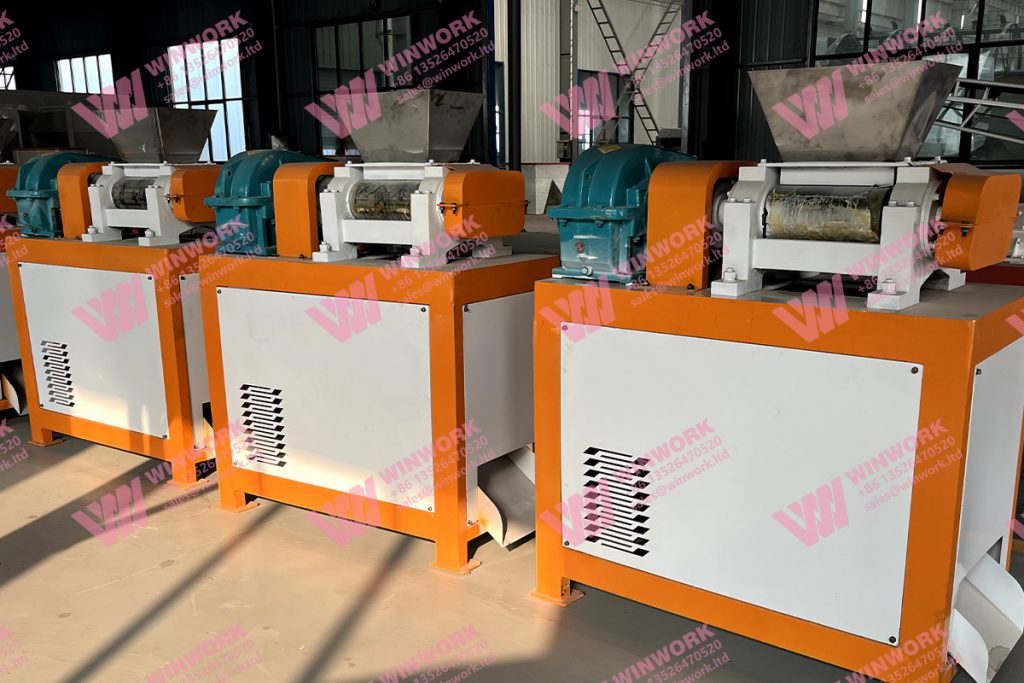
double roller granulator
For small to medium capacity lines, disc and drum granulators are widely used due to their stable operation and adjustable parameters. Granulation quality directly affects absorption capacity, dust content, and product appearance.
Drying and Cooling Systems in the Production Line
Freshly formed cat litter granules typically contain excess moisture that must be removed to ensure storage stability. A 1–2 T/H Cat Litter Production Line usually incorporates a drying stage to reduce moisture content to an acceptable level.After drying, granules are often at elevated temperatures. Cooling is essential to prevent agglomeration and surface cracking.So cooling equipment helps stabilize product quality before screening.
Drying and Cooling equipment commonly includes:
- Rotary drum dryers
- Rotary drum coolers
Proper drying improves granule hardness, reduces breakage during handling, and enhances overall product consistency.While efficient cooling also protects downstream screening and packaging equipment from thermal stress.
Screening and Grading Systems
Not all granules produced during granulation meet size specifications. Screening ensures that only qualified particles proceed to packaging. In a 1–2 T/H Cat Litter Production Line, screening systems separate oversized, undersized, and qualified products.
Typical screening equipment includes:
- Vibrating screens
- Rotary screens
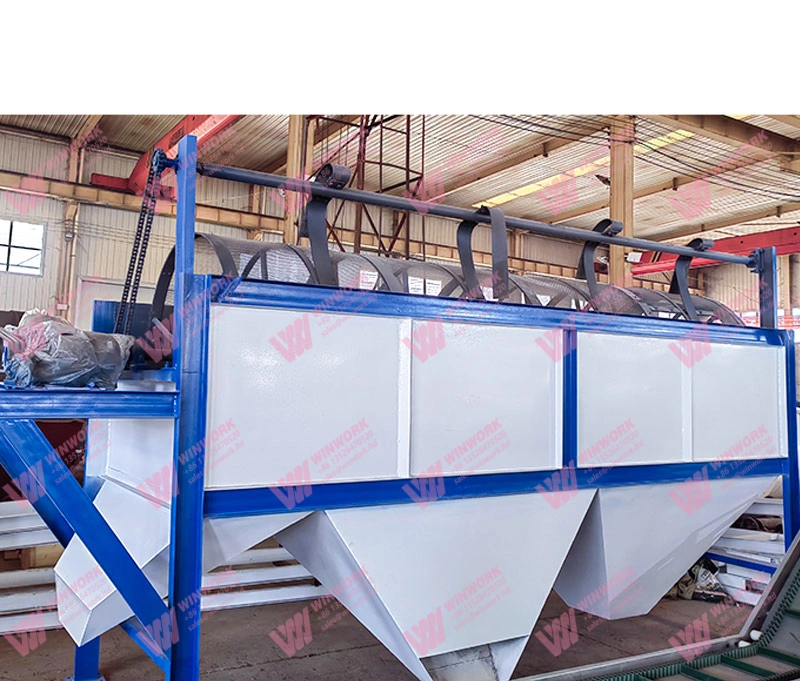
Rejected particles are often recycled back into the crushing or mixing stage, improving material utilization and reducing waste.
Packaging Equipment and Automation Options
Packaging is the final step in a 1–2 T/H Cat Litter Production Line. Depending on market positioning, packaging systems can range from semi-automatic to fully automatic solutions.
Packaging equipment may include:
- Automatic weighing machines
- Bag filling machines
- Sealing and stitching units
At this production scale, manufacturers often choose flexible packaging systems that allow easy adjustment for different bag sizes and product types.
Dust Control and Environmental Considerations
Even at moderate capacity, dust management is critical. A well-designed 1–2 T/H Cat Litter Production Line integrates dust collection systems to improve working conditions and meet environmental standards.
Dust control solutions include:
- Cyclone dust collectors
- Bag filter systems
- Enclosed conveying systems
Proper dust management also contributes to higher product quality and reduced material loss.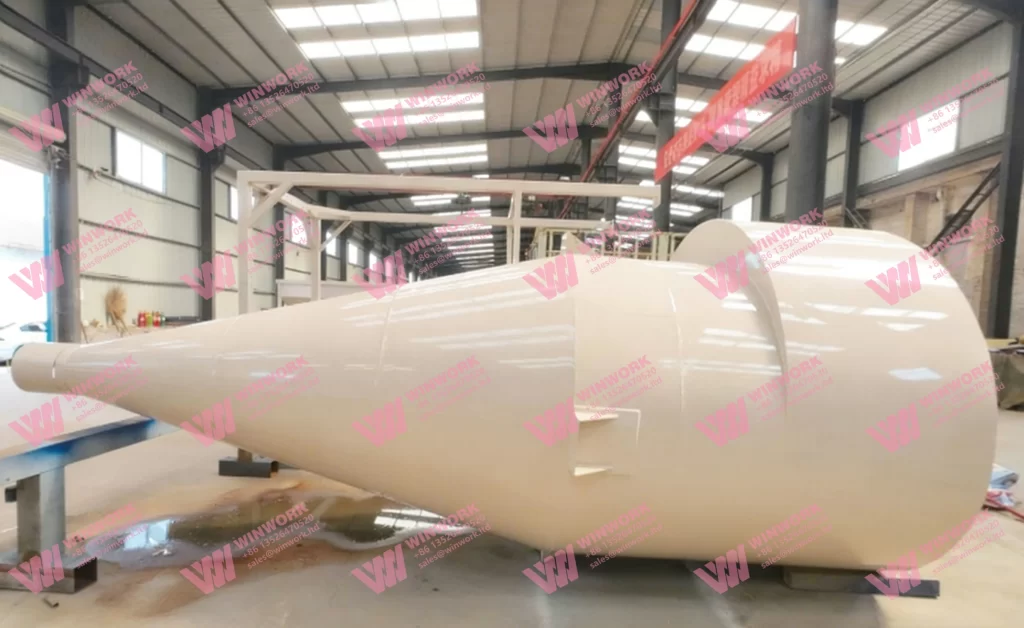
Operational Advantages of a 1–2 T/H Cat Litter Production Line
Choosing a 1–2 T/H Cat Litter Production Line offers several operational advantages:
- Lower initial investment
- Faster installation and commissioning
- Easier workforce training
- Simplified maintenance routines
These advantages make this capacity range ideal for manufacturers seeking controlled growth.
Scalability and Upgrade Potential about 1-2 T/H Cat Litter Production Line
One of the key benefits of a 1–2 T/H Cat Litter Production Line is its scalability. Many systems are designed with future expansion in mind, allowing manufacturers to upgrade individual equipment modules or integrate additional capacity.
As market demand increases, producers often consider transitioning to higher-capacity systems such as a 5T/H cat litter production line, which offers improved automation and higher throughput. Designing the initial line with compatible equipment layouts makes this transition more cost-effective and less disruptive.
Linking Small-Scale Production to Industrial Expansion
From an investment perspective, a 1–2 T/H Cat Litter Production Line serves as a stepping stone toward industrial-scale manufacturing. Data collected during early operation—such as raw material behavior, energy consumption, and maintenance frequency—provides valuable insights for scaling decisions.
This staged development approach reduces operational risk and improves long-term profitability.
Frequently Asked Questions About 1–2 T/H Cat Litter Production Lines
Q1: What raw materials are suitable for this production capacity?
This type of production line works well with bentonite clay, natural clay, calcium-based materials, and blended formulas. Raw material moisture and particle size should be properly controlled before granulation to ensure stable operation.
Q2: Is the production system fully automatic or semi-automatic?
Most 1–2 T/H cat litter systems are semi-automatic by default, while key sections such as feeding, drying, screening, and packaging can be upgraded to higher automation if required.
Q3: How much installation space is usually required?
The required plant area depends on equipment layout and process design, but a compact workshop is generally sufficient when material flow and equipment positioning are well planned.
Q4: Can the production capacity be expanded in the future?
Yes, this production configuration is often designed with scalability in mind. By upgrading core equipment such as granulators, dryers, and screeners, manufacturers can smoothly transition to higher-capacity lines.
Q5: Why is a 1–2 T/H output suitable for new manufacturers?
Starting with a 1–2 T/H cat litter production line helps reduce initial investment risk, allows manufacturers to test market demand, and provides practical operating data before moving to larger-scale production.
Conclusion
A 1–2 T/H Cat Litter Production Line is an efficient, flexible, and practical solution for manufacturers entering or expanding within the cat litter market. By combining reliable equipment, a clear process flow, and scalable design principles, this production line supports stable output while leaving room for future growth.
For producers planning long-term development, starting with a 1–2 T/H system and gradually upgrading to higher-capacity solutions ensures technical continuity and market adaptability.
For more details, please feel free to contact us.
Email: sales@lanesvc.com
Contact number: +8613526470520
Whatsapp: +8613526470520
Get A Quote