

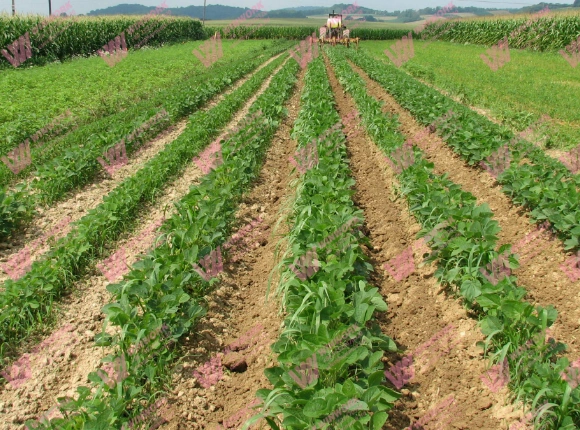
Introduction
Facing the stringent requirements of large‑scale farming for efficient, stable, and low‑cost fertilizer supply, Agricultural Fertilizer Solutions for Large Farms are becoming a core strategy for precision fertilization and sustainable development. This press release explores Agricultural Fertilizer Solutions for Large Farms, covering their definition, usage methods, integration with production‑line fertilizer and fertilizer manufacturing systems, common equipment, key benefits, and an FAQ section. This is mainly helping large‑scale farm managers, agronomists, and suppliers fully understand and implement this comprehensive approach tailored for large agricultural operations.
What Are Agricultural Fertilizer Solutions for Large Farms?
Agricultural Fertilizer Solutions for Large Farms refer to an integrated system of fertilizer research, production, distribution, application, and management designed specifically for large agricultural entities practicing extensive cultivation, intensive crop production, or integrated livestock‑crop operations. It encompasses not only conventional straight or compound fertilizers but also liquid fertilizers, slow‑release fertilizers, and organic‑inorganic blends, with customizable formulations based on soil testing and crop nutrient models.
In large‑scale scenarios, Agricultural Fertilizer Solutions for Large Farms emphasize an integrated produce‑supply‑apply approach: production‑line fertilizer facilities ensure stable supply; scientific fertilizer manufacturing guarantees precise nutrient content; mechanization and informatization enable efficient application. The goal is to reduce per‑hectare fertilization costs while increasing yield and quality, and minimizing environmental risks.
How to Use Agricultural Fertilizer Solutions for Large Farms
Maximizing the benefits of Agricultural Fertilizer Solutions for Large Farms requires aligning with farm size and cropping patterns:
Soil and Crop Diagnosis
Conduct whole‑farm soil testing and crop nutrient requirement analysis before sowing or transplanting to identify N, P, K, and micronutrient status.
Prescription Formulation and Zonal Management
Divide fields into management zones based on test results, customizing NPK ratios and application rates for variable rate fertilization (VRT).
Mechanized Application
Use large‑scale spreaders, fertilizer‑seed drills, or liquid fertilizer injection/drip systems to uniformly place granular or powdered fertilizers into the root zone, or deliver liquid fertilizers directly via irrigation networks.
Dynamic Monitoring and Adjustment
During the growing season, combine remote sensing, sensor data, and field scouting to adjust top dressing plans, keeping nutrient supply synchronized with crop demand.
These steps are central to implementing Agricultural Fertilizer Solutions for Large Farms effectively in large‑scale operations, significantly reducing waste and improving nutrient use efficiency.
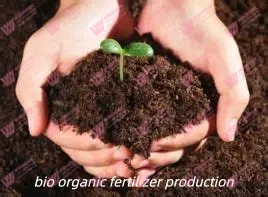
Producing line
Raw material treatment: because organic waste is usually not easy to decompose, and contains some harmful substances to the soil, so it needs to be fully cooked and fermented, decomposition to remove the harmful substances, the formation of nutrient-rich humus. At this stage, the organic fertilizer production line researched and developed by our company can deal with this problem well by using compost turning machine and fermentation tank.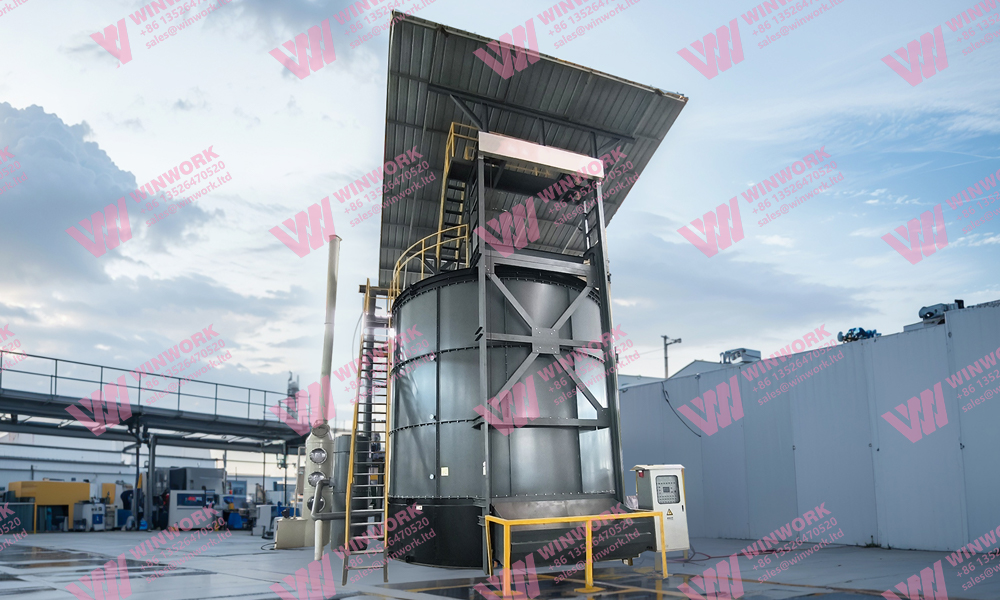
Through the compost turner, the material heap which has been sown with bacteria is turned, broken up and stirred, so as to promote the fermentation and maturation of the material, microbial growth and reproduction, and reduce the environmental pollution.
Through the fermentation tank, the material can be anaerobic, temperature-controlled treatment, to ensure that the material can be quickly fermented and ripened, the formation of organic fertilizer can be manufactured raw materials.
Raw material processing stage: after composting and fermentation of raw materials with rich organic matter, can effectively improve the quality of soil, and enhance the production of crops, but still not easy to save and transport, and can not be stored for a long time, we need to further processing.
The use of crusher, through the crusher internal high-speed rotating blades and chains, the fermentation of the material to complete the grinding, the formation of easy-to-handle powder, and then sent to the mixer after the full mixing and stirring, so that the material is more uniform, in this step can also add some necessary ingredients, such as additives, adhesives and so on.
Granulation: The processed powder will be sent into the churning teeth granulator through the belt conveyor, and the churning teeth rotating at high speed in the cylinder will mix, bond and cut the materials to form compact granules and push them backward to the discharge port to send them out.
Drying and cooling: By entering the dryer and cooler, the moisture of the granule is reduced and the hardness and stability of the granule is increased.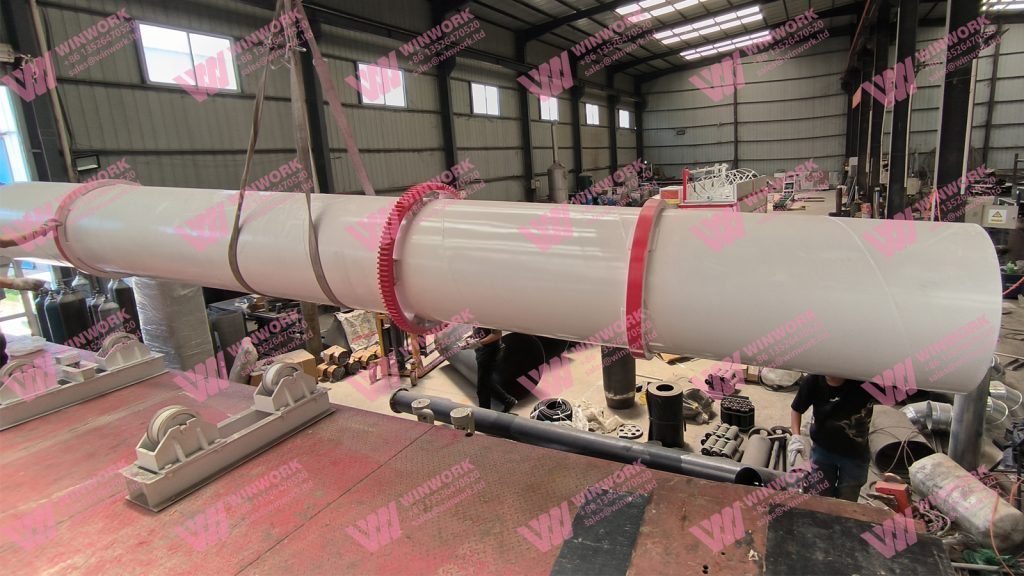
Screening: After drying, the granules enter the sieving machine to sieve out the granules that don’t meet the production standard and return them to be crushed and granulated again to improve the utilization rate, and at the same time, send out the granules that meet the production requirements.
Finished product processing: finished particles can be added according to customer demand for film wrapping machine or packaging machine, to further enhance the production effect, to ensure the quality of the finished product.
Common Equipment
Supporting Agricultural Fertilizer Solutions for Large Farms involves equipment for both production and application:
Automatic Batching Systems – Precise weighing of multiple raw materials.
Crushing and Screening Machines– Uniform raw material particle size.
Mixers– Even nutrient distribution.
Granulators – Produce easy‑handling pellets.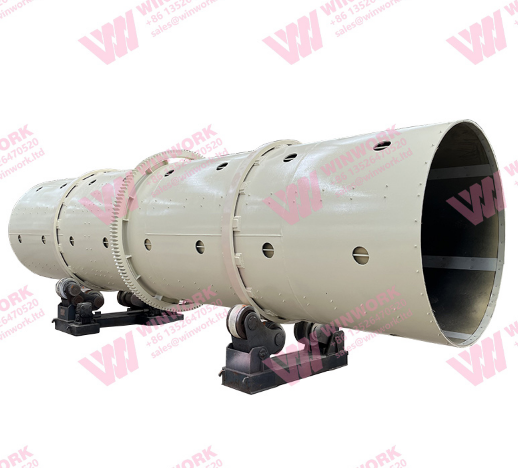
Dryers and Coolers – Control product physical characteristics.
Bagging and Palletizing Machines– Efficient storage and shipment.
Benefits of Agricultural Fertilizer Solutions for Large Farms
Cost Reduction and Efficiency Gains– Centralized procurement and continuous production lower unit fertilizer costs; mechanized application cuts labor.
Precision Nutrition–Custom prescriptions based on soil and crop data raise fertilizer use efficiency and reduce waste.
Stable Supply–Production‑line systems ensure large‑volume, continuous availability, avoiding seasonal shortages.
Versatile Adaptation – Multiple formulations suit different crops, soils, and climates.
Environmental Protection – Precision application cuts nutrient runoff and non‑point pollution, supporting green farming.
Smart Management– Integration with IoT and big data enables scientific decision‑making.
Quality Assurance– Rigorous QC and traceability ensure safe, reliable fertilizers.
Higher Yields and Quality – Balanced nutrition fosters robust growth and improved marketable yield.
Enhanced Competitiveness– End‑to‑end optimization gives large farms cost and quality advantages in the marketplace.
These nine advantages underscore the essential role of Agricultural Fertilizer Solutions for Large Farms in modern large‑scale agriculture.
FAQ – Frequently Asked Questions
Q1: Must large farms build their own fertilizer plants?
A: Not necessarily. Long‑term partnerships with specialized fertilizer companies can provide stable supply and still achieve the aims of Agricultural Fertilizer Solutions for Large Farms.
Q2: How to determine fertilizer prescriptions?
A: Based on soil test data and crop nutrient models, developed by agronomists or fertilizer specialists, then refined during the season.
Q3: How to combine liquid and solid fertilizers?
A: Use solid fertilizers for basal application and liquid fertilizers for top‑dressing via fertigation, increasing the flexibility of Agricultural Fertilizer Solutions for Large Farms.
Q4: Is variable rate technology expensive to adopt?
A: Initial investment is high, but long‑term savings from reduced input use and higher yields justify the cost, while greatly improving precision.
Q5: Are organic‑inorganic blends suitable for large farms?
A: Yes, especially for farms aiming to improve soil health or pursue organic certification, and they can be incorporated into Agricultural Fertilizer Solutions for Large Farms.
Conclusion
Agricultural Fertilizer Solutions for Large Farms are more than a product range — they represent a strategic system spanning testing, formulation, production, supply, application, and management. Through scientific fertilizer manufacturing and efficient production‑line fertilizer operations, paired with modern application equipment and management platforms, large farms can achieve cost control, precision nutrition, stable supply, and green production. This release has highlighted Agricultural Fertilizer Solutions for Large Farms throughout to emphasize its role as a future‑ready approach for large‑scale agriculture. As smart farming and sustainability advance, Agricultural Fertilizer Solutions for Large Farms will play an increasingly vital part in ensuring food security, enhancing competitiveness, and realizing sustainable agricultural development.
For more details, please feel free to contact us.
Email: sales@lanesvc.com
Contact number: +8613526470520
Whatsapp: +8613526470520
Get A Quote