

In flat die pellet production, most operators focus heavily on the granulator itself—die structure, roller pressure, motor power, or output capacity. However, real production experience shows that over 80% of pelletizing instability is caused not by the granulator, but by improper raw material preparation, especially the wrong crusher selection.
Choosing the right crusher for flat die granulator is not an accessory decision. It directly determines raw material particle size, moisture uniformity, feeding stability, pellet density, die wear rate, and even final pellet appearance. A mismatched crusher leads to frequent die blockage, uneven pellets, excessive fines, and shortened equipment lifespan.
This article explains, from an engineering and production perspective, how to select the correct crusher for flat die granulator systems, why crusher–granulator matching matters, and how different raw materials require different crushing solutions.
Why Crusher Selection Determines Flat Die Granulator Performance
A flat die granulator works by compressing raw material through die holes using rollers. For this compression process to remain stable, raw material particle size must fall within a narrow and controlled range. Oversized particles cause die blockage, while excessive fines reduce pellet strength and increase dust.
This is why the crusher for flat die granulator is not simply a size-reduction device—it is a process stabilizer. Proper crushing ensures that material enters the granulator with:
- Uniform particle size
- Stable bulk density
- Consistent feeding behavior
Without this foundation, even the most advanced flat die granulator cannot perform reliably.
Ideal Raw Material Size for Flat Die Granulation
Before choosing a crusher for flat die granulator applications, it is essential to understand target particle size requirements.
In most flat die pellet systems:
- Biomass materials: 3–5 mm
- Organic fertilizer materials: 2–4 mm
- Feed-related materials: 2–3 mm
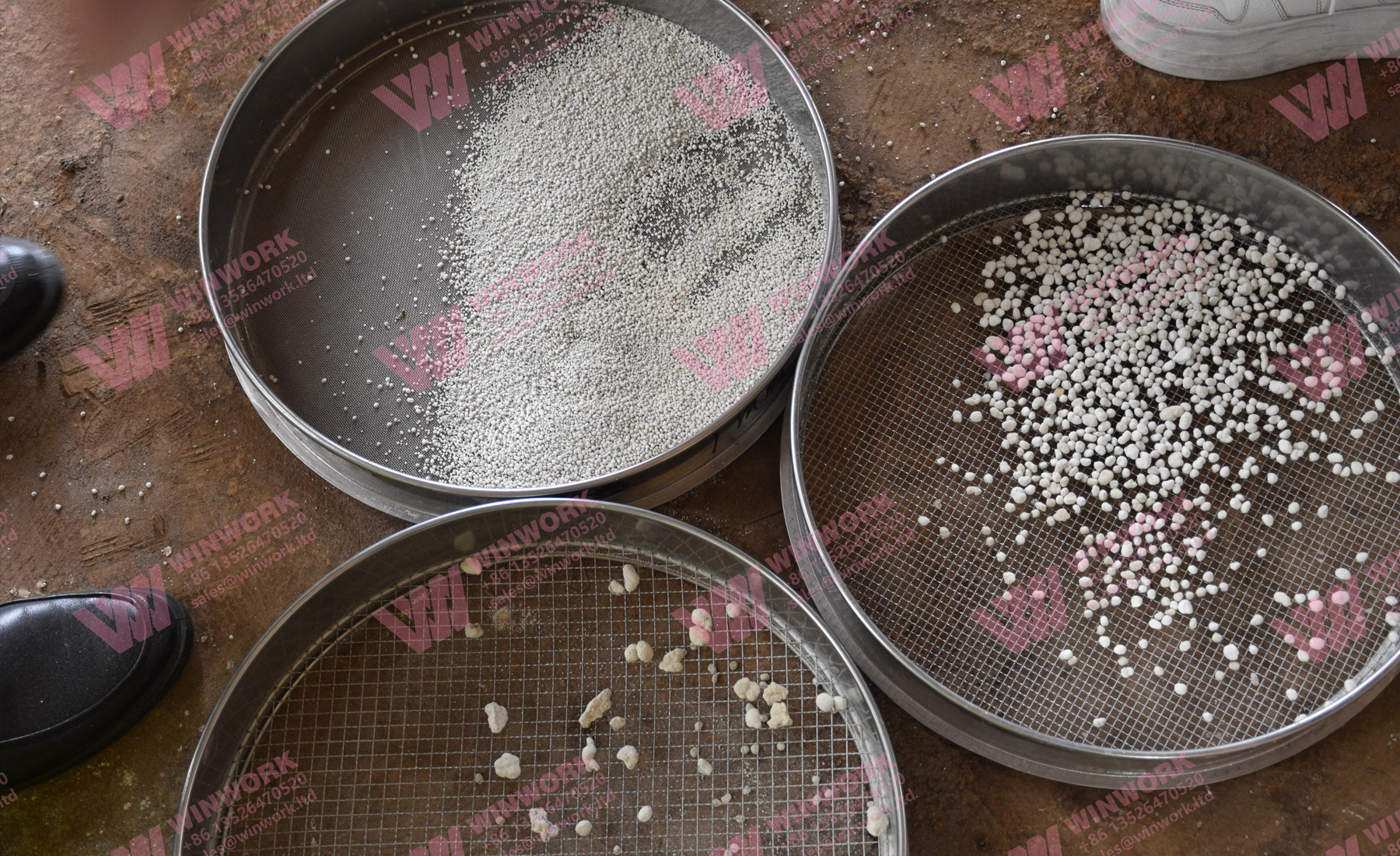
Particle size distribution matters more than absolute size. A good crusher for flat die granulator use produces narrow distribution, not just smaller particles. This reduces segregation and improves roller–die contact efficiency.
Common Problems Caused by the Wrong Crusher
Using an unsuitable crusher for flat die granulator systems leads to predictable production issues:
- Die hole blockage due to oversized particles
- Pellet cracking caused by uneven compression
- Low output despite sufficient motor power
- High energy consumption during pelletizing
- Accelerated die and roller wear
These problems often result in operators blaming the granulator, when the root cause is actually upstream crushing.
Key Crusher Types Suitable for Flat Die Granulator Lines
In flat die pellet production, crusher selection directly affects feeding stability, die wear, and pellet forming quality. Based on material adaptability and granulation compatibility, the following four crusher types are the most suitable crusher for flat die granulator systems.
Hammer crushers are one of the most commonly used solutions as a crusher for flat die granulator lines when processing dry or semi-dry materials. By adjusting screen size and rotor speed, they can produce uniform particles that meet flat die granulation requirements.
They are typically used for:
- Dry organic fertilizer materials
- Brittle agricultural residues
- Pre-dried compost materials
When properly configured, hammer crushers ensure stable feeding and consistent particle size, which helps improve pellet density and reduce flat die blockage.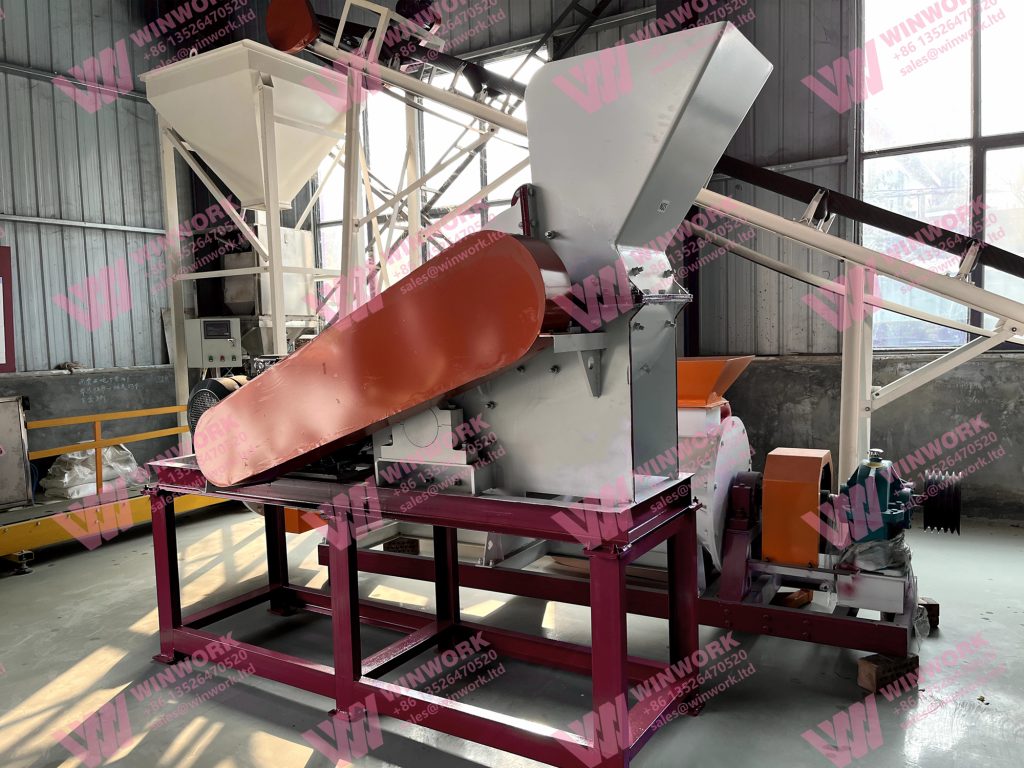
Vertical crushers are well suited as a crusher for flat die granulator systems handling materials with moderate moisture content. The vertical crushing structure allows gravity-assisted material flow, reducing material accumulation and improving discharge continuity.
They are commonly applied in:
- Organic fertilizer pellet lines
- Compost-based materials with fluctuating moisture
- Small to medium capacity flat die granulator systems
Their stable operation helps maintain uniform feeding, which is critical for smooth flat die pellet formation.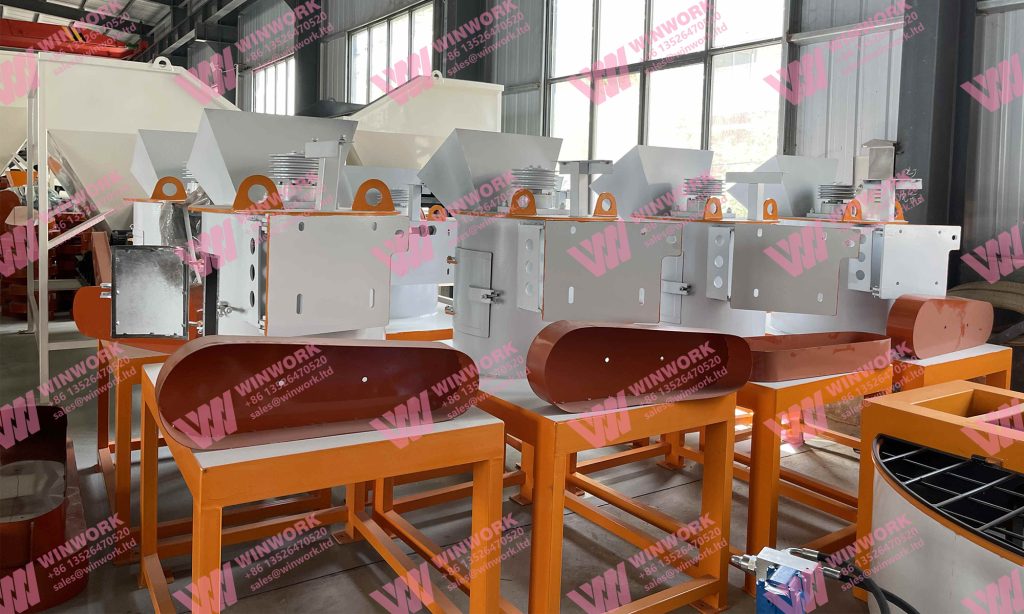
Cage crushers are highly compatible with flat die granulators due to their low-speed crushing and excellent particle size control. As a crusher for flat die granulator, they minimize over-crushing and reduce excessive fines.
Key advantages include:
- Uniform particle size distribution
- Low dust generation
- Improved pellet appearance and strength
Cage crushers are often selected when pellet quality consistency is a primary concern.
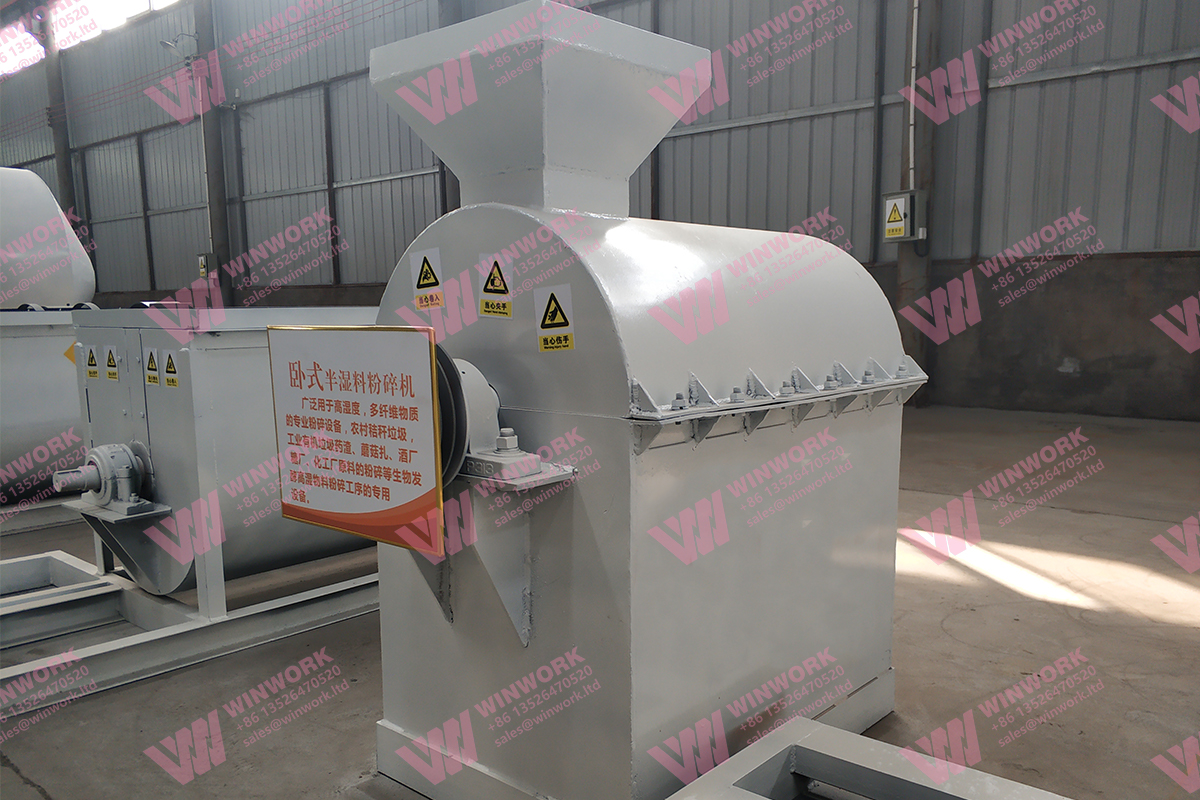
Semi-wet crushers are the preferred crusher for flat die granulator systems processing high-moisture or fermented materials. Their screenless, anti-clogging design allows continuous crushing of sticky inputs without interrupting production.
They are suitable for:
- Fermented manure-based materials
- Compost with high moisture content
- Organic fertilizer pellet production
By ensuring stable particle preparation, semi-wet crushers help prevent feeding fluctuation and die blocking in flat die granulators.
Crusher Selection Logic for Flat Die Granulator Matching
For flat die granulator systems, crusher selection should focus on particle uniformity, moisture adaptability, and feeding stability, rather than maximum crushing force. The four crusher types above cover most flat die granulator application scenarios and provide reliable long-term operation when properly matched with material characteristics.
Matching Crusher Capacity with Flat Die Granulator Output
One of the most common engineering mistakes is capacity mismatch. A crusher for flat die granulator must slightly exceed granulator capacity, not match it exactly.
For example:
1 t/h granulator → 1.2–1.3 t/h crusher
3 t/h granulator → 3.5–4 t/h crusher
This buffer ensures continuous feeding and avoids surge loading, which destabilizes pellet formation.
Moisture Considerations When Selecting a Crusher
Moisture content significantly affects crusher performance. A crusher for flat die granulator handling materials above 25% moisture must include:
- Anti-sticking structure
- Self-cleaning rotor design
- Reduced screen blockage risk
In high-moisture systems, improper crusher selection causes frequent shutdowns and inconsistent pellet density.
Crusher Placement in Flat Die Granulator Process Flow
The position of the crusher for flat die granulator systems also affects performance.
Typical process flow:
- Raw material storage
- Crushing
- Mixing / conditioning
- Flat die granulation
- Cooling and screening
Placing the crusher immediately before granulation ensures size consistency but may require dust control. In some designs, pre-crushing plus fine crushing improves stability for complex materials.
How Crusher Design Affects Pellet Quality
Pellet strength, density, and surface smoothness are all influenced by crushing quality. A well-selected crusher for flat die granulator systems ensures:
- Even compression inside die holes
- Balanced internal stress in pellets
- Reduced surface cracking
Pellets produced from uniformly crushed materials show better durability during packaging and transport.
Energy Efficiency: Crusher vs Granulator Balance
Energy consumption should be evaluated as a system. A high-efficiency crusher for flat die granulator applications reduces granulator load, lowering total power consumption.
In many cases, investing in a better crusher reduces:
- Granulator motor current
- Die friction losses
- Maintenance frequency
This system-level optimization improves long-term operating cost.
Customization Options for Crusher–Granulator Matching
Most industrial crusher for flat die granulator systems are customizable. Common customization points include:
- Rotor speed
- Screen aperture size
- Wear-resistant materials
- Feed inlet structure
Customization ensures that the crusher adapts to the granulator, not the other way around.
Maintenance Impact of Crusher Selection
Crusher performance directly affects maintenance workload. A properly selected crusher for flat die granulator reduces:
- Die replacement frequency
- Roller surface damage
- Pellet fines accumulation
Lower maintenance means higher uptime and more predictable production schedules.
Typical Industries Using Crusher for Flat Die Granulator Systems
This crusher–granulator combination is widely used in:
- Organic fertilizer plants
- Biomass pellet factories
- Animal feed preprocessing
- Compost recycling facilities
Each industry requires slightly different crusher configurations, but the core matching principle remains the same.
How to Evaluate Whether Your Crusher Is Correctly Matched
Ask these questions:
- Is pellet output stable at rated capacity?
- Is die blockage frequent?
- Is pellet size uniform?
- Is crusher producing excessive fines?
If the answer is no, the crusher for flat die granulator is likely mismatched.
Long-Term Cost Impact of Proper Crusher Selection
While crusher cost is often lower than granulator cost, its long-term impact is substantial. The right crusher for flat die granulator systems:
- Extends die lifespan
- Reduces downtime
- Improves product consistency
These benefits outweigh initial equipment savings from choosing an underspecified crusher.
Engineering Guidelines for Crusher–Granulator Matching
From an engineering standpoint:
- Crusher output size must match die hole diameter
- Crusher capacity must exceed granulator demand
- Crusher structure must match material properties
Ignoring any of these principles results in unstable pelletizing.
Frequently Asked Questions about Crusher for Flat Die Granulator
Q1: Why is crusher selection important for a flat die granulator system?
Because particle size uniformity and moisture control directly affect feeding stability, pellet density, and flat die lifespan.
Q2: What particle size is ideal after crushing for flat die granulation?
Most flat die granulators perform best when raw materials are crushed to approximately 2–5 mm, depending on material hardness and moisture.
Q3: Can one crusher type handle all materials for a flat die granulator?
No, different materials require different crushers; dry materials suit hammer or cage crushers, while wet or fermented materials need semi-wet crushers.
Q4: Does improper crushing increase flat die wear?
Yes, oversized or uneven particles increase extrusion resistance, accelerating flat die wear and increasing maintenance frequency.
Q5: Should the crusher capacity match the flat die granulator capacity exactly?
The crusher capacity should be slightly higher than the granulator to ensure continuous feeding and avoid production bottlenecks.
Conclusion
Selecting the right crusher for flat die granulator is not a minor equipment decision—it is a core engineering factor that determines pellet quality, production stability, and equipment lifespan. Flat die granulation relies on precise raw material preparation, and crushing is the foundation of that preparation.
By understanding raw material characteristics, capacity matching, moisture behavior, and crusher design principles, manufacturers can build stable, efficient, and scalable flat die pellet production systems. In real-world operations, investing in the correct crusher for flat die granulator systems often delivers the highest return on investment across the entire production line.
For more details, please feel free to contact us.
Email: sales@lanesvc.com
Contact number: +8613526470520
Whatsapp: +8613526470520
Get A Quote