

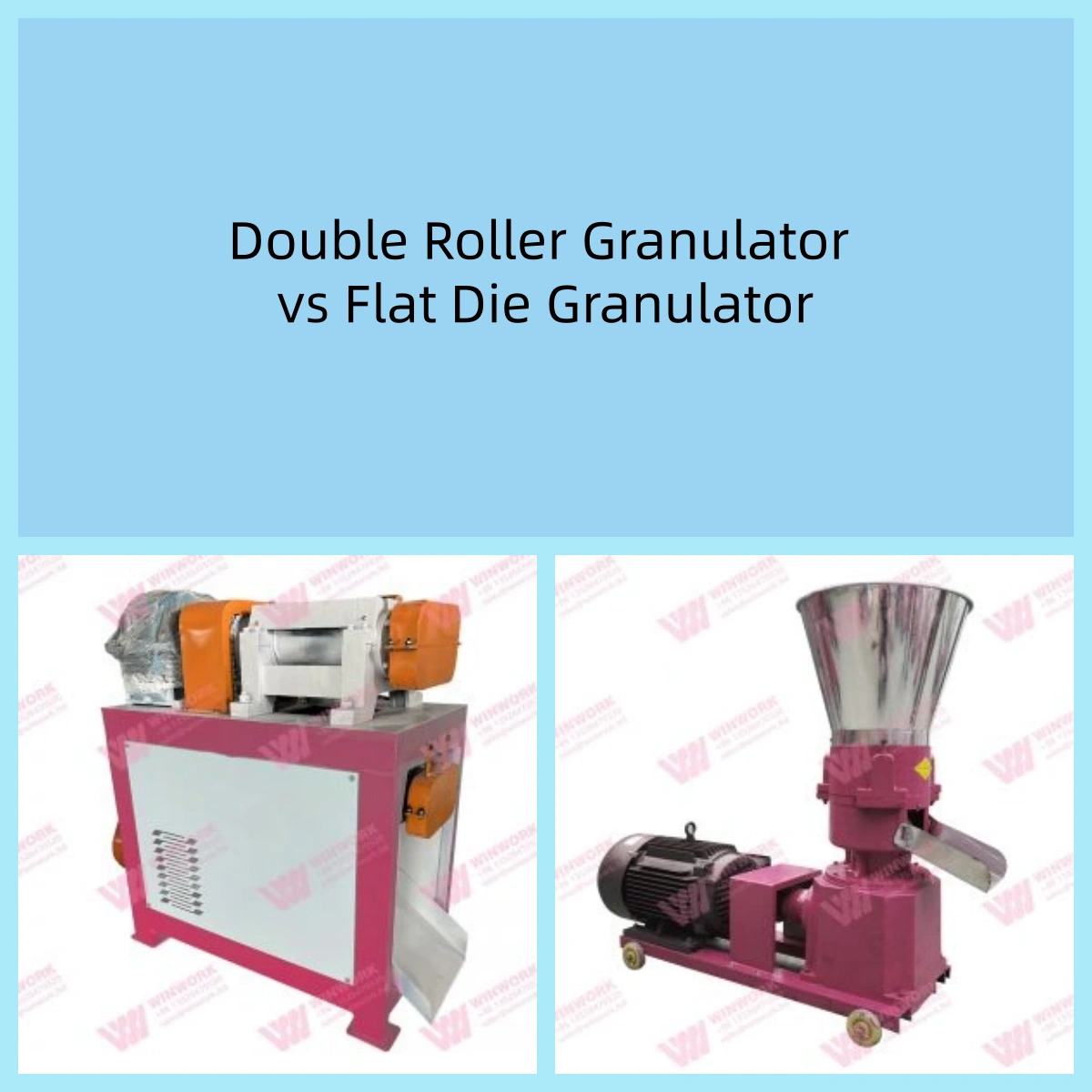
With the global fertilizer industry moving toward higher efficiency and more diversified raw materials, choosing the right granulation equipment has become a critical decision for manufacturers. Among various options, Double Roller Granulator vs Flat Die Granulator is one of the most frequently compared topics in modern fertilizer production lines. These two machines are widely used in compound fertilizer, organic fertilizer, and blended fertilizer manufacturing, yet they differ significantly in structure, working principle, application range, and operating cost.
This article provides a comprehensive comparison of Double Roller Granulator vs Flat Die Granulator, explaining their key differences, suitable raw materials, application scenarios, and selection logic. By the end of this guide, manufacturers and project planners will have a clear understanding of which granulator better fits their production goals.
What Are the Similarities Between Double Roller Granulator vs Flat Die Granulator
Double Roller Granulator vs Flat Die Granulator share several important similarities despite their different mechanical structures. Both machines are designed for dry or low-moisture granulation, operate without complex chemical reactions, and focus on physical compaction to form solid fertilizer pellets.
These shared characteristics make both granulators suitable for energy-efficient production lines with simple process flows, stable output requirements, and relatively low operating costs. Understanding these similarities helps manufacturers narrow down options before evaluating material-specific differences.
Working Principle of Double Roller Granulator vs Flat Die Granulator
Double Roller Granulator vs Flat Die Granulator differs significantly in how raw materials are transformed into finished granules.
A double roller granulator uses two alloy steel rollers with matching molds. Dry or semi-dry powder materials are squeezed under high pressure, directly forming compact granules without adding water or binders. This dry granulation process is particularly suitable for moisture-sensitive fertilizer materials.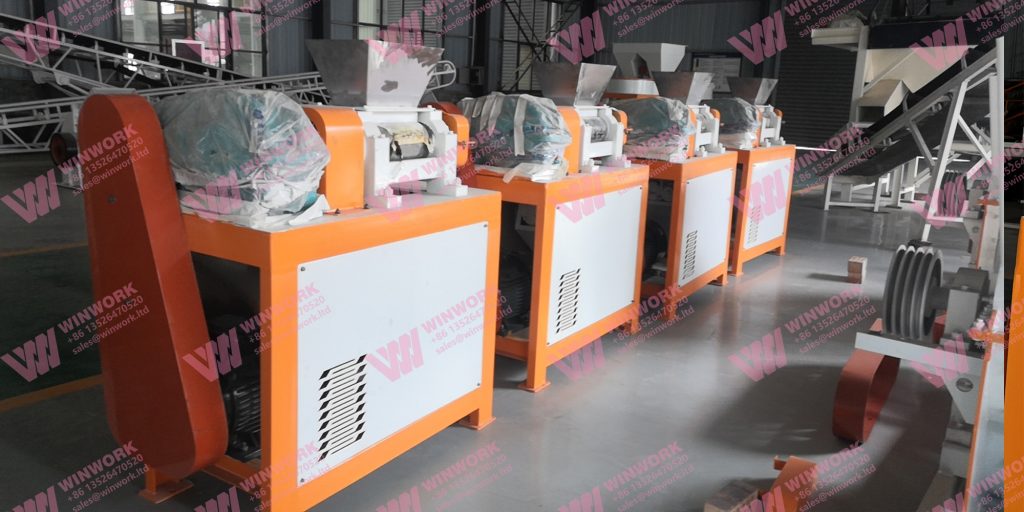
In contrast, a flat die granulator relies on mechanical extrusion through a flat die plate. Raw materials are pressed through die holes by rotating rollers, forming cylindrical pellets. This method usually requires higher moisture content and sometimes binders to ensure pellet integrity.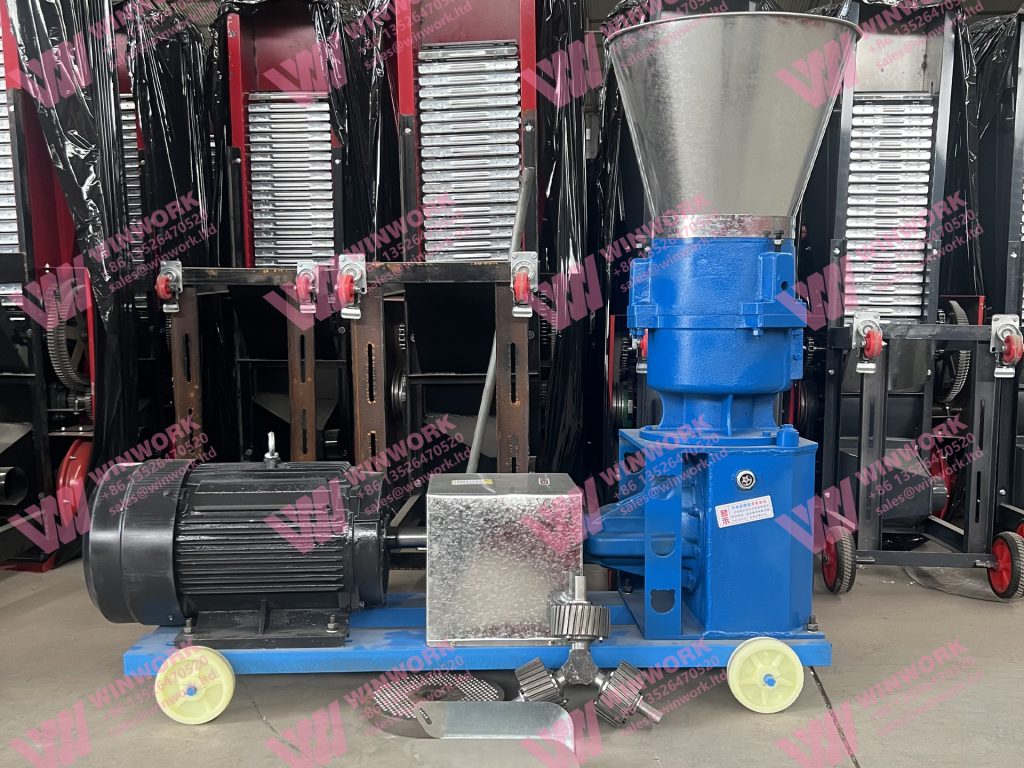
Raw Material Adaptability in Double Roller Granulator vs Flat Die Granulator
Raw material characteristics play a decisive role when comparing Double Roller Granulator vs Flat Die Granulator.
Double roller granulators perform best with:
- Compound fertilizer powder
- NPK blends
- Chemical fertilizer materials
- Dry inorganic powders
Flat die granulators are more suitable for:
- Organic fertilizer materials
- Biomass-based fertilizers
- Materials with natural binding properties
- Powder mixed with moderate moisture
When raw materials have low moisture and poor binding ability, double roller granulation offers higher success rates and more stable output.In contrast, flat die granulators are better suited for materials with sufficient natural binding force, where gentle compression helps maintain organic structure and pellet integrity.
Moisture Requirements: A Key Factor in Double Roller Granulator vs Flat Die Granulator
Moisture control is one of the most critical differences in Double Roller Granulator vs Flat Die Granulator.
Double roller granulators typically operate with moisture content below 5%. This makes them ideal for dry fertilizer production lines and environments where drying capacity is limited or energy costs are high.
Flat die granulators usually require higher moisture levels, often between 10% and 20%, depending on raw material properties. While this improves pellet formation, it also increases drying load and overall energy consumption.
For manufacturers aiming to reduce drying costs, this moisture difference alone can strongly influence equipment choice.
Pellet Shape and Appearance in Double Roller Granulator vs Flat Die Granulator
Pellet shape consistency is another important comparison point in Double Roller Granulator vs Flat Die Granulator.
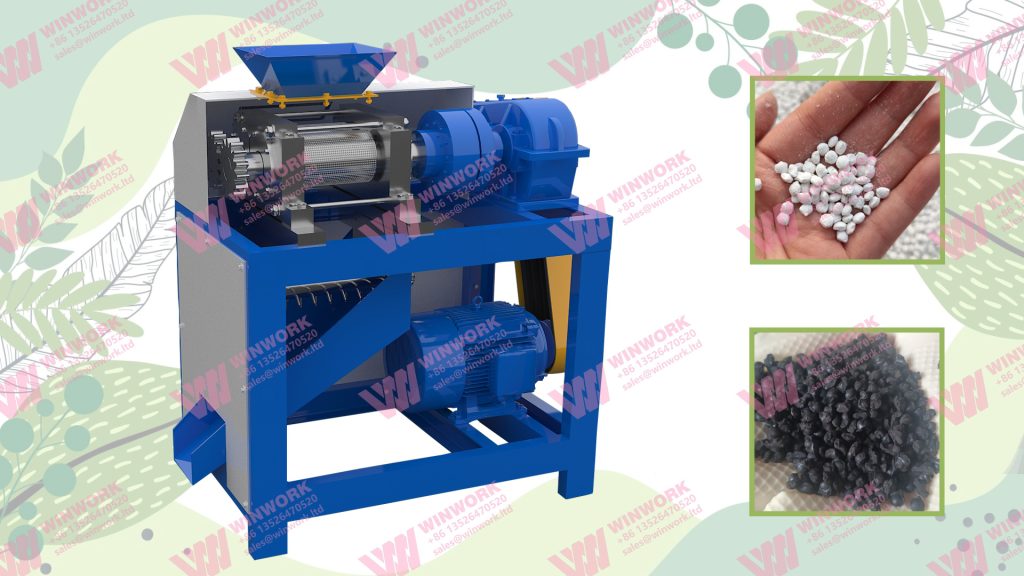
Double roller granulators typically produce:
- Pillow-shaped or oval granules
- Uniform particle size
- Smooth surface with high density
Flat die granulators usually produce:
- Cylindrical pellets
- Variable length depending on cutting system
- Slightly rougher surface texture
For fertilizer products where particle uniformity and bulk density are critical—such as export-grade compound fertilizers—double roller granulation often provides a more consistent appearance,while flat die granulators are better suited for applications where pellet length flexibility and organic material texture are more important than strict uniformity.
Production Capacity Comparison of Double Roller Granulator vs Flat Die Granulator
Production capacity varies significantly between Double Roller Granulator vs Flat Die Granulator, especially in continuous industrial operation.
Double roller granulators are designed for medium to large-scale production lines, commonly ranging from 1 T/H to over 10 T/H. Their structure supports continuous high-pressure operation with relatively stable output.
Flat die granulators are more commonly used in small to medium-scale plants, typically below 5 T/H. While suitable for flexible production, they may experience higher wear and output fluctuation under heavy loads.
For large compound fertilizer plants, capacity scalability often favors double roller systems,while flat die granulators remain a practical choice for smaller operations prioritizing flexibility, lower initial investment, and easier capacity adjustment.
Energy Consumption in Double Roller Granulator vs Flat Die Granulator
Energy efficiency is a growing concern in fertilizer manufacturing, making it a critical comparison point in Double Roller Granulator vs Flat Die Granulator.
Double roller granulators consume less energy in downstream processes because they eliminate or significantly reduce drying requirements. Although roller pressure requires strong motors, overall system energy consumption remains relatively low.
Flat die granulators consume more energy due to higher moisture input and longer drying cycles. This increased energy demand can raise operating costs, particularly in regions with high electricity or fuel prices.
From a long-term operating cost perspective, double roller granulators are generally more energy-efficient for dry powder fertilizer production, while flat die granulators trade higher energy consumption for better adaptability to moist and organic materials.
Wear Parts and Maintenance Differences
Maintenance frequency differs noticeably when evaluating Double Roller Granulator vs Flat Die Granulator.
Double roller granulators mainly involve roller shell wear, which occurs gradually and predictably. Roller surfaces can often be refurbished, extending service life and reducing maintenance costs.
Flat die granulators experience wear on die plates and rollers, especially when processing abrasive or fibrous materials. Die replacement can be more frequent and costly if raw materials are not well controlled.
From a maintenance perspective, double roller granulators offer more predictable wear and lower maintenance frequency in dry powder applications, while flat die granulators require more frequent wear-part management but provide better flexibility for organic and fibrous materials.
Application Scenarios for Double Roller Granulator vs Flat Die Granulator
Understanding application scenarios is essential when comparing Double Roller Granulator vs Flat Die Granulator.
Double roller granulators are widely used in:
- Compound fertilizer production lines
- NPK fertilizer manufacturing
- Chemical fertilizer plants
- Dry granulation systems
Flat die granulators are commonly applied in:
- Organic fertilizer plants
- Small-scale fertilizer workshops
- Biomass pellet production
- Flexible multi-product lines
Each machine serves distinct production goals, and selecting the wrong type can lead to inefficiency and unstable output.
Comparison Table: Double Roller Granulator vs Flat Die Granulator
| Aspect | Double Roller Granulator | Flat Die Granulator |
| Granulation Method | Dry extrusion | Mechanical extrusion |
| Moisture Requirement | Low | Medium to high |
| Pellet Shape | Pillow / oval | Cylindrical |
| Capacity Range | Medium to large | Small to medium |
| Drying Demand | Low | High |
| Maintenance | Moderate | Higher |
| Best For | Compound fertilizers | Organic fertilizers |
This table highlights the practical differences manufacturers must evaluate during equipment selection.
How to Choose Between Double Roller Granulator vs Flat Die Granulator
Choosing between Double Roller Granulator vs Flat Die Granulator requires a clear understanding of raw materials, production goals, and long-term operating strategy.
Based on raw material characteristics
For compound fertilizers with low moisture, stable formulas, and poor binding properties, double roller granulators usually deliver more stable output. Organic or biomass-based materials with natural adhesion are better suited to flat die granulators.
Based on production scale and flexibility
Double roller granulators are ideal for continuous, high-output production lines with standardized products. Flat die granulators are more suitable for smaller batches, frequent formula changes, and flexible production schedules.
Based on energy strategy and long-term planning
Dry granulation with double roller systems reduces drying energy consumption, while flat die systems require higher energy input but offer greater adaptability. Final selection should match long-term cost control and production planning goals.
Installation Position in Fertilizer Production Lines
In fertilizer production lines, the installation position differs when comparing Double Roller Granulator vs Flat Die Granulator.
Double roller granulators are typically installed after batching and mixing, directly forming granules from powdered materials before screening and packaging.
Flat die granulators are often placed after moisture conditioning and pre-mixing stages, followed by drying, cooling, and screening processes.
Correct positioning improves material flow, reduces recycling load, and enhances overall line efficiency.
Frequently Asked Questions about Double Roller Granulator vs Flat Die Granulator
Q1: Can both machines be used in the same fertilizer production line?
In some cases, yes. However, combining them usually increases complexity and is not recommended unless producing multiple product types.
Q2: Which machine produces stronger pellets?
Double roller granulators generally produce higher-density pellets, while flat die pellets rely more on binders and moisture.
Q3: Is drying always required for flat die granulation?
Yes. Due to higher moisture content, drying is almost always necessary after flat die granulation.
Q4: Which granulator is better for export-grade fertilizer?
Double roller granulators are often preferred due to consistent particle size and appearance.
Q5: Can flat die granulators handle chemical fertilizers?
They can, but wear and binding issues may occur without proper material conditioning.
Conclusion
The comparison of Double Roller Granulator vs Flat Die Granulator highlights that there is no universal solution for all fertilizer production needs. Each machine offers distinct advantages depending on raw material type, moisture tolerance, capacity requirements, and energy strategy.
For manufacturers aiming at large-scale, low-moisture, and energy-efficient fertilizer production, double roller granulation provides strong technical and economic advantages. For smaller operations focusing on organic or biomass-based fertilizers, flat die granulation remains a flexible and accessible option.
By understanding the technical differences and application scenarios discussed in this article, manufacturers can make informed decisions that support stable production, controlled costs, and long-term competitiveness.
For more details, please feel free to contact us.
Email: sales@lanesvc.com
Contact number: +86 13526470520
Whatsapp: +86 13526470520
Get A Quote