

Under the wave of sustainable agriculture and the circular economy, make my own fertilizer has become an increasingly popular choice for farmers and growers. Focusing on the question “can I make my own fertilizer from farm waste?”, this press release confirms that the answer is a truthful yes — livestock manure, crop straw, biogas residue, and other farm by‑products can be transformed into high‑value organic fertilizer through scientific processes and suitable equipment. We guiding readers through the complete journey from waste to premium home‑made fertilizer, achieving both waste valorization and cost savings.
As chemical fertilizer prices increasing and environmental regulations tighten, make my own fertilizer is no longer a niche experiment but a practical route for farms to recycle resources and decrease the input costs.
In particular, the frequently asked question “can I make my own fertilizer from farm waste?” is answered affirmatively: farm waste is rich in nitrogen, phosphorus, potassium, and organic matter, making it an ideal raw material for make my own fertilizer. Through proper techniques and equipment, you can convert these by‑products into valuable organic fertilizers. This article unpacks the entire make my own fertilizer workflow, highlights essential equipment, and explains core benefits.
Feasibility Explained the question
Farm waste is a natural reservoir for make my own fertilizer:
Livestock manure like cow, pig, chicken, they Rich in nitrogen and microbes; fresh manure has 50%–80% moisture and needs pre‑treatment.
Crop strawlike corn stalks, rice husks, wheat bran, Supplies carbon and fiber, balancing the fertilizer’s C/N ratio.
Biogas residue and slurry, Nutrient‑concentrated output from anaerobic digestion, with low pest risk.
Spent mushroom substrate Contains protein‑rich mycelia, boosting biological activity.
Through steps such as pre‑processing → fermentation → crushing → batching → granulation → drying, you can successfully make my own fertilizer, with costs only one‑third to one‑half of commercial fertilizer.
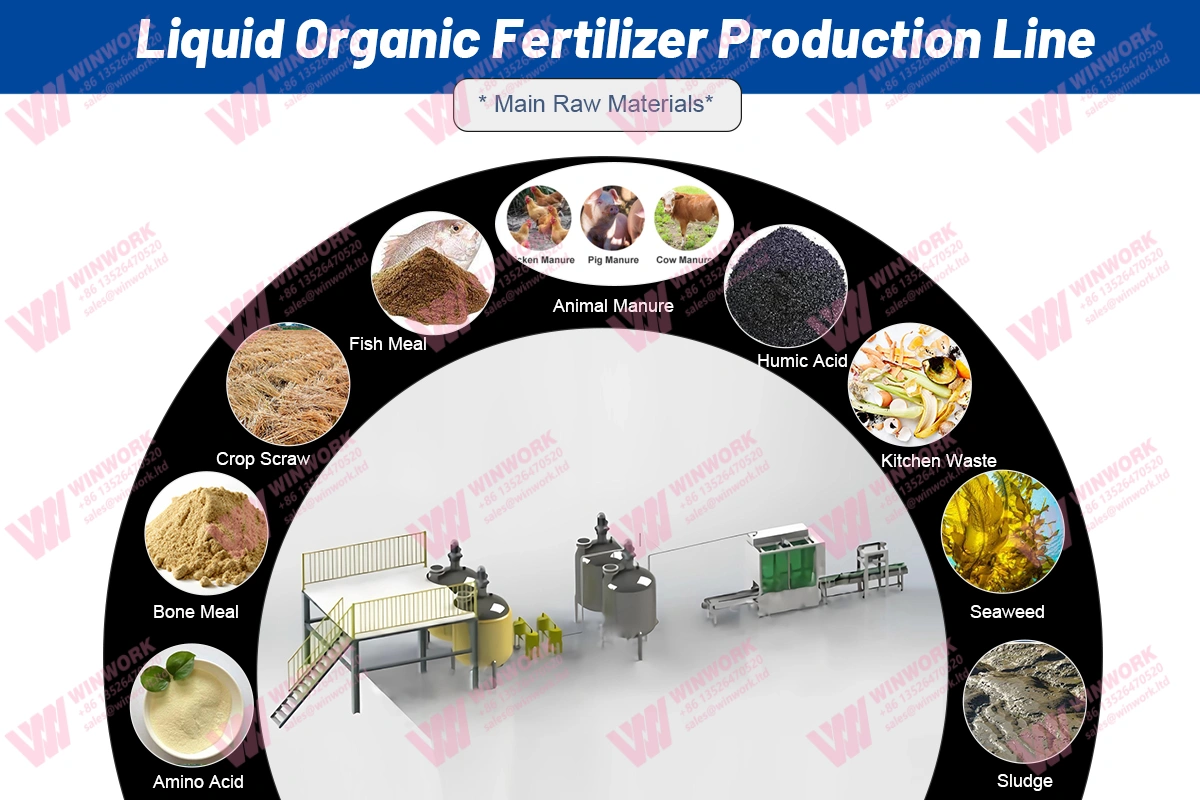
The important raw materials of a fertilizer line
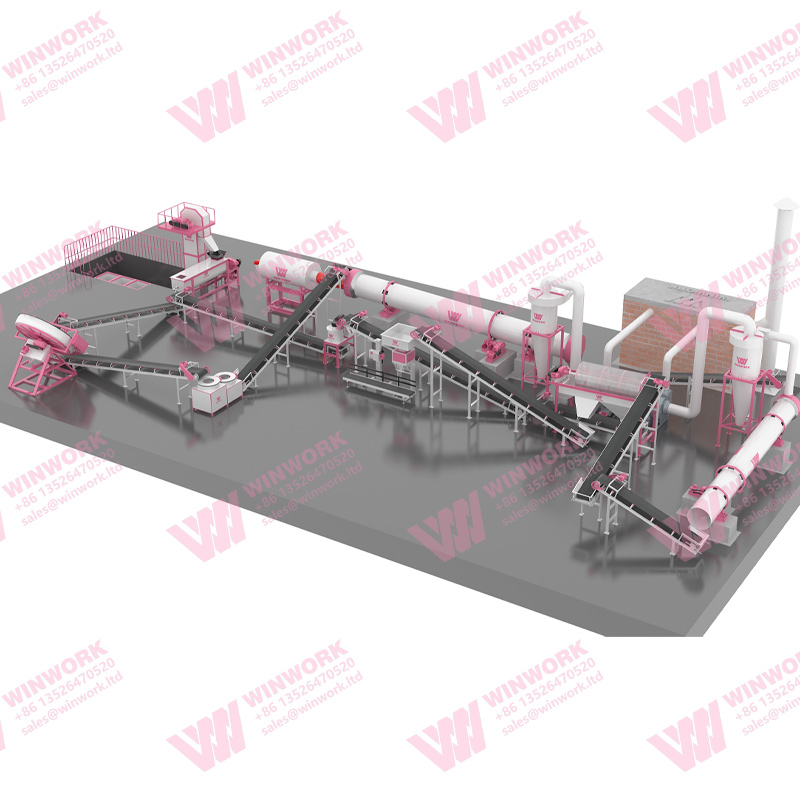
Organic fertilizer production line is a combination of a series of organic material raw material processing equipment for producing granular fertilizers that are easy to pack, transport and store for a long time.
Organic fertilizer production line mainly contains turner, raw material crusher, raw material mixer, granulator, drying and cooling system, screening machine and packaging machine and other equipment, according to the production needs of the increase or decrease in the machinery, in order to achieve the final production goals.
Raw materials commonly used in organic fertilizer production line listing above,
Animal waste: chicken dung, cow dung, horse dung, sheep dung, animal hair, etc.
Agricultural waste: plant straw (corn stalks, wheat straw, etc.), rice husk, rice straw, grass ash, etc.
Industrial waste: medicine residue, sugar residue, soybean meal, cotton meal, cassava residue, wine lees, oil residue, etc.
Municipal waste: sludge, kitchen waste and so on.
The above organic raw materials can be manufactured through a series of organic fertilizer processing, not only to reduce the harm caused by the accumulation of such harmful substances, but also to turn waste into treasure and environmental protection, is a new trend in agricultural development.
As you can see , many raw materials you can have in your house and daily you will waste them, now you can have a better idea to change them into fertilizers.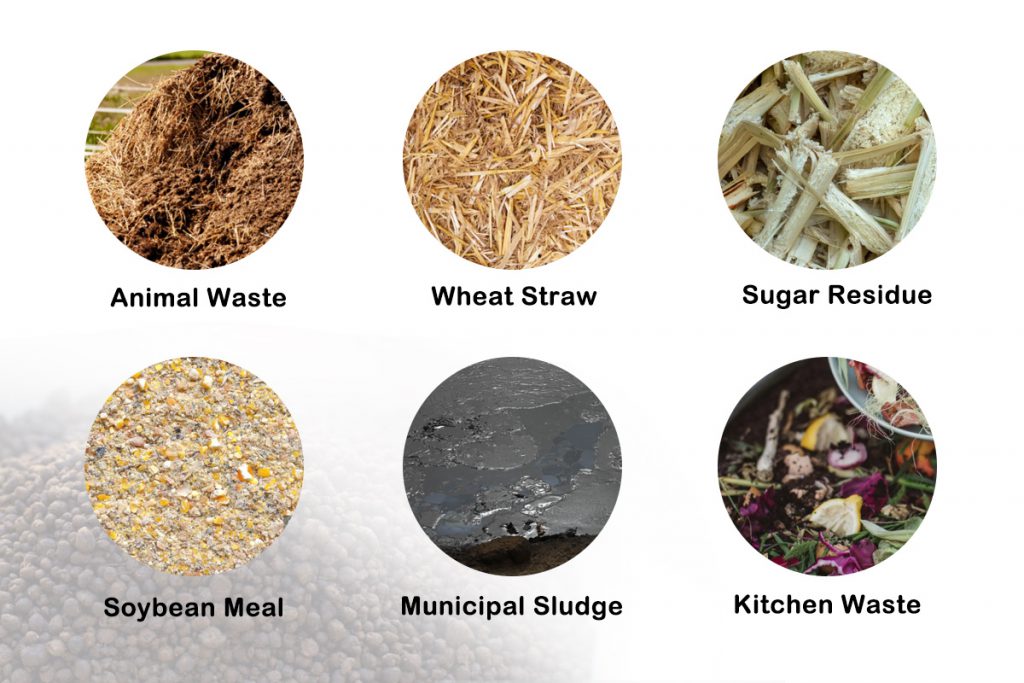
Common machines you can buy
Crawler compost turner is an advanced compost turning equipment, specially designed for compost fermentation process, with the advantages of high efficiency, stability, easy operation and so on.
Crawler compost tumbler realizes automatic operation through crawler walking system, which is the necessary equipment for producing organic fertilizer granules and widely used in organic fertilizer production line.
Also, you can have the fermentation tank to ferment your materials to convenient them to release their nutrition.
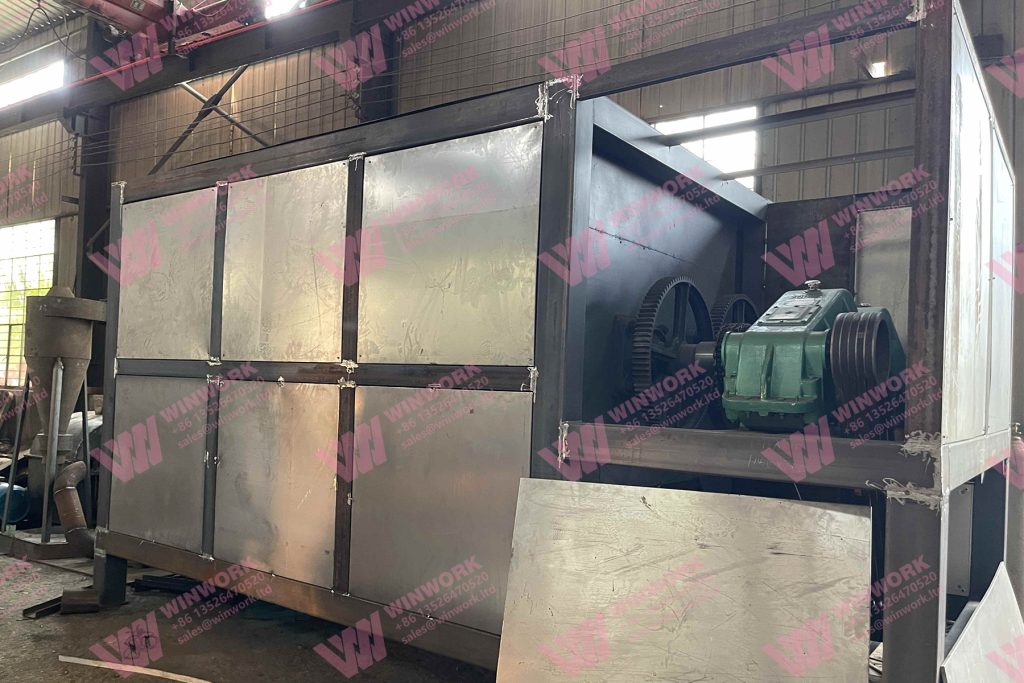
Horizontal fermentation tank
After your raw materials have fermented well, you can use a crusher to crush them, turning the product into a state suitable for mixing. This will facilitate the subsequent granulation process,so you can buy a crusher and a granulator. The granulator is the most key machine in your fertilizer production.
There are also many types of granulators, New type organic fertilizer granulator, also known as churning teeth granulator, is a kind of high-efficiency molding equipment, simple principle, fast granulation speed.
At this step, your granulation is already well, if you have high quality demand and you want to store it for a long time, then you can put in a cooler and dryer, and also a screener to classify your products and to check whether them are up to standard.
Five Core Advantages of Make My Own Fertilizer
Lower Costs: Free raw material son‑farm waste, long‑term use of equipment after one‑time investment; cost per ton is only 30%–50% of commercial fertilizer, sharply cutting planting expenses.
Better Fertility: Self‑made fertilizer matches soil needs formula adjustable by crop stage, rich in organic matter and beneficial microbes, improving soil structure and water/nutrient retention; long‑term use can raise yields 10%–20%.
Environmental Benefit: Converts waste to fertilizer, reducing methane emissions and leachate from open dumping, practicing circular economy through make my own fertilizer to aid farm carbon neutrality.
Flexibility: Customize formulas for crop growth stages, avoiding waste or excess from one‑size‑fits‑all commercial fertilizers.
Self‑Reliance: Frees you from external fertilizer dependence, securing planting plans amid price hikes or supply instability.
Practical FAQ
Q1: Can I make my own fertilizer from farm waste? Are all types usable?
A1: Most are usable, but avoid high‑salt straw from saline soils or heavy‑metal contaminated industrial waste; fresh manure must be fermented first (or it burns roots); biogas residue must be fully digested to avoid methane residue.
Q2: Must I use professional equipment for make my own fertilizer? Can small farms use simple tools?
A2: Small scale (<100 t/year) can use simple tools — shovel for turning, plastic buckets for fermentation, home crusher for grinding — but efficiency and quality are lower; large scale (>500 t/year) should invest in Ferment Tank, Cow Dung Crusher, etc., for stable make my own fertilizer.
Q3: Why is there strong odor during make my own fertilizer fermentation?
A3: Odor comes from ammonia volatilization or anaerobic fermentation. Solutions: first, Control humidity (50%–60%, excess moisture causes anaerobiosis); next Add straw/rice husk to adjust C/N ratio (25:1–30:1); also, Use covered ferment tank or film to limit smell — key odor‑control tricks in make my own fertilizer.
Q4: Can make my own fertilizer match commercial fertilizer nutrient levels?
A4: Yes. With precise batching, NPK can rival commercial fertilizer; test and fine‑tune for safety and high performance in make my own fertilizer.
Q5: Why do granules from make my own fertilizer crumble easily?
A5: Likely insufficient moisture or binder in granulation; increase fermented liquid/water (suggested 5%–10%); if using wet granulation machine, check drum speed (too fast causes loose granules) — a common fix in make my own fertilizer granulation.
Conclusion
Starting with can I make my own fertilizer from farm waste?, we see clearly that make my own fertilizer is not only feasible but also a win‑win for cost reduction, quality improvement, and environmental protection. With proper pre‑processing, fermentation, crushing, and granulation equipment, even small farms can turn waste into golden fertilizer. In future, as compact, intelligent make my own fertilizer machines like home ferment tanks, auto batching devices become widespread, homemade fertilizer will become a standard skill, injecting lasting momentum into green agriculture.
This article explains feasibility, core processes, key equipment, and advantages, with an FAQ addressing practical concerns. The repeated appearance of make my own fertilizer emphasizes its role as the centerpiece of farm resource cycling. Mastering make my own fertilizer methods and equipment not only transforms farm waste into treasure but also achieves lower costs, better fertility, and carbon reduction — an essential pathway for modern sustainable agriculture.
For more details, please feel free to contact us.
Email: sales@lanesvc.com
Contact number: +86 13526470520
Whatsapp: +86 13526470520
Get A Quote