

Introduction
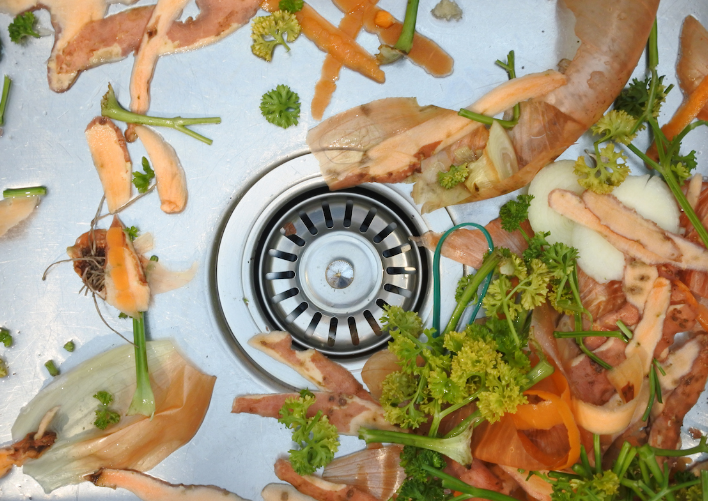
Food waste has become a global environmental challenge, with millions of tons discarded each year. At the same time, agriculture faces growing demand for sustainable soil nutrients. An organic fertilizer manufacturing plant bridges this gap by converting food waste into high-quality organic fertilizer.
By recycling organic residues, these plants reduce landfill pressure, lower greenhouse gas emissions, and create value-added products for agriculture. Understanding how the conversion process works helps investors, policymakers, and agricultural producers evaluate the real potential of food waste–based fertilizer production.
Why Food Waste Is Suitable for Organic Fertilizer
Food waste contains abundant organic matter and essential nutrients such as nitrogen, phosphorus, and potassium. When properly processed, it becomes an excellent raw material for organic fertilizer.
An organic fertilizer manufacturing plant typically accepts:
- Kitchen and canteen waste
- Food processing residues
- Vegetable and fruit waste
- Expired food products
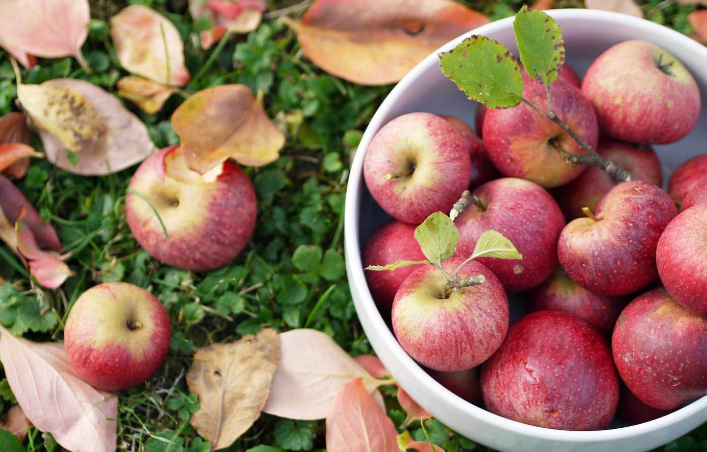
These materials improve soil structure and microbial activity when converted into stable organic fertilizer.
Food Waste Collection and Pre-Processing
Before biological treatment begins, food waste must be properly prepared. In an organic fertilizer manufacturing plant, incoming materials are inspected and sorted to remove plastics, metals, and other non-organic contaminants.
The waste is then crushed or shredded to reduce particle size and adjust moisture levels. This preparation improves processing efficiency and creates suitable conditions for microbial decomposition. Proper pre-processing also helps protect downstream equipment and ensures stable plant operation.
Fermentation and Organic Matter Stabilization
Fermentation is the core process that converts food waste into organic fertilizer. Inside the organic fertilizer manufacturing plant, microorganisms break down organic matter under controlled temperature, oxygen, and humidity conditions.
During fermentation, harmful pathogens and weed seeds are eliminated, and unstable organic materials are transformed into mature, odor-controlled fertilizer components. This biological process determines the safety, effectiveness, and overall quality of the final product.
Moisture Control and Material Conditioning
After fermentation, the material usually contains excess moisture. Drying systems are used to reduce water content and improve storage stability. Modern organic fertilizer manufacturing plant designs emphasize energy efficiency to prevent nutrient loss while lowering operating costs.
Proper moisture control also prepares the material for further processing, such as crushing or granulation, ensuring consistent product performance.
Particle Size Control and Granulation
Depending on market demand, organic fertilizer may be sold in powder or granulated form. In many cases, granulation is preferred for ease of transport and application.
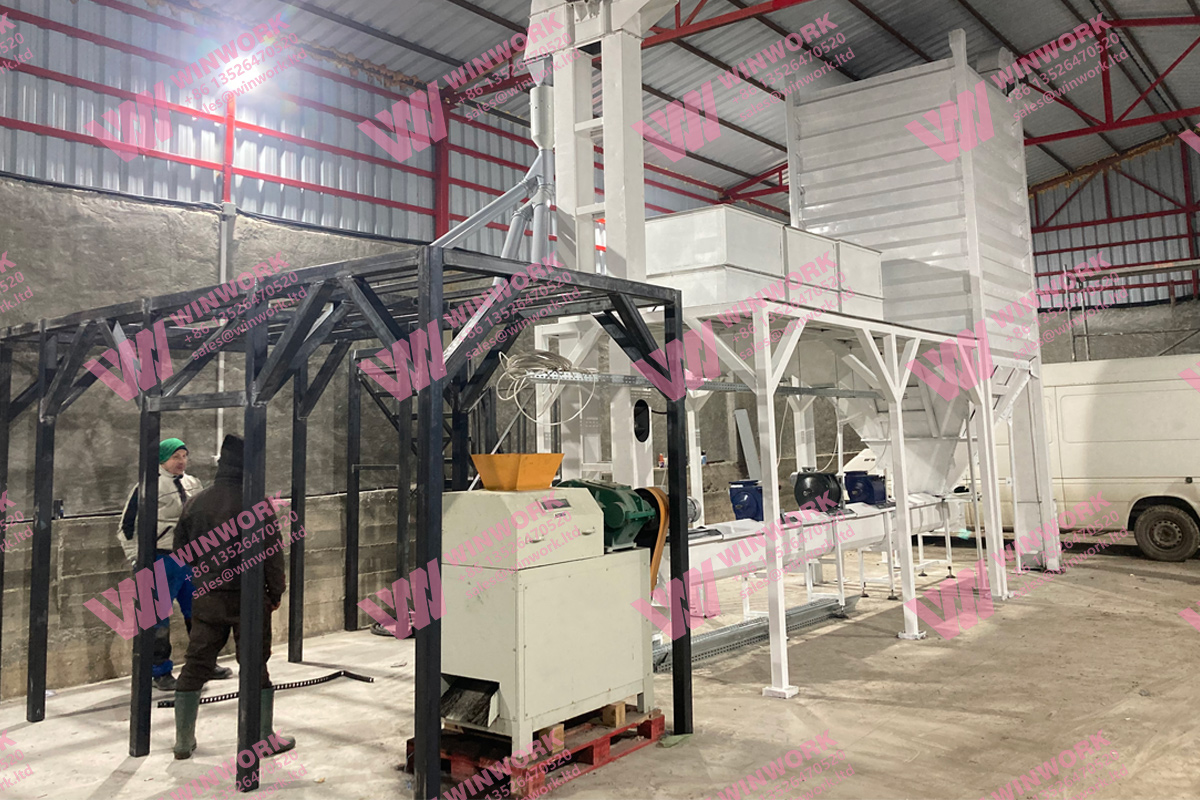
Within an organic fertilizer manufacturing plant, screened material is shaped into uniform granules using specialized equipment. Oversized or undersized particles are separated and recycled back into production, reducing waste and improving overall efficiency.
Cooling, Packaging, and Storage
After shaping, fertilizer granules are cooled to prevent caking and maintain structural strength. Cooling improves product stability during storage and transportation.
Packaging systems in an organic fertilizer manufacturing plant are designed to support different bag sizes and market requirements, from small retail packages to bulk agricultural supply. Efficient packaging enhances productivity and reduces labor intensity.
Environmental and Economic Benefits
Food waste recycling offers significant environmental advantages. An organic fertilizer manufacturing plant reduces landfill usage, lowers greenhouse gas emissions, and supports circular agriculture by returning nutrients to the soil.
From an economic perspective, producers benefit from lower raw material costs and growing demand for organic fertilizer. Municipalities also gain by reducing waste disposal expenses, creating a win-win solution for multiple stakeholders.
Market Outlook and Industry Potential
Demand for organic fertilizer continues to rise as sustainable farming practices expand globally. Governments and agricultural organizations increasingly support food waste recycling initiatives, further strengthening the business case for organic fertilizer production.
As technology improves, the organic fertilizer manufacturing plant model based on food waste is expected to become more efficient, scalable, and widely adopted across different regions.
Frequently Asked Questions(FAQ) bout Organic Fertilizer Manufacturing Plant
1. What types of food waste can be used in an organic fertilizer manufacturing plant?
Common materials include kitchen waste, food processing residues, vegetable waste, and expired food products, provided contaminants are removed.
2. Is fertilizer produced from food waste safe for agriculture?
Yes. Proper fermentation eliminates pathogens and stabilizes organic matter, making the fertilizer safe for agricultural use.
3. Is granulation necessary for organic fertilizer production?
Granulation is optional. Some markets prefer powdered fertilizer, while others require granulated products for easier application and transport.
4. How does food waste–based fertilizer support sustainability?
It reduces landfill waste, lowers emissions, recycles nutrients, and improves soil health, supporting long-term sustainable agriculture.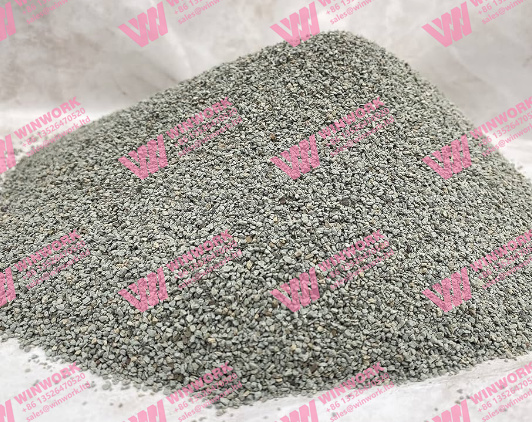
Conclusion
An organic fertilizer manufacturing plant provides a practical and sustainable way to convert food waste into valuable fertilizer. Through controlled processing, biological treatment, and efficient equipment, food waste is transformed into a market-ready agricultural input.
This model supports environmental protection, resource recycling, and agricultural productivity, making it an increasingly important solution for regions facing both food waste challenges and fertilizer demand.
For more details, please feel free to contact us.
Email: sales@lanesvc.com
Contact number: +86 13526470520
Whatsapp: +86 13526470520

Get A Quote