

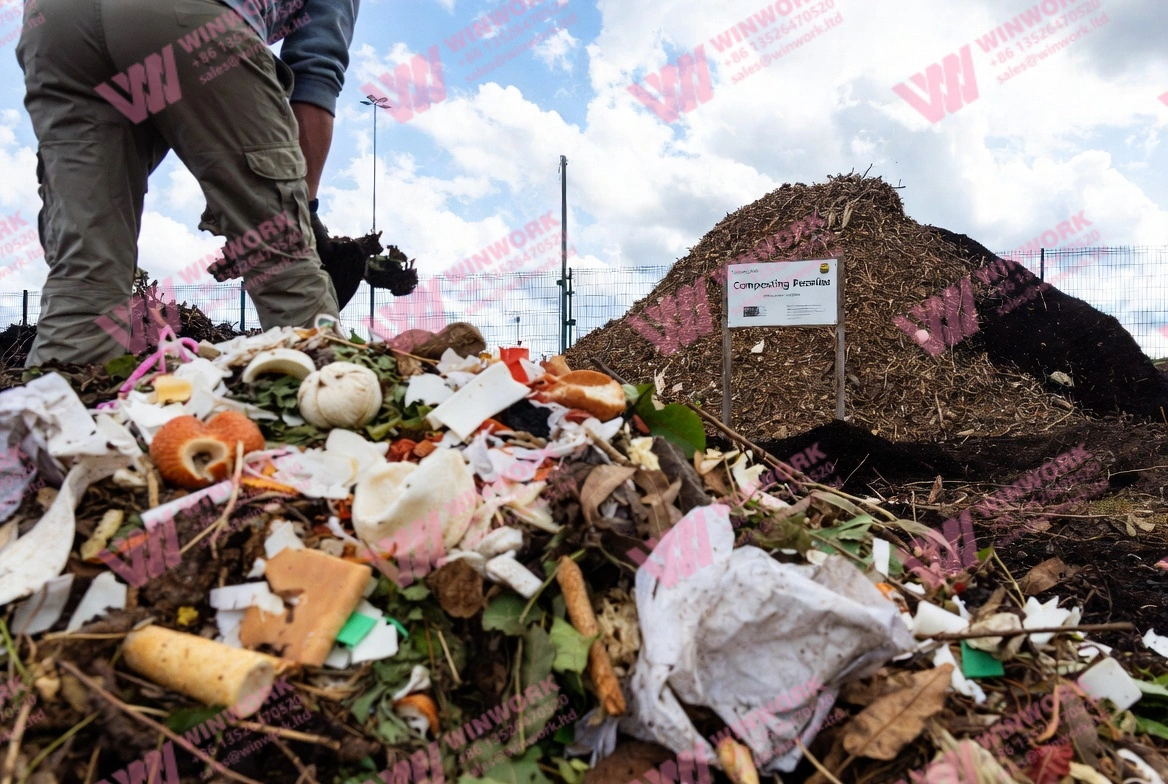
Organic Waste to Fertilizer Process: A Sustainable Way to Recycle Waste and Boost Agriculture
With the growing global focus on environmental protection and sustainable agriculture, the organic waste to fertilizer process has emerged as a key solution to address organic waste pollution and resource waste.Organic waste such as livestock manure,food waste,industrial waste and municipal waste which were once considered environmental burdens,now can be transformed into high-quality organic fertilizer through organic waste to fertilizer process.This article will comprehensively interpret the organic waste to fertilizer process,unlocking the secrets of turning waste into treasure.
What is the Organic Waste to Fertilizer Process?
The organic waste to fertilizer process refers to a series of scientific and systematic processing procedures that convert various organic wastes into stable, harmless and nutrient-rich organic fertilizer through physical, chemical and biological methods. The core goal of this process is to decompose the complex organic matter in waste into simple, absorbable nutrients,and finally form a product that meets agricultural application standards. Unlike traditional random composting, the modern organic waste to fertilizer process is more standardized, efficient and environmentally friendly, which has a win-win result in both product quality and production safety.
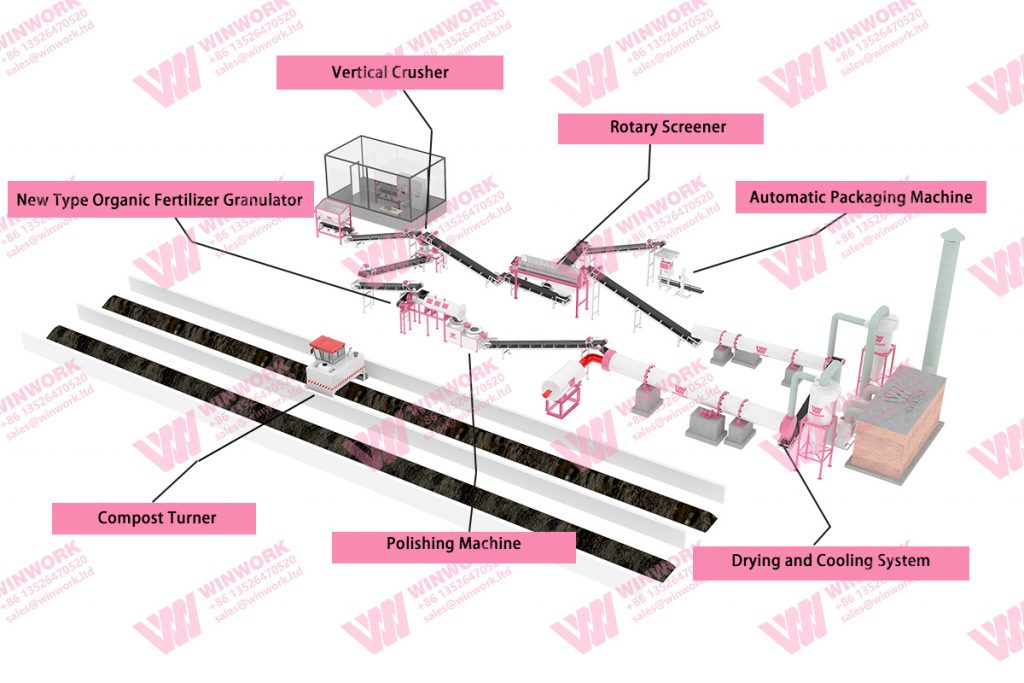
Core steps of organic waste to fertilizer process
Raw material collection and treatment
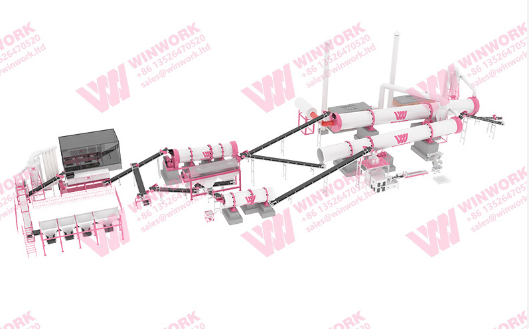
This is the first and foremost steps of the entire process. We need to remove the non-organic impurities and use a crusher to increase the contact area between the waste and microorganisms,which will accelerate the subsequent fermentation process.At this stage,the organic waste to fertilizer process researched and developed by our company can deal with the problems well by using compost turning machine and fermentation tank.
Raw material processing stage
After composting and fermentation of organic waste,we still need to further process due to the inconvenience in saving,transporting and storing.So we need the crusher and mixer to deal with the organic waste and turn it into easy-to-handle powder.We could also add some necessary ingredients such as additives in the mixing step.
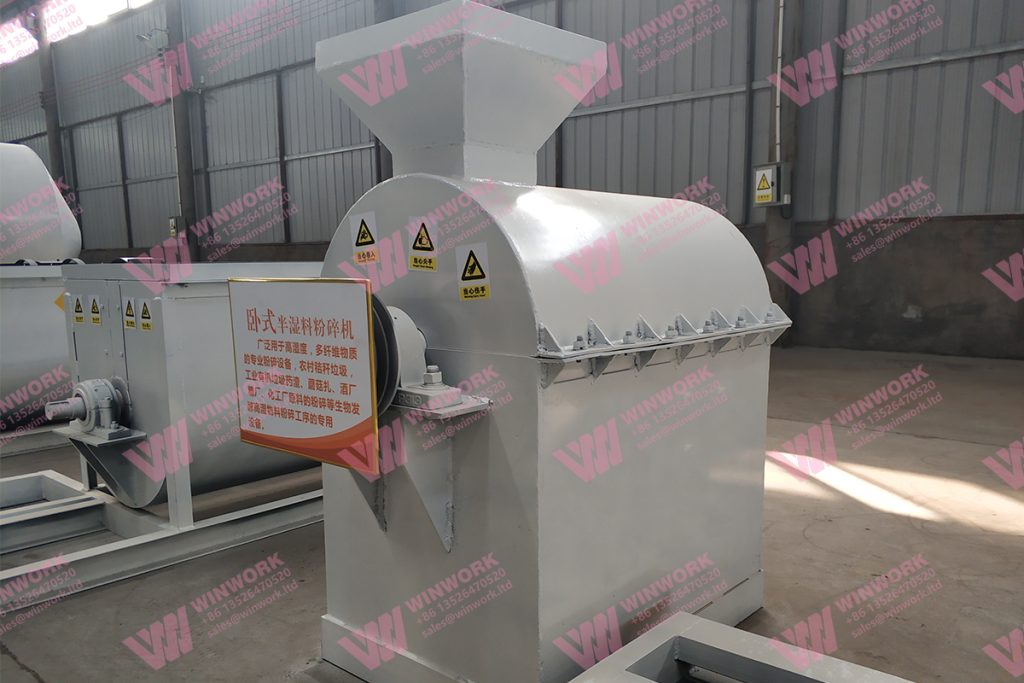
This step will send the processed powder into the granulator through the belt conveyor and the granulator will mix,bond and cut the materials to form compact granules and push them backward to discharge port and send them out.
By entering the rotary drying and cooling machine,the moisture of the granules is reduced and the hardness and stability of the granules are increased.
The sieving machine will sieve out the granules that don’t meet the standard after drying and return them to the crusher for reprocessing in order to increase the utilization rate.

Finished product processing
Finished particles can be added according to client’s demand for packaging machine to further enhance the production effect and ensure the quality of finished product.
Advantages of organic waste to fertilizer process
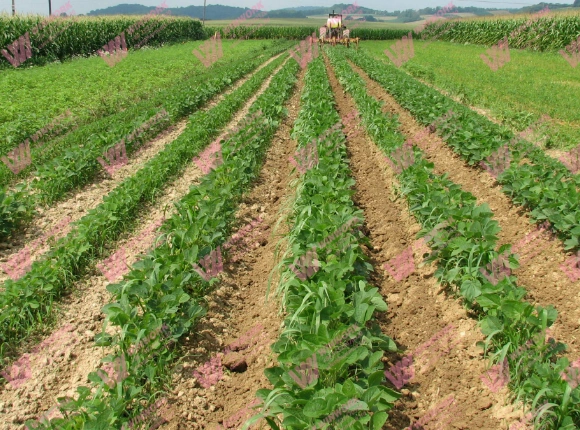
Eco-friendly and solve organic waste pollution:This process avoids environmental pollution produced by organic waste and converts it into high-quality organic fertilizer which will enhance the crop yield and improve the soil health.
Achieve Resource Recycling:The process makes full use of the nutrient resources in waste.The produced fertilizer can not only enhance soil fertilizer but also promote the growth of corps.
Close Structure and compact equipment connection:Our organic fertilizer production process can fully process materials in accordance with the steps to form high-quality organic fertilizer granules and realize the mass industrial production with high automation in streaming.
Experienced in solving various difficulties:We can design and provide customers with exclusive solutions,including dust treatment,harmful gas treatment,special raw material treatment and so on.
Create Economic Benefits:The organic fertilizer produced through this process can be sold to the market to obtain additional economic income. At the same time, it reduces the cost of waste treatment and realizes the transformation of environmental burden into economic asset.
Application Scenarios of the organic waste to fertilizer process
Large-Scale livestock breeding enterprises:The companies such as pig farms,beef cattle farms and dairy farms produce a great amount of livestock manure which will leave a serious environmental burden can use the organic waste to fertilizer process to achieve resource recycling.
Agricultural Cooperatives:These industries can process local organic waste into organic fertilizer for their own use or sale to surrounding farmers, reducing fertilizer costs and improving soil quality.
Professional Organic Fertilizer Manufacturers:They can take various organic wastes as raw materials to produce organic fertilizer on a large scale and supply it to the market then meet the demands of different crops.
Frequently Asked Questions (FAQs) About the Organic Waste to Fertilizer Process
How long does the entire organic waste to fertilizer process take?
The total cycle is usually 20-45 days, including 7-30 days of fermentation and 10-20 days of maturation, depending on the technology and raw material characteristics.
Can all organic wastes be used in the organic waste to fertilizer process?
No, toxic organic wastes (such as waste containing heavy metals, pesticides) cannot be used, only non-toxic, degradable organic wastes are applicable.
Is the organic fertilizer produced by this process up to standard?
Yes, as long as the process is standardized and quality-controlled, the product can meet the national organic fertilizer standard (NY 525-2021).
What is the investment cost of building a small-scale organic waste to fertilizer production line?
The investment cost of a small-scale production line (annual output of 3,000-5,000 tons) is usually $30,000-$80,000, including equipment purchase and installation.
Conclusion
The organic waste to fertilizer process is an important way to realize the recycling of organic resources and promote the coordinated development of the environment and agriculture. It not only solves the problem of organic waste pollution but also provides high-quality and eco-friendly fertilizer for agricultural production.For enterprises engaged in waste treatment and agricultural production, mastering and applying this process is of great significance for improving economic benefits, protecting the environment and achieving sustainable development.
For more details, please feel free to contact us.
Email: sales@lanesvc.com
Contact number: +86 13526470520
Whatsapp: +86 13526470520
Get A Quote