

Introduction
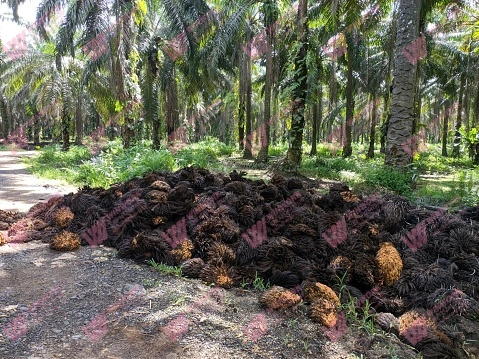
The rapid growth of the palm oil industry has led to increasing volumes of palm oil waste residue, including empty fruit bunches, palm press fiber, and decanter cake. If not treated properly, these residues can create environmental pressure. The palm oil waste residue fertilizer process provides an effective solution by transforming waste into organic fertilizer suitable for sustainable agriculture.
Organic farming depends heavily on soil health, nutrient cycling, and environmentally friendly inputs. Converting palm oil waste residue into fertilizer not only reduces waste disposal problems but also supports organic crop production. This article explains the complete palm oil waste residue fertilizer process and its relevance to organic farming systems.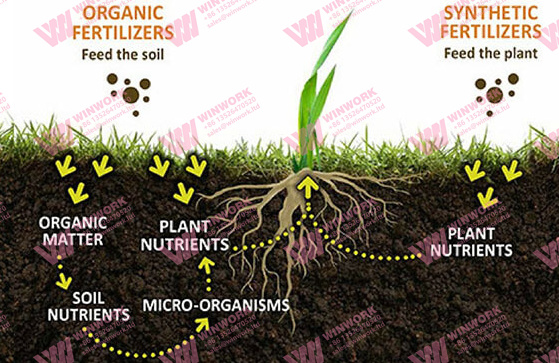
Characteristics of Palm Oil Waste Residue
Palm oil waste residue is rich in organic matter, lignocellulose, and essential nutrients such as potassium, nitrogen, and trace elements. However, raw residues often have high moisture content and coarse fiber structure, making direct application to farmland inefficient.
Before entering the palm oil waste residue fertilizer process, these materials require proper pretreatment. Understanding the physical and chemical characteristics of palm oil waste residue helps determine suitable processing methods and equipment, ensuring stable fertilizer quality for organic use.
Overview of the Palm Oil Waste Residue Fertilizer Process
The palm oil waste residue fertilizer process generally consists of several core stages: pretreatment, composting or fermentation, crushing, granulation, drying, cooling, and packaging. Each step plays a crucial role in nutrient stabilization and product consistency.
For organic farming applications, biological fermentation is particularly important. Microbial activity breaks down complex organic compounds, reduces pathogens, and improves nutrient availability. This makes the final fertilizer safer and more effective for soil improvement.
Raw Material Pretreatment
Pretreatment is the foundation of an efficient palm oil waste residue fertilizer process. Palm oil residues are usually shredded or crushed to reduce particle size and improve aeration during fermentation. Moisture content is adjusted to an optimal range, typically between 50% and 60%.
In some projects, auxiliary materials such as animal manure or crop straw are added to balance the carbon-to-nitrogen ratio. This adjustment accelerates microbial activity and shortens fermentation time, which is especially beneficial for large-scale organic fertilizer production.
Composting and Fermentation Stage
Composting is the core biological step in the palm oil waste residue fertilizer process. Under controlled temperature and oxygen conditions, microorganisms decompose organic matter and convert nutrients into plant-available forms.
Aerobic composting is widely used for organic farming fertilizer because it minimizes odor and ensures pathogen reduction. The fermentation cycle may last from several weeks to a few months, depending on climate, material composition, and management practices.
Proper fermentation not only improves fertilizer efficiency but also ensures compliance with organic agriculture standards, making the final product suitable for certified organic farms.
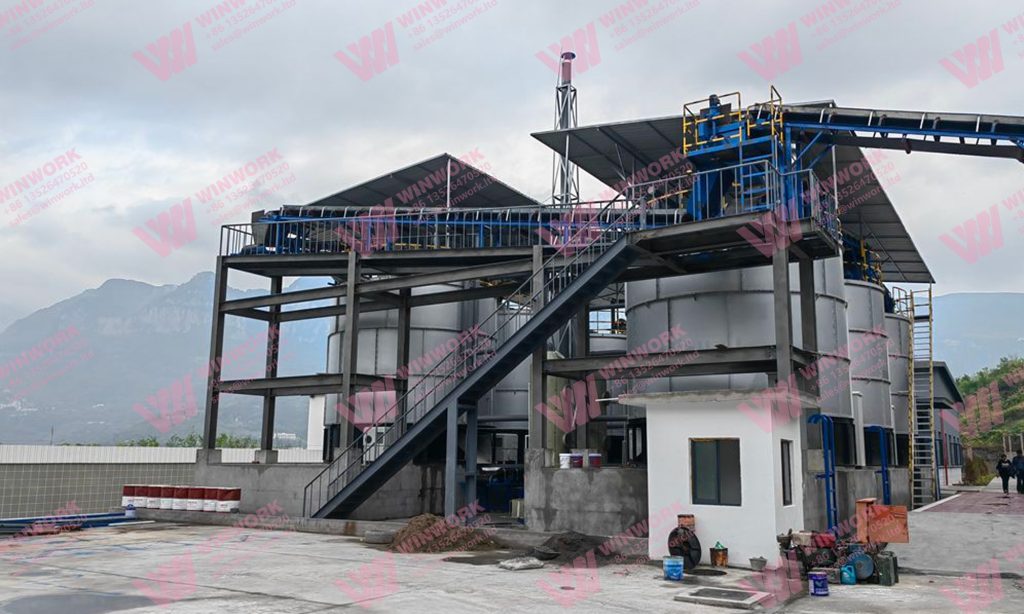
Vertical fermenter site installation
Crushing and Granulation
After fermentation, the composted material is crushed to achieve uniform particle size. Granulation then transforms powdered material into granules, improving handling, storage, and field application.
In the palm oil waste residue fertilizer process, granulation enhances product appearance and reduces nutrient loss. Granular organic fertilizer is easier to apply with mechanical spreaders, making it more attractive for commercial organic farming operations.
Different granulation technologies can be selected based on production scale and investment budget, but the goal remains consistent: stable granules with good hardness and slow nutrient release.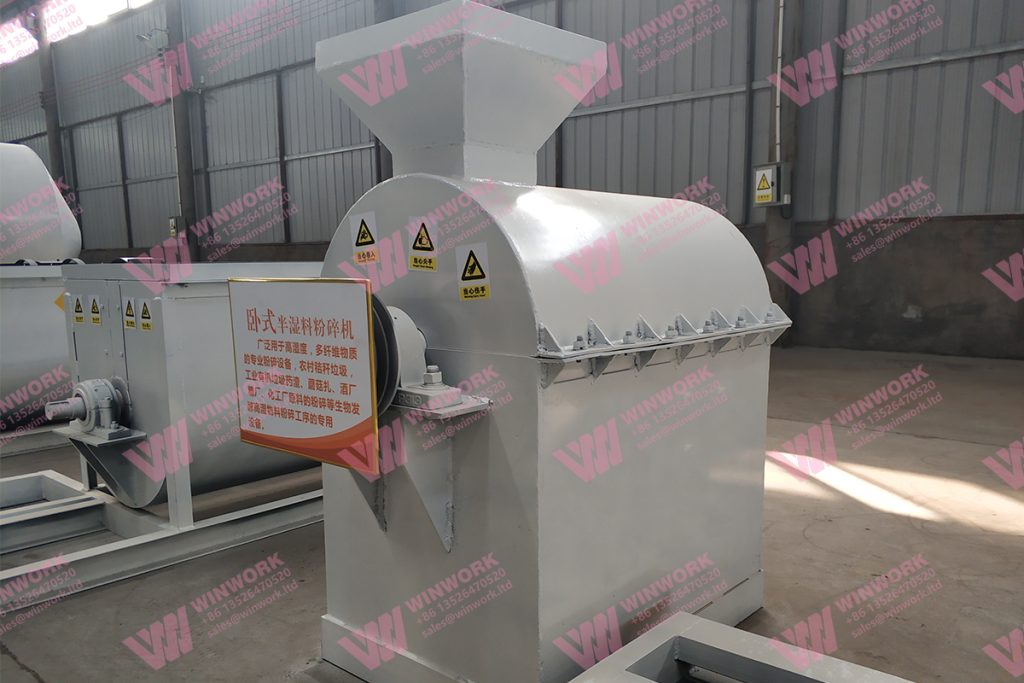
Drying, Cooling, and Packaging
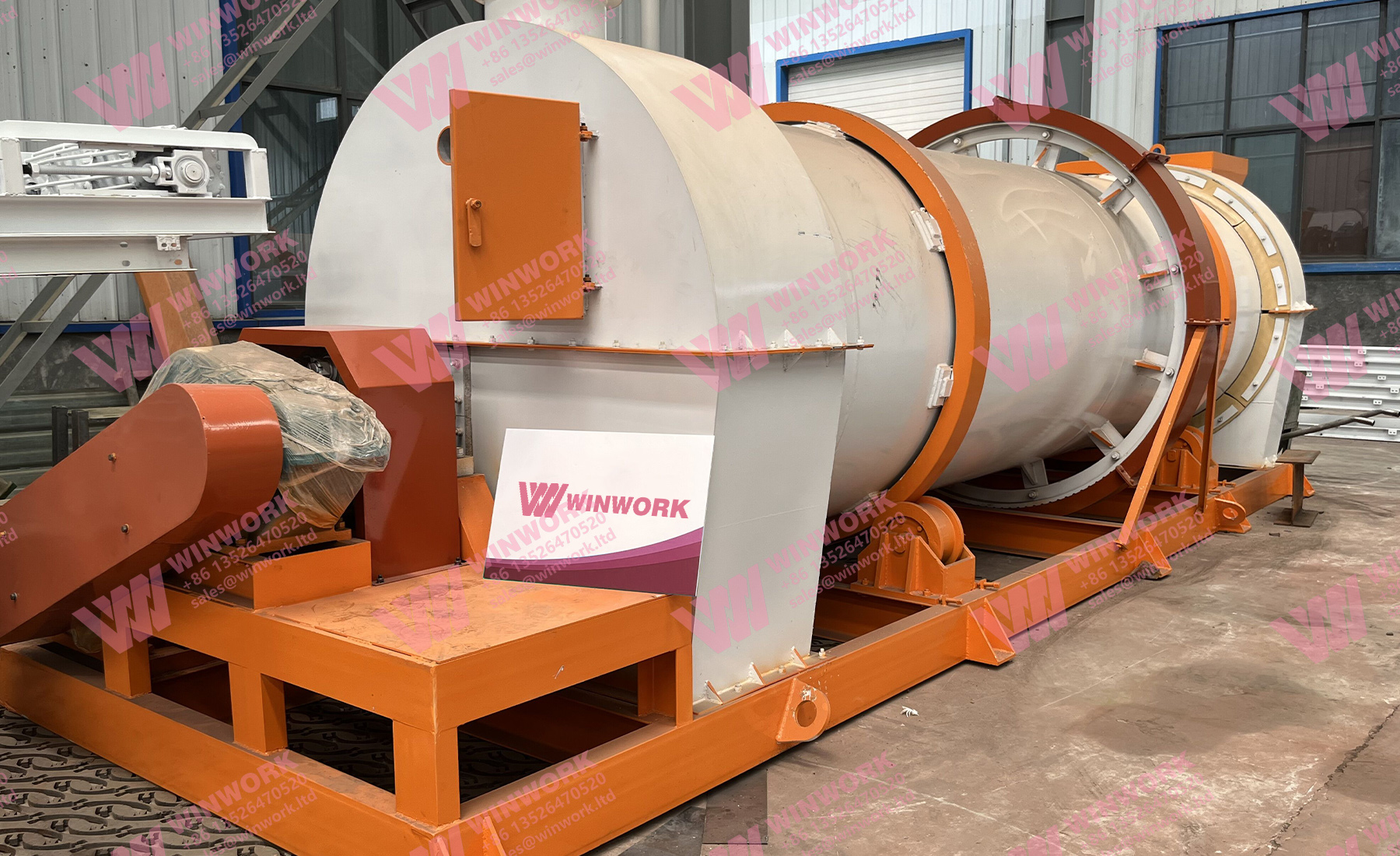
Drying reduces moisture content to improve shelf life and prevent microbial reactivation. Cooling stabilizes granules before packaging, ensuring product quality during storage and transportation.
These finishing steps complete the palm oil waste residue fertilizer process, delivering a market-ready organic fertilizer. Proper packaging protects the product from moisture and contamination, which is essential for maintaining organic certification and customer trust.
Benefits for Organic Farming
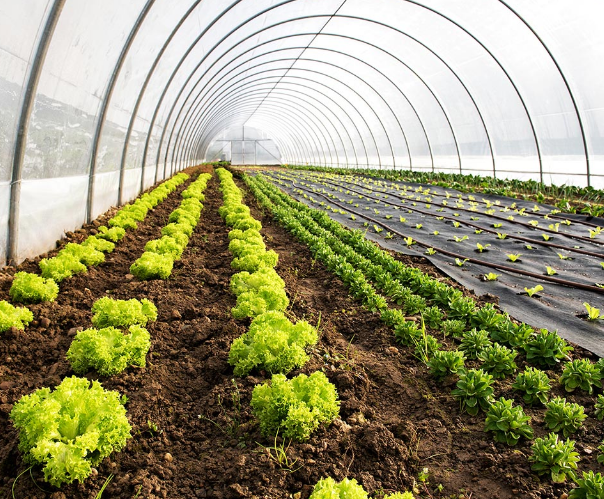
Organic farming emphasizes soil fertility, biodiversity, and long-term sustainability. Fertilizers produced through the palm oil waste residue fertilizer process provide multiple benefits, including improved soil structure, enhanced microbial activity, and gradual nutrient release.
Unlike chemical fertilizers, organic fertilizer derived from palm oil waste residue supports soil carbon sequestration and reduces environmental pollution. It aligns well with organic farming principles and contributes to circular agriculture systems.
Environmental and Economic Value
From an environmental perspective, the palm oil waste residue fertilizer process reduces landfill use, greenhouse gas emissions, and water pollution risks. Economically, it creates added value from waste, supporting local fertilizer production and rural development.
For regions with strong palm oil industries, integrating fertilizer production into existing supply chains can significantly improve resource efficiency and sustainability.
Conclusion
The palm oil waste residue fertilizer process is an effective way to turn palm oil waste into useful organic fertilizer. Instead of being discarded, these residues can be reused to improve soil quality and support healthy crop growth.
When the process is properly planned and managed, it helps farmers reduce fertilizer costs, allows producers to make better use of waste materials, and supports more sustainable agriculture. Overall, it is a practical solution that benefits both the environment and everyday farming needs.
For more details, please feel free to contact us.
Email: sales@lanesvc.com
Contact number: +8613526470520
Whatsapp: +8613526470520

Get A Quote