

Introduction
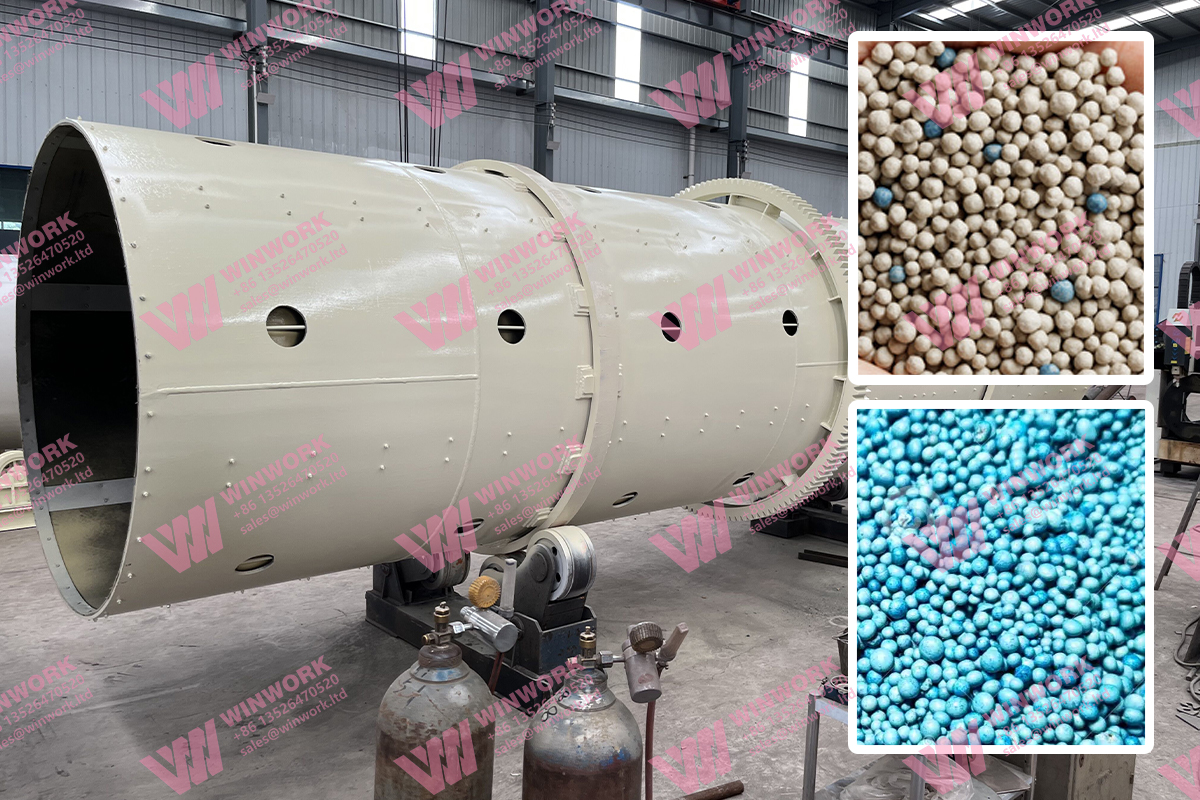
Fertilizer production often starts with powdered or irregular raw materials that need to be processed into uniform granules. Granulation can improve the handling, storage, transportation, and application of fertilizer products. Among the different types of granulation equipment available, the rotary drum pelletizer is widely used for continuous fertilizer production because of its rotating structure and ability to support stable granule formation.
A rotary drum pelletizing system can be used for different fertilizer formulations, including NPK fertilizer, compound fertilizer, and organic fertilizer. During operation, fertilizer materials are continuously lifted and rolled inside the rotating drum while moisture or a suitable liquid is added to help particles combine and grow.
This article explains what a rotary drum pelletizer is, how it works, which materials it can process, its main advantages, how it compares with other granulation machines, and what factors should be considered when selecting equipment for a fertilizer production project.
Rotary Drum Pelletizer
What Is a Rotary Drum Pelletizer?
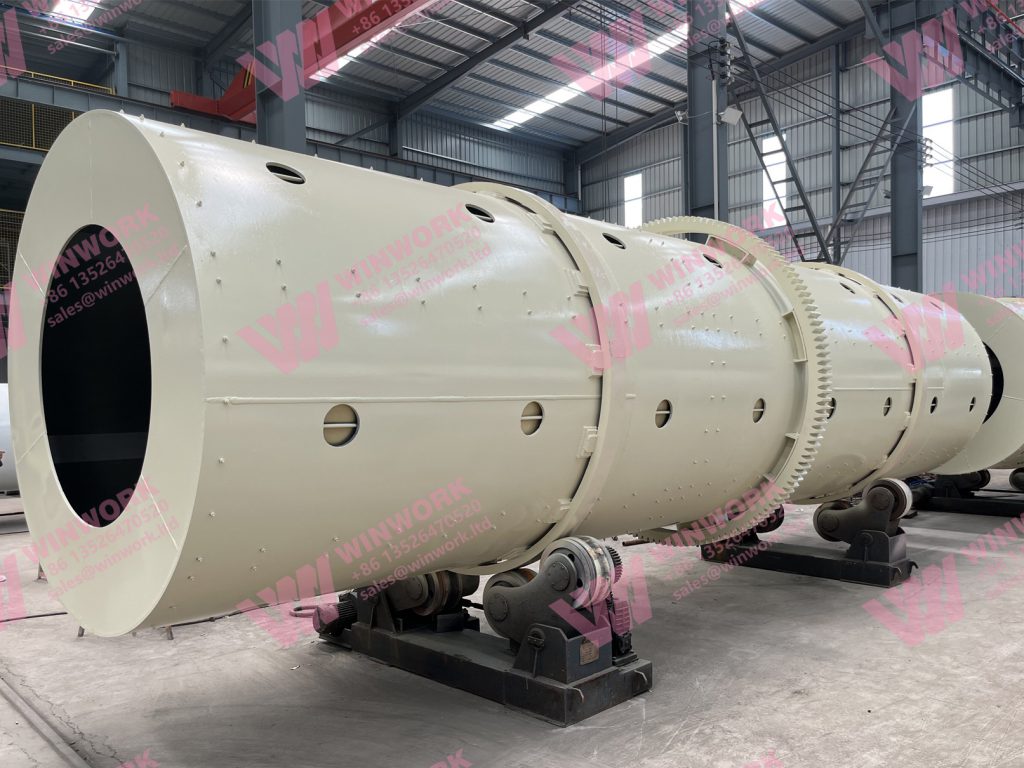
A rotary drum pelletizer is a type of fertilizer granulation machine that uses a rotating cylindrical drum to form fertilizer particles into relatively uniform granules. It is commonly used in continuous fertilizer production where raw materials need to be transformed from powder or fine particles into granulated products.
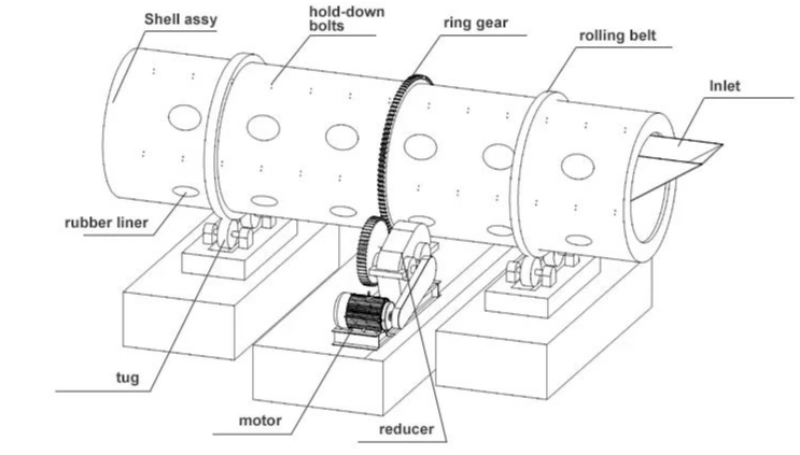
The basic structure of the equipment usually includes a rotating drum, feeding system, spraying system, transmission system, supporting rollers, and discharge system. These components work together to maintain stable rotation and provide the conditions needed for particle formation.
Rotary Drum Pelletizer
Inside the drum, fertilizer materials move continuously as the cylinder rotates. The movement allows the particles to mix, roll, and gradually combine. When an appropriate amount of moisture or binder is added, smaller particles can attach to each other and grow into larger granules.
A rotary drum pelletizer can also be integrated with other fertilizer processing equipment. In a complete production process, crushing, mixing, screening, drying, cooling, coating, and packing equipment may be used together according to the raw materials and production requirements.
For this reason, the equipment is not only a pelletizing machine but also an important part of a complete fertilizer processing system.
How Does a Rotary Drum Pelletizer Work?
The working principle of a rotary drum pelletizer is based on the continuous rolling and agglomeration of fertilizer particles inside a rotating drum. The exact operating conditions depend on the raw materials, moisture content, formulation, and required granule size, but the general process follows several stages.
Feeding and Material Mixing
Fertilizer raw materials first enter the rotating drum through the feeding system. Before entering the pelletizer, the materials are normally crushed or mixed according to the production process.
As the drum rotates, the materials are continuously lifted and dropped. This repeated movement helps distribute the particles and promotes more
consistent contact between different raw materials. Proper mixing is important when producing compound or NPK fertilizer because different nutrient materials need to be distributed throughout the granules.
Liquid Addition and Particle Formation
During the pelletizing process, water or another suitable liquid may be introduced through a spraying system. The liquid increases the adhesion between fine particles and helps small particles form initial nuclei.
As the particles move through the drum, powder adheres to these nuclei. The granules gradually become larger as additional material attaches to their surfaces. The amount and distribution of liquid need to be controlled because moisture has a direct effect on the granulation process.
Rolling and Pellet Growth
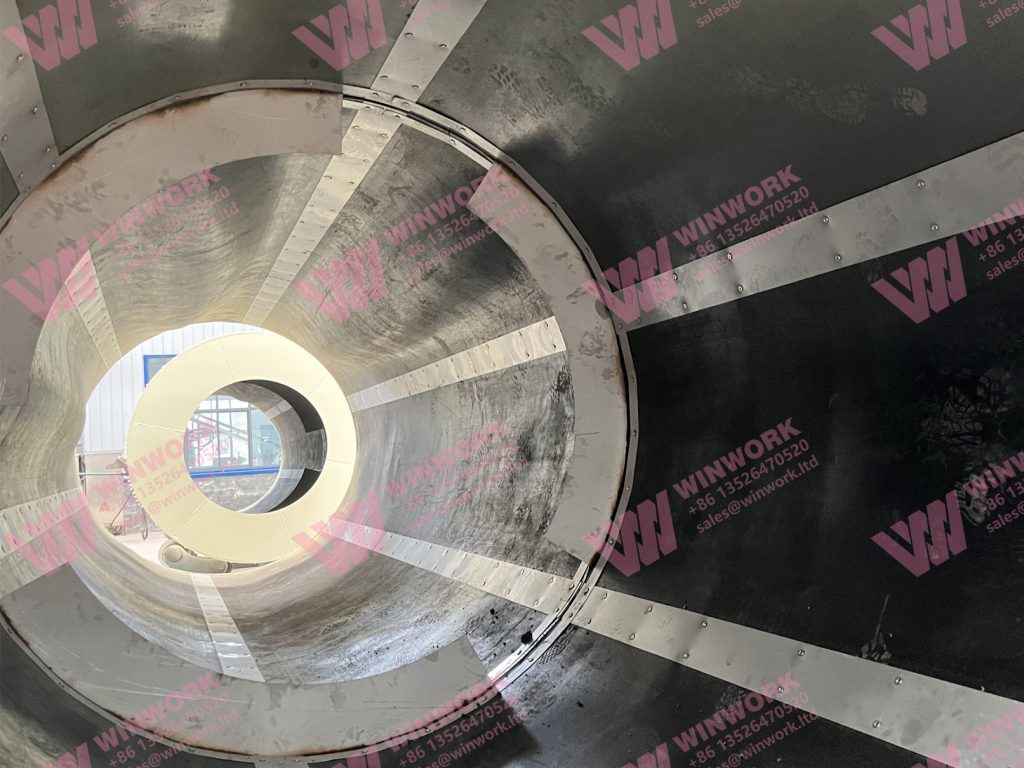
Continuous rotation causes the fertilizer particles to roll against each other and against the inner surface of the drum. Rolling, friction, gravity, and adhesion work together to promote particle growth.
Small granules can gradually become larger and more rounded as they move through the drum. Operating conditions such as drum speed, material feed rate, moisture level, and residence time can affect the final granule characteristics.
Discharge and Further Processing
After reaching the required degree of granulation, the fertilizer particles move toward the discharge end of the drum. The granulated material can then be sent to screening equipment to separate particles according to size.
Oversized or undersized particles may be returned to the production process, while qualified granules can continue to drying, cooling, coating, and packing. This process allows the rotary drum pelletizer to operate as part of a continuous fertilizer production system.
What Materials Can a Rotary Drum Pelletizer Process?
A rotary drum pelletizer can be used with various fertilizer materials, but the actual suitability of a material depends on its physical properties and the required production conditions. Moisture content, particle size, formulation, density, and adhesion characteristics can all influence the granulation result.
NPK and Compound Fertilizer
NPK fertilizer and compound fertilizer are common applications for rotary drum granulation. Different nitrogen, phosphorus, and potassium-containing materials can be processed into granules according to a specific nutrient formulation.
The granulation process can help convert mixed fertilizer powders into more convenient granular products. A rotary drum pelletizer for NPK fertilizer can therefore be used in projects
where continuous production and consistent granule formation are required.
Organic fertilizer is another important application. Materials such as compost, livestock manure, chicken manure, and cow manure may be processed into granules after suitable pretreatment.
Organic materials can have different moisture levels and physical characteristics, so the raw materials may need to be crushed, mixed, or adjusted before entering the pelletizing stage. A rotary drum pelletizer for organic fertilizer can then be used to form the prepared material into granules.
Other Fertilizer Materials
Depending on the production formula and material properties, rotary drum granulation can also be considered for phosphate fertilizer, potash-based fertilizer, mineral fertilizer, and other customized fertilizer formulations.
Before selecting equipment, it is important to evaluate the actual raw materials rather than choosing a machine based only on the fertilizer name. Material testing can help determine whether the selected granulation process can meet the required product specifications.
Why Use a Rotary Drum Pelletizer for Fertilizer Production?
Different fertilizer production projects have different requirements, but a rotary drum pelletizer offers several characteristics that make it suitable for continuous granulation applications.
High Production Capacity
One of the main characteristics of a rotary drum pelletizer is its suitability for continuous operation. Compared with equipment designed mainly for small-batch processing, rotary drum systems can be configured for larger production requirements.
Production capacity should be selected according to the required hourly output, daily production target, raw material characteristics, and possible future expansion. Choosing equipment according to actual production requirements can help avoid either insufficient capacity or unnecessary investment.
Uniform Granule Formation
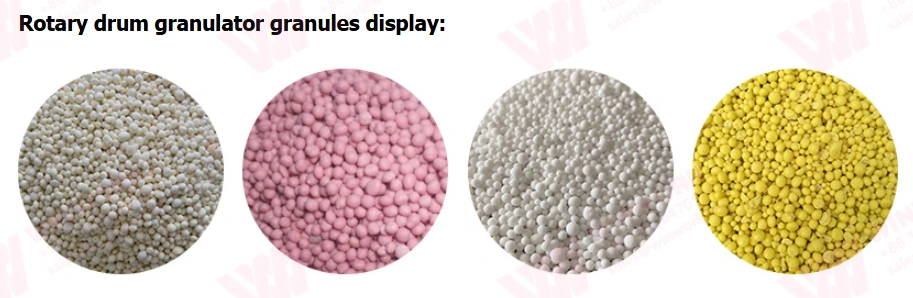
The repeated rolling movement inside the drum provides conditions for particles to gradually grow. When the raw materials, moisture, and operating parameters are properly controlled, the process can produce relatively uniform fertilizer granules.
Uniform granules can make subsequent screening, drying, packaging, storage, transportation, and fertilizer application more convenient.
Suitable for Different Fertilizer Formulations
A rotary drum pelletizer can be used with different fertilizer formulations when the raw materials and process conditions are suitable. This makes it possible to adapt the production process according to nutrient requirements, raw material characteristics, and final product specifications.
However, different materials may require different process parameters. Therefore, the same equipment configuration should not automatically be applied to every fertilizer formula.
Integration With Other Production Equipment
The pelletizing stage is only one part of fertilizer production. Depending on the project, a complete system may also include crushers, mixers, screening machines, dryers, coolers, coating machines, and packing machines.
For larger projects, the pelletizing equipment can be integrated into a complete NPK fertilizer production line for continuous processing from raw materials to finished fertilizer granules.
Rotary Drum Pelletizer vs. Other Fertilizer Granulation Machines
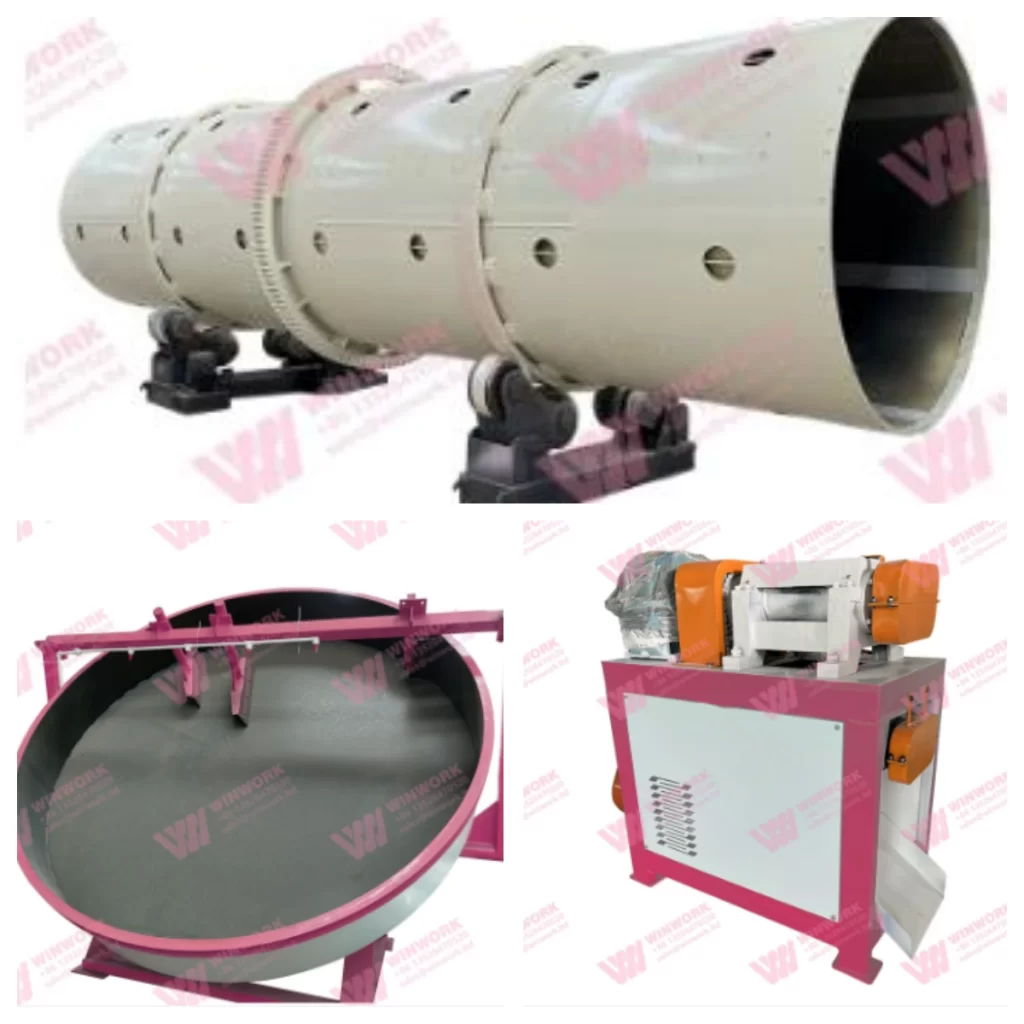 A rotary drum pelletizer is not the only type of equipment available for fertilizer granulation. Different granulation machines use different forming principles and are suitable for different raw materials, production capacities, and product requirements.
A rotary drum pelletizer uses continuous rolling and agglomeration inside a rotating drum. It is commonly considered for medium- and large-scale fertilizer production where continuous processing is required.
A disc granulator uses a rotating inclined disc to form particles. It can be suitable for certain small- and medium-scale fertilizer projects and is often selected according to production capacity and raw material characteristics.
A roller press granulator forms fertilizer particles through mechanical compression. It can be useful for materials that are suitable for dry or low-moisture granulation and does not rely on the same rolling and liquid addition process used by a drum system.
Therefore, there is no single granulation machine that is suitable for every project. Equipment selection should consider raw materials, moisture content, production capacity, granule size, fertilizer formulation, investment requirements, and the configuration of the complete production process.
How to Choose the Right Rotary Drum Pelletizer?
Selecting a rotary drum pelletizer requires more than simply comparing equipment models. The machine should be matched with the actual requirements of the fertilizer project.
Production Capacity
Capacity is one of the first factors to consider. Buyers should determine the required hourly output and daily production target before selecting equipment.
For example, a project may require several tons per hour, while another large-scale fertilizer plant may need a much higher capacity. Future production expansion should also be considered when planning the equipment configuration.
Raw Material Characteristics
Raw material properties directly affect the granulation process. Important factors include moisture content, particle size, density, stickiness, and the composition of the fertilizer formula.
Materials with significantly different physical properties may require different pretreatment or operating conditions. Providing detailed raw material information to the equipment supplier can therefore make equipment selection more accurate.
Final Granule Size
The required final granule size is another important consideration. Different fertilizer products may require different particle size ranges depending on the intended application and market requirements.
The granulation process, screening system, and operating parameters should be considered together when targeting a specific granule size.
Production Line Configuration
A fertilizer plant normally involves more than one processing stage. Buyers should consider how the pelletizer will work with crushers, mixers, dryers, coolers, screening machines, coating equipment, and packing machines.
If the project requires continuous production, the equipment configuration should be designed as a coordinated system rather than treating each machine as an independent unit.
For example, the selected fertilizer granulation machine should match the capacity of the upstream mixing equipment and downstream screening and drying systems.
Equipment Supplier and Customization
The equipment supplier is also an important consideration. A suitable supplier should be able to discuss raw materials, capacity, granule requirements, equipment configuration, and the overall production process.
Depending on the project, customization may involve equipment capacity, auxiliary machines, process layout, material handling, and other production-line requirements.
Maintenance Tips for a Rotary Drum Pelletizer
Regular maintenance can help keep fertilizer granulation equipment operating more consistently and can reduce the risk of unexpected downtime.
Check the Drum and Support Rollers
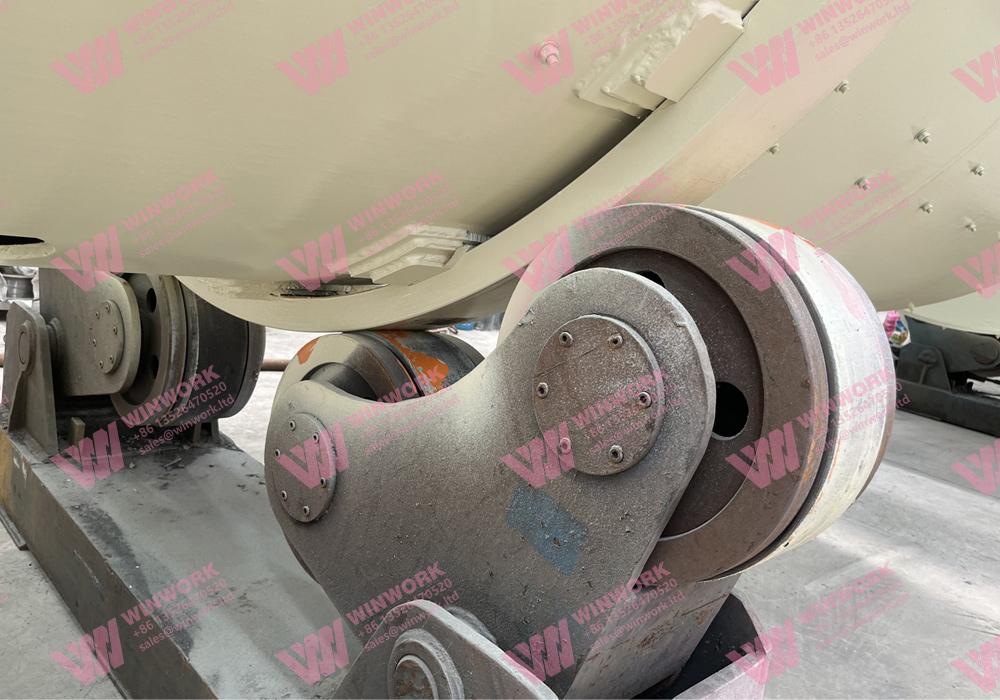
Rotary drum granulator rollers
The rotating drum and supporting components should be inspected regularly. Support rollers, bearings, and other mechanical parts should be checked for abnormal wear, looseness, or operating problems.
Keeping these components in good condition helps maintain stable drum rotation.
Keep the Spraying System Clean
The spraying system plays an important role when liquid is used during granulation. Spray nozzles and related pipes should be checked regularly to prevent blockage.
Uneven liquid distribution can affect particle formation, so the spraying system should be kept clean and properly maintained.
Monitor the Transmission System
The motor, gearbox, chain, gears, and other transmission components should be inspected according to the equipment manufacturer’s maintenance recommendations.
Lubrication and routine inspection can help identify potential mechanical problems before they affect production.
Control Material Moisture
Moisture is an important factor in fertilizer granulation. Material that is too dry may not form granules effectively, while excessive moisture can create larger particles or increase the load on subsequent drying and screening processes.
Therefore, stable moisture control is important for maintaining consistent granulation performance.
Conclusion
A rotary drum pelletizer is an important type of fertilizer granulation equipment for projects that require continuous particle formation. By using controlled rolling, moisture addition, and particle agglomeration, it can transform suitable fertilizer powders and prepared organic materials into more convenient granular products.
The equipment can be considered for NPK fertilizer, compound fertilizer, organic fertilizer, and other suitable formulations. However, the right machine should always be selected according to raw material characteristics, production capacity, required granule size, moisture conditions, and the configuration of the overall production process.
For a fertilizer project, understanding these factors before purchasing equipment can help create a more suitable and efficient production system. Whether the requirement is for a standalone machine or a complete fertilizer processing project, choosing the right rotary drum pelletizer is an important step toward achieving stable fertilizer granulation.


Get A Quote