

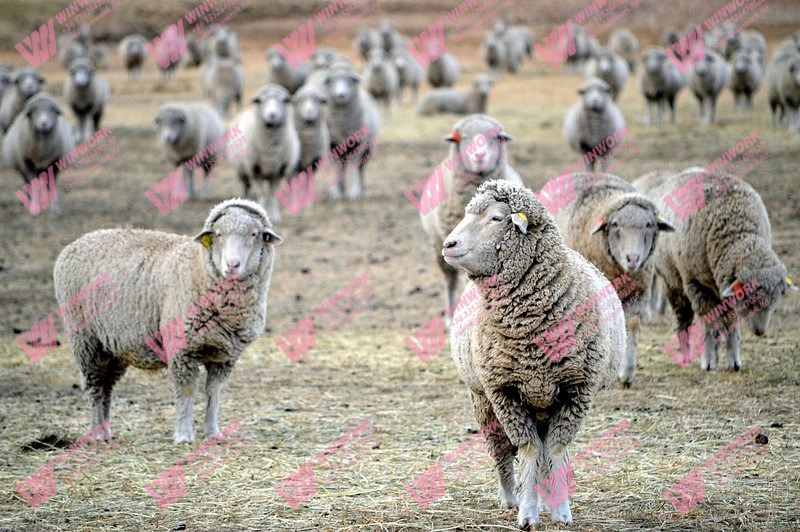
Why Sheep Manure Is Valuable for Organic Fertilizer
Sheep manure is widely recognized as a high-quality organic fertilizer raw material. Compared with other livestock waste, sheep manure contains relatively balanced nutrients, moderate moisture content, and a favorable carbon-to-nitrogen ratio. These characteristics make it particularly suitable for composting and granulation.
With the growth of sustainable agriculture, sheep manure compost fertilizer production has become an important industrial process for converting livestock waste into marketable organic fertilizer products. Instead of causing environmental pollution, sheep manure can be efficiently processed into powder or granular fertilizer suitable for commercial sale.
To understand how sheep manure compost fertilizer production works, it is essential to analyze each stage from raw material preparation to finished granules.
Raw Material Preparation in Sheep Manure Compost Fertilizer Production
The first stage of production begins with collecting and preparing raw sheep manure. Fresh sheep manure typically contains:
-
60–70% moisture
-
Undecomposed organic matter
-
Pathogens and weed seeds
-
Ammonia compounds
Direct application of fresh manure is not recommended. Therefore, pretreatment is necessary before entering the composting system.
1. Moisture Adjustment
Optimal moisture content for composting ranges from 55% to 60%. If sheep manure is too wet, dry materials such as:
-
Straw
-
Rice husk
-
Sawdust
-
Crop residues
can be added to adjust moisture and improve aeration.
2. Carbon-Nitrogen Ratio Adjustment
The ideal C/N ratio for composting is 25–30:1. Sheep manure alone may have a lower C/N ratio, so carbon-rich materials are mixed to balance microbial activity. Proper adjustment significantly improves sheep manure compost fertilizer production efficiency.
Composting Stage: Core of Sheep Manure Compost Fertilizer Production
Composting is the most critical step in the compost fertilizer production. During this stage, microorganisms decompose organic matter under aerobic conditions, generating heat and eliminating pathogens.
1. Composting Methods
Common composting methods include:
-
Windrow composting
-
Groove composting
-
Fermentation tank composting
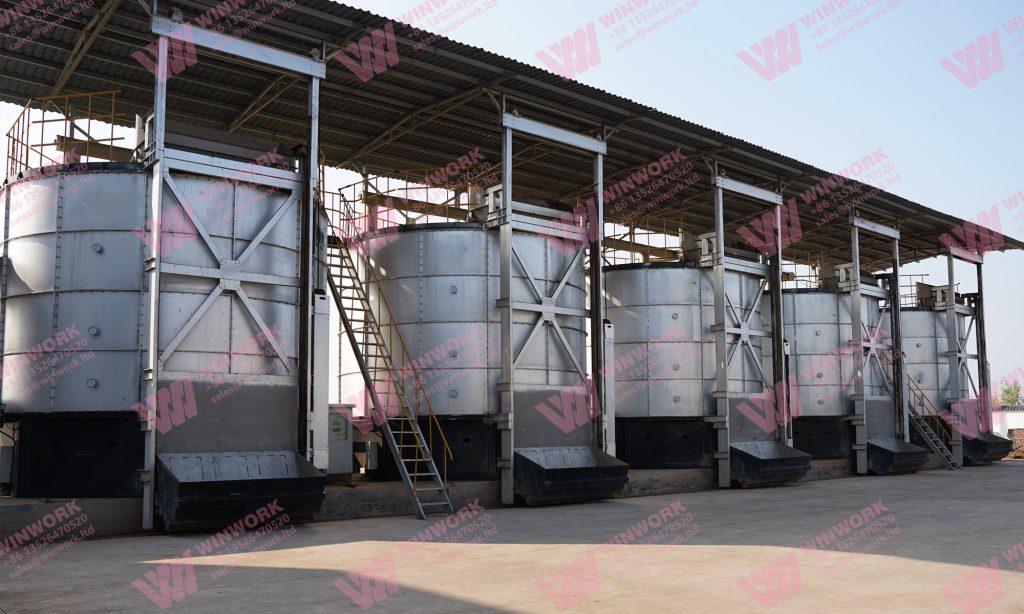
In commercial sheep manure compost fertilizer production, windrow composting with a compost turner machine is widely used due to cost efficiency and scalability.
2. Temperature Control
During fermentation:
-
Temperature rises to 55–65°C
-
Pathogens and weed seeds are destroyed
-
Organic matter decomposes rapidly
Maintaining high temperature for 5–7 days ensures sanitation standards.
3. Aeration and Turning
Regular turning provides oxygen for aerobic microorganisms. Mechanical compost turners increase efficiency and shorten fermentation time to 15–20 days.
At the end of composting, the material becomes:
-
Dark brown
-
Odorless
-
Loose in texture
-
Stable in nutrient composition
This semi-finished compost is the foundation of high-quality sheep manure compost fertilizer production.
Crushing and Screening in Sheep Manure Compost Fertilizer Production
After composting, materials may form lumps. Uniform particle size is essential for granulation.
1. Crushing Process
A semi-wet material crusher or vertical crusher is commonly used. Crushing ensures:
-
Consistent particle size
-
Improved mixing uniformity
-
Better granulation performance
2. Screening Process
A rotary screening machine removes oversized particles and impurities. Fine powder proceeds to the mixing stage, ensuring product consistency in sheep manure compost fertilizer production. The screening process plays an important role in maintaining uniform particle size distribution, which directly affects mixing efficiency and granulation performance. By separating qualified powder from large lumps and foreign materials, the system prevents equipment blockage and reduces wear on downstream machinery. In modern sheep manure compost fertilizer production, adjustable mesh sizes are often used to meet different product specifications. Proper screening not only improves final granule quality but also increases overall production stability and material utilization efficiency.
Mixing and Nutrient Adjustment
Although sheep manure itself contains nitrogen, phosphorus, and potassium, commercial fertilizer products often require nutrient standardization.
In sheep manure compost fertilizer production, mixing equipment blends:
-
Composted sheep manure powder
-
Additional organic materials
-
Microbial agents
-
Trace elements (if required)
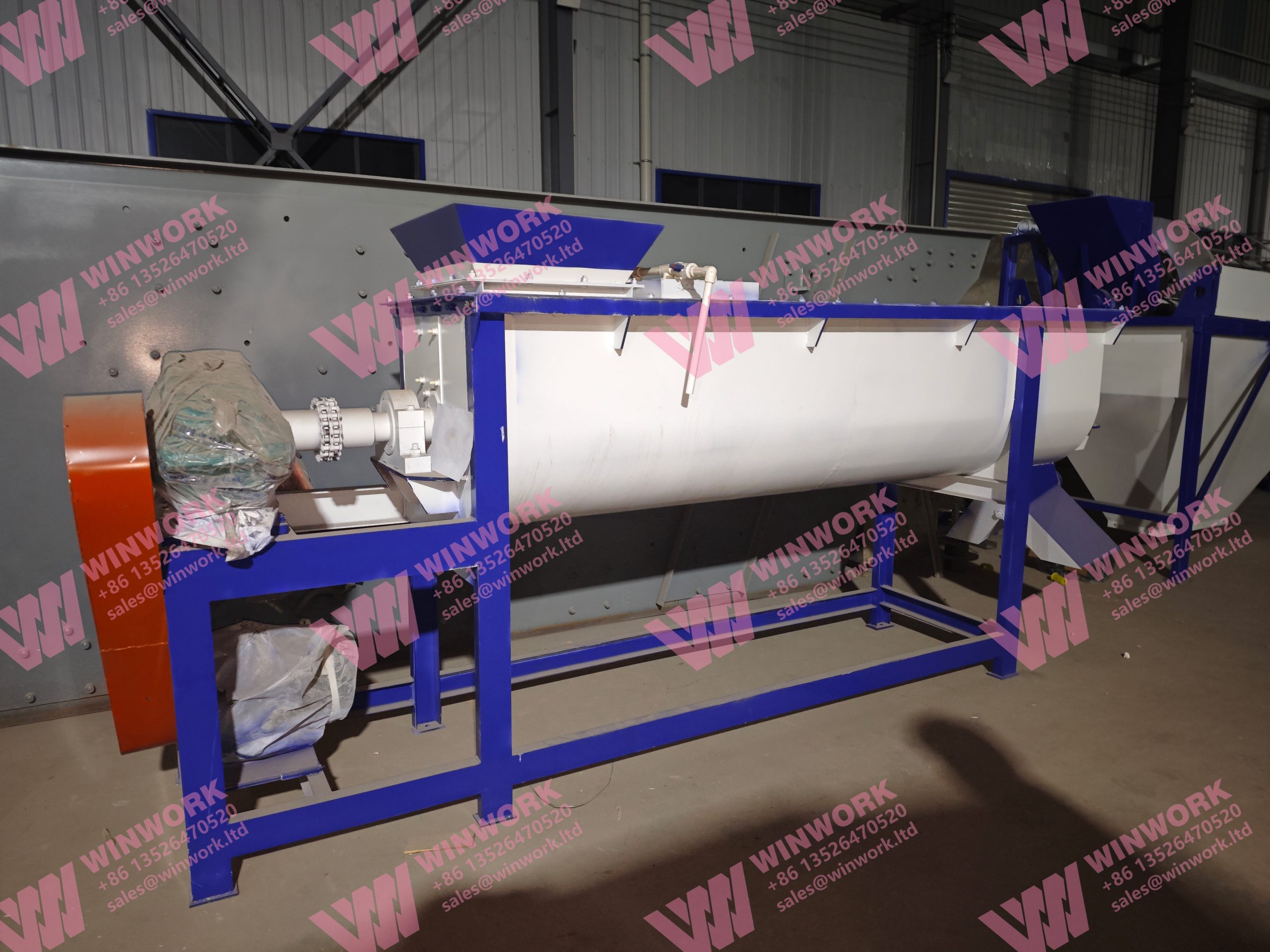
A horizontal mixer or double-shaft mixer ensures homogeneity. Uniform mixing improves granule strength and nutrient distribution.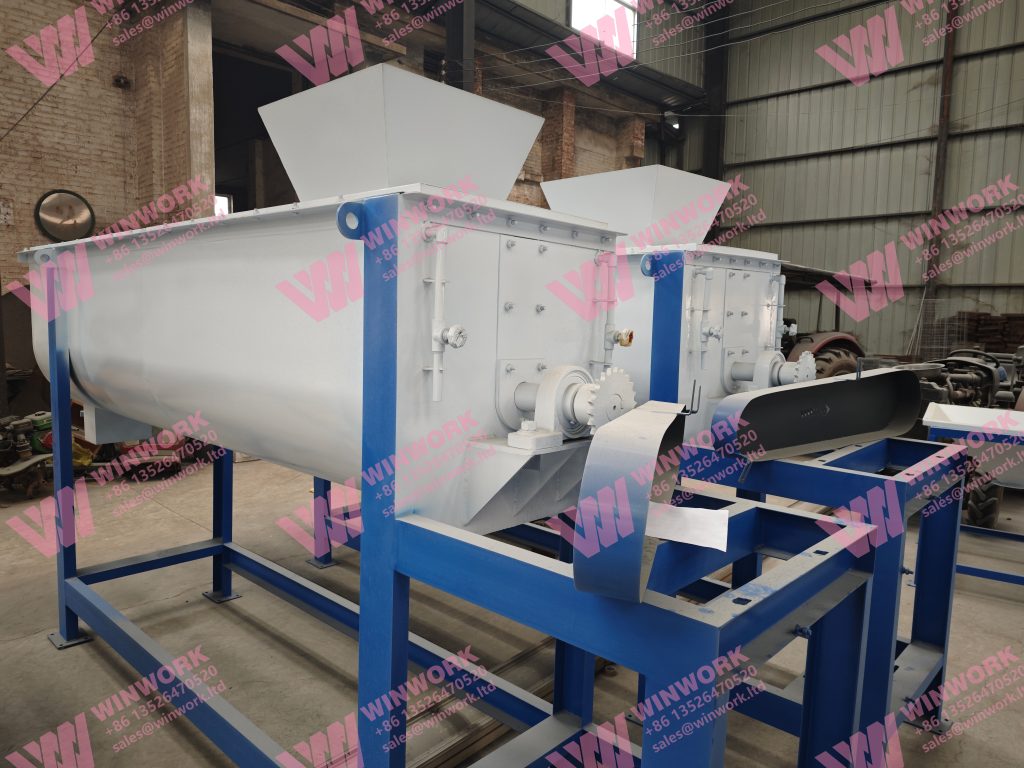
Granulation: Transforming Powder into Marketable Granules
Granulation is a key step that upgrades powder compost into commercial fertilizer granules. Granules are preferred because they are:
-
Easy to transport
-
Dust-free
-
Suitable for mechanical spreading
-
More attractive for retail markets
1. Common Granulation Methods
Several granulation technologies are used:
-
Disc granulator
-
Rotary drum granulator
-
Flat die granulator
-
Double roller extrusion granulator
For organic fertilizer, disc and drum granulators are most common.
2. Granulation Principle
During granulation:
-
Powder materials are moistened
-
Particles adhere through rolling motion
-
Granules gradually enlarge to desired size (2–5 mm)
Proper moisture control is essential in fertilizer production to achieve high granulation rate and low return material ratio.
Drying and Cooling in Sheep Manure Compost Fertilizer Production
Fresh granules usually contain 20–30% moisture. Drying is required to ensure storage stability.
1. Drying Process
A rotary dryer reduces moisture to about 10–15%. Heat sources may include:
-
Coal
-
Biomass
-
Natural gas
-
Diesel burners
Efficient drying improves product shelf life and prevents caking.
2. Cooling Process
After drying, granules are hot and fragile. A rotary cooler reduces temperature close to ambient conditions. Cooling enhances granule hardness and reduces breakage during packaging.
These steps ensure product stability in sheep manure compost fertilizer production.
Screening and Recycling System
After drying and cooling, granules are screened again.
-
Qualified granules move to packaging
-
Oversized granules are crushed and returned
-
Undersized particles are recycled to granulation
This closed-loop system improves raw material utilization and production efficiency.
Coating and Packaging
1. Coating (Optional)
A coating machine may apply anti-caking agents or functional additives to:
-
Improve appearance
-
Enhance storage performance
-
Increase market competitiveness
2. Packaging
Automatic packaging machines weigh and pack fertilizer into 25kg or 50kg bags. Packaging completes the sheep manure compost fertilizer production process, preparing products for distribution.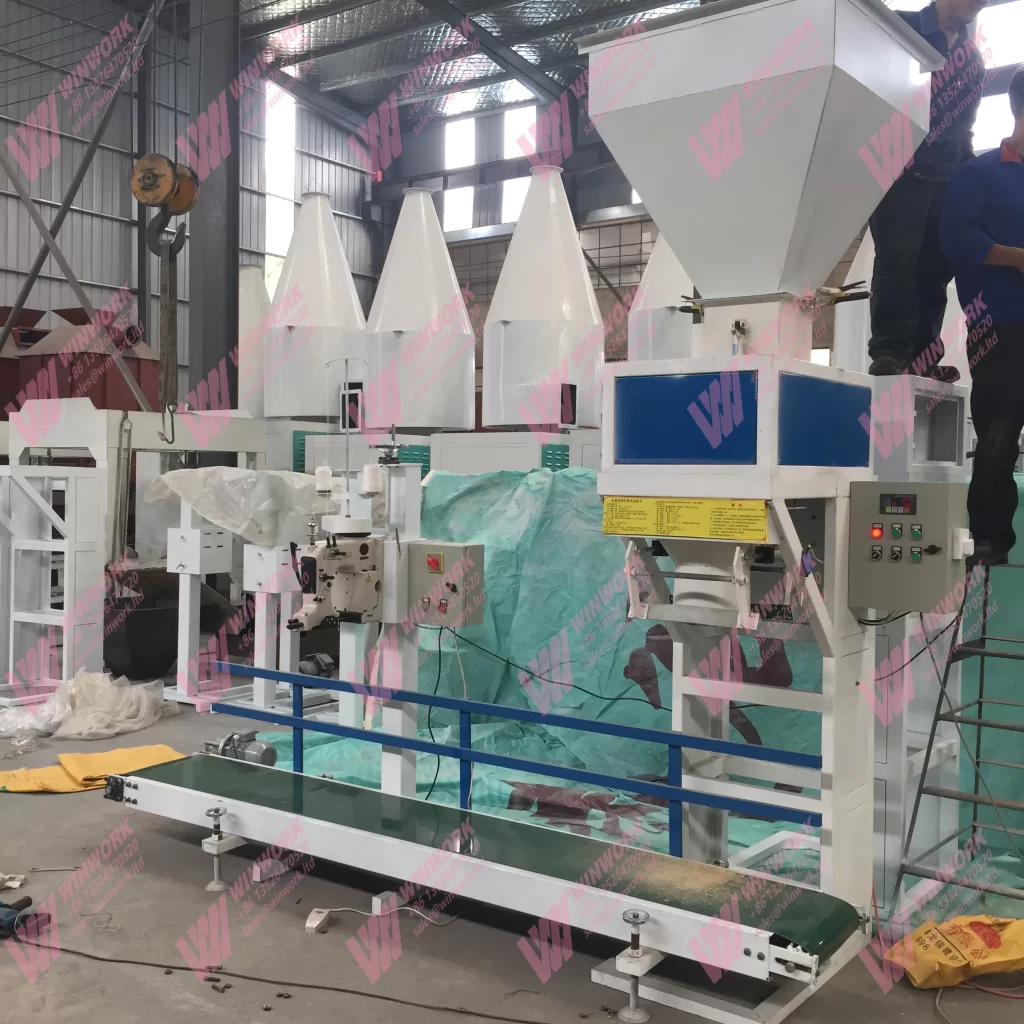
Environmental Considerations
Modern compost fertilizer production emphasizes environmental protection.
Key measures include:
-
Dust collection systems
-
Odor control devices
-
Wastewater recycling
-
Noise reduction equipment
Proper design minimizes environmental impact and ensures regulatory compliance.
Production Capacity and Plant Layout
Sheep manure compost fertilizer production plants vary in scale:
-
Small scale: 1–3 tons per hour
-
Medium scale: 5–10 tons per hour
-
Large scale: 15–20 tons per hour or more
A typical production line includes:
-
Raw material storage area
-
Composting site
-
Crushing section
-
Mixing section
-
Granulation system
-
Drying and cooling system
-
Screening system
-
Packaging system
Reasonable layout design reduces transportation distance, energy consumption, and labor cost.
Quality Control in Sheep Manure Compost Fertilizer Production
To ensure product quality, manufacturers monitor:
-
Moisture content
-
Organic matter percentage
-
Total nutrient content
-
pH value
-
Granule strength
Laboratory testing ensures consistency and compliance with organic fertilizer standards.
Economic Benefits of Sheep Manure Compost Fertilizer Production
-
Low-cost raw materials
-
High demand for organic fertilizer
-
Value-added granule products
-
Sustainable agricultural solution
In livestock-rich regions, converting sheep manure into fertilizer reduces disposal costs and creates additional income streams.
Common Challenges and Solutions
1. Excess Moisture
Excess moisture is a common issue in organic fertilizer processing, especially when fresh manure is collected directly from farms. High water content can negatively affect composting efficiency, reduce internal pile temperature, and lead to anaerobic fermentation, which may cause unpleasant odors. In addition, overly wet material can stick to equipment during crushing and granulation, increasing maintenance frequency and reducing production stability.
Solution: Add dry auxiliary materials such as straw, rice husk, or sawdust to absorb excess moisture and improve material structure. Increasing aeration through regular turning or forced ventilation helps accelerate water evaporation and maintain aerobic conditions. Proper drainage systems and covered composting areas can further stabilize moisture levels and improve overall processing performance.
2. Low Granulation Rate
Low granulation rate reduces finished product yield and increases the return ratio of fine powder, which lowers production efficiency. This problem is often caused by inconsistent particle size after crushing, improper moisture levels before granulation, or insufficient bonding strength between particles. If not controlled, it may result in irregular granule size and weak particle strength.
Solution: Optimize moisture control before granulation to ensure proper particle adhesion. Adjust binder addition carefully to enhance cohesion without over-wetting the material. Ensuring uniform mixing and stable equipment parameters, such as disc angle or drum speed, can significantly improve granule formation and overall production efficiency.
3. High Energy Consumption
Energy consumption, particularly during the drying stage, represents a significant operational cost. Excessively wet granules entering the dryer increase fuel usage and prolong drying time. Poor insulation and inefficient burner systems can further reduce thermal efficiency and raise operating expenses.
Solution: Improve insulation of drying equipment to minimize heat loss and select energy-efficient dryers with optimized airflow design. Reducing moisture content before drying
Future Trends in Sheep Manure Compost Fertilizer Production
With increasing demand for sustainable agriculture, sheep manure compost fertilizer production is evolving toward:
-
Automation and intelligent control systems
-
Energy-saving drying technology
-
Integrated odor treatment systems
-
Modular plant design
These innovations enhance productivity and environmental performance.
Conclusion
Sheep manure compost fertilizer production is a systematic process that converts livestock waste into valuable organic fertilizer granules. From raw material preparation and composting to crushing, mixing, granulation, drying, screening, and packaging, each step plays a crucial role in product quality and economic performance.
By adopting proper process control, efficient equipment configuration, and environmental protection measures, manufacturers can build a stable and profitable sheep manure compost fertilizer production line. As sustainable agriculture continues to expand globally, this production model provides both ecological and commercial benefits, transforming agricultural waste into a market-ready organic fertilizer product.
For more details, please feel free to contact us.
Email: sales@lanesvc.com
Contact number: +8613526470520
Whatsapp: +8613526470520
Get A Quote