

Introduction
Walk onto any farm, and you’ll see piles of manure. But look closer, and you’ll see two different philosophies at work. Some farmers just let the piles sit—this is static composting. Others are constantly running machinery through the piles—this is turned composting. The debate over static vs turned composting isn’t just academic; it’s about how you spend your time, your money, and how much value you get out of your waste. Let’s dig into the dirt and figure out which method is right for your farm.
The Goal: Why Do We Compost Anyway?
Before comparing static vs turned composting, we need to agree on the goal. Composting is nature’s way of recycling. We are trying to get microbes to break down raw, smelly, potentially dangerous manure into a stable, earthy-smelling, nutrient-rich soil amendment. The best composting method is the one that does this fastest, cheapest, and safest.
Especially in livestock farms, there is a large amount of animal waste. They are worried about how to deal with this waste. If it is left piled up for a long time, it will become extremely smelly and affect the health of both humans and animals. Simply removing and throwing it away would be too wasteful. Therefore, it is especially necessary to have an appropriate method to handle this waste, and this method is composting.
Static vs Turned Composting: The Core Differences
When we talk about static vs turned composting, we are really talking about one key and the most important ingredient: oxygen. It is the gas everything needs almost.
Static Composting is the set it and forget it method. You pile up manure often with a carbon source like straw and leave it alone. Air moves through the pile naturally by diffusion. This process is very slow, often taking 6-12 months. It requires almost no labor but risks producing foul odors ,ammonia, rotten egg, if the pile goes anaerobic runs out of oxygen. This method is very simple. All you need to do is to pile these things up in one place, and then you can completely avoid managing them. Let them ferment by themselves.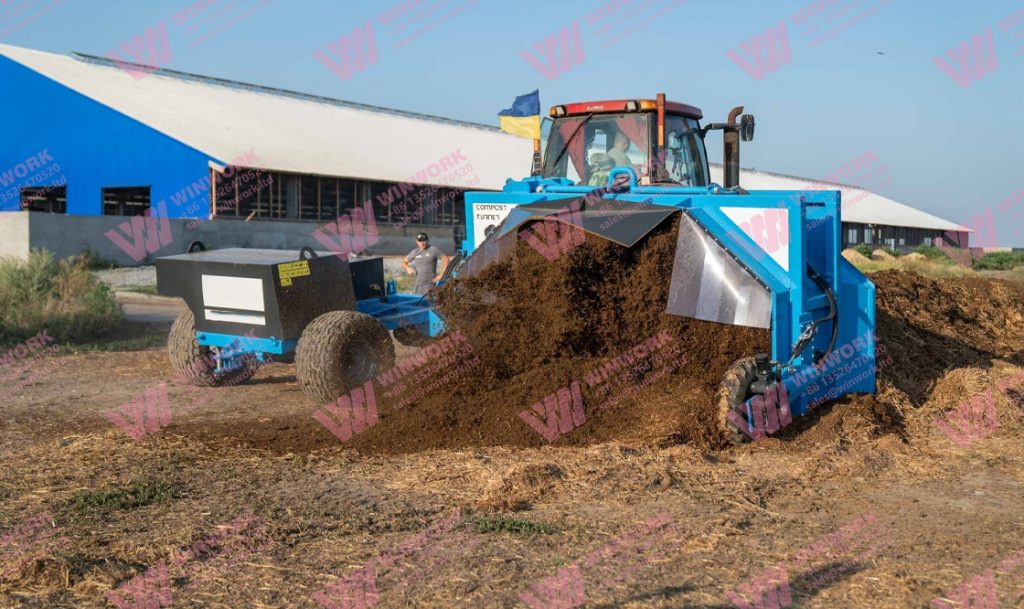
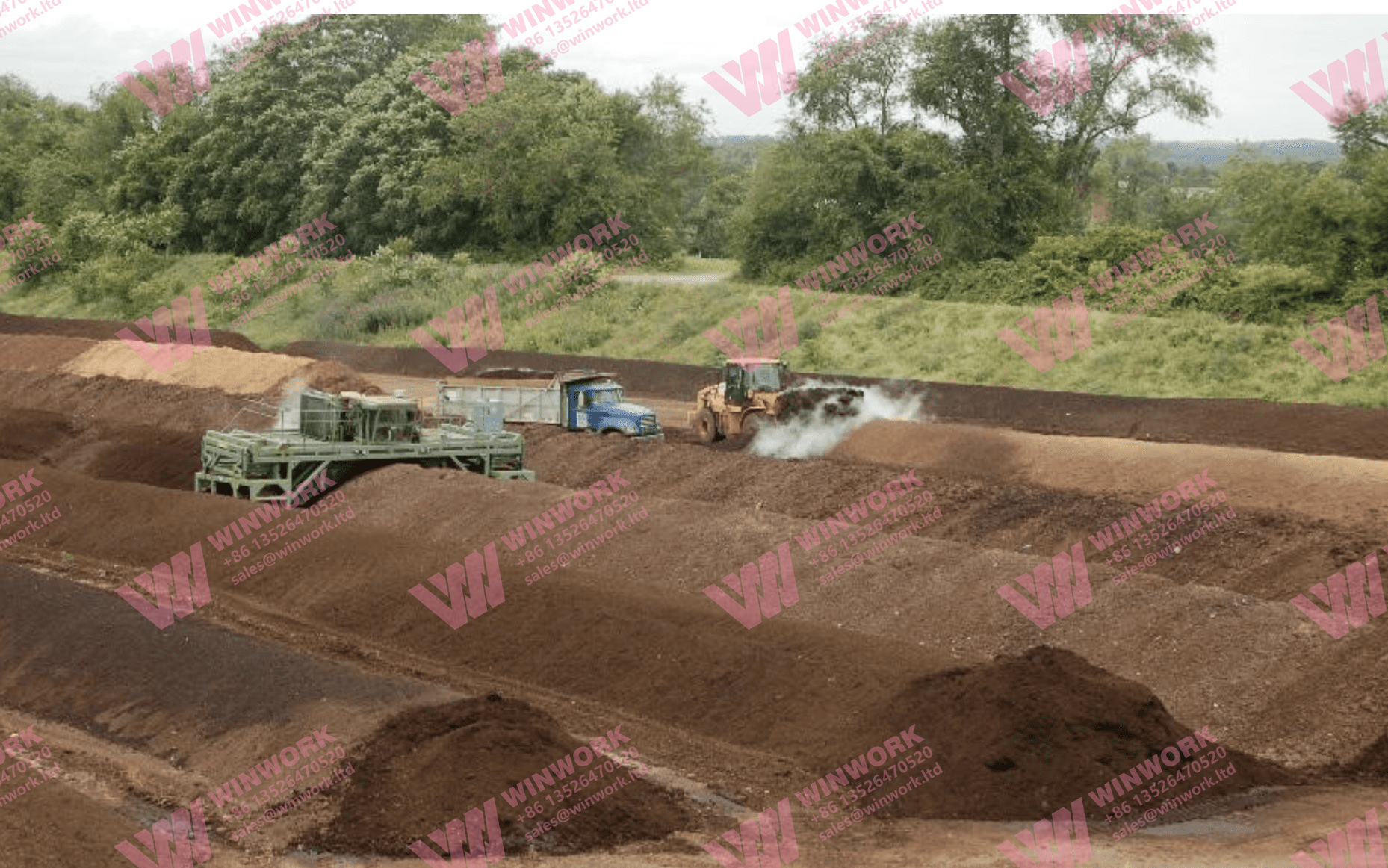
Turned Composting is the hands-on method. You build the pile and then use a machine to physically flip and mix it every few days. This forces oxygen into every part of the pile, supercharging the microbial activity. The entire process can be finished in as little as 3 weeks. This is the key difference in the static vs turned composting debate: speed versus labor.
This way you can just turn the compost by yourself in time, however this will be hard and tired for you if the work is large, and if you hire some persons this will be a new problem you should concern it is the payment may be a large output. Also there is another way for you to start this work, for example, if the work is very large, you can use the intelligent machines, although machines also needs money, the lifetime is long and the cost is smaller than using human labor. Whats more, this machine you just need to buy once and use it for a very long time.
The Important Equipment
How can we make choices, this is really a good question. Your choice in the static vs turned composting decision directly impacts your equipment needs.
And for composting, only small preparations are needed for you to start your work. You really only need:
A Front-End Loader or pitchfork to build the initial pile.
A Storage Pad concrete or gravel to keep the pile contained.
The low equipment cost is the main appeal of static composting.
For Turned Composting, the star of the show is the machine. You absolutely need:
A Compost Turner: This can be a small, walk-behind unit for small farms, a PTO-driven unit pulled by a compact tractor, or a large, self-propelled windrow turner for bigger operations. This machine is non-negotiable for efficient turned composting.
This way, the crawler compost turner is a very good choice.
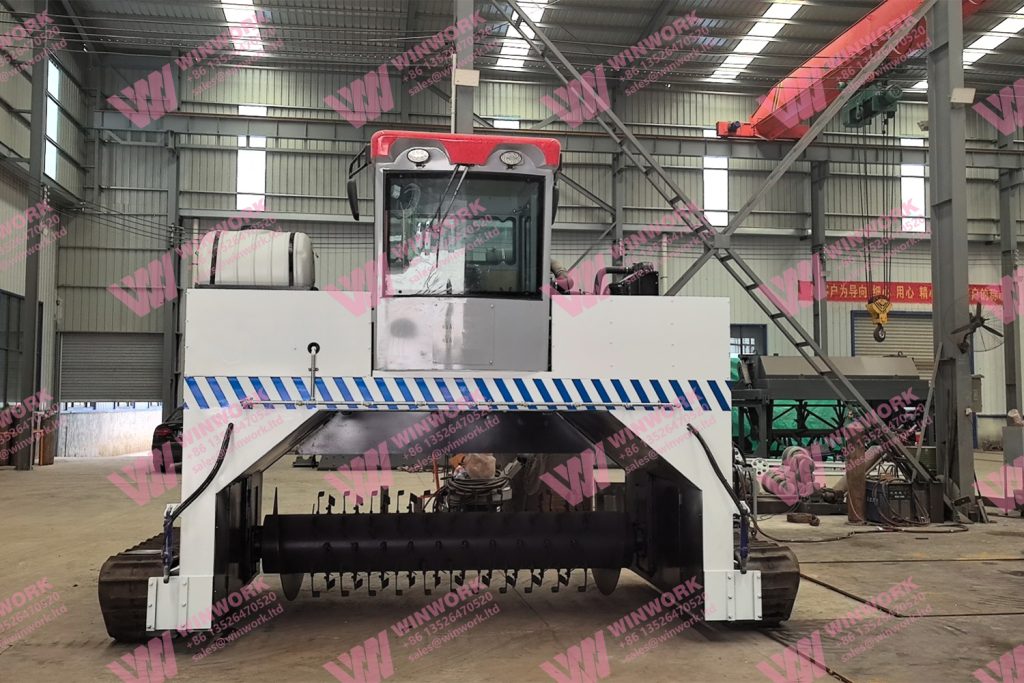
Crawler compost turner is an advanced compost turning equipment, specially designed for compost fermentation process, with the advantages of high efficiency, stability, easy operation and so on.
Crawler compost tumbler realizes automatic operation through crawler walking system, which is the necessary equipment for producing organic fertilizer granules and widely used in organic fertilizer production line.
Crawler compost turner can not only quickly improve the fermentation efficiency of materials, but also effectively improve the quality of compost, is the first choice of modern compost production equipment.
And this machine suits for most of the materials.
A Solid-Liquid Separator which is very Recommended: To get the best results in the static vs turned composting comparison, you should start with well-separated, drier solids. This makes turning easier and faster.
A Shredder/Crusher: To mix in carbon sources like straw effectively.
Horizontal crusher, also known as horizontal semi-wet material crusher, is a kind of crushing equipment specially designed to deal with high humidity, organic materials, especially suitable for organic fertilizer production in the material pre-treatment.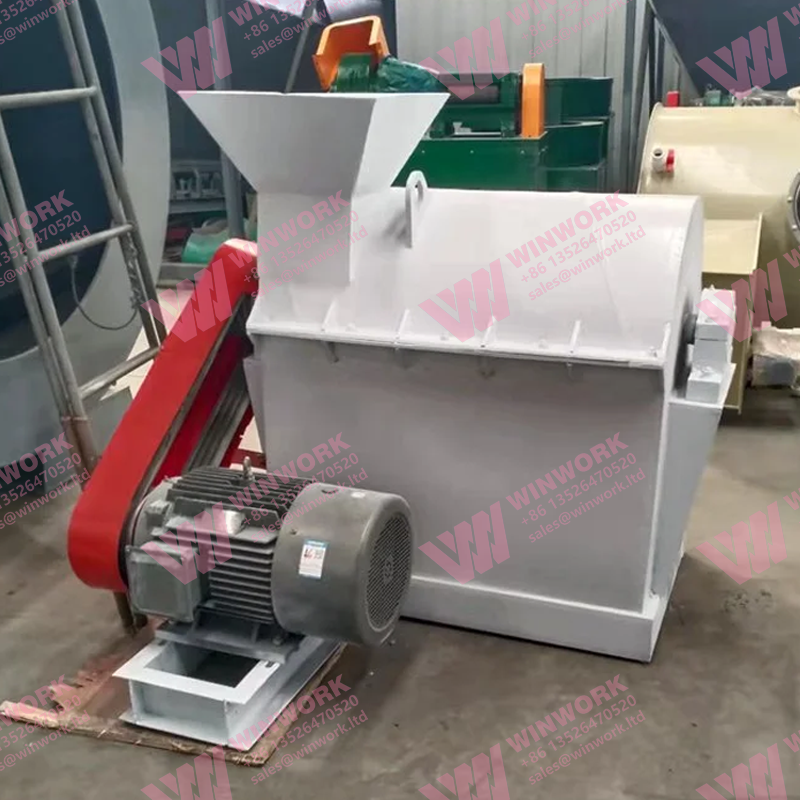
Horizontal crusher adopts a unique double-stage rotor structure, can effectively deal with high humidity materials, such as livestock and poultry manure, city garbage, crop residues and so on. It has high crushing efficiency, even material size, no blockage, no sticking phenomenon, and is one of the indispensable key equipments in organic fertilizer production line.
The Payoff: Why Turned Composting Often Wins
While static composting seems cheaper, the math often favors turning. Here’s why:
Speed: Turned composting finishes in 3 weeks vs. 6+ months for static. You can produce 4-5 batches of fertilizer in the time it takes static composting to make one.
Quality: The high heat generated by turned composting up to 70°C / 160°F reliably kills weed seeds and pathogens. Static piles often don’t get hot enough throughout.
Odor Control: Properly turned piles are aerobic and smell earthy. Static piles frequently go anaerobic and smell terrible, risking neighbor complaints.
When you look at static vs turned composting purely from a profit perspective, the ability to generate income faster with turned composting usually wins.
Real Farm Example
The Johnson family has a 50-cow dairy. They used to practice static composting, letting manure piles sit for a year. They had constant issues with leachate runoff and neighbors complaining about the smell.
Last year, they invested $12,000 in a mid-sized Compost Turner to settle the static vs turned composting debate on their own farm.
Their composting cycle dropped from 9 months to just 21 days.
They produced 4 times more finished fertilizer in the same space.
They sold the excess to a local vineyard for $160/ton.
We were shocked at the difference, said Robert Johnson. The static vs turned composting argument ended the moment we saw our first check from the fertilizer sale.
FAQ: Your Questions About Static vs Turned Composting Answered
Q1: Is static composting ever a good idea?
A: Yes, for very small-scale operations (like a home garden) or if you have zero access to machinery. It’s the lowest-cost entry point in the static vs turned composting discussion.
Q2: What is the biggest risk with turned composting?
A: The initial investment in a compost turner. However, the return on investment is typically very fast due to increased production speed and quality.
Q3: Can I turn a pile by hand?
A: You can, but it’s incredibly labor-intensive and difficult to do effectively on a farm scale. A machine is essential for a serious static vs turned composting analysis.
Q4: Does turned composting use more fuel?
A: Yes, the turner uses diesel or gasoline. But the value of the faster-produced, higher-quality fertilizer far outweighs the fuel cost.
Q5: Which method is better for the environment?
A: Turned composting is better because it prevents anaerobic conditions that release methane (a potent greenhouse gas) and prevents nutrient leaching. This is a major point in the static vs turned composting environmental impact debate.
Q6: How do I know when to turn the pile?
A: Use a compost thermometer. When the internal temperature starts to drop below 120°F (50°C), it’s time to turn. This is a key skill in managing turned composting.
Q7: What if I can’t afford a big turner?
A: This is really a small question, you can just Start small! There are affordable tow-behind turners for sub-compact tractors. You don’t need a massive machine to benefit from turned composting.
Q8: Does static composting produce lower quality fertilizer?
A: Yes. And almost of the time it is acceptable. Because it doesn’t reach high, consistent temperatures, it may contain viable weed seeds and pathogens that turned composting eliminates.
Q9: Where can I learn more about the equipment?
A: Local agricultural extension offices and equipment dealers are great resources for comparing models relevant to the static vs turned composting choice.
Conclusion
The choice between static vs turned composting is really a choice between slow and steady versus fast and profitable. While static composting requires less labor, turned composting delivers a superior product in a fraction of the time, making it the clear winner for most commercial farms.
By investing in the right equipment, you can turn your biggest waste problem into your most valuable asset. Don’t just let your manure sit there—put it to work for you. And investing a small machine to help you work and also can help you receive some payment, it is really a good method and you can reduce the money for human labor.
For more details, please feel free to contact us.
Email: sales@lanesvc.com
Contact number: +8613526470520
Whatsapp: +8613526470520
Get A Quote