

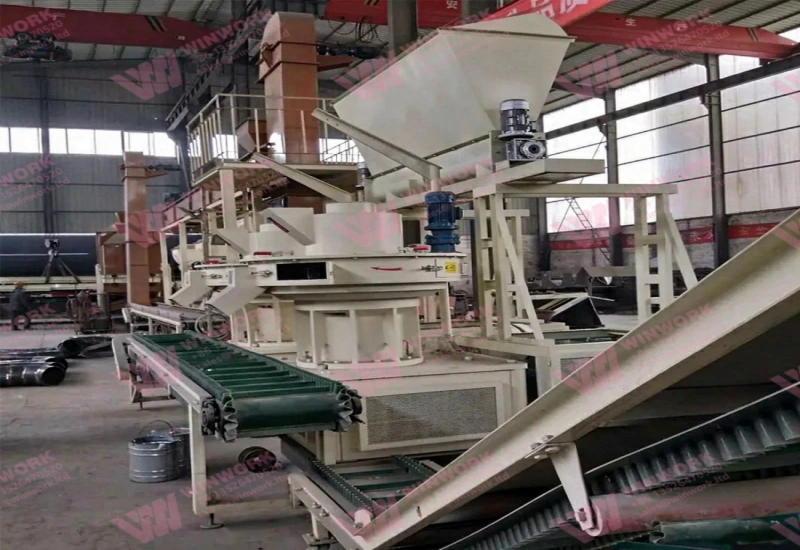
How Should You Plan a 2 ton per hour chicken feed plant?
Building a chicken feed manufacturing facility involves more than purchasing a hammer mill and a pellet machine. Each processing stage must work with the next one to produce consistent feed at the required capacity. For a 2 ton per hour chicken feed plant, the first step is to determine the type of feed you intend to manufacture and the raw materials available.
For example, a broiler feed factory may produce starter, grower, and finisher feed. These products can have different particle sizes and pellet requirements. Layer feed, on the other hand, may be manufactured as mash or pellets depending on the feeding program and market demand. These differences directly affect the equipment configuration of a 2 ton per hour chicken feed plant, especially the grinding, mixing, and pelleting sections.
Before selecting machinery, consider the following production conditions:
-
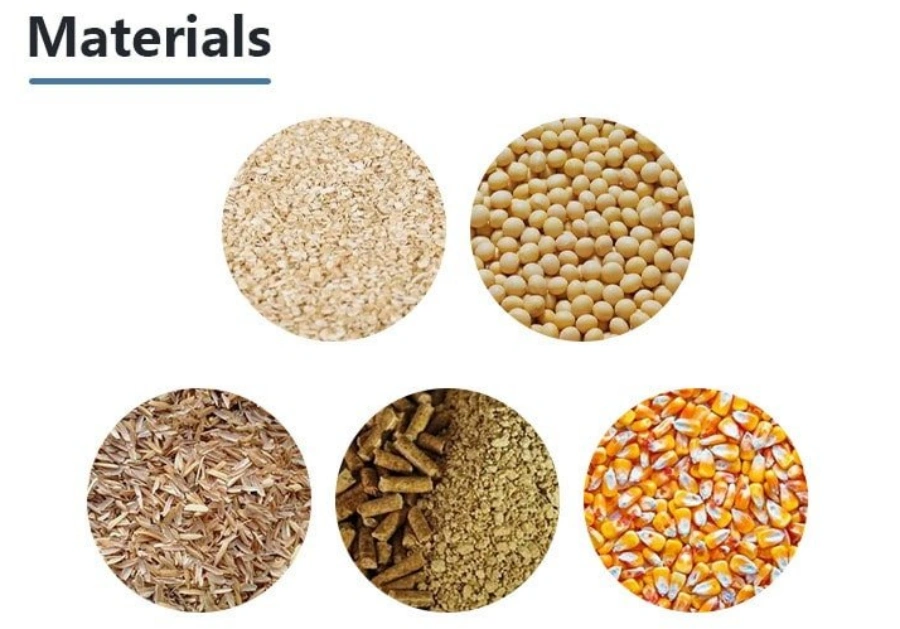
Raw materials: Corn, soybean meal, wheat, bran, and premixes.
-
Finished feed type: Mash feed, pellets, or crumbles.
-
Pellet diameter: Common specifications include 2 mm, 3 mm, and 4 mm, depending on bird age and feed formulation.
-
Production schedule: Daily operating hours and the number of feed formulations.
-
Target output: Two tons of finished feed per hour, rather than two tons of raw materials entering the line.
The production process can then be arranged around the product requirements:
Raw material cleaning → Grinding → Batching → Mixing → Conditioning → Pelleting → Cooling → Crumbling and screening → Packing
Not every 2 ton per hour chicken feed plant requires every machine.For instance, a mash feed production line can finish after mixing, while a pellet line needs conditioning, pelleting, and cooling equipment. If the plant produces starter feed, a crumbler may also be necessary.
Once the product specifications are clear, the next task in a 2 ton per hour chicken feed plant is to prepare the raw materials for accurate processing.
How Are Raw Materials Ground, Batched, and Mixed?
The quality of finished chicken feed in a 2 ton per hour chicken feed plant starts with the condition of the raw materials.Corn, soybean meal, and other ingredients may arrive in bags or bulk. Before entering the processing system, they should be inspected and cleaned to remove stones, metal fragments, and other unwanted materials.
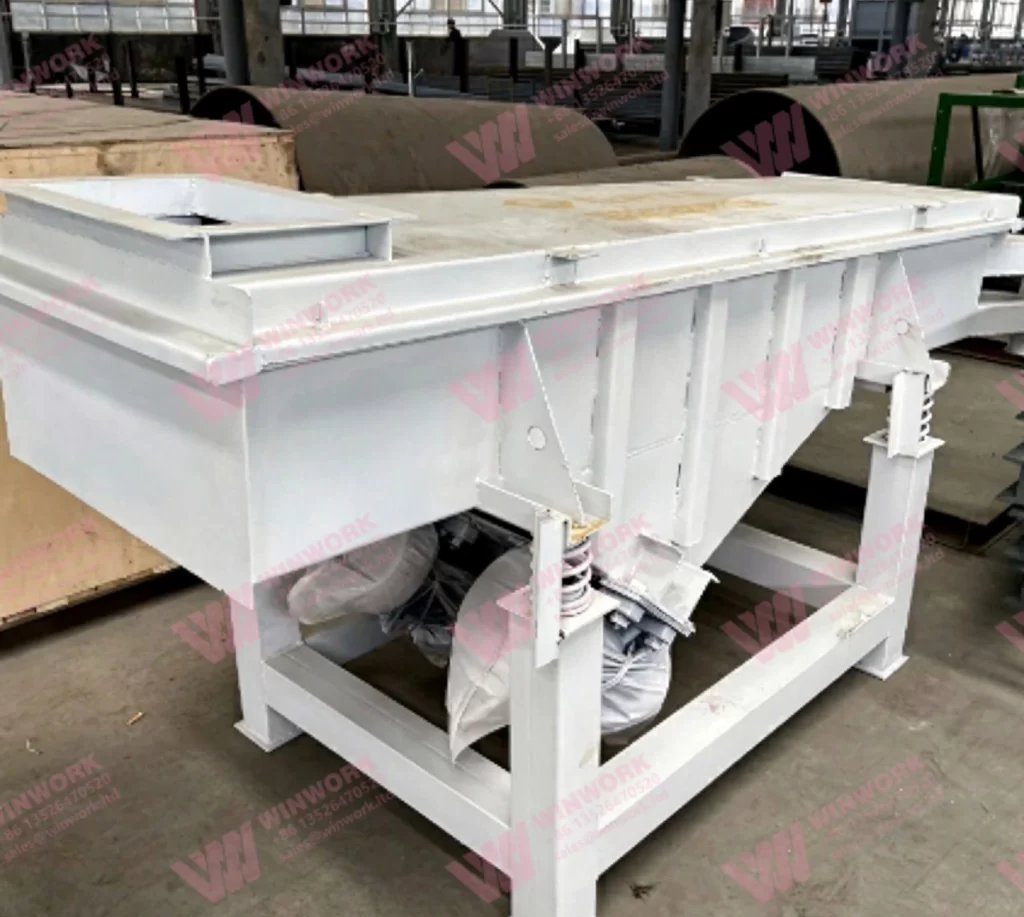
In a 2 ton per hour chicken feed plant, a vibrating cleaning screen separates larger impurities, while a magnetic separator captures ferrous metal particles. This first step helps protect the hammer mill and downstream equipment from unnecessary wear or damage.
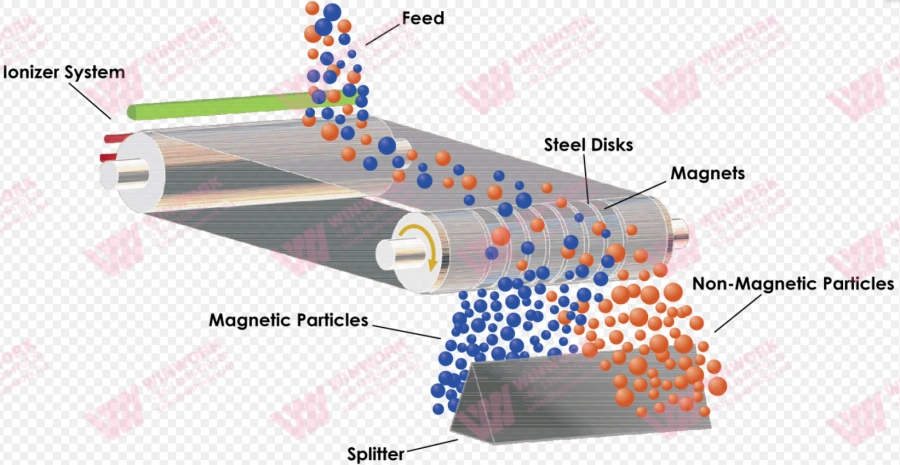
magnetic separator
After cleaning, grains such as corn and wheat are transferred to a hammer mill for size reduction in a 2 ton per hour chicken feed plant. The hammer mill uses high-speed rotating hammers to break the materials into smaller particles. The screen installed inside the grinding chamber controls the approximate particle size.
For example, a smaller screen opening generally produces finer ground material, but it can also reduce grinding capacity and increase energy consumption. Therefore, screen selection should be based on the feed formulation and the required particle size rather than simply choosing the finest available screen.
In a 2 ton per hour chicken feed plant, particle size also affects the next stage. If the ground material contains too many large particles, it may be difficult to achieve a consistent mixture. If it is excessively fine, dust generation and processing costs may increase. The objective is to produce a suitable and reasonably consistent particle distribution for the intended feed.
Once grinding is complete in a 2 ton per hour chicken feed plant, the ingredients need to be measured according to the feed formulation. An automatic batching system can use separate storage bins and weighing devices to deliver the required quantities of corn, soybean meal, minerals, and other ingredients.
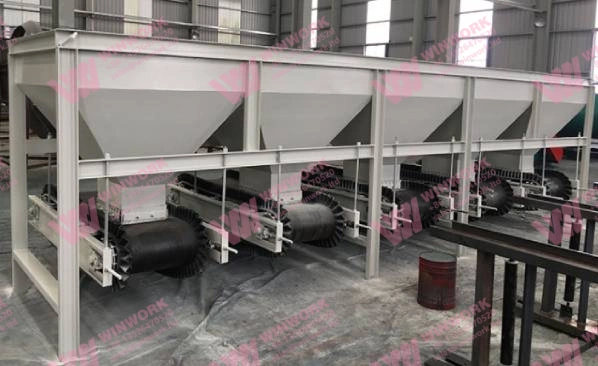
Micro-ingredients require particular attention because small weighing errors can affect the final formulation. Depending on the production setup, vitamins, minerals, and premixes can be pre-mixed before being added to the main batch.
The weighed ingredients in a 2 ton per hour chicken feed plant then enter a horizontal feed mixer. Ribbon mixers and paddle mixers are two common options. A ribbon mixer moves materials through inner and outer spiral blades, while a paddle mixer uses angled paddles to create a mixing action.
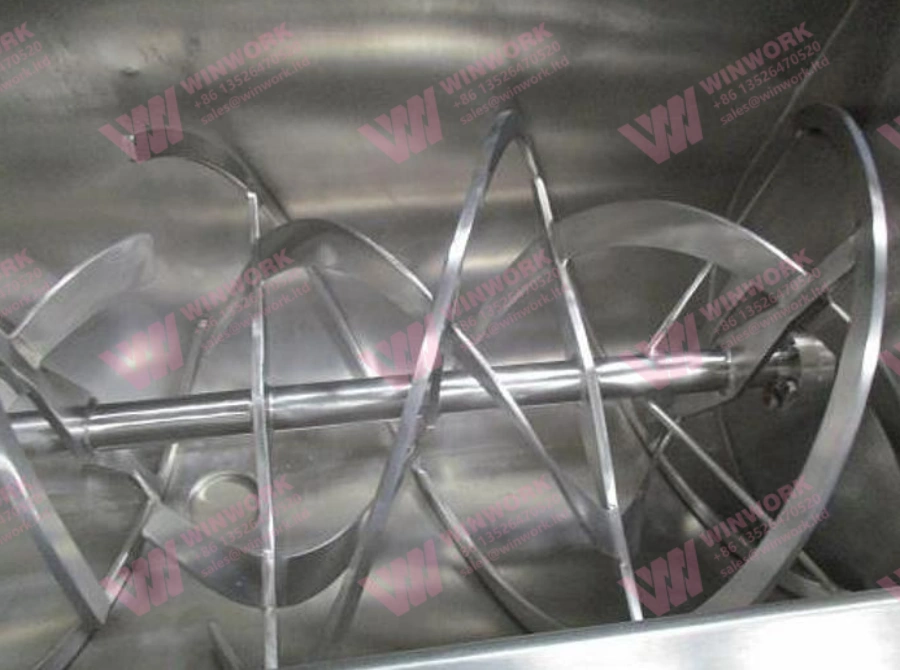
The operator needs to consider three factors:
-
Batch weight: The amount of material loaded into the mixer.
-
Filling ratio: The relationship between the material volume and the mixer’s effective working volume.
-
Mixing time: The time required to distribute ingredients evenly throughout the batch.
In a 2 ton per hour chicken feed plant, overloading a mixer can reduce mixing effectiveness, while an unnecessarily long mixing cycle may limit production output. Mixing uniformity should be checked during commissioning and whenever the formulation or operating conditions change.
At the end of this stage, the plant has a consistent mash feed mixture. However, if the finished product needs to be pellets, the mixture must undergo another process to form compact and durable particles.
How Does Conditioning and Ring Die Pelleting Turn Mash into Chicken Feed Pellets?
Pelleting is one of the most important stages in a 2 ton per hour chicken feed plant, as it converts loose mash into compact feed particles. It changes loose powder into compact feed particles that are easier to handle, transport, and distribute.
Before the mash enters the pellet mill in a 2 ton per hour chicken feed plant, it usually passes through a conditioner. Steam is introduced into the conditioning chamber to increase the temperature and moisture of the feed. This helps improve material plasticity and supports pellet formation during compression.
The conditioning process must be adjusted according to the formulation. Starch content, fiber level, fat content, and initial moisture can all affect how the material responds to steam. Too little conditioning may result in weak pellets, while excessive moisture can create handling and drying problems.
For this reason, operators should not use one fixed conditioning setting for every feed formula. Temperature, moisture, steam quality, and retention time should be tested and adjusted according to the raw materials and equipment manufacturer’s recommendations.
After conditioning, the mash enters a ring die pellet mill.
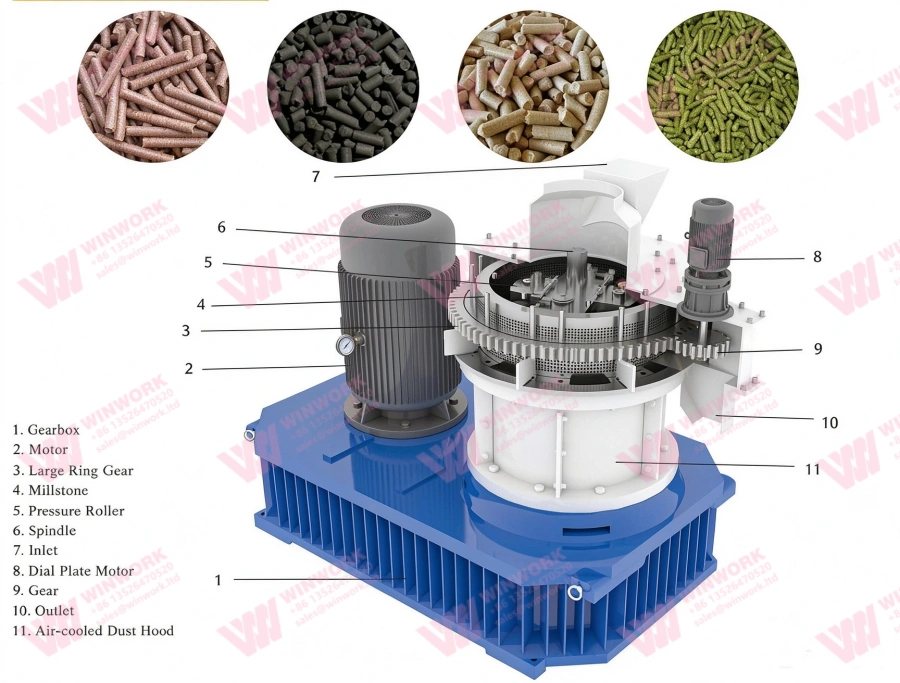
Inside the machine, feed material is pressed between rotating rollers and a perforated ring die. The rollers force the conditioned material through the die holes, forming cylindrical pellets. A cutting knife outside the die controls the pellet length.
In a 2 ton per hour chicken feed plant, several factors influence the final pellet quality:
Die hole diameter: This determines the approximate pellet diameter. For example, 2 mm or 3 mm dies may be considered for certain starter feed products, while larger sizes may be used for other poultry feed formulations. The final selection depends on bird age, feed requirements, and customer specifications.
Compression ratio: This describes the relationship between the effective die-hole length and its diameter. A higher compression ratio generally creates greater resistance during extrusion, but it does not automatically produce better pellets. Material characteristics, die design, and machine load must be considered together.
Roller and die condition: Worn rollers or blocked die holes can cause unstable feeding, uneven pellet formation, and reduced output. Regular inspection and correct roller adjustment are therefore important.
If pellets break easily after leaving the machine, the problem may not be caused by the pellet mill alone. Incorrect conditioning, unsuitable die specifications, inconsistent grinding, or an unbalanced formulation may also contribute.
The ring die pellet mill in a 2 ton per hour chicken feed plant needs to be selected according to the actual feed formula and finished pellet specifications. Its rated capacity alone is not enough to determine whether it can maintain the required output of a 2 ton per hour chicken feed plant.
Once the pellets are formed, they still contain heat and moisture. They must be cooled and screened before they can be safely stored and packed.
How Are Chicken Feed Pellets Cooled, Screened, and Packed?
In a 2 ton per hour chicken feed plant, fresh pellets leave the pellet mill at an elevated temperature and contain moisture introduced during conditioning. Packing them immediately can cause condensation, caking, and deterioration during storage.
A counterflow pellet cooler is commonly used in a 2 ton per hour chicken feed plant to solve this problem. Hot pellets enter the cooling chamber from the top, while ambient air moves upward through the material from the opposite direction. This counterflow arrangement helps remove heat and excess moisture.
The cooling process should be controlled rather than judged only by how long the pellets remain inside the machine. Operators need to monitor the outlet temperature, moisture condition, and appearance of the pellets. The finished pellets should be sufficiently cooled before entering storage or packaging.
After cooling, the material passes through a vibrating screen. The screen separates acceptable pellets from fine particles and oversized material. Fine particles can be collected and returned to an appropriate point in the production process for reprocessing, provided the feed formulation and quality-control procedures allow it.
For plants producing broiler starter feed, a feed crumbler may be installed between the cooler and the final screening system. The crumbler uses two rollers to break larger pellets into smaller pieces. The roller clearance can be adjusted according to the required crumble size.
This equipment is not necessary for every product. If the plant mainly produces standard pellets or mash feed, the crumbler may be omitted. This is one reason why the final equipment configuration should be based on the product range rather than a standard machine list.
After screening, qualified feed can enter a finished-product bin and then move to an automatic weighing and packing machine. Common bag sizes include 25 kg and 50 kg, although the actual packaging specification depends on the target market.
Before packing, operators should check:
-
Whether the pellets have cooled sufficiently.
-
Whether the finished product has an acceptable moisture condition.
-
Whether the proportion of fines is within the required limit.
-
Whether the pellet size and appearance meet the product specification.
-
Whether the packing scale delivers consistent bag weights.
At this point, the production process is complete. However, having all the necessary machines does not automatically guarantee two tons of finished feed every hour. The capacity of each stage must be coordinated.
How Can Equipment Capacity Be Matched to a 2 ton per hour chicken feed plant?
A production line should be designed as one connected system, not as a collection of independent machines. If the hammer mill cannot prepare material quickly enough, the mixer may have to wait. If the mixer cannot discharge on schedule, the pellet mill may operate below its rated capacity. Similarly, an undersized cooler can create a queue of hot pellets behind the pellet mill.
For this reason, equipment selection for a 2 ton per hour chicken feed plant should be based on actual processing conditions and the working cycle of each machine.
Consider a simplified example. If the finished-feed target is 2 tons per hour and the mixing system produces 500 kg per batch, it must complete four batches per hour to meet the target. This means the complete batch cycle—including filling, mixing, discharge, and preparation for the next batch—must fit within approximately 15 minutes.
The hammer mill must prepare enough ground material before each mixing cycle. A storage bin between grinding and mixing can help separate the continuous grinding operation from batch-based mixing. This reduces waiting time and makes the production schedule easier to coordinate.
The same principle applies to the pelleting and cooling sections. The pellet mill must process the mixed feed at the required rate, while the cooler and screening system must handle the actual pellet output without creating a bottleneck.
When selecting equipment, pay attention to the following factors:
- Hammer mill: Raw material hardness, screen size, required particle size, and grinding capacity
- Batching system: Number of ingredients, weighing accuracy, and batch weight
- Feed mixer: Effective batch volume, mixing uniformity, and total cycle time
- Ring die pellet mill: Feed formulation, pellet diameter, die compression ratio, and actual output
- Pellet cooler: Pellet output, cooling capacity, and moisture removal
- Crumbler and screen: Required product size and expected fine-particle volume
- Packing machine: Bag weight, packing speed, and weighing accuracy
Production capacity should also account for material changes and operating interruptions. A machine that reaches its rated output under one test condition may deliver a different result when processing another formula or pellet size.
During daily production, operators should monitor grinding particle size, weighing accuracy, mixer performance, pellet mill current, pellet appearance, and cooler discharge conditions. If the output begins to fall, checking the machine responsible for the bottleneck is more effective than increasing the feeding rate across the entire line.
A well-designed 2 ton per hour chicken feed plant should balance equipment capacity, material flow, and operating cycles to maintain consistent production. The objective is not simply to install machines with high rated capacities, but to ensure that each processing stage can supply the next stage continuously and reliably.
Before confirming the final equipment list, the manufacturer should understand the customer’s raw materials, feed formulations, finished product types, available workshop space, and expected operating schedule. These details provide the basis for selecting suitable machinery and designing a practical production process.
If you are planning a new chicken feed factory or upgrading an existing facility, share your raw material list, target feed products, and required output. The equipment configuration can then be adjusted to match your actual production needs. A properly planned 2 ton per hour chicken feed plant should deliver not only the required hourly output but also consistent feed quality and manageable operating costs.


Get A Quote