

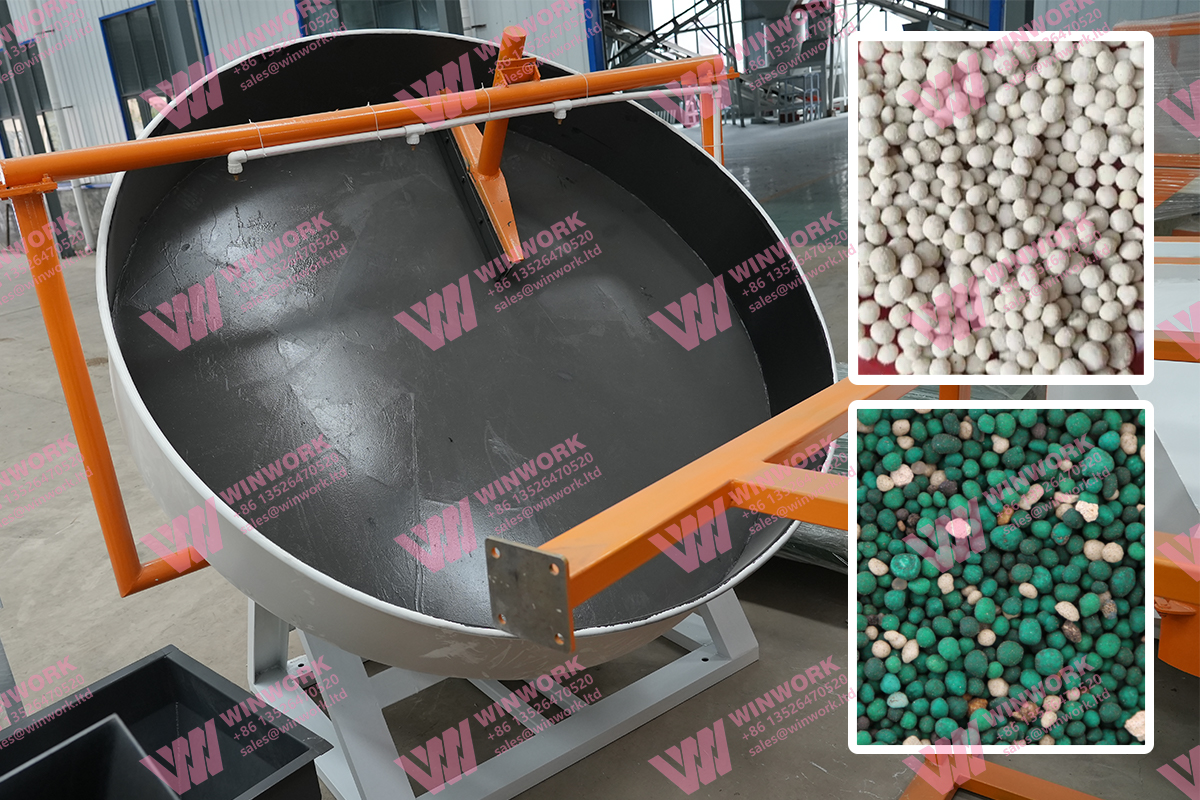
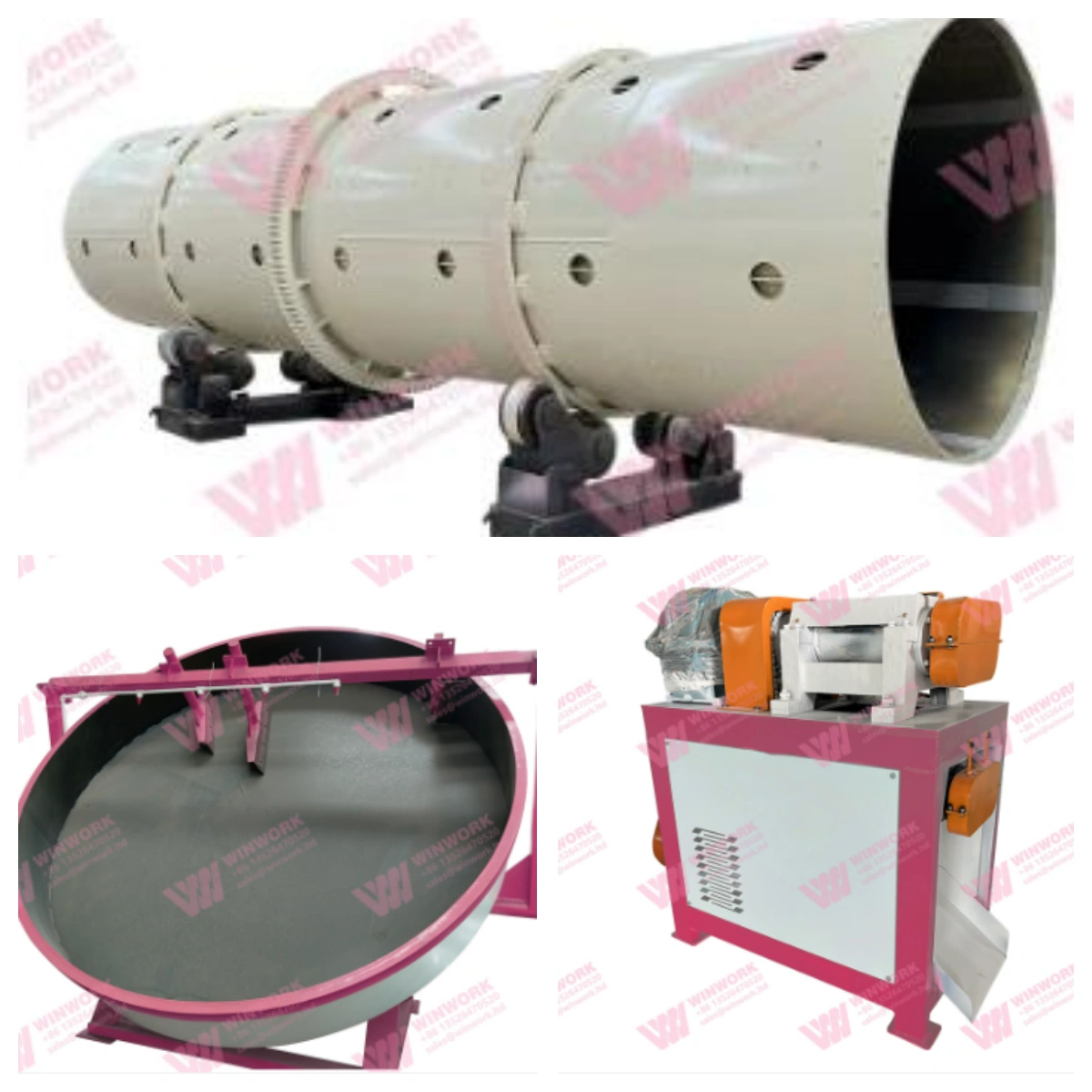
A multifunctional disc granulator is designed to turn suitable powdered materials into rounded granules through continuous rolling on a rotating disc. Its main structure typically includes a granulating disc, drive system, supporting frame, and angle adjustment mechanism. Depending on the model, a scraper and spraying device may also be included.
One of its practical advantages is its relatively simple operating process. Operators can observe granule formation directly and adjust operating conditions according to the material’s behavior. Beyond ease of use, a multifunctional disc granulator can handle different suitable raw materials and may support additional spraying or coating functions through optional configurations. Understanding these features helps manufacturers decide whether this equipment fits their production requirements.
1. Simple Structure and Easy Operation
A straightforward machine structure
The granulating disc is the main working component. A motor and transmission system drive the disc, while the frame supports the machine during operation. The adjustable disc angle helps operators change the material’s movement and residence time according to production conditions. Some models also include a scraper to remove material that sticks to the disc surface.
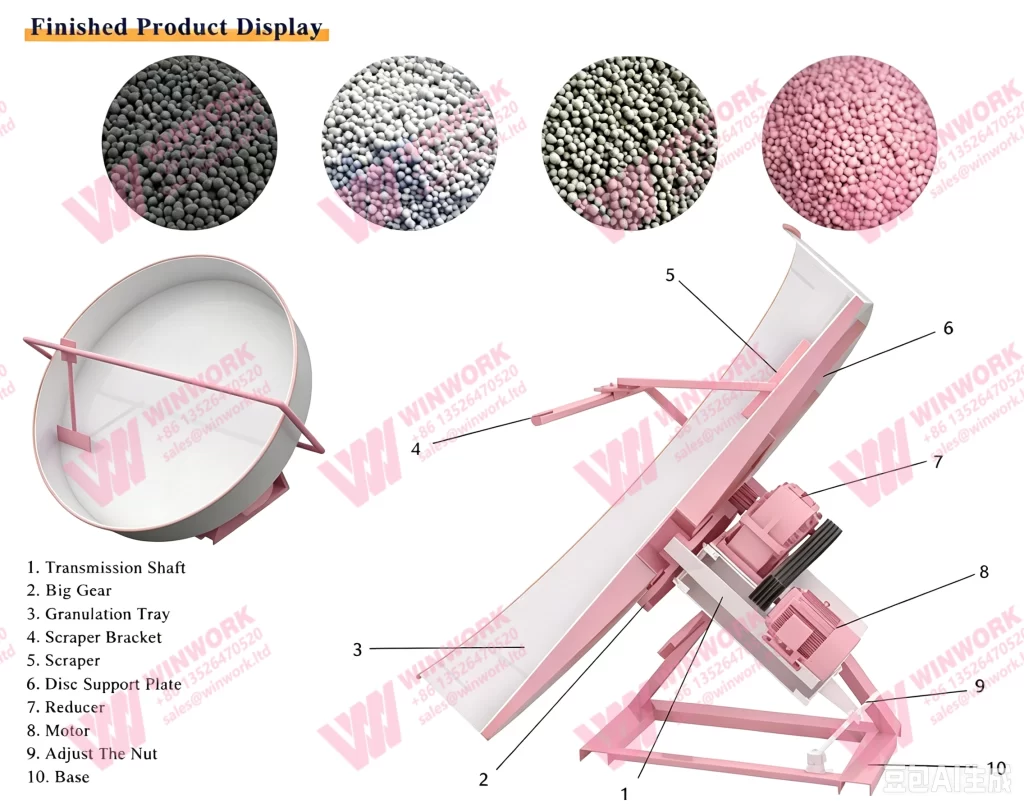
Compared with more complicated processing systems, a multifunctional disc granulator has a relatively straightforward working principle. Operators still need training and must follow operating procedures, but the visible structure makes it easier to understand how material moves through the granulation process.
Convenient adjustment during production
Different raw materials behave differently. Operators may need to adjust the feed rate, moisture addition, disc angle, or rotation speed, depending on the machine design and the characteristics of the material. These adjustments help establish suitable conditions for granule formation.
Another advantage is that the working area is generally open and visible. Operators can observe the material as it rolls, combines, and gradually grows into granules. If particles become unusually large, remain too small, or stick together excessively, the operator can investigate possible causes, including moisture distribution, feed consistency, and operating conditions. If necessary, the machine should be stopped safely before inspection or maintenance.
This visible process makes a multifunctional disc granulator practical for operations where direct observation and timely adjustment are important. It does not eliminate the need for process control, but it helps operators identify changes before they develop into larger production problems.
For additional information about machine structure and specifications, visit the WINWORK disc granulator product page.
2. Suitable for Different Raw Materials
Applications in organic and compound fertilizer production
A disc granulator can process various powdered materials when their physical properties and formulation are suitable for rolling granulation. Common applications include prepared organic fertilizer materials, compound fertilizer mixtures, and NPK fertilizer formulations.
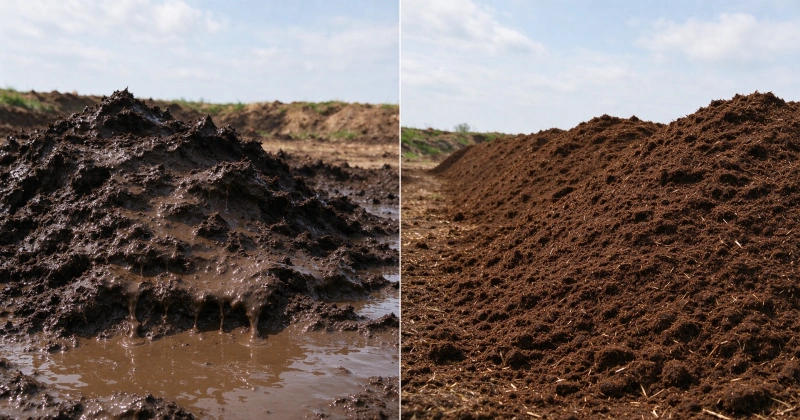
Organic fertilizer production may involve composted materials and other processed organic ingredients. Compound fertilizer production, meanwhile, requires different nutrient-containing ingredients to be mixed into a consistent formulation before granulation. In both cases, appropriate preparation helps the material form granules more reliably.
Material characteristics still matter
Although a multifunctional disc granulator can accommodate different materials, it does not mean every raw material can be processed using identical settings. Particle size, moisture content, density, binding characteristics, and formulation can all affect granule formation.
For example, some materials require additional water or a suitable binder to help particles adhere. Others may become sticky when too much liquid is added. Fibrous or irregular materials may also need pretreatment before entering the granulator.
Before selecting a machine, manufacturers should evaluate their actual raw materials and target product specifications. Testing is particularly useful when the material’s granulation behavior is uncertain. The purpose is to determine suitable operating conditions rather than assume that one setting will work for every formula.
This flexibility makes a multifunctional disc granulator worth considering for producers who handle several compatible formulations or expect their product range to change over time.
3. Visible Granulation and Particle Size Adjustment
How granules form
During operation, prepared material enters the rotating disc. As the disc turns, particles move and roll across its surface. When moisture or a suitable binder is added under appropriate conditions, fine particles begin to adhere to one another. Repeated rolling encourages the particles to grow into larger, rounded granules.
The final result depends on several interacting factors, including raw material properties, liquid addition, feed rate, disc angle, rotation speed, and residence time. A multifunctional disc granulator therefore needs to be adjusted according to the actual material and desired product rather than operated using a fixed setting for every application.
Why direct observation is useful
Because the granulation process can be observed directly, operators can monitor the shape, approximate size, and uniformity of the developing particles. If the granules are growing too quickly or remain too small, they can check the operating conditions and make appropriate adjustments.
Abnormal granule formation may be associated with uneven moisture distribution, inconsistent feeding, unsuitable raw material preparation, or changes in the formulation. Identifying these factors early can help reduce unnecessary reprocessing and improve process stability.
However, visual observation alone cannot guarantee a specific particle size or product quality. Screening may still be required to separate oversized and undersized granules, and the operating parameters should be verified against the finished product requirements.
4. Optional Spraying System for Moisture Control and Coating
Using a spraying system to control moisture
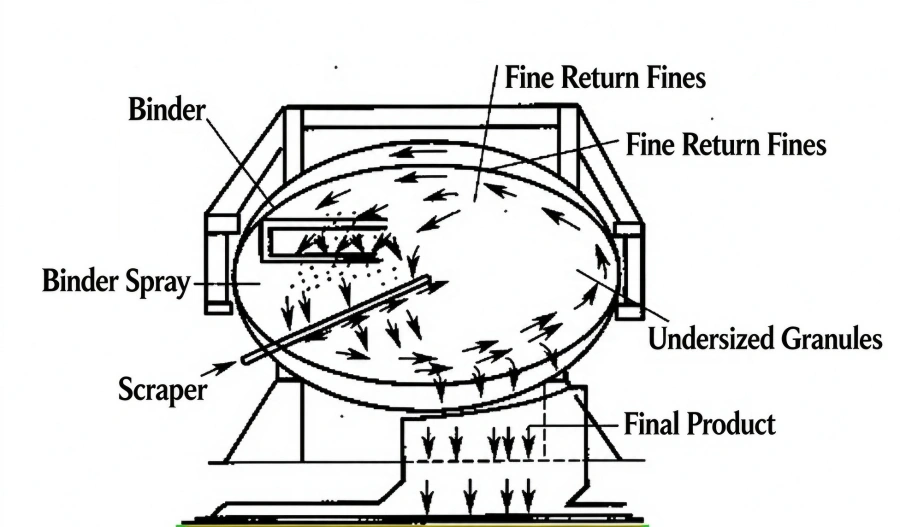
A multifunctional disc granulator can be configured with a spraying system when the machine design and production process support it. The system can introduce water or a suitable liquid binder into the material bed during granulation.
Controlled liquid addition helps particles adhere and grow. It can also help operators distribute moisture more consistently across the moving material. The appropriate spraying rate depends on the raw material, feed rate, formulation, and desired granule characteristics.
Too little liquid may make particle formation difficult, while excessive liquid can cause sticky material, oversized granules, or uneven growth. Operators should therefore adjust spraying conditions based on actual production observations and test results.
Adding a spray gun for basic coating applications
Beyond moisture control, a spraying device can provide another potential use for the machine. Under suitable conditions, a spray gun may be installed to apply coating liquid to finished granules while they roll inside the disc.
The process requires preparation. First, the material must be granulated to the desired size. The granules should then be dried or conditioned to a suitable state for coating, according to the coating material’s requirements. Once the disc angle and operating conditions have been adjusted for the coating stage, the spray gun applies the coating liquid while the granules continue to roll.
The rolling movement allows different areas of the granule surface to come into contact with the spray. This arrangement may be useful for small-scale production or applications where coating requirements are relatively simple. It can offer a practical way to extend the use of existing equipment without automatically adding a separate coating machine.
However, the actual coating result depends on the spray pattern, liquid properties, granule movement, application rate, and drying conditions. Compatibility should be checked before modifying the machine, and a trial run is recommended to evaluate coating uniformity and product quality.
When a dedicated coating machine is the better choice
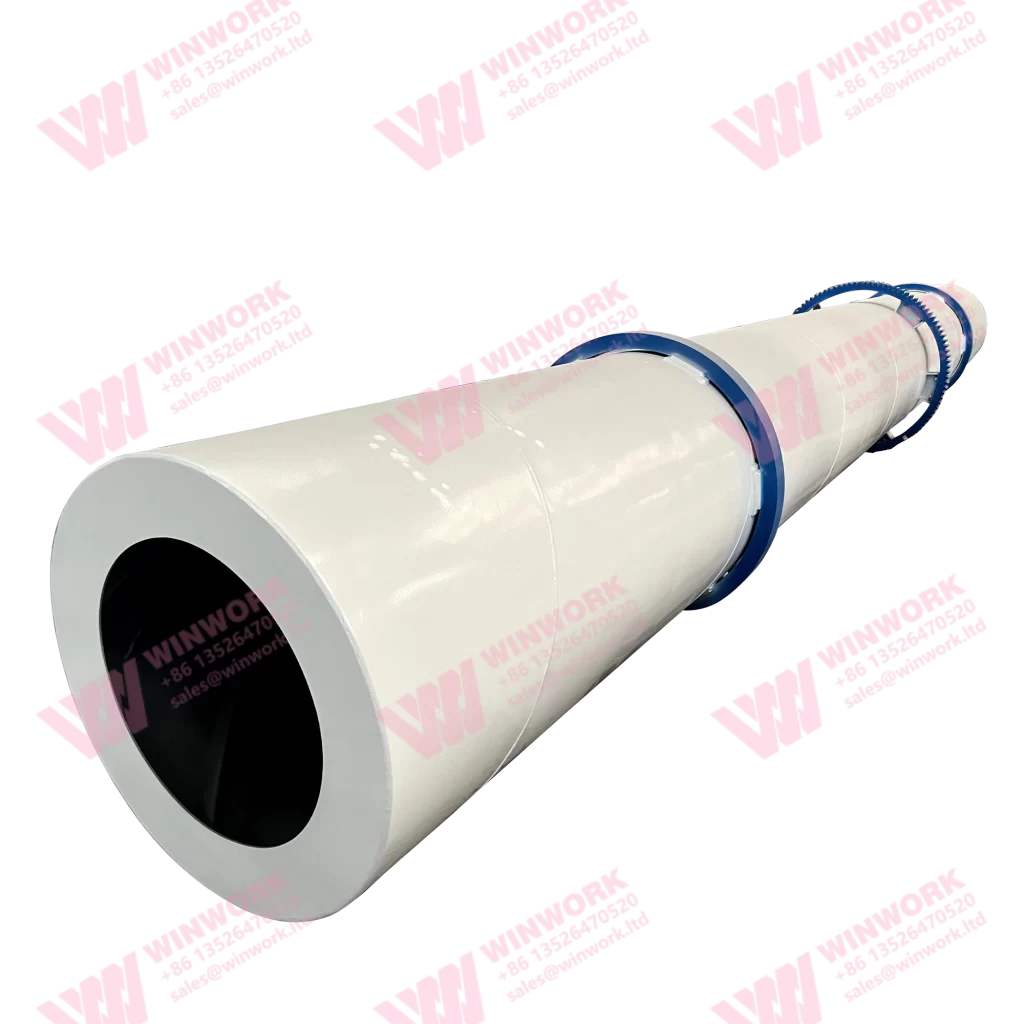
A multifunctional disc granulator with an optional spray gun should not be treated as a universal replacement for professional coating equipment. For high production volumes, continuous operation, strict coating thickness requirements, or demanding standards for surface uniformity, a dedicated coating machine is generally the more appropriate option to evaluate.
Professional coating equipment is designed specifically for coating operations and can be configured around the required production capacity and product specifications. It is therefore better suited to projects where coating consistency is a critical quality requirement.
The decision should depend on the actual application. For a small operation with modest coating requirements, an adapted disc granulator may be worth testing. For large-scale production or strict quality standards, a separate coating machine is usually the safer starting point for equipment selection.
5. How to Choose the Right Multifunctional Disc Granulator
Choosing a multifunctional disc granulator starts with the raw material and the finished product rather than the machine name alone.
Evaluate raw materials and formulation. Confirm the material type, particle size, moisture content, binding characteristics, and whether pretreatment is required. These details help determine whether disc granulation is appropriate.
Determine the required capacity. Estimate the hourly output and daily production target. The selected model should match the production plan, while the capacity of mixers, conveyors, dryers, and screening equipment should also be considered.
Define granule and coating requirements. Specify the desired particle size, shape, uniformity, and strength. If coating is required, clarify whether the goal is basic surface spraying or a tightly controlled coating process.
Check optional configurations. Confirm whether the selected model can accommodate the required spraying system or spray gun. The disc structure, angle adjustment range, and material compatibility should be checked before finalizing the configuration.
6. Conclusion
A multifunctional disc granulator offers a practical combination of relatively simple operation, visible granule formation, and flexibility for different suitable raw materials. Its open working area helps operators observe particle development and investigate abnormalities during production. With a compatible spraying system, the machine can also support moisture adjustment and, in suitable small-scale applications, basic coating operations.
Nevertheless, the right configuration depends on material properties, required capacity, and product quality standards. For modest coating requirements, an optional spray gun may be worth evaluating. For high-volume production or strict coating specifications, a dedicated coating machine is generally the better choice. Matching the equipment to the actual production process is the key to obtaining reliable results.
Get A Quote