

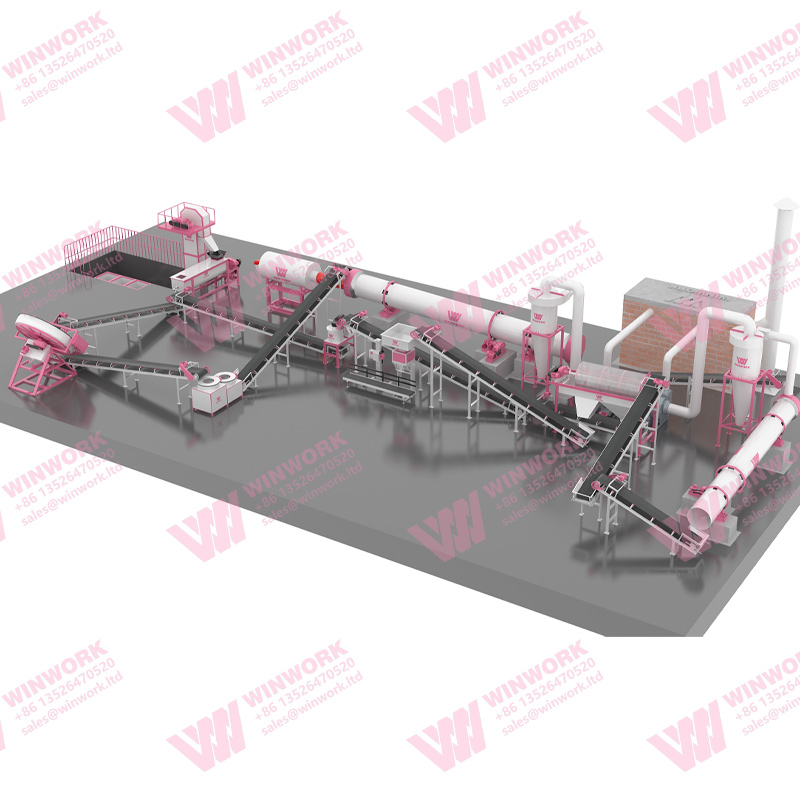
As global demand for cat litter continues to grow, manufacturers are under increasing pressure to improve production efficiency, control costs, and maintain consistent product quality. For many medium-sized factories, a 5T/H cat litter production line has become a practical and scalable solution that balances output capacity with investment cost.
A 5T/H cat litter production line is widely used for producing bentonite cat litter, tofu cat litter, paper cat litter, and other plant-based or mineral-based products. Compared with small pilot lines or large industrial systems, this cat litter production line offers stable output, manageable energy consumption, and flexible equipment configuration. This article provides a comprehensive explanation of how this cat litter production line works, the main equipment involved, how to choose the right configuration, and how it compares with other production capacities.
What Is a 5T/H Cat Litter Production Line?
A 5 tons per hour cat litter production line refers to a complete production system capable of producing approximately five tons of finished cat litter per hour under stable operating conditions. This capacity is commonly selected by manufacturers supplying regional markets or export-oriented brands with consistent demand.
Unlike small-scale lines designed for testing or niche products, a 5T/H cat litter production line is engineered for continuous operation. It integrates raw material handling, granulation, drying, screening, and packaging into a coordinated system. This level of integration helps reduce labor dependency and ensures uniform pellet quality.
Main Production Steps in a 5T/H Cat Litter Production Line
A complete 5T/H cat litter production line consists of several key processing stages. Each step directly affects production efficiency and final product performance.
- Raw Material Preparation
The first step in this cat litter production line is raw material preparation. Depending on the cat litter type, raw materials may include bentonite clay, soybean fiber, paper pulp, wood fiber, or corn-based materials.
Crushers are used to reduce raw materials to a suitable particle size. In a stable cat litter production line, consistent raw material size is essential for smooth granulation and reduced equipment wear.
- Feeding and Material Conveying
Automatic feeding systems regulate the flow of raw materials into the production process. For a cat litter production line, precise feeding control is critical to maintain stable throughput and prevent bottlenecks.
Conveyors, bucket elevators, and screw feeders are commonly used to ensure continuous material movement between processing stages.
- Mixing and Moisture Control
Mixing plays a vital role in any cat litter production line. Raw materials are blended with water or binders to achieve optimal moisture content for granulation.
Uniform mixing improves pellet bonding strength and reduces dust generation. Adjustable mixing parameters allow the cat litter production line to adapt to different raw material characteristics.
- Granulation and Pellet Formation
Granulation is the core process of a cat litter production line. Disc granulators or rotary drum granulators are used to form raw materials into uniform granules.
For medium-capacity systems, both granulator types can be applied. Disc granulators offer flexible control, while rotary drum granulators provide higher granule strength for continuous production. Proper granulation ensures that the cat litter production line delivers consistent granule size and absorbency.
- Drying and Cooling
Freshly formed pellets contain excess moisture and must be dried. In a cat litter production line, rotary dryers are typically used to reduce moisture content to a stable level.
After drying, cooling machines lower granule temperature to prevent deformation during storage and packaging. Efficient drying and cooling improve energy efficiency and product stability.
- Screening and Recycling
Screening systems separate qualified pellets from fines and oversized particles. In a well-designed cat litter production line, unqualified materials are recycled back into the granulation stage, improving raw material utilization.
- Packaging and Finished Product Handling
Automatic packaging machines complete the process by weighing and bagging finished products. A cat litter production line typically supports multiple bag sizes to meet different market requirements.
Key Equipment Used in a 5T/H Cat Litter Production Line
A reliable 5T/H cat litter production line depends on coordinated equipment selection. Core equipment includes:
- Crushers for raw material preparation

- Automatic feeding systems and conveyors
- High-efficiency mixers
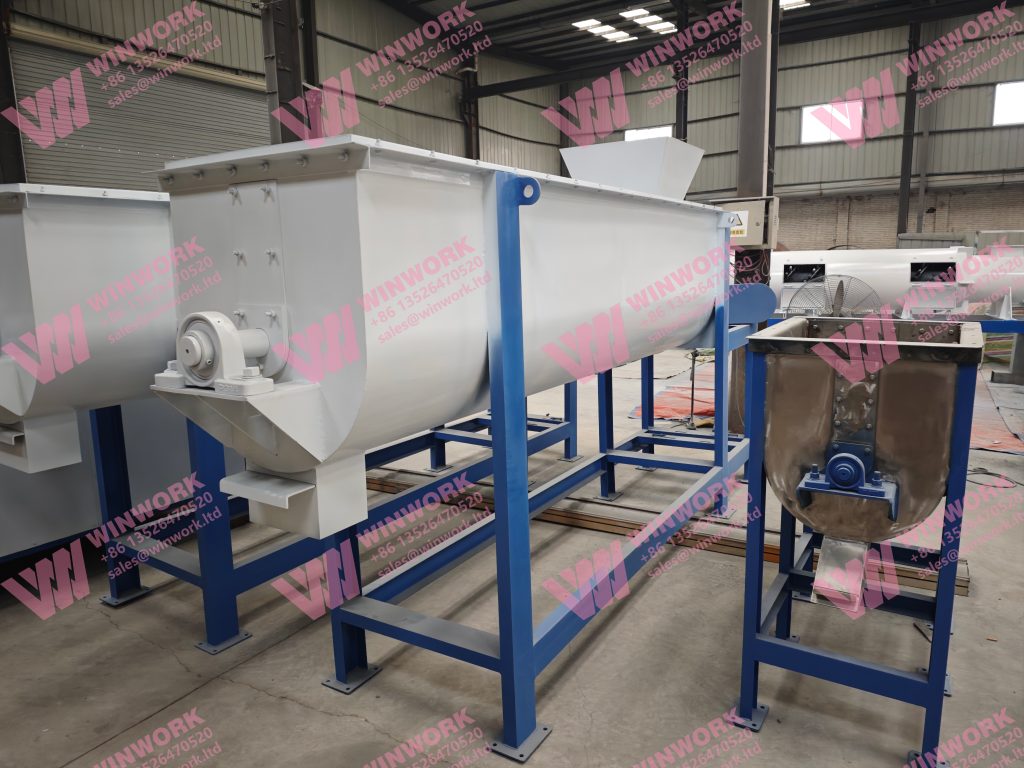
- Disc granulators or rotary drum granulators
- Rotary dryers and cooling machines
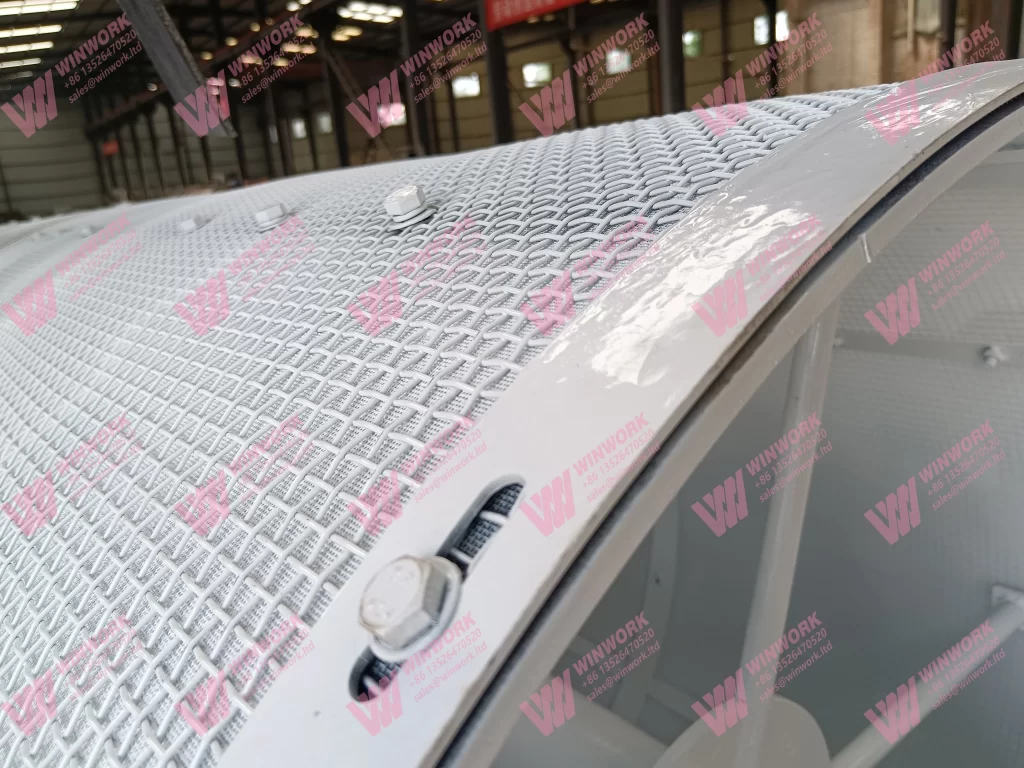
- Screening machines
- Automatic packaging systems
Each component must be matched to the target output of the 5T/H cat litter production line to ensure stable long-term operation.
How to Choose the Right 5T/H Cat Litter Production Line Configuration
Selecting a suitable 5T/H cat litter production line requires careful evaluation of production goals and operating conditions.
Raw Material Type
Different raw materials require different processing approaches. Bentonite-based systems emphasize pellet strength, while tofu and paper-based systems prioritize moisture control. A flexible cat litter production line should be customized accordingly.
Product Specifications
Pellet size, density, and absorbency directly affect equipment selection. Granulator type and drying capacity must align with final product requirements.
Automation Level
A higher automation level reduces labor costs and improves consistency. Most modern cat litter production line systems are designed for continuous operation with minimal manual intervention.
Energy Efficiency
Drying and cooling consume significant energy. Energy-efficient designs help reduce operating costs and improve profitability.
Supplier Support
Reliable technical support and spare parts availability are essential for maintaining a cat litter production line over the long term.
Comparing a 5T/H Cat Litter Production Line with Other Capacities
Understanding how a 5T/H cat litter production line compares with other capacities helps manufacturers make informed investment decisions.
3T/H Cat Litter Production Line
A 3T/H system is suitable for small factories or pilot production. Compared with a 5T/H cat litter production line, it requires lower investment but offers limited scalability and higher unit production costs.We usually opt for disc granulators which are suitable for small-scale production line to save costs.
5T/H Cat Litter Production Line
The 5T/H cat litter production line represents a balance between capacity and cost. It supports continuous production, stable quality, and moderate energy consumption, making it ideal for growing manufacturers.Both disc granlators and rotary drum granulators are optional for your production line.
8–10T/H Cat Litter Production Line
Higher-capacity systems are designed for large industrial operations. While output is higher, investment and operating complexity increase significantly.Rotary drum granulators are chosen for this production line. For many manufacturers, a 5T/H cat litter production line offers better return on investment during early expansion stages.
Advantages of a 5T/H Cat Litter Production Line
A well-designed 5T/H cat litter production line offers several practical advantages for manufacturers:
Stable and Continuous Output
A 5T/H cat litter production line is designed for continuous operation, ensuring stable hourly output without frequent interruptions. This stability helps manufacturers maintain consistent product quality and delivery schedules.
Lower Unit Production Cost Compared with Small Lines
Compared with small-capacity systems, a 5T/H cat litter production line spreads labor and energy costs over higher output volumes. This results in a lower unit production cost while maintaining reliable production efficiency.
Flexible Configuration for Different Cat Litter Types
A 5T/H cat litter production line can be configured to process bentonite, tofu, paper, or mixed cat litter materials. Adjustable equipment settings allow manufacturers to switch between product types without major structural changes.
Moderate Energy Consumption
The energy demand of a 5T/H cat litter production line is balanced, offering higher efficiency than small lines without the excessive power consumption of large-scale systems. This makes it suitable for long-term, cost-controlled operation.
Easier Maintenance Than Large-Scale Systems
Compared with high-capacity industrial lines, a 5T/H cat litter production line features simpler equipment layout and easier access for maintenance. This reduces downtime and lowers long-term maintenance costs.
These advantages make the 5T/H cat litter production line one of the most widely adopted solutions in the global cat litter manufacturing industry.
Typical Applications of a 5T/H Cat Litter Production Line
A 5T/H cat litter production line is commonly used for the following applications:
Bentonite Cat Litter Production
A 5T/H cat litter production line is well-suited for bentonite cat litter production, supporting stable granulation and consistent clumping performance. It can handle high-density mineral materials while maintaining uniform particle size and reliable output.
Tofu Cat Litter Production
For tofu cat litter production, a 5T/H cat litter production line provides precise moisture control and gentle granulation suitable for plant-based raw materials. This helps ensure strong pellets, low dust levels, and consistent absorbency.
Paper Cat Litter Production
A 5T/H cat litter production line can efficiently process recycled paper materials, forming lightweight pellets with good structural stability. Proper drying and screening systems help reduce fines and improve finished product quality.
Mixed or Customized Cat Litter Formulations
When producing mixed or customized cat litter formulations, a 5T/H cat litter production line offers flexibility in raw material ratios and process settings. This allows manufacturers to quickly adjust products to meet different market or brand requirements.
This versatility enables manufacturers to respond to changing market demand without replacing the entire production system, making a 5T/H cat litter production line a reliable choice for scalable operations.
Frequently Asked Questions about 5T/H Cat Litter Production Line
- What does 5T/H mean in a cat litter production line?
It refers to a production capacity of approximately five tons of finished cat litter per hour. - Is a 5T/H cat litter production line suitable for export-oriented factories?
Yes, many export-focused manufacturers choose a 5T/H cat litter production line for stable and scalable production. - Can a 5T/H cat litter production line handle different raw materials?
With proper configuration, a 5T/H cat litter production line can process bentonite, tofu, paper, and other materials. - How much space is required for a 5T/H cat litter production line?
Space requirements depend on layout and equipment selection, but it is generally suitable for medium-sized factories. - Can capacity be expanded beyond 5T/H later?
Most 5T/H cat litter production line systems are modular and can be upgraded to higher capacities.
Conclusion
A 5T/H cat litter production line is an ideal choice for manufacturers seeking a balance between output capacity, investment cost, and operational flexibility. By understanding the production process, equipment requirements, and capacity comparisons, manufacturers can make informed decisions and build a stable foundation for long-term growth. With proper configuration and reliable support, a 5T/H cat litter production line can deliver consistent quality, efficient production, and strong market competitiveness.
For more details, please feel free to contact us.
Email: sales@lanesvc.com
Contact number: +86 13526470520
Whatsapp: +86 13526470520
Get A Quote