

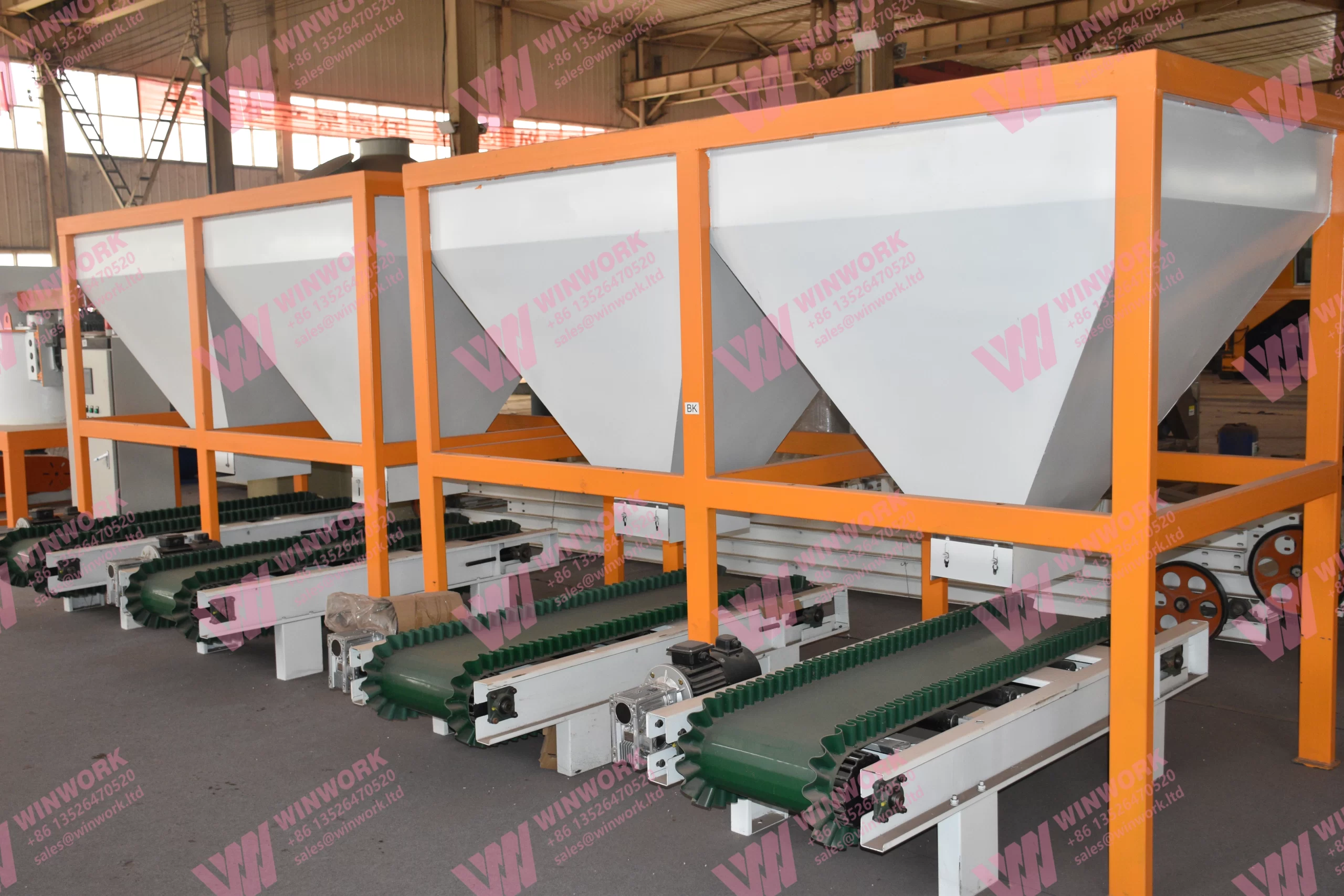
With the rapid development of modern manufacturing and agriculture, batching equipment has popularized as a key device for achieving accurate measurement and automated proportioning, gaining increasing attention in fertilizer production, feed processing, and chemical industries. Are you interested in this excellent batching system, now you can have a detail understanding of this system and learn some equipments. This article explores what batching equipment is, its common types, core advantages, and answers frequently asked questions, helping the industry fully recognize the vital role of batching equipment in ensuring formula consistency, improving production efficiency, and reducing manual errors.
With the continuous advancement of technology, the market’s demands for products are becoming increasingly strict, and the requirements for quality control of products are also rising. the equipment has gradually become an indispensable part of the production line, playing a very significant role in how to rationally proportion various types of raw materials. It can automatically complete the weighing and feeding of various materials in the production process according to the preset proportion, thus replacing the inefficient and unstable traditional manual batching mode. Whether in the production of compound fertilizers, concrete manufacturing or the field of food ingredients, it plays a core role in ensuring the accuracy of formulas and the efficiency of processes.
What Is Batching Equipment?
it refers to an automated system designed to accurately weigh and dispense different types of raw materials according to a set recipe. It operates through the coordinated work of load sensors, conveying devices, and control systems, metering each material step by step and feeding it into the next process. Compared with manual operations, batching equipment significantly reduces batching errors, enhances consistency between batches, and enables real-time data recording and traceability to meet modern quality management requirements.
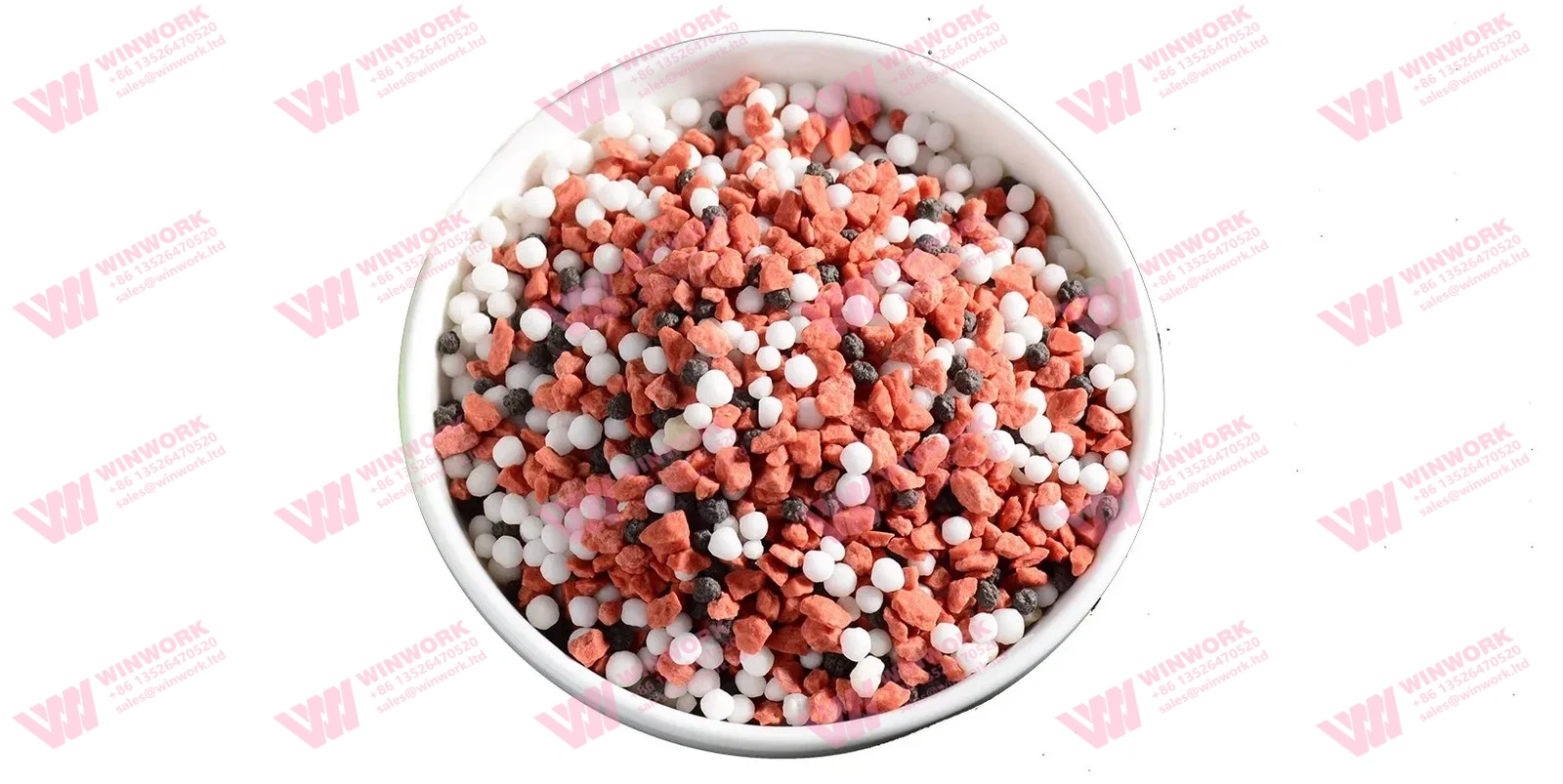
In fertilizer production, batching equipment can rapidly and uniformly feed nitrogen, phosphorus, potassium, and micronutrients into mixers in scientifically determined proportions, ensuring precise nutrient ratios in finished products. In feed processing, it guarantees nutritional formulas match animal growth requirements. Clearly, batching equipment is fundamental to large-scale, standardized manufacturing.
Common Types of Batching Equipment
Loading hopper
Loading hopper can transport fine materials with particle size below 5mm, and can also transport large materials above lcm. Strong adaptability, adjustable conveying capacity and continuous and uniform conveying of various materials. The equipment is equipped with anti-smashing net, vibration anti-blocking device, frequency conversion speed regulating device, which can achieve uniform discharge and accurate control of the quantity of discharge.
The frame is welded by channel steel and square steel, and the channel plate adopts double round arc plate to prevent material leakage effectively.
Tail has sleeper to absorb shock, and the center has special shock-absorbing roller support to improve the life of running parts.
The head unit sprocket is cut into 3 flap-teeth, so it is easy to replace the teeth without dismantling the chain plate, which is easy to maintain.
Dynamic batching system
Fertilizer batching machine is a high-tech product integrating conveying, weighing and measuring and quantitative control.
It can continuously and uniformly carry out dynamic control, quantitative feeding and continuous measurement for lump, granular and powdery materials.
Complete the series of closed-loop control with microprocessor, actuator and sensor.
When the system is running, the materials conveyed are measured by the belt dosing scale, and the received weight and speed signals are processed by the computer calculator and transformed into the cumulative value and instantaneous flow rate, and the cumulative value and instantaneous flow rate signals are transmitted to the industrial control machine (upper computer) by the RS-485 port
4 ~ 20mA analog current signal transmitted to the frequency converter regulator, and then by the frequency converter regulator to adjust the size of the silo outlet, when the flow rate increases, the size of the outlet closed, and vice versa, increase the size of the outlet, thus making the material flow and the stage of the cumulative value of flow and speed signals are processed and converted into the cumulative value and instantaneous flow.
Make the flow rate of the material and the cumulative amount of the stage are maintained in the set range, and then complete the measurement and dosing of the material.
Static batching system
The static feeder consists of an upper feeder and a lower weighing feeder. The upper feeder is responsible for feeding, and the lower feeder is responsible for weighing and dis-charging materials in batches. The batching accuracy is high and the operation is stable. The static scale feeding unit designed according to the process flow requirements is optionally equipped with a cycloid motor reducer.
Different forms of batching equipment can be configured flexibly according to production processes, material characteristics, and site conditions to achieve optimal batching efficiency and accuracy.
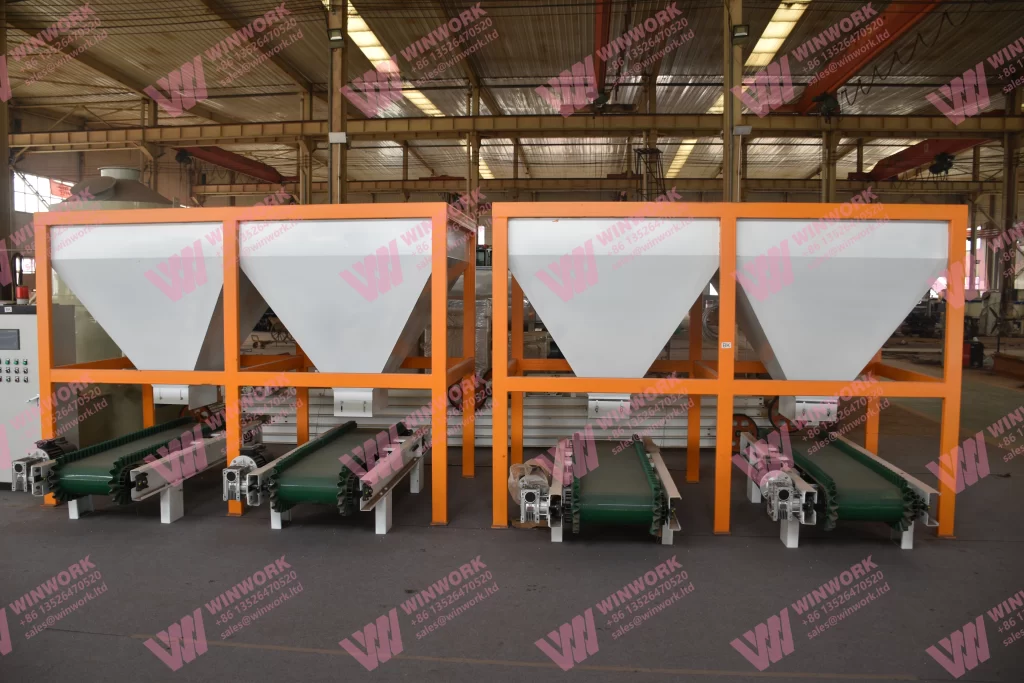
batching equipment
Core Advantages of Batching Equipment
Improved Batching Accuracy: Relying on high-precision sensors and closed-loop control, batching equipment keeps errors within a minimal range, avoiding fluctuations caused by manual handling.
Higher Production Efficiency: Automated workflows greatly shorten batching times, accelerating the entire production line, especially beneficial in large-volume runs.
Reduced Labor Cost & Physical Strain: equipment replaces heavy manual lifting and weighing tasks, lowering manpower needs and improving working conditions.
Ensured Formula Consistency & Traceability: Each batching record is logged automatically, facilitating quality analysis and issue tracing, meeting ISO and industry quality standards.
Enhanced Production Flexibility: Simply adjusting recipe parameters in the control system allows equipment to swiftly switch between products, adapting to diverse market demands.
Minimized Raw Material Waste: Accurate measurement prevents overfeeding or repeated weighing, effectively saving raw material costs.
Real-world cases show that after introducing advanced batching equipment, a compound fertilizer company improved product qualification rates by 12% and reduced raw material loss by 18%, highlighting the comprehensive value of equipment.
Selection and Maintenance Tips for this Equipment
When selecting equipment, key considerations include recipe complexity, physical properties of raw materials, single-batch output, and site layout. For example, dusty powders require enclosed equipment, while sticky materials call for anti-adhesion and self-cleaning designs. For maintenance, regularly calibrate load sensors, check conveyor mechanisms, clean residual material in hoppers to avoid cross-contamination, and update control system software to ensure long-term stable operation of the equipment.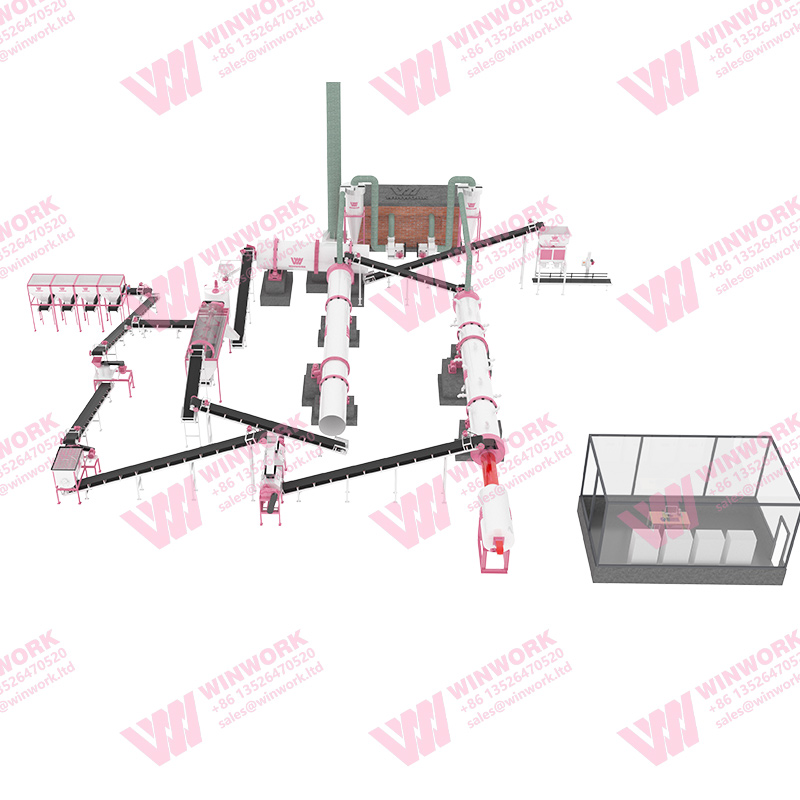
FAQ – Frequently Asked Questions and Answers
Q1: What is the difference between batching equipment and a mixer?
A1: Batching equipment precisely weighs and dispenses individual raw materials, while a mixer blends already weighed materials into a uniform mixture. They work sequentially in the production line to ensure both component accuracy and uniformity.
Q2: Which industries can use equipment?
A2: Batching equipment is widely used in fertilizer manufacturing, feed processing, concrete mixing, chemical formulation, food additives, and plastic pellet production, among others.
Q3: How to ensure the batching accuracy of batching equipment?
A3: Use high-precision load sensors, perform regular calibration, set appropriate feeding speeds, keep the equipment clean, and conduct proper maintenance to maximize batching equipment performance.
Q4: Can batching equipment be monitored and controlled remotely?
A4: Modern equipment often includes PLC and industrial IoT interfaces, enabling connection to central control systems for remote recipe modification, data monitoring, and fault alerts.
Q5: Is the initial investment in batching equipment high?
A5: Initial cost varies with type and capacity, but in the long run, batching equipment quickly pays off by saving raw materials, reducing labor, and improving qualification rates.
Conclusion
As a core element of modern production, batching equipment is evolving toward higher precision, greater intelligence, and improved energy efficiency. Integrating AI algorithms and big data analytics, next-generation batching equipment will enable adaptive batching and predictive maintenance, further enhancing production stability and resource utilization. For companies aiming to stay competitive, investing in efficient and reliable batching equipment is an inevitable trend.
As the key equipment for precise measurement and automated proportioning, batching equipment significantly improves product quality, production efficiency, and operational cost-effectiveness. With continuous technological progress, batching equipment will demonstrate its core value across more industries, providing solid support for intelligent manufacturing and green production.
For more details, please feel free to contact us.
Email: sales@lanesvc.com
Contact number: +8613526470520
Whatsapp: +8613526470520
Get A Quote