

Introduction
As global demand for premium pet care products continues to grow, manufacturers are investing in reliable technologies to improve product quality and production efficiency. Among all processing methods, bentonite cat litter wet granulation has emerged as one of the most stable and scalable technologies for industrial clumping litter manufacturing.
This article provides a comprehensive industrial reference covering process flow, equipment configuration, technical parameters, quality control, and plant optimization strategies. The objective is to help manufacturers understand how bentonite cat litter wet granulation works in practice and how to design an efficient production system that meets modern market requirements.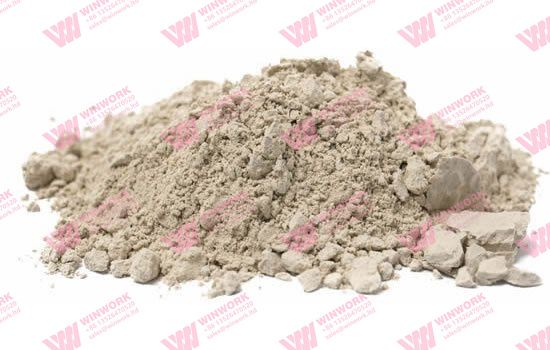
Fundamentals of Bentonite in Cat Litter Production
Bentonite is a natural clay mineral rich in montmorillonite, known for its strong swelling and water absorption properties. When exposed to moisture, bentonite expands and forms cohesive clumps, making it ideal for clumping cat litter applications.
However, raw bentonite powder cannot be sold directly to consumers. It must be transformed into uniform granules with controlled size distribution, mechanical strength, and low dust content. Wet granulation enables manufacturers to achieve these characteristics through controlled moisture addition and mechanical rolling.
The quality of the final product depends heavily on the grade of bentonite used. Higher montmorillonite content typically improves absorption capacity and clumping strength. At the same time, the initial moisture level of the raw material influences granulation stability. If the raw clay contains excessive natural moisture, additional drying or adjustment may be required before entering the granulation stage. Furthermore, the type of granulator selected—whether disc or rotary drum—affects particle shape, output capacity, and operational flexibility.
Why Bentonite Cat Litter Wet Granulation Is Preferred
There are multiple manufacturing methods available for producing granular cat litter, including dry compaction and extrusion systems. However, bentonite cat litter wet granulation remains widely adopted in industrial production due to its ability to produce spherical particles with improved surface smoothness and structural integrity.
In wet granulation systems, moisture acts as a binding medium that allows fine particles to aggregate gradually. This layered growth mechanism produces granules with better mechanical strength compared to simple compression. As a result, products manufactured through bentonite cat litter wet granulation typically generate less dust during packaging, transportation, and consumer use.
Additionally, wet granulation offers greater flexibility in adjusting particle size distribution. By modifying rotational speed, spray intensity, and residence time, operators can fine-tune the granule diameter to match different market preferences.
Complete Industrial Process of Bentonite Cat Litter Wet Granulation
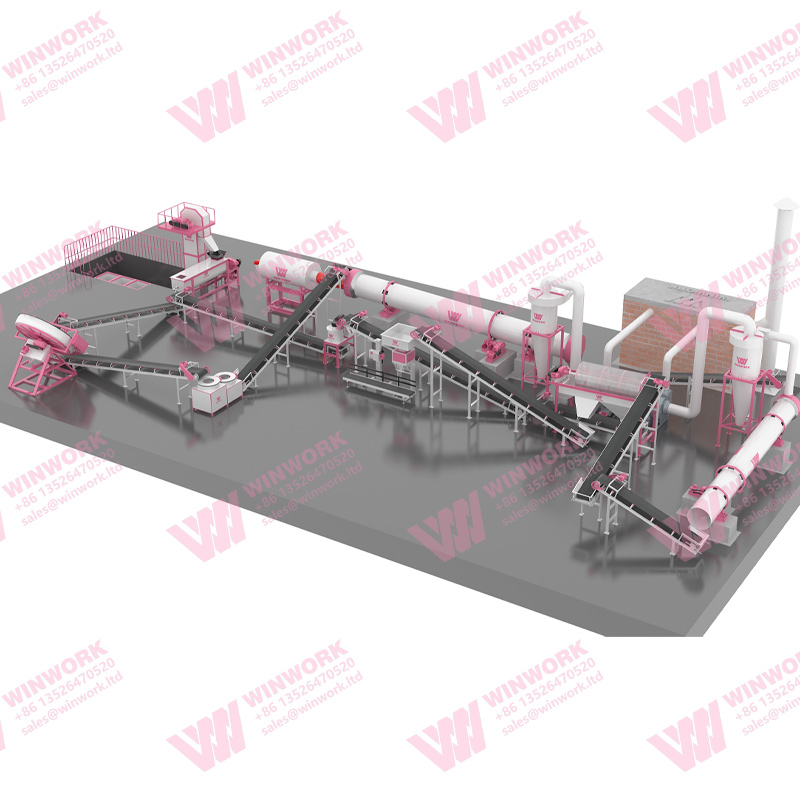
A modern bentonite cat litter wet granulation production line is composed of several interconnected stages designed to ensure consistent output quality.
Raw Material Crushing and Grinding
The process begins with bentonite ore, which is first crushed to reduce large lumps into manageable fragments. After primary crushing, the material is fed into grinding equipment to achieve a fine powder suitable for granulation.
The fineness of the powder plays a critical role in bentonite cat litter wet granulation. Finer particles promote better binding during moisture addition, while excessively coarse particles may reduce granule strength and uniformity. Therefore, grinding parameters must be optimized according to the selected granulation equipment and target product specifications.
Mixing and Moisture Conditioning
Once the powder reaches the required fineness, it is transferred into a mixing unit where controlled water spraying occurs. Moisture conditioning is one of the most sensitive stages in bentonite cat litter wet granulation because water acts as the primary binding agent.
The optimal moisture range typically falls between 28 percent and 35 percent, though the precise value depends on raw material characteristics and production capacity. For example, a high-grade bentonite with strong swelling properties may require slightly lower water addition to avoid over-saturation. Conversely, materials with lower binding strength may need a higher moisture ratio to initiate proper granule formation.
Uniform distribution of water is essential. Poor mixing can create uneven granules or unstable pellets that break during drying.
Granule Formation in the Granulator
The core of bentonite cat litter wet granulation lies in the granulation stage. Most industrial plants use either disc granulators or rotary drum granulators.
In a disc granulator system, the rotating inclined pan allows moist powder to roll continuously, forming spherical particles through layering. Operators can adjust the inclination angle and rotational speed to influence particle growth rate. A steeper angle generally produces smaller granules, while slower rotation may increase particle size.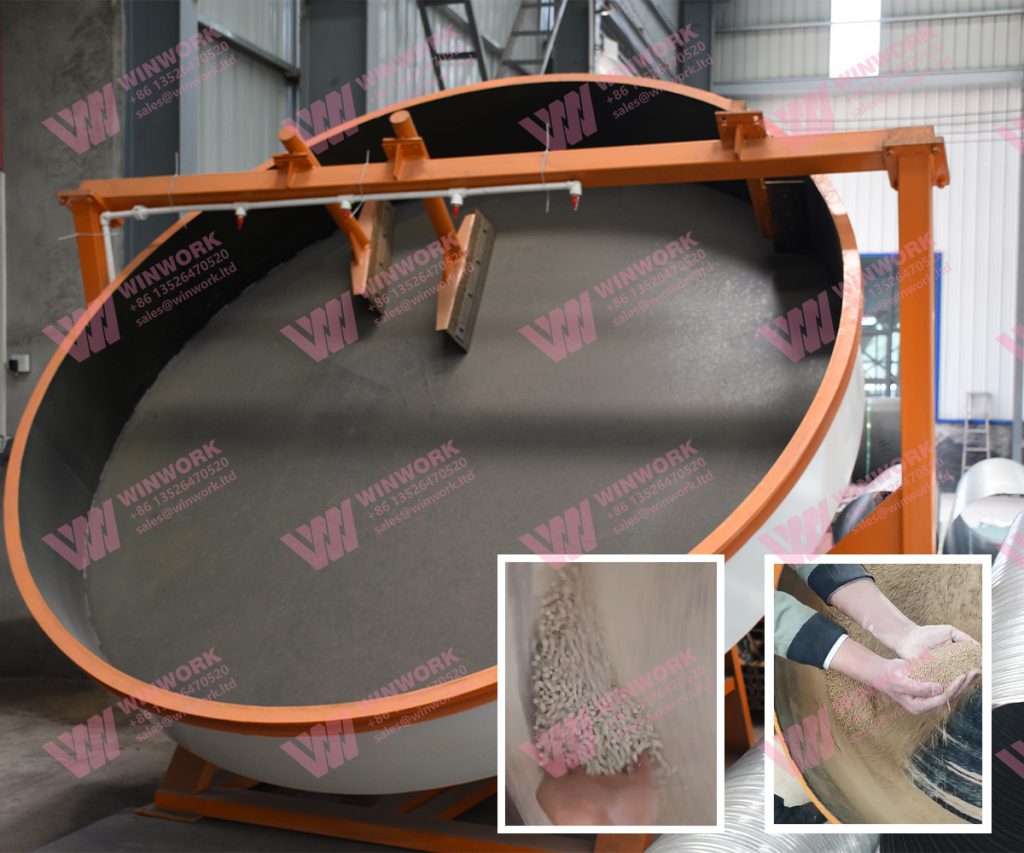
In a rotary drum granulator, granulation occurs inside a cylindrical chamber where material tumbles under rotational motion. This design is suitable for higher-capacity production and offers more stable continuous operation.
During bentonite cat litter wet granulation, particles grow gradually as fine powder adheres to existing nuclei. Proper control of feed rate and spray intensity ensures consistent particle size distribution, typically ranging from 0.5 millimeters to 4 millimeters.
Drying and Moisture Stabilization
Fresh granules exiting the granulator contain high moisture levels and must be dried to achieve storage stability. Rotary dryers are widely used in bentonite cat litter wet granulation plants due to their continuous operation and high heat transfer efficiency.
Hot air flows through the rotating drum, reducing moisture content to safe levels without damaging granule structure. Inlet temperature must be carefully controlled to avoid excessive surface hardening, which can negatively affect clumping performance. Similarly, outlet temperature should remain moderate to preserve internal moisture balance.
Proper drying ensures that granules maintain structural integrity while retaining their natural absorption properties.
Screening and Recycling
After drying, the material passes through a vibrating screen to classify particles by size. Qualified granules move forward to packaging, while oversized particles are crushed and returned to the system. Fine powder is also recycled into the granulation stage.
This closed-loop design increases raw material utilization efficiency and reduces production waste, making bentonite cat litter wet granulation both economical and environmentally responsible.
Dust Removal and Product Polishing
Industrial production inevitably generates dust during material transfer and screening. Therefore, modern wet granulation facilities incorporate cyclone separators and bag filter systems to maintain a clean working environment.
In some cases, polishing machines are installed to improve the surface smoothness of finished granules. This enhances visual appeal and reduces residual dust, increasing product competitiveness in premium markets.
Key Process Control Factors
Stable operation of wet granulation requires continuous monitoring of several interrelated variables. Moisture content must remain within the optimal range to ensure strong binding without excessive stickiness. Granulator rotation speed must be calibrated to maintain rolling motion rather than sliding. Feed rate should match system capacity to avoid overload or insufficient layering.
Additionally, ambient humidity and temperature may influence drying performance, particularly in large-scale plants. Integrating automated sensors and PLC control systems can significantly improve consistency and reduce operator dependency.
Equipment Configuration for Industrial Plants
A complete bentonite cat litter wet granulation production line typically includes crushing equipment, mixers, granulators, dryers, vibrating screens, dust collectors, and packaging machines.
Capacity selection depends on market demand. Small factories may operate at three tons per hour, while large industrial plants can exceed ten tons per hour. When designing the system, manufacturers must balance initial investment with expected production output and long-term operating cost.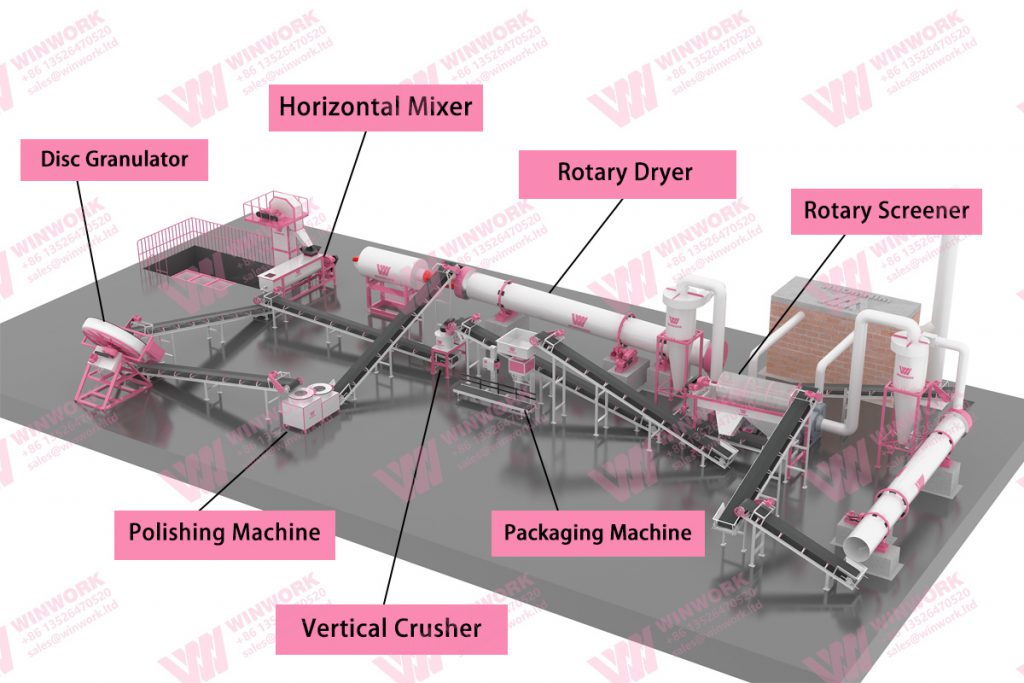
Quality Control and Testing
Consistent quality is essential for brand reputation. In bentonite cat litter wet granulation, testing procedures often include clumping strength evaluation, drop resistance testing, moisture analysis, and dust content measurement.
Absorption rate is particularly important because it determines how quickly the litter forms solid clumps upon contact with liquid. Maintaining precise control over granulation and drying stages ensures stable performance across production batches.
Cost and Energy Optimization
Energy consumption in bentonite cat litter wet granulation primarily arises from grinding and drying operations. Improving burner efficiency, optimizing airflow design, and installing heat recovery systems can significantly reduce operational expenses.
Automation also contributes to cost savings by minimizing labor requirements and preventing material waste caused by parameter fluctuations.
Future Development Trends
The future of bentonite cat litter wet granulation lies in intelligent manufacturing. Increasingly, producers are adopting automated control systems, energy-efficient dryers, and environmentally friendly dust collection solutions.
As consumer demand shifts toward low-dust and high-performance products, manufacturers who invest in advanced bentonite cat litter wet granulation technology will gain competitive advantages in both domestic and international markets.
Conclusion
Bentonite cat litter wet granulation remains one of the most effective and scalable solutions for industrial clumping litter production. By carefully controlling raw material preparation, moisture conditioning, granulation dynamics, drying parameters, and screening efficiency, manufacturers can achieve consistent product quality and strong market competitiveness.
For investors and factory operators seeking long-term profitability, implementing a well-designed wet granulation system provides a reliable foundation for sustainable growth in the global pet care industry.
For more details, please feel free to contact us.
Email: sales@lanesvc.com
Contact number: +8613526470520
Whatsapp: +8613526470520
Get A Quote