


Introduction about Bentonite Litter Plant Layout
The global pet care industry continues to expand, and clumping bentonite cat litter remains one of the most stable and profitable segments within it. However, building a successful factory requires more than selecting reliable machines. The structural and engineering logic behind the bentonite litter plant layout ultimately determines whether a project achieves stable output, consistent product quality, and long-term cost control.
Many new investors focus heavily on equipment price while underestimating the strategic importance of plant layout design. In fact, an inefficient bentonite litter plant layout can increase material handling distance, create bottlenecks between process stages, raise dust concentration levels, and limit future expansion opportunities. Conversely, a carefully engineered layout improves workflow continuity, reduces energy waste, and simplifies maintenance management.
This article explores the most critical factors to evaluate before finalizing your bentonite litter plant layout, offering practical planning principles and engineering recommendations suitable for 3–10 tons per hour production lines and beyond.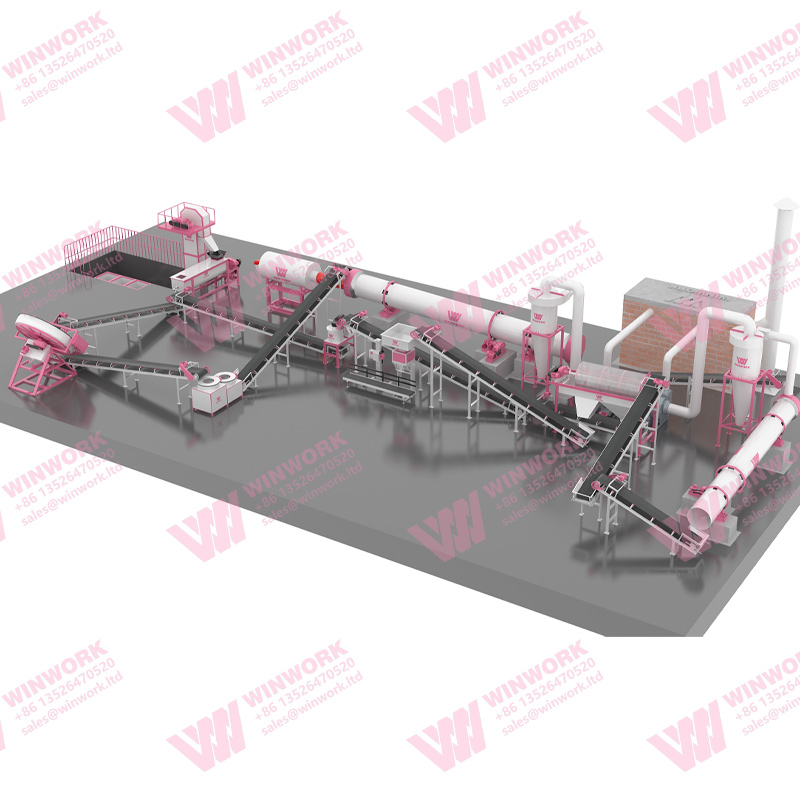
Defining the Complete Production Process Before Layout Planning
Before drafting a bentonite litter plant layout, it is essential to map out the full production process in technical detail. A typical clumping bentonite cat litter production line includes raw material storage, crushing, additive mixing (if fragrance or color is required), granulation, drying, screening, cooling, dust removal, automatic weighing, packaging, and palletizing.
Each stage has unique space, height, ventilation, and maintenance requirements. If the bentonite litter plant layout is designed without fully understanding the interaction between these stages, the final installation may require expensive modifications.
For example, granulation systems often require stable and continuous feeding. If the crushing system is positioned too far away or requires multiple transfer conveyors, raw material supply may fluctuate. Therefore, the bentonite litter plant layout must follow the natural processing order, minimizing unnecessary directional changes.
A clear process flow diagram should be completed before any civil construction begins. This ensures that building dimensions match equipment specifications rather than forcing equipment to adapt to limited structural space.
Material Flow Logic and Spatial Organization
Material flow is the backbone of an efficient bentonite litter plant layout. Bentonite is relatively heavy, and improper transport design increases mechanical wear and electricity consumption.
An ideal layout reduces horizontal conveying distance and takes advantage of gravity whenever possible. Vertical arrangement strategies are frequently used in modern plants. For instance, crushed bentonite can be elevated once to an upper-level storage bin and then flow downward into granulation and drying systems. This approach reduces repeated lifting operations and improves operational stability.
When planning spatial organization, engineers must also consider forklift pathways, raw material delivery access, and finished product dispatch routes. Intersections between raw input and finished output areas should be avoided to prevent logistical congestion.
A well-structured bentonite litter plant layout ensures that materials move forward in a continuous and logical path, without crossing production zones or requiring manual repositioning.
Equipment Positioning and Functional Zoning
Effective functional zoning improves operational clarity. In a professionally designed bentonite litter plant layout, the production workshop is usually divided into distinct areas:
-
Raw material preparation zone
-
Core processing zone
-
Finishing and packaging zone
-
Dust collection and environmental control zone
-
Electrical and control room
Separating these zones enhances workflow transparency and simplifies supervision.
Crushing equipment should be located near raw material storage to reduce loader operation time. Since crushing generates dust, the bentonite litter plant layout must integrate immediate dust extraction at both inlet and outlet points.
Granulation and drying equipment are the heart of the plant and typically occupy the central section of the layout. The rotary dryer requires adequate space not only for installation but also for burner systems, exhaust pipelines, and maintenance access. Positioning this equipment centrally shortens the distance to both upstream and downstream processes.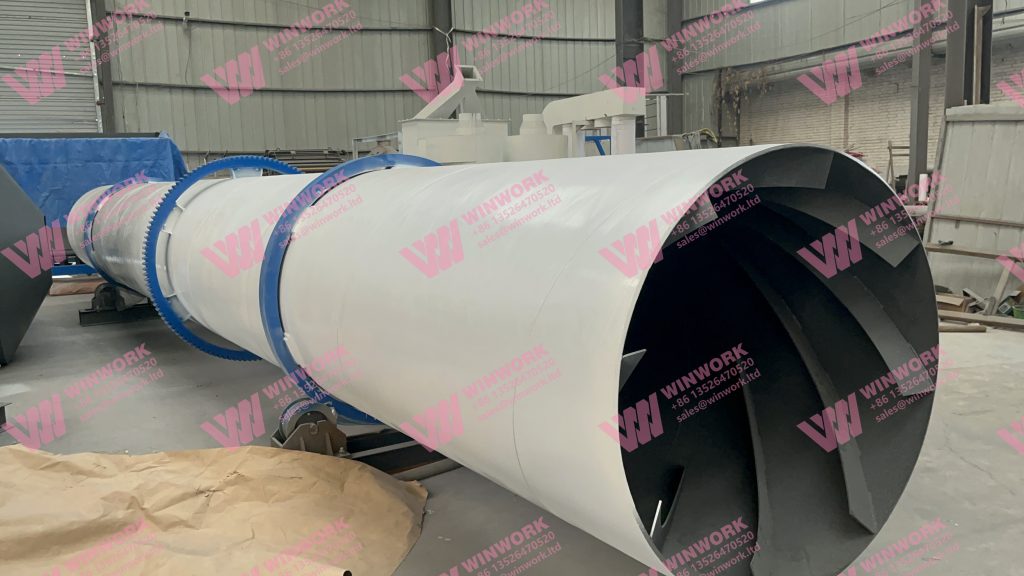
Screening and packaging equipment should be installed in a clean and relatively dust-controlled area. If packaging machines are placed too close to heavy dust sources, product appearance and sealing accuracy may be compromised.
Clear zoning within the bentonite litter plant layout supports better quality control and operational safety.
Structural Requirements and Building Design
The structural design of the factory building must correspond to the equipment arrangement. A bentonite litter plant layout for a 5 TPH production line often requires a building height of at least 8–12 meters, depending on vertical equipment configuration.
The rotary dryer’s support frame, cyclone separator, and exhaust fan all require elevation. If ceiling height is insufficient, the layout must compensate with additional conveyors, which increase investment and energy consumption.
Foundation strength is another critical factor. Heavy equipment such as dryers and granulators require reinforced concrete bases to prevent vibration and structural damage. Therefore, civil engineering drawings should be finalized only after the bentonite litter plant layout has been technically approved.
Ventilation design must also be integrated into building planning. Natural airflow direction and prevailing wind patterns can influence exhaust system positioning.
Dust Control Integration
Dust management is one of the most important considerations in bentonite processing. Without systematic planning, airborne particles accumulate and create safety hazards.
A scientific plant layout integrates centralized dust collection pipelines connected to crushers, screens, bucket elevators, and packaging machines. Instead of installing isolated dust collectors at each machine, centralized systems reduce maintenance complexity and improve filtration efficiency.
Airflow routing must be calculated to ensure balanced suction power. Poor duct placement can reduce collection performance. Additionally, dust collection rooms should be located at the edge of the production workshop to simplify waste handling.
By integrating dust control into the early stages of plant layout design, factories can maintain cleaner working environments and comply with environmental standards.
Energy Optimization Through Layout Engineering
Energy consumption is closely tied to spatial design. Excessively long conveyors increase motor load and electricity usage. Therefore, compact linear arrangements are preferred.
Burner systems for rotary dryers require fuel supply lines and safe clearance. Positioning these components efficiently reduces pipeline installation cost and heat loss.
In some advanced bentonite litter plant layout configurations, waste heat from dryer exhaust systems is partially recovered to preheat incoming air. Integrating such systems during initial planning is far easier than retrofitting them later.
Electrical panels should be grouped in accessible control zones rather than scattered across the workshop. This centralization simplifies wiring and reduces cable length.
Automation and Control Room Placement
Automation enhances consistency and reduces labor dependency. A modern bentonite litter plant layout often includes centralized PLC control systems that monitor feeding rates, dryer temperature, and packaging accuracy.
Control rooms should be positioned where operators have visual or digital access to critical process sections. Elevated control platforms overlooking granulation and drying zones are common in advanced facilities.
Cable routing paths must be planned carefully to avoid interference with moving equipment. Integrating automation planning into the plant layout ensures smoother commissioning and easier troubleshooting.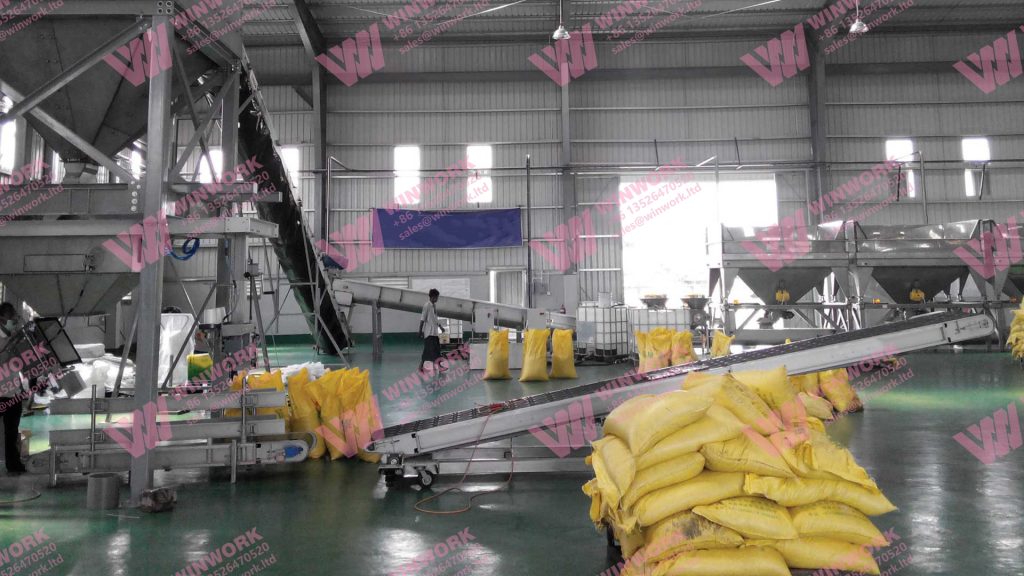
Capacity Matching and Bottleneck Prevention
Every component in the production line must be capacity-balanced. If the crusher handles 12 TPH but the dryer can only process 8 TPH, material will accumulate and disrupt workflow.
When designing the plant layout, engineers calculate hourly throughput for each stage. Buffer silos are sometimes included between key sections to stabilize flow.
Screening surface area must be sufficient to handle peak output after drying. Packaging machines must match final production speed to prevent backlog.
Careful capacity matching prevents uneven wear and extends equipment lifespan within the bentonite litter plant layout.
Maintenance Accessibility and Operational Safety
Maintenance space should never be sacrificed for compactness. Rotary dryers require periodic internal inspection. Vibrating screens need regular mesh replacement.
Inadequate spacing complicates maintenance tasks and increases downtime. Therefore, maintenance platforms, ladders, and safety railings must be incorporated into the bentonite litter plant layout.
Emergency exits, fire extinguisher stations, and electrical safety zones must comply with industrial safety standards. Proper walkway design improves worker mobility and reduces accident risk.
Planning for Future Expansion
Market demand may increase after initial operation. Designing an expandable bentonite litter plant layout allows seamless capacity upgrades.
Engineers often reserve space for an additional dryer or parallel screening line. Electrical systems can be sized with extra load capacity.
Structural steel frameworks should be modular, enabling extension without full reconstruction. Including expansion potential during the first planning stage saves significant future investment.
Financial Impact of Professional Layout Design
Although layout engineering may represent a small percentage of total project cost, its influence on operational economics is substantial.
Reduced material handling distance lowers energy use. Optimized zoning shortens training time for new workers. Efficient dust control decreases equipment wear.
A carefully engineered bentonite litter plant layout minimizes hidden inefficiencies that accumulate over years of operation.
Investors who treat layout planning as a strategic engineering process rather than a simple drawing exercise generally achieve stronger long-term returns.
Conclusion
Establishing a successful bentonite cat litter factory requires systematic planning that extends far beyond machinery procurement. The bentonite litter plant layout defines workflow continuity, operational efficiency, environmental compliance, and expansion flexibility.
By carefully analyzing process sequence, spatial organization, equipment positioning, structural requirements, automation integration, and capacity balance, investors can construct a facility that operates reliably and competitively in global markets.
Before beginning construction, dedicate sufficient time and technical expertise to developing a scientifically structured plant layout. Sound planning at the design stage creates measurable advantages throughout the entire lifecycle of your manufacturing operation.
For more details, please feel free to contact us.
Email: sales@lanesvc.com
Contact number: +8613526470520
Whatsapp: +8613526470520


Get A Quote