

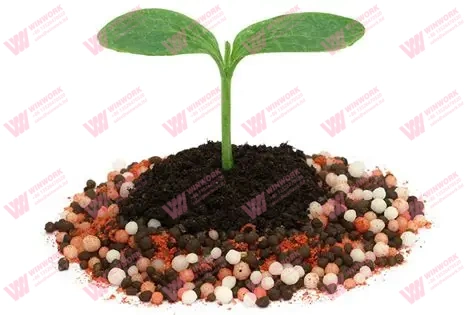
With the deepening of global circular economy development, the recycling and utilization of organic waste have become a key direction of industrial upgrading. The carbonization production line, as a core equipment system for realizing organic material resource utilization, can convert various organic materials into carbon products with high economic value, while reducing environmental pollution. The following article will interpret the definition, working process, applicable materials, and advantages of carbonization production line in order to assist enterprises to choose a suitable production line.
What is carbonization production line?
The carbonization production line refers to a set of continuous and automated equipment systems that use high-temperature anaerobic or low-oxygen technology to decompose organic materials into carbon products in a closed environment with limited oxygen. Through thermal decomposition, condensation and other reactions, moisture, volatile components and other impurities are removed, finally forming carbon-rich products.
Compared with traditional carbonization methods, the carbonization production line has the characteristics of continuous production, high automation, stable product quality and environmental protection, and is an important equipment for promoting the resource utilization of organic waste. For fertilizer manufacturers specifically, these carbonized products can be further processed into biochar-based organic fertilizers or soil conditioners, creating additional value from agricultural waste.
The process and main equipment of carbonization production line
The carbonization production line adopts a standardized and automated production process, which is mainly composed of 4 core systems. Each system is equipped with professional equipment to ensure the smooth progress of the carbonization process:
Purification system
The purification system removes harmful substances such as dust, sulfur dioxide and nitrogen oxides in the gas, avoids air pollution, and at the same time purifies the combustible gas to ensure its safe recycling. Modern purification systems also enable heat recovery, which can be redirected to dry raw materials—reducing overall energy consumption by 20-30%.
The common equipment: dust removers, gas purification towers, condensers.
Carbonization system
The carbonization system controls the temperature, oxygen content and residence time of materials in the furnace through precise temperature control devices, ensuring that the materials are fully carbonized and the quality of carbon products is stable. Temperature typically ranges from 400℃ to 800℃ depending on the feedstock and desired carbon properties.
The common equipment: rice husk carbonization furnace, continuous carbonization furnace, temperature control panels.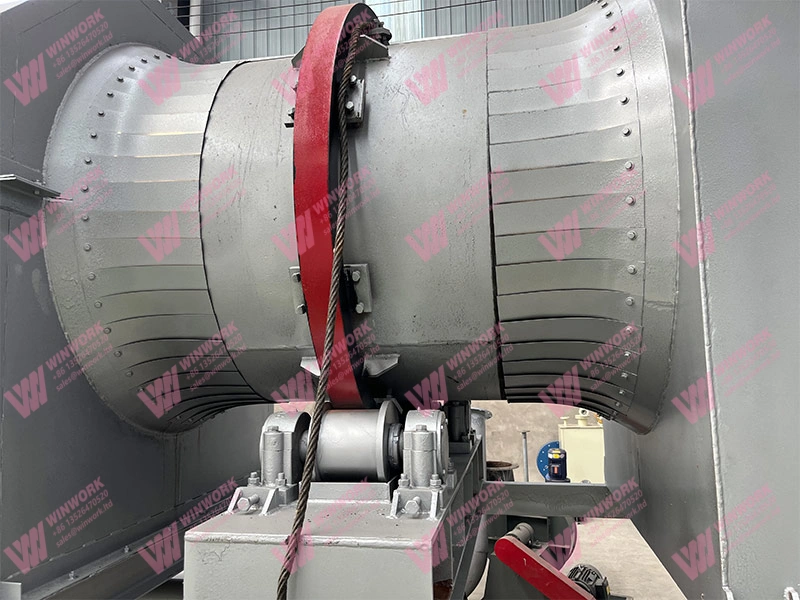
Auxiliary equipment system
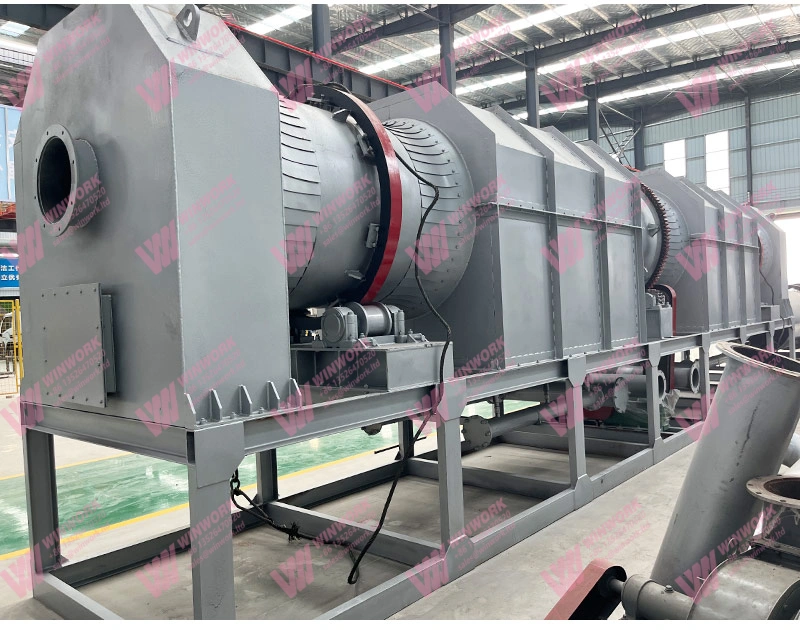
This includes feeding machine, cooling machine, conveyor, and control system. This is the auxiliary equipment system that ensures the continuity and automation of the production line. This whole system achieves the automation control of feeding, temperature, carbonization time, cooling and other links, reducing manual operation and improving production efficiency.
The whole coking process is designed for automation and continuous production. This automated production mode not only improves production efficiency and product quality stability, but also reduces labor costs and operational risks, making large-scale continuous production possible.
The common equipment: coconut shell carbonization machine, sludge carbonization machine, automatic control systems.
Applicable materials of carbonization production line
The carbonization production line has strong adaptability to materials and can process various organic materials, mainly including the following categories:
Coconut shell
A high-quality raw material with dense texture, which can be carbonized to produce activated carbon with strong adsorption capacity. In fertilizer applications, coconut shell biochar is valued for its high porosity and nutrient retention properties.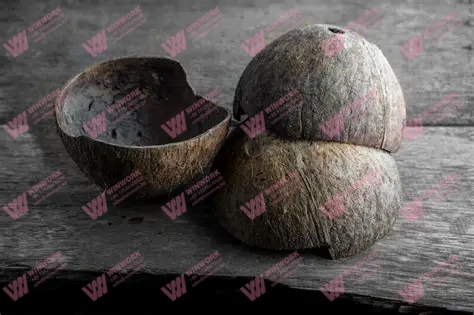
Nut shell
Including various fruit shells such as peanut shells and chestnut shells, which are rich in organic matter and suitable for large-scale carbonization processing.
Walnut shell
With high hardness and good carbonization performance, the carbon product made from it has excellent wear resistance and is widely used in filtration and soil improvement.
Hardwood
Such as oak, birch and other tree species, with high density and low ash content, which can produce high-calorie carbon products suitable for agricultural use.
Machine-made wood
Including wood chips, wood shavings and other processed wood products, with uniform particle size and easy to realize continuous carbonization production.
Additional materials suitable for carbonization:
Rice husk
A common agricultural waste with high silica content. Its carbonized products are widely used in water treatment, soil improvement, and as a raw material for silicon-based fertilizers.
Wood chips
With small and uniform particle size, wood chips can be quickly and fully carbonized, making them ideal for large-scale continuous production lines.
Charcoal
Recyclable carbon material, which can be re-carbonized to improve its density and adsorption performance, increasing its added value for specialty fertilizer applications.
Sawdust
A by-product of wood processing with abundant sources and low cost. Its carbonized products can be used as biochar for composting or as biomass fuel.
Bamboo
Made from bamboo as raw material, bamboo charcoal has a developed pore structure, and the carbonized products have excellent adsorption and deodorization effects—valuable for high-end organic fertilizers.
Advantages of carbonization production line
Large processing capacity
The carbonization production line adopts continuous production design and automated feeding and conveying equipment, which can realize 24-hour continuous operation. The daily processing capacity can reach several tons to hundreds of tons, meeting the large-scale processing needs of different enterprises and suitable for large-scale organic waste treatment projects. For fertilizer manufacturers, this means reliable, consistent supply of biochar for blending operations.
Environmentally friendly
Equipped with a complete purification system, the production line can effectively treat the flue gas and harmful substances generated during the carbonization process, ensuring that exhaust gas meets national emission standards and avoiding air pollution. At the same time, it realizes the resource utilization of organic waste, reduces environmental pressure caused by waste stacking and incineration, and conforms to the green and low-carbon development concept increasingly required by agricultural supply chains.
Long machine service life
The core equipment of the carbonization production line is made of high-temperature resistant, corrosion-resistant and wear-resistant materials, with strong durability. After professional design and manufacturing, the equipment has stable performance and low failure rate. Under normal operation and regular maintenance, the service life of the main equipment can reach 5-8 years, reducing equipment replacement frequency and maintenance costs.
How to choose a proper carbonization production line
Choosing a suitable carbonization production line is crucial to ensuring production efficiency, product quality and investment returns. Enterprises and investors should consider the following key factors:
Processing scale and material type
First, determine the daily or annual processing capacity according to the amount of local organic waste and market demand for carbon products. At the same time, select the corresponding production line type according to the characteristics of the processed materials—different feedstocks may require different furnace designs.
Equipment quality and automation level
Prioritize the selection of production lines with high-quality core equipment and advanced automation control systems. These can not only ensure stable operation and long service life but also reduce manual intervention, improve production efficiency and product quality stability.
Cost evaluation and after-sales service
Compare the investment cost, operation cost and expected return of different production lines, and choose a line with high cost-effectiveness. At the same time, pay attention to the manufacturer’s after-sales service, including equipment installation and commissioning, technical training, spare parts supply and maintenance support.
Environmental compliance
The carbonization production line must meet local environmental protection standards. With increasingly strict environmental policies worldwide, choosing an environmentally compliant production line can avoid shutdown risks and ensure long-term stable operation.
Frequently Asked Questions about carbonization production line
Q1: What is the main difference between continuous and intermittent carbonization production lines?
A1: Continuous carbonization production lines can realize 24-hour uninterrupted production with high efficiency and stable product quality, while intermittent ones need to stop for feeding and discharging, making them suitable for smaller-scale production.
Q2: What is the temperature range required for the carbonization process?
A2: The temperature range required for the carbonization process is typically 400-800℃. Lower temperatures (400-600℃) are often preferred when producing biochar for fertilizer applications, as they preserve more beneficial nutrients.
Q3: Can the carbonization production line process materials with high moisture content directly?
A3: It is not recommended to process materials with high moisture content directly. A pre-drying system should be used to reduce moisture content to 15%-20% to ensure optimal carbonization effect and energy efficiency.
Q4: What are the main uses of carbon products produced by the carbonization production line?
A4: Carbon products can be used as soil improvers to enhance soil fertility, as adsorbents for environmental treatment, as biochar-based fertilizer components, and as fuel for energy supply.
Q5: Can carbonized materials be used directly as fertilizer?
A5: Biochar itself is not a complete fertilizer, but it serves as an excellent soil conditioner. When blended with compost or organic fertilizers, it enhances nutrient retention, improves soil structure, and reduces fertilizer runoff.
Q6: What is the general payback period of a carbonization production line?
A6: The typical payback period ranges from 1.5 to 3 years, depending on processing scale, material costs, and market prices for carbon products.
Conclusion
The carbonization production line offers significant advantages including large processing capacity, environmental protection, and long service life, with broad application prospects across multiple industries. When selecting a carbonization production line, enterprises and investors should comprehensively consider factors such as processing scale, material type, equipment quality, automation level, cost, after-sales service, and environmental policies to choose the most suitable production line for their specific needs.
For more details, please feel free to contact us.
Email: sales@lanesvc.com
Contact number: +86 13526470520
Whatsapp: +86 13526470520
Get A Quote