

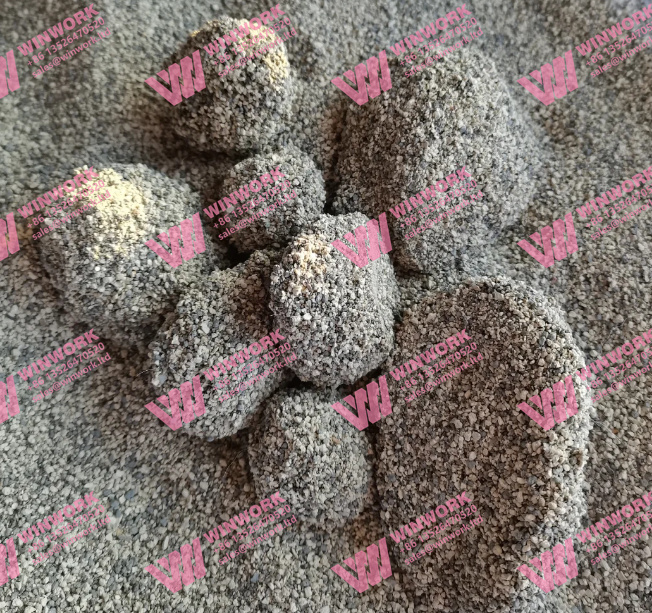
1. Why Granulation Is the Core of Cat Litter Manufacturing
The cat litter granulation process is a key step in transforming fine powders and raw material blends into usable pellets. Granulation determines the final product’s performance, including water absorption, dust control, clumping behavior, and overall user experience. Without proper granulation, cat litter remains a fine powder, which creates dust and makes handling and packaging difficult.
A stable granulation process ensures uniform pellet size, consistent bulk density, and sufficient mechanical strength. It also improves downstream operations such as drying, screening, and packaging. Thus, choosing the right granulation method is not just a technical decision, but a foundation for product quality and manufacturing efficiency.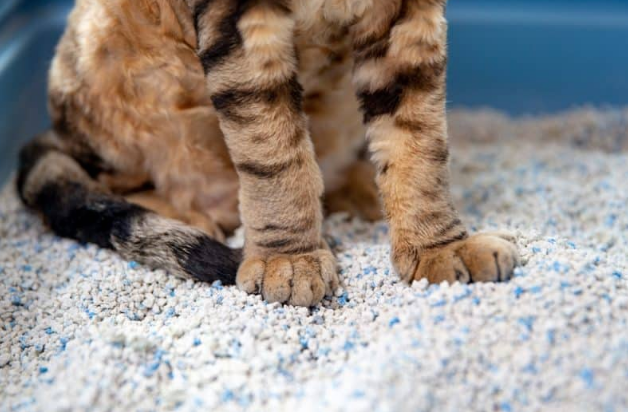
2. Understanding Pellet Shape in the Cat Litter Granulation Process
One of the most important outcomes of the cat litter granulation process is pellet shape. In practice, cat litter pellets can be divided into two types: regular pellets and irregular granules.
Regular pellets are typically cylindrical or spherical, showing consistent appearance and stable density. These pellets are usually produced through wet granulation, where moisture and binders help particles bond and grow in a controlled manner. Wet granulation enables consistent pellet shape and better control over particle size, which is why it is widely used for regular cat litter products.
Irregular granules have rough edges and uneven shapes. They are commonly produced through dry granulation, especially in small-scale production. Dry granulation compresses material into sheets or flakes and then breaks them into uneven particles, resulting in irregular shapes. This method is often chosen for smaller batches, experimental production, or cost-sensitive products.
Understanding how pellet shape relates to granulation method helps manufacturers make the right decision when choosing between dry and wet processes.
3. Two Main Routes: Dry Granulation and Wet Granulation
The cat litter granulation process generally follows one of two routes: dry granulation or wet granulation.
Dry granulation does not involve adding water or binders. It relies on mechanical pressure to compress material into flakes or pellets, which are then crushed and screened. This method is often used for irregular pellets and small-scale production.
Wet granulation adds water or binders to help particles stick together. The process allows controlled growth of granules and is the preferred method for producing regular pellets. However, wet granulation requires drying after granulation to remove moisture, which increases energy consumption and system complexity.
The decision between dry and wet granulation should be based on product goals, material properties, and production scale rather than simply following common practice.
4. Dry Granulation: Suitable for Irregular Pellets and Small Production
Dry granulation is commonly used when producers want irregular cat litter granules or when production scale is relatively small. In this cat litter granulation process, powders are fed into a double roller granulator, where they are compacted into dense sheets or flakes. These compacted materials are then crushed and screened into irregular granules.
The core equipment is the double roller granulator. It uses two rollers to apply high pressure to the raw materials. The compacted material is then broken into granules of varying sizes, which naturally form irregular shapes.
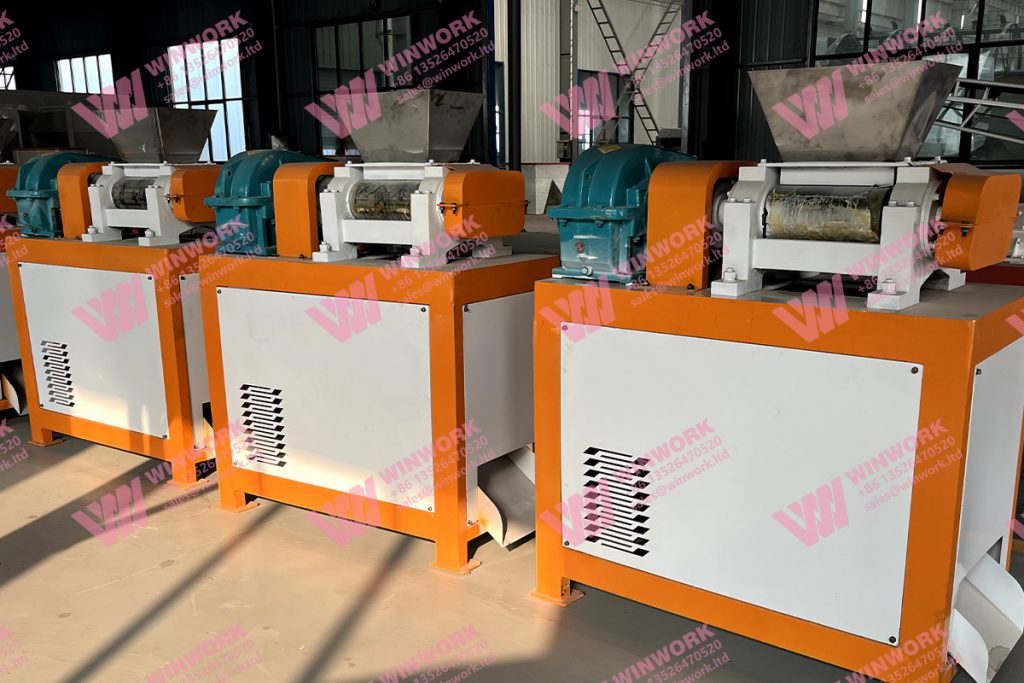
double roller granulator
Dry granulation in cat litter granulation process is favored in small production because it does not require drying equipment. This simplifies the production line and reduces energy costs. It also allows manufacturers to quickly switch formulas and adjust output without complex process control.
However, dry granulation is not suitable for producing highly uniform pellets. If the market demands regular, premium pellets, wet granulation becomes necessary.
5. Wet Granulation: Preferred for Regular Pellets and Stable Shape
Wet granulation is the most common method for producing regular cat litter pellets. In this cat litter granulation process, water or binder is added to the material mixture, and the particles are agglomerated into controlled shapes. This method enables producers to form pellets that are uniform in size and appearance.
Wet granulation is especially suitable for manufacturers who require consistent pellet quality and want to meet higher market standards. Because moisture is involved, the process usually requires drying after granulation to remove excess water and stabilize the pellets.
6. Small-Scale Wet Granulation: Disc and Stirring Tooth Granulators
For small-scale production or experimental lines, wet granulation can be performed using disc granulators or stirring tooth granulators.
A disc granulator uses a rotating inclined pan to roll moist materials into spherical pellets. This method is suitable for producing regular pellets in small batches. Pellet size can be adjusted by changing the disc angle and rotation speed.
A stirring tooth granulator uses rotating teeth to mix and agglomerate the material. It produces irregular but strong granules, and is useful for materials that require strong mixing and bonding.
These two types of equipment are flexible and convenient for small-scale wet granulation in the cat litter granulation process.
7. Large-Scale Wet Granulation: Rotary Drum Granulator
When production capacity exceeds 5 tons per hour, disc and stirring tooth granulators become less efficient. At this scale, the rotary drum granulator becomes the standard choice for wet granulation.
The rotary drum granulator allows continuous high-capacity operation. Raw materials are fed into the rotating drum, where they tumble and collide. With moisture and binder, the particles gradually agglomerate and form pellets. This equipment is widely used in industrial cat litter plants, where stable output and consistent pellet quality are required.
Rotary drum granulators are often integrated with drying and screening systems to ensure efficient operation and high product quality.
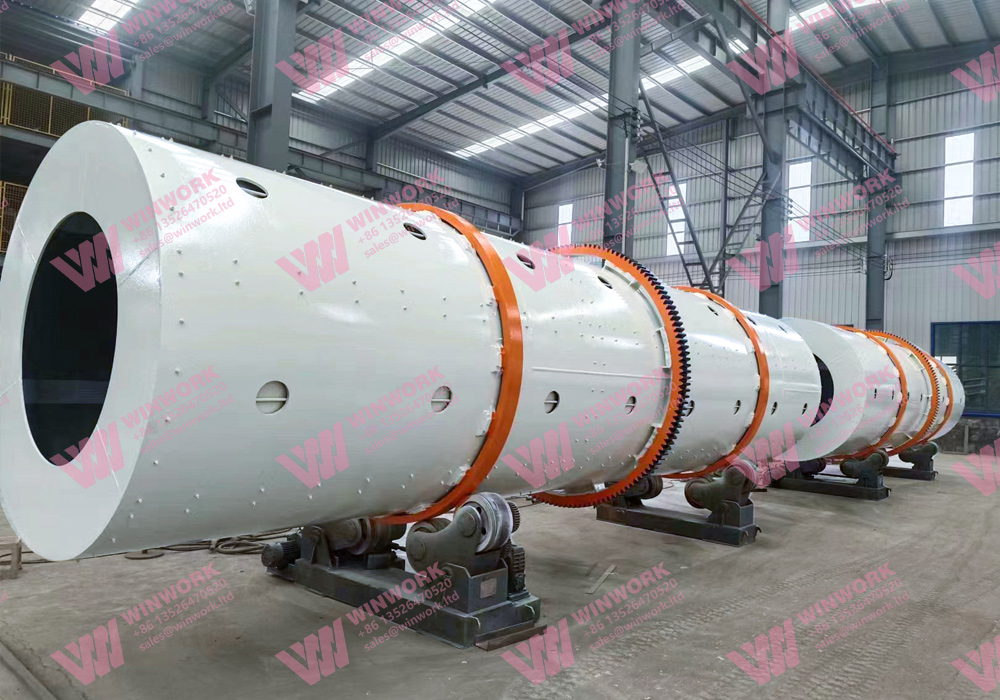
compound fertilizer production in Malaysia
8. How to Choose Between Dry and Wet Granulation
Choosing the right cat litter granulation process requires balancing three main factors: pellet shape, production scale, and raw material characteristics.
If the product requires regular pellets and consistent appearance, wet granulation is the best choice. For small-scale production or experimental lines, disc or stirring tooth granulators can provide the required flexibility.
If the goal is irregular cat litter granules and lower cost, dry granulation using roller press granulators is more suitable. This method is also preferred for small-scale production due to its simplicity and low energy consumption.
For large-scale production with high output requirements, wet granulation using rotary drum granulators is the most efficient and stable option.
9. Conclusion About Cat Litter Granulation Process
The cat litter granulation process is a key factor in determining pellet shape, strength, and production efficiency. In the cat litter granulation process, regular pellets are generally produced by wet granulation, while irregular pellets are commonly produced by dry granulation, especially in small-scale production. Dry granulation using double roller granulators offers simplicity and low energy consumption, while wet granulation provides controlled pellet shape and higher product consistency. By understanding the differences between these methods and selecting appropriate equipment for the cat litter granulation process, manufacturers can build efficient and competitive cat litter production lines.
For more details, please feel free to contact us.
Email: sales@lanesvc.com
Contact number: +8613526470520
Whatsapp: +8613526470520
Get A Quote