

Introduction
Selecting the right granulator for fertilizer is key to small-scale success. This guide explains how choosing the right granulator for fertilizer can save costs, boost quality, and fit tight budgets, covering types, tips, and FAQs.
If you’re planning to start a small fertilizer business or upgrade your current setup, one decision stands above the rest: choosing the right granulator for fertilizer. This single piece of equipment determines whether your powdery raw materials turn into sturdy, saleable pellets—or crumble into useless dust. With dozens of models on the market, how do you pick the best fit for your budget and material? Let’s break it down in plain terms.
Why Choosing the Right Granulator for Fertilizer Matters
Many beginners focus on price alone, only to regret it later. The wrong granulator can lead to:
Broken-pellets during transport or storage
Low production efficiency and wasted raw materials
Excessive maintenance costs eating into profits
On the flip side, choosing the right granulator for fertilizer means:
Consistent pellet strength and size
Higher output with less energy
Fewer headaches and happier customers
Types of Granulators: Matching Machine to Material
When choosing the right granulator for fertilizer, your raw material is the #1 factor. Here are the main options:
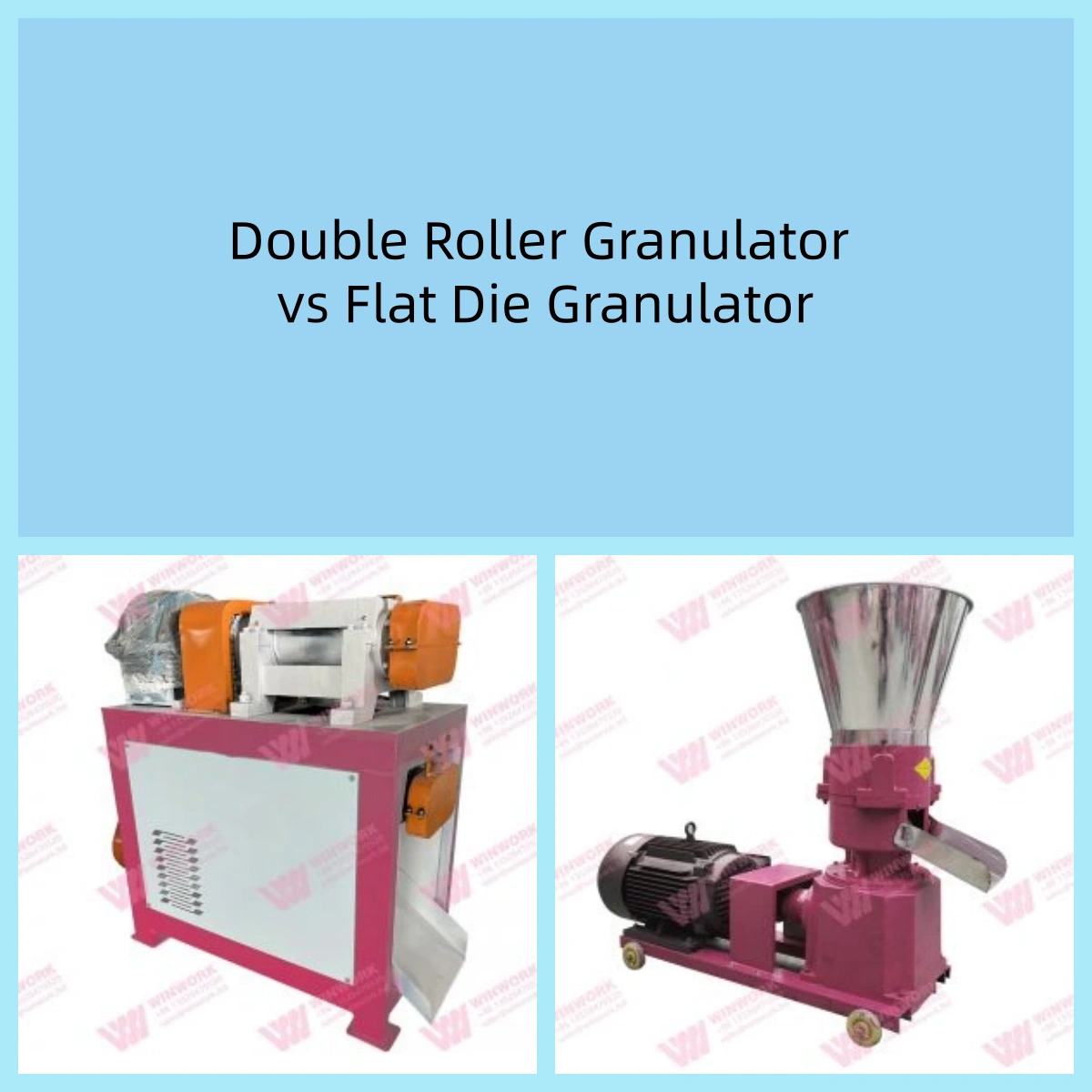
Flat die granulator also called flat die pellet mill, it is a kind of pelletizing equipment used to press powdery raw materials into pellets, which is widely used in feed, fertilizer, biomass energy, chemical industry and other industries. Reading carefully about these granulators, you will know how about choosing the right granulator.
The equipment compresses the raw materials into high-density granules through the interaction of pressure roller and flat die, featuring high molding rate, uniform granules and low energy consumption.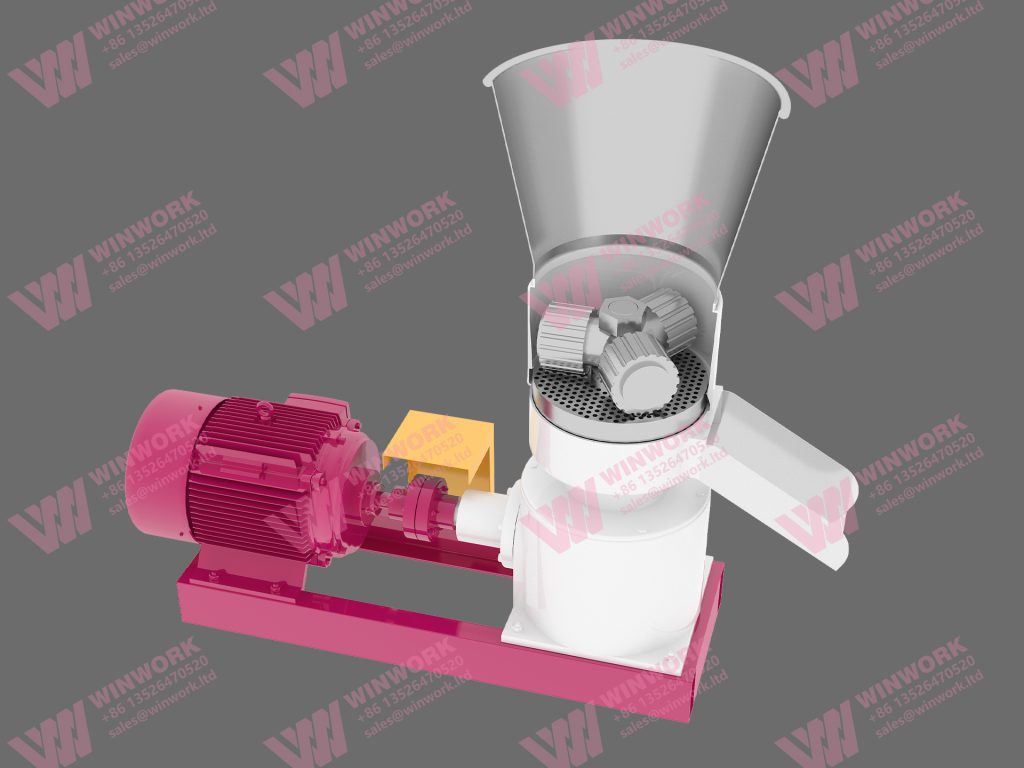
Double roller granulator and the corresponding auxiliary equipment supporting, can form a small production line, with a certain capacity, to achieve continuous, mechanized production. Roller extrusion granulator adopts superior formula, no need to dry, can be produced at room temperature. The product can be rolled and shaped once, so that its quality can meet the requirements of technical indexes of compound fertilizer.
Double roller granulator is suitable for the production of high, medium and low concentration of special compound fertilizers required by various crops, which is a newer product of energy saving and consumption reduction in the compound fertilizer industry. you will know how about choosing the right granulator.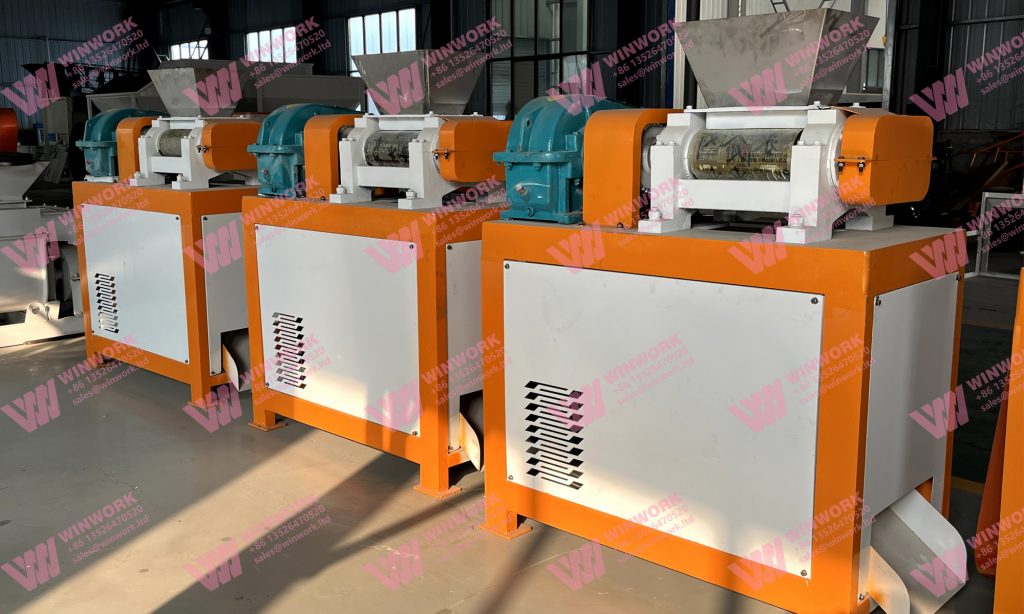
The disc granulator adopts advanced design and high quality materials, featuring high efficiency and durability. The disk corners of the pelletizing disc adopt rounded structure, and the pelletizing rate is up to 93% or more.
Start with your material: Test a small sample in different granulators if possible.
Prioritize core functions: A cheaper machine that can’t handle your feedstock will cost more in the long run.
Consider expandability: Choose a model that can grow with your business—extra rollers, dies, or automation add-ons.
Check after-sales support: Even the best granulator needs maintenance. Reliable technical help is worth paying a bit more for. you will know how about choosing the right granulator.
FAQ
Q1: I’m on a tight budget. Which granulator is the cheapest to start with?
A: For pure organic materials, a flat die granulator is the most affordable entry point. It’s simple, reliable, and perfect for small batches.
Q2: Can I use the same granulator for both chicken manure and NPK fertilizer?
A: Not ideally. Chicken manure is fibrous and moist—better suited to a dual-function or flat die granulator. NPK powders need a roller extruder. Choosing the right granulator for fertilizer means matching it to each material type.
Q3: How do I know if my material is “too hard” for a flat die machine?
A: If your material contains lots of straw, wood chips, or minerals, it may clog or wear out a flat die quickly. Test a small batch first.
Q4: What’s the difference between a granulator and a pellet mill?
A: In fertilizer terms, they’re often used interchangeably. Granulator usually refers to machines that form pellets from powder, while pellet mill can include feed or biomass applications. Focus on specs, not names.
Q5: How much maintenance does a granulator need?
A: Daily cleaning, monthly lubrication, and annual die or roller replacement (for flat die/roller types). Choosing the right granulator for fertilizer includes picking one with easily replaceable parts.
Q6: Can I add a binder to make any granulator work?
A: Binders help, but they can’t overcome fundamental mismatches. For example, adding bentonite to a roller extruder won’t fix poor pellet strength if the material is too dry.
Q7: What’s the typical lifespan of a good granulator?
A: With proper care, 5–10 years. Industrial-grade models last longer than cheap imitations.
Q8: Should I buy new or used equipment?
A: New machines offer warranties and predictable performance. Used ones save money but risk hidden wear. If you’re new to choosing the right granulator for fertilizer, start new.
Q9: How do I calculate ROI on a granulator purchase?
A: Divide your expected annual profit from fertilizer sales by the machine cost. A good granulator pays for itself in 1–2 years.
Q10: Where can I test different granulators before buying?
A: Many Chinese and Indian manufacturers offer sample testing. Send your material and ask for a video demo—it’s the smartest way to choose the right granulator for fertilizer.
Conclusion
Choosing the right granulator for fertilizer isn’t just about picking a machine—it’s about setting your business up for consistent quality, lower waste, and higher profits. Whether you’re working with chicken manure, compost, or mineral blends, matching your material to the right granulator type is the foundation of success. By focusing on your feedstock, budget, and long-term goals, you can avoid costly mistakes and build a reliable production line. Remember: the cheapest option rarely saves money, but choosing the right granulator for fertilizer always pays off.
For more details, please feel free to contact us.
Email: sales@lanesvc.com
Contact number: +8613526470520
Whatsapp: +8613526470520
Get A Quote