


With the rapid development of the organic fertilizer industry, the cow dung crusher for organic fertilizer production, a crushing machine specially developed for cattle manure has become a core piece of equipment for farms and fertilizer plants seeking large scale, resourceful treatment of cow dung. Do you have some questions about how to turn the cattle manure to beneficial fertilizers? This press release systematically introduces the definition, common types, and core advantages of the cow dung crusher for organic fertilizer production, show you the whole production line, and answers frequently asked questions, helping the industry understand its important role in improving cattle manure processing efficiency, ensuring organic fertilizer quality, and reducing operating costs.
As green agriculture and circular economy advance, the value of cattle manure as a high‑quality organic fertilizer raw material is increasingly recognized. However, direct application poses problems such as pathogens, weed seeds, and long fermentation periods. By using a cow dung crusher for organic fertilizer production for pre-crushing, the fiber structure is broken down and surface area increased, significantly accelerating subsequent fermentation and nutrient release. This equipment is specifically designed for the high‑fiber, high‑moisture nature of cattle manure, serving as the vital link between manure collection and finished organic fertilizer.
What Is a Cow Dung Crusher for Organic Fertilizer Production?
Cow Dung Crusher for Organic Fertilizer Production for organic fertilizer production is a crushing machine used in organic fertilizer production lines to process cattle manure. It uses mechanical forces such as shear, impact, compression to break lumpy or coarse‑fibered cattle manure into uniformly fine particles or powder, laying the foundation for subsequent fermentation, mixing, and granulation. Its core design must address the high toughness of fibers and high moisture content , fresh cattle manure often 80%–90% water to avoid clogging and winding, ensuring continuous and stable operation.
Common Types of Cow Dung Crusher for Organic Fertilizer Production
Hammer crusher is a kind of equipment widely used in compound fertilizer production line, which is also suitable for crushing medium hardness and brittle materials in mining, cement, metallurgy, chemical industry and other industries.
The hammer crusher utilizes the high-speed rotating hammer head to impact, shear, tear and grind the material, so that the material is crushed into the required particle size.
Hammer crusher has simple structure, high production efficiency, large crushing ratio, uniform size of the discharged material, which is the ideal crushing equipment in industrial production.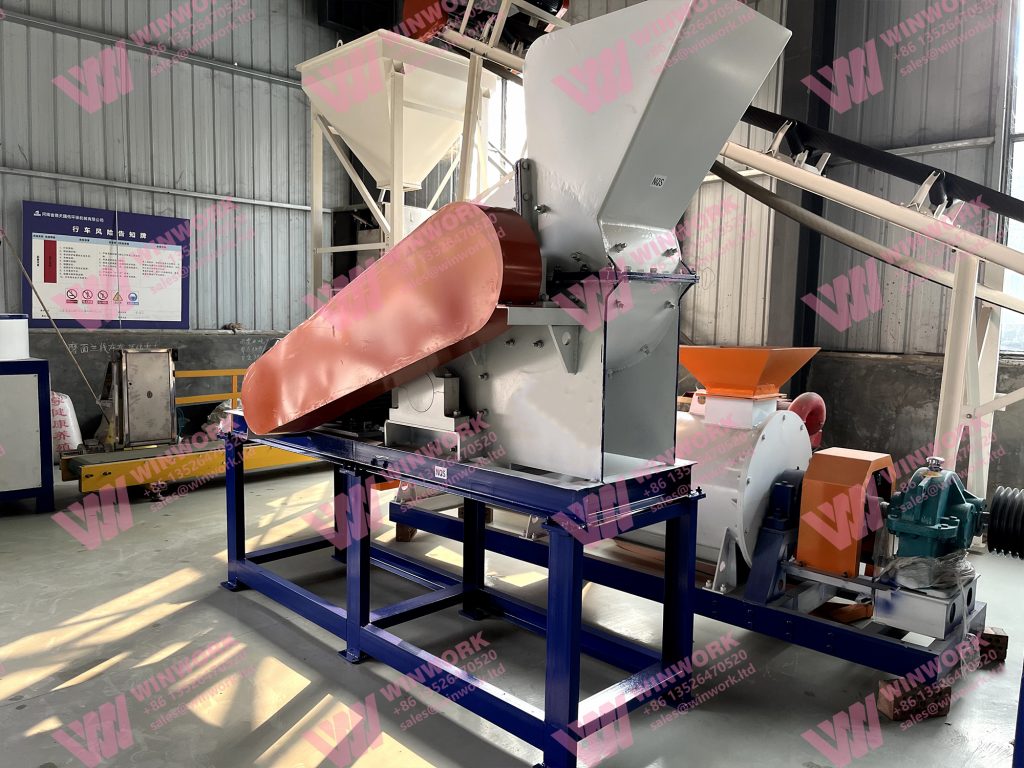
Horizontal crusher, also known as horizontal semi-wet material crusher, is a kind of crushing equipment specially designed to deal with high humidity, organic materials, especially suitable for organic fertilizer production in the material pre-treatment.
Horizontal crusher adopts a unique double-stage rotor structure, can effectively deal with high humidity materials, such as livestock and poultry manure, city garbage, crop residues and so on. It has high crushing efficiency, even material size, no blockage, no sticking phenomenon, and is one of the indispensable key equipments in organic fertilizer production line.
This horizontal crusher is very suitable for the organic fertilizer production and fit of the cattle manure.
Vertical crusher can crush the harder ore materials, is widely used in compound fertilizer production line and npk fertilizer production line.
Vertical crusher is a kind of high-efficiency and energy-saving crushing equipment, specially designed for all kinds of medium and low hardness materials, widely used in mining, chemical industry, cement, building materials and other industries. The equipment has a compact structure, covers an area of small, simple operation, easy maintenance, with a large ratio of crushing, low energy consumption, uniformity of the material size and other characteristics. Vertical crusher is especially suitable for fine crushing of brittle materials, which is the ideal choice for realizing efficient pulverizing operation.
Core Advantages of Cow Dung Crusher for Organic Fertilizer Production
Higher Crushing Efficiency: Optimized rotation speed and blade angle for cattle manure characteristics increase throughput by 30%–50% compared with general crushers, shortening preprocessing time.
More Uniform Fermentation: Cow Dung Crusher for Organic Fertilizer Production needs fermentation. Finely crushed manure with broken fibers provides larger microbial contact area, speeding up heating and thorough decomposition; kills over 95% of harmful bacteria.
Lower Downstream Energy Use: Uniform fine particles reduce mixing resistance in fermentation pits and granulator load, indirectly cutting whole‑line energy consumption by 15%–20%.
Less Raw Material Waste: Controlled particle size avoids nutrient loss from over‑crushing, raising conversion rate from manure to organic fertilizer.
Strong Adaptability: Handles fresh manure, semi‑dry manure, and mixtures with auxiliary materials, fitting various formulation processes.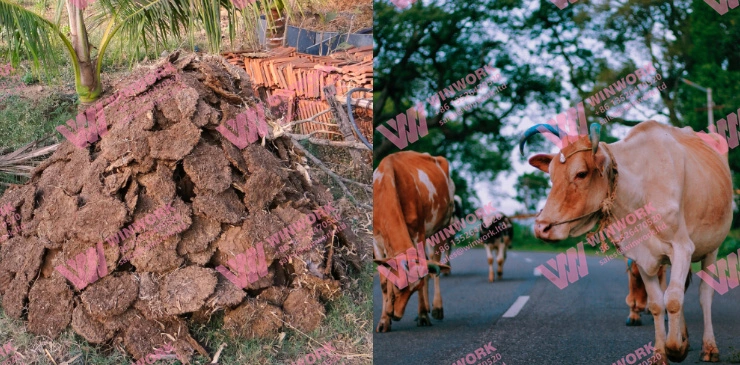
Selection and Maintenance Tips for Cow Dung Crusher for Organic Fertilizer Production
Selection should focus on initial manure state (fresh/wet vs. semi‑dry), fiber content, target particle size, and capacity. For high‑moisture fresh manure, choose blade‑type cow dung crusher for organic fertilizer production with anti‑adhesion feed inlet; for semi‑dry manure, hammer or toothed‑roller types improve efficiency. Maintenance includes regular sharpening of blades/hammers, cleaning screen mesh buildup, and checking motor bearing lubrication for long‑term stability.
FAQ – Frequently Asked Questions and Answers
Q1: How is the cow dung crusher for organic fertilizer production different from ordinary crushers?
A1: Ordinary crushers are not optimized for high‑fiber, high‑moisture cattle manure, leading to winding and clogging; the cow dung crusher for organic fertilizer production uses anti‑winding blades, wear‑resistant materials, and special feed design for better suitability.
Q2: Can it process manure with bedding material directly?
A2: Yes, it can handle manure containing rice husk, sawdust, etc., but blade gap should be adjusted according to bedding ratio to avoid over‑crushing that harms fermentation aeration.
Q3: How does crushed particle size affect fermentation?
A3: Particles of 2–5 mm give the highest microbial decomposition efficiency; too fine causes clumping, too coarse slows fermentation — screen mesh ensures precise control.
Q4: Is the machine noisy during operation?
A4: Modern cow dung crusher for organic fertilizer production comes with soundproof covers and vibration‑damping bases, limiting noise to ≤85 dB, minimizing impact on operators.
Q5: How to reduce fiber winding?
A5: Choose blade or combination types, regularly clean blade base buildup, and slightly sun‑dry manure before feeding to reduce fiber stickiness.
Conclusion
The cow dung crusher for organic fertilizer production, as the core of pre-processing in cattle manure organic fertilizer production, is developing toward intelligent control and low energy consumption. In the future, versions integrated with AI to identify manure state will enable crush on demand, pushing cattle manure resource utilization toward higher efficiency and lower carbon emissions.
As a crusher specially designed for cattle manure organic fertilizer production, the cow dung crusher for organic fertilizer production significantly improves crushing efficiency, ensures fermentation quality, and reduces energy consumption, making it essential for farms and fertilizer plants to realize cattle manure valorization. With continued technological advancement, it will play an even more critical role in the organic fertilizer industry, supporting the growth of green agriculture.
For more details, please feel free to contact us.
Email: sales@lanesvc.com
Contact number: +8613526470520
Whatsapp: +8613526470520
Get A Quote