

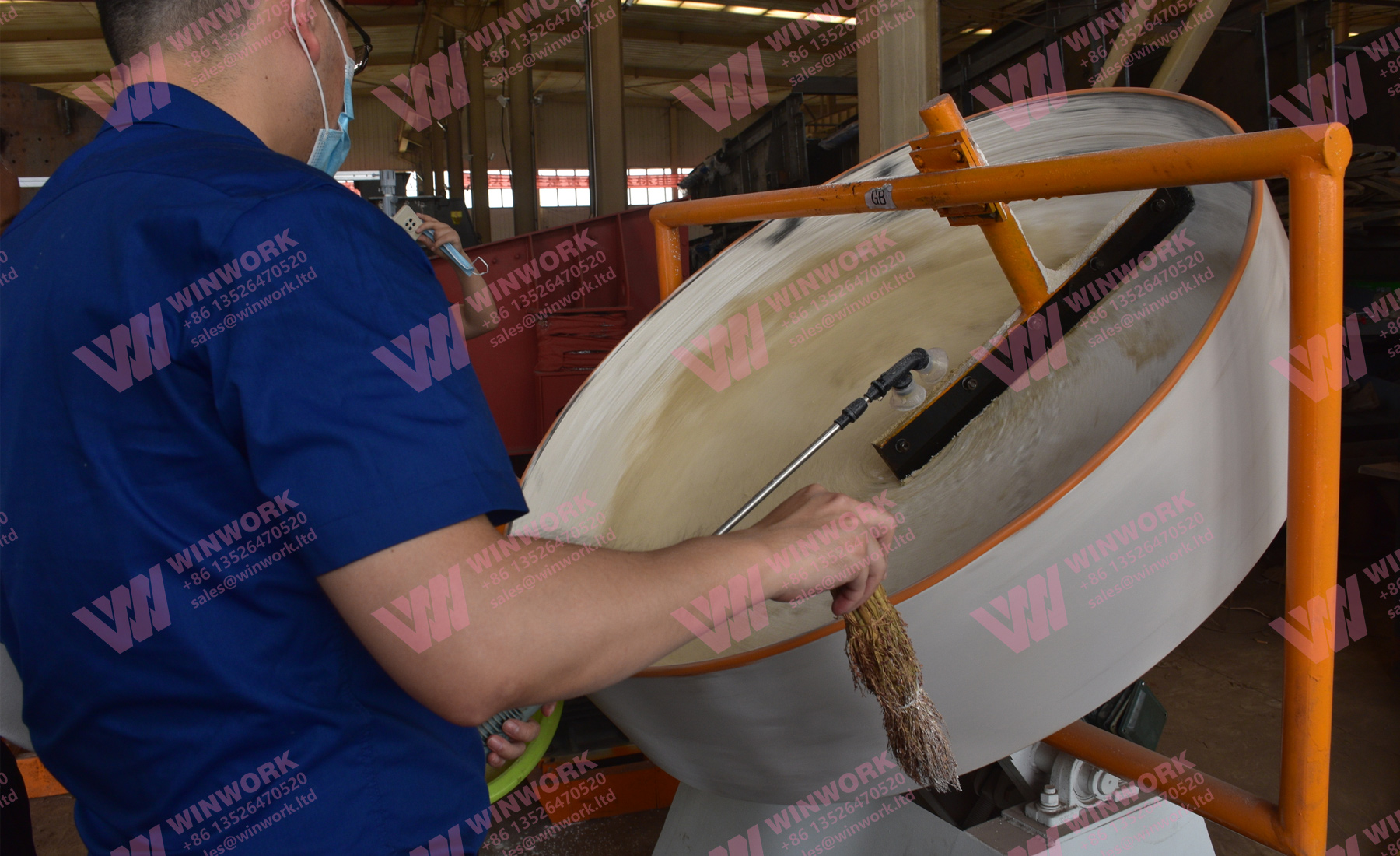
Disc Fertilizer Granulator in Modern Fertilizer Manufacturing
Granulation is a decisive stage in fertilizer production, influencing not only product appearance but also nutrient distribution, storage stability, and application performance. Among various granulation technologies, the disc fertilizer granulator has maintained relevance because it emphasizes controllability rather than brute force shaping.
In many fertilizer plants, especially those handling variable raw materials, granulation conditions change frequently. Equipment that allows visible adjustment and flexible control is therefore preferred. The disc fertilizer granulator meets this demand by enabling gradual particle growth through rolling and layering, rather than relying on compression or extrusion.
This characteristic makes it suitable for manufacturers who prioritize product consistency, adaptability, and manageable operating costs.
Working Principle of a Disc Fertilizer Granulator
The disc fertilizer granulator operates based on rotational motion, gravity, and controlled moisture interaction. Raw materials enter the rotating disc, which is installed at an adjustable inclination angle. As the disc rotates, centrifugal force causes materials to move along the disc surface in a circular trajectory.
Liquid—usually water, binder solution, or nutrient solution—is sprayed evenly onto the material bed. Fine particles act as nuclei, gradually attracting surrounding material and growing in size through repeated rolling. Granules that reach the target size naturally migrate toward the disc edge and are discharged.
Key parameters affecting granulation behavior include:
- Disc rotation speed
- Disc inclination angle
- Feed rate stability
- Moisture distribution
The layered growth mechanism of the disc fertilizer granulator allows operators to regulate particle size during formation, reducing reliance on downstream screening.
Structural Components and Design Features
The performance of a disc fertilizer granulator is closely related to its structural design. Each component plays a specific role in maintaining granulation stability and durability.
Granulating Disc Structure
The disc is typically manufactured from carbon steel and lined with wear-resistant or corrosion-resistant materials. The lining protects the disc when processing acidic, alkaline, or mineral-rich fertilizers. Adjustable disc angles allow operators to modify material residence time without changing rotational speed.
Drive and Transmission System
A stable transmission system ensures smooth rotation under continuous load. Well-designed disc fertilizer granulators use reinforced bearings and balanced drive components to minimize vibration, which directly affects granule uniformity and equipment lifespan.
Spray and Liquid Distribution System
Uniform liquid distribution is essential. The spray system is designed to deliver controlled moisture or binder across the full working area of the disc. Poor spray uniformity often leads to uneven particle growth and higher recycle rates.
Support Frame and Adjustment Mechanism
The support structure must withstand long-term dynamic loads. Precision adjustment mechanisms allow fine-tuning during operation, which is particularly important when raw material characteristics fluctuate.
Together, these design features make the disc fertilizer granulator reliable for continuous industrial operation.
Raw Material Adaptability and Processing Range
One major advantage of the disc fertilizer granulator is its adaptability to different fertilizer formulations. It is commonly used for:
- Organic fertilizer based on livestock manure or compost
- Compound fertilizers with balanced nutrient blends
- Mineral fertilizers combined with organic carriers
- Fertilizer formulations containing trace elements

Materials with fine particle size and moderate moisture content are especially suitable. For materials with weak binding properties, the addition of suitable binders or pre-conditioning through mixing improves granulation efficiency.
This adaptability allows fertilizer plants to adjust product formulas without major equipment changes.
Granule Quality Control and Process Stability
Granule quality directly influences downstream handling and market acceptance. The disc fertilizer granulator provides several advantages in quality control due to its visible and adjustable granulation process.
Important quality indicators include:
- Particle size distribution
- Granule roundness
- Surface smoothness
- Mechanical strength
By stabilizing feed rate and moisture content, operators can maintain consistent granulation conditions. Compared with impact-based granulation methods, disc granulation produces fewer fines and a higher proportion of qualified granules.
Integration into Complete Fertilizer Production Lines
In practical applications, a disc fertilizer granulator is integrated into a complete fertilizer production line rather than operating as a standalone machine.
Typical upstream and downstream equipment includes:
- Crushers to ensure uniform feed particle size
- Mixers for homogeneous nutrient and moisture distribution
- Dryers and coolers for moisture stabilization
- Screening machines for final size classification
Proper equipment matching ensures that the granulator operates within its optimal range. Poor integration often results in unstable granulation that cannot be corrected by adjusting the granulator alone.
Comparison with Other Fertilizer Granulation Technologies
When selecting granulation equipment, manufacturers often compare the disc fertilizer granulator with alternative systems.
Disc Granulator vs Rotary Drum Granulator
Rotary drum granulators are suitable for high-capacity production but offer less precise particle size control. Disc granulators provide better adjustability and visual control, making them more suitable for medium-capacity plants or multi-formula production.
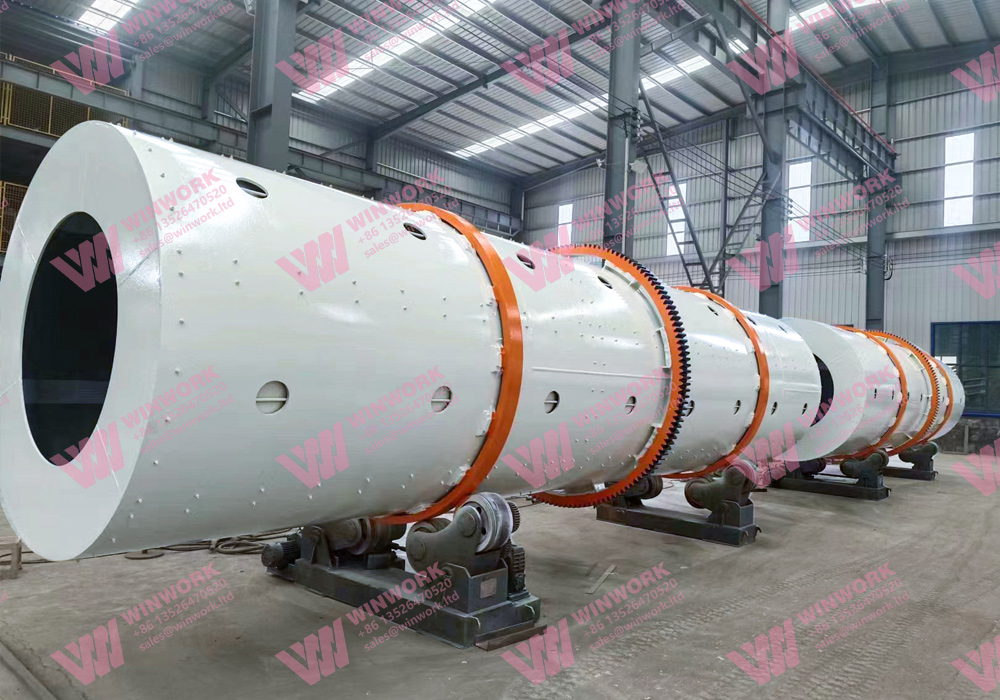
compound fertilizer production in Malaysia
Disc Granulator vs Double Roller Granulator
Double Roller granulators rely on mechanical pressure to form particles, resulting in higher energy consumption and less spherical granules. The disc fertilizer granulator consumes less energy and produces more uniform round particles.
Operation and Maintenance Considerations
The disc fertilizer granulator is relatively easy to maintain due to its simple structure. However, stable operation still requires routine inspection.
Key maintenance points include:
- Checking disc liner wear
- Cleaning spray nozzles
- Inspecting transmission components
- Ensuring alignment and balance
Preventive maintenance reduces unplanned downtime and maintains consistent granule quality over long production cycles.
Environmental and Energy Efficiency Aspects
Energy efficiency is an increasing concern in fertilizer manufacturing. The disc fertilizer granulator operates mainly through mechanical rotation, resulting in lower energy consumption compared with pressure-based systems.
By producing granules with controlled moisture, it also reduces the drying load, lowering overall energy use. Proper enclosure and dust control further improve environmental performance.
Capacity Selection and Customization Options
Selecting the correct model of disc fertilizer granulator requires consideration of real operating conditions rather than nominal capacity alone.
Factors influencing capacity selection include:
- Raw material characteristics
- Target granule size
- Desired output stability
- Available plant space
Customization options such as automated spraying systems or corrosion-resistant materials can further enhance performance and reliability.
Practical Application Scenarios
The disc fertilizer granulator is widely used in:
- Organic fertilizer plants focused on soil improvement
- Compound fertilizer plants requiring consistent appearance
- Regional fertilizer factories serving diversified markets
Its flexibility allows producers to respond quickly to market changes without extensive equipment modification.
Future Development Trends
Future development of the disc fertilizer granulator focuses on improved automation, process monitoring, and durability. Integration with sensors and control systems allows real-time adjustment, reducing dependence on operator experience.
These trends ensure continued relevance in modern fertilizer production.
Conclusion
The disc fertilizer granulator remains a reliable and versatile granulation solution due to its controllable process, robust structural design, and broad adaptability to various raw materials. When properly integrated into a complete fertilizer production line and operated under stable conditions, it consistently produces high-quality granules, enhances overall production efficiency, and provides sustained operational value for fertilizer manufacturers.
For more details, please feel free to contact us.
Email: sales@lanesvc.com
Contact number: +8613526470520
Whatsapp: +8613526470520
Get A Quote