

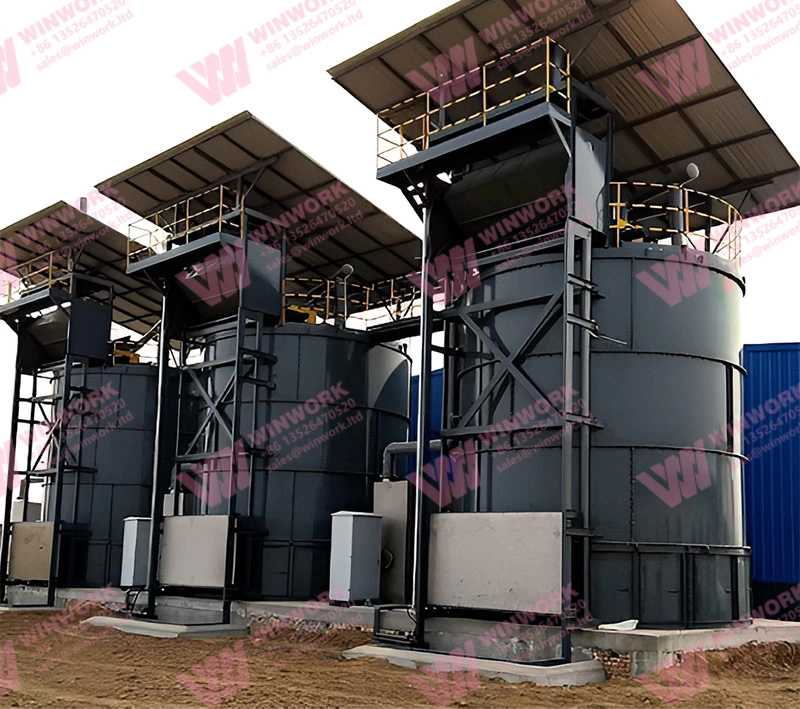
Against the backdrop of accelerating global green agriculture and circular economy, the ferment tank has emerged as a core piece of equipment for large-scale, controllable microbial fermentation. It is widely applied in organic fertilizer production, bio-feed, biogas projects, and biopharmaceutical manufacturing. If you are interested in it too, now you have found the detail explanation of this tank. This article systematically introduces what a ferment tank is, common equipment types, core advantages, and answers frequently asked questions, helping the industry gain a deeper understanding of the important role of the ferment tank in improving fermentation efficiency, ensuring product quality, and reducing operating costs.
With the growing popularity of sustainable development and organic farming concepts, the demand for high-quality organic fertilizers and bioproducts continues to rise. In this trend, the tank—a specialized vessel and system for conducting microbial fermentation of materials in a controlled environment—has become a vital link between raw material pre-treatment and final product output. Whether dealing with livestock manure, crop straw, food waste, or municipal sludge, all can be transformed into stable organic fertilizers or energy resources through a tank.
What Is a Ferment Tank?
A tank (fermentation tank/vessel) is a closed or semi-closed device that decomposes organic matter and synthesizes target products through microbial metabolic activities under specific temperature, humidity, aeration, and agitation conditions. It typically consists of a tank body, temperature control system, air supply and exhaust units, stirring mechanism, and online monitoring and control systems for pH and dissolved oxygen. According to different process requirements, ferment tanks can be vertical, horizontal, or box-shaped, and designed for batch, continuous, or semi-continuous operation.
In organic fertilizer production, a ferment tank rapidly raises the pile temperature to 55–70°C, killing pathogens and weed seeds, while forced aeration and turning promote uniform aerobic microbial activity, significantly shortening the maturation period. In biogas projects, an anaerobic ferment tank provides a stable environment to maximize methane yield. Clearly, the ferment tank is the foundation for large-scale, standardized, and harmless fermentation.
Common Types of Ferment Tank Equipment
The Horizontal Fermentation Tank is a state-of-the-art equipment designed for the effective aerobic fermentation of organic waste, agricultural residues, sludge, and other compostable materials. Unlike vertical tanks, the horizontal design allows for larger capacity and more uniform fermentation.
The Horizontal Fermentation Tank is widely used in the production of organic fertilizers and compost, offering numerous advantages in terms of efficiency, control, and environmental impact. The Horizontal Fermentation Tank is an ideal choice for modern organic fertilizer production line and composting operations. Its efficient design, advanced control systems, and robust construction make it a valuable asset for improving production efficiency, product quality, and environmental sustainability.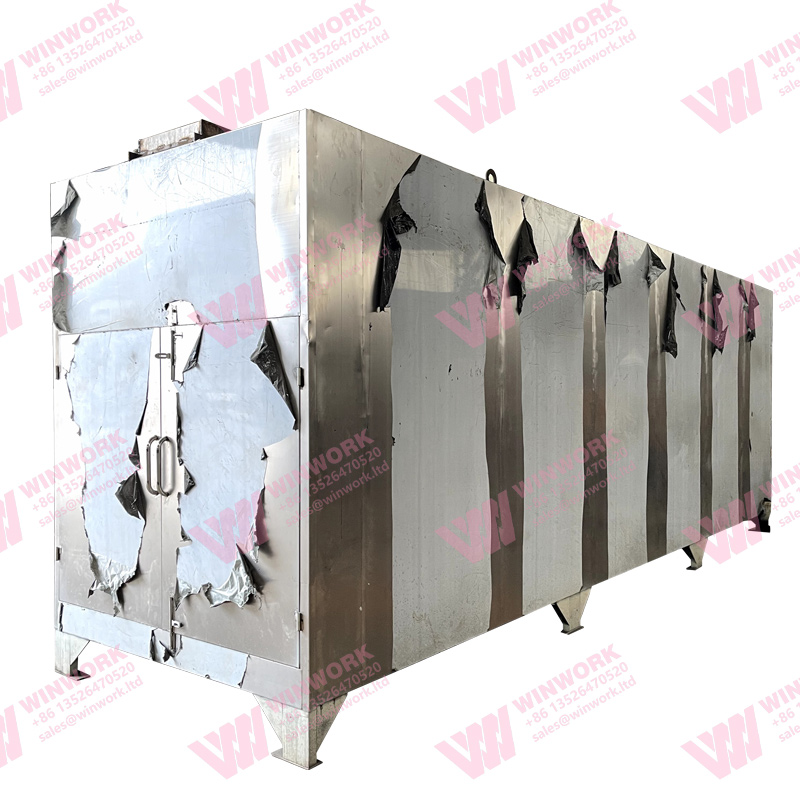
The Vertical Fermentation Tank is a specialized unit designed for efficient aerobic fermentation of organic waste, agricultural residues, sludge and other compostable materials. This fermenter features a vertical structure and a compact design that maximizes space utilization while providing excellent mixing and aeration capabilities. It is widely used in the production of organic fertilizers, compost and other bio-products with the advantages of high efficiency and reduced environmental pollution.
The Vertical Fermentation Tank is an ideal choice for modern organic fertilizer production and composting operations. Its efficient design, advanced control systems, and robust construction make it a valuable asset for improving production efficiency, product quality, and environmental sustainability.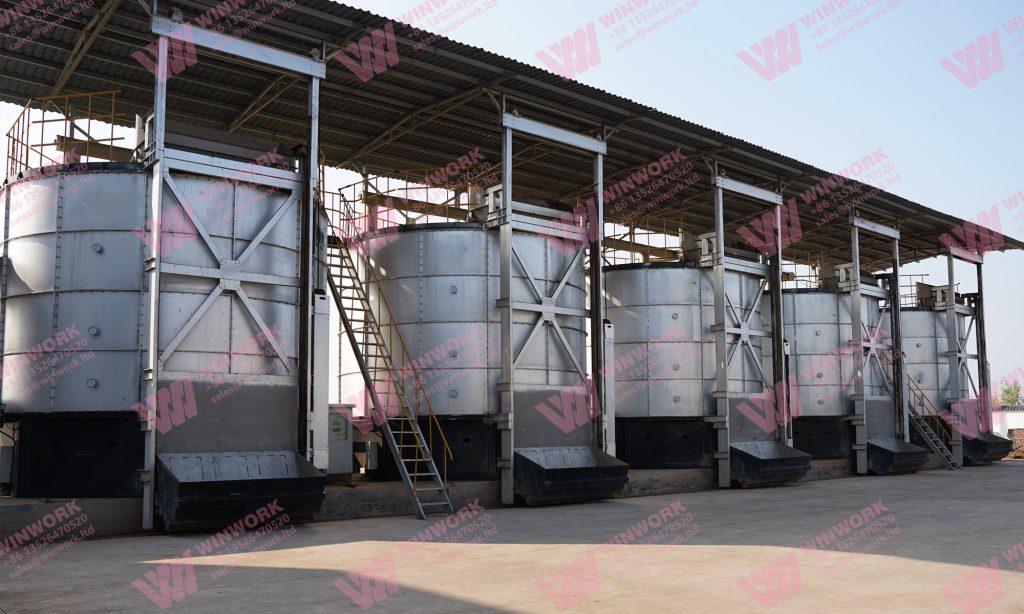
Core Advantages of Ferment Tank
Enhanced Fermentation Efficiency: Through precise environmental control, the tank accelerates microbial activity and shortens fermentation cycles by 30%–50%.
Ensured Product Safety and Stability: The high-temperature phase effectively inactivates harmful bacteria and insect eggs, ensuring organic fertilizers meet harmlessness standards.
Improved Raw Material Utilization: Homogeneous stirring and aeration in the tank reduce dead zones, increasing organic degradation rates and nutrient retention.
Reduced Footprint and Environmental Impact: Closed tanks minimize odor and leachate dispersion, improving plant environment.
Strengthened Process Control and Data Traceability: Online monitoring and automatic regulation make fermentation parameters recordable and reproducible for each batch, aiding quality control.
Realization of Dual Resource and Energy Recovery: Besides producing organic fertilizer, anaerobic tanks can recover biogas for power generation or heating.
A practical case shows that after switching from traditional composting to a groove-type tank, an organic fertilizer company increased annual production capacity by 40%, achieved a 98% product qualification rate, and reduced odor complaints by 90%, fully demonstrating the comprehensive benefits of the ferment tank.
Selection and Maintenance Tips for Ferment Tank
Selecting a ferment tank requires consideration of raw material type and moisture content, desired fermentation method (aerobic/anaerobic), batch processing capacity, site space, and local environmental regulations. For high-moisture materials, groove-type or tower ferment tanks with dewatering pretreatment are recommended; for sterile conditions in biopharmaceutical production, smart ferment tanks with enhanced CIP (clean-in-place) systems should be chosen. For maintenance, regularly clean the tank and stirring components, check the operation of heating/cooling and aeration systems, calibrate sensors, and upgrade control system software to ensure long-term stable operation of the ferment tank.
FAQ – Frequently Asked Questions and Answers
Q1: What are the advantages of a ferment tank compared to traditional composting?
A1: The tank offers controllable environments, faster fermentation, higher degree of harmlessness, smaller footprint, better odor control, and is easier to scale and automate. Traditional composting is weather-dependent, slower, and prone to quality fluctuations.
Q2: What raw materials can be processed in a ferment tank?
A2: Suitable materials include livestock manure, crop straw, kitchen waste, food industry residues, municipal sludge, and also fermentation media for biopharmaceuticals.
Q3: How to choose between aerobic and anaerobic tanks?
A3: Choose aerobic ferment tank for organic fertilizer or bio-feed production; choose anaerobic tank for biogas or biomethane production.
Q4: Is the ferment tank high in energy consumption?
A4: Consumption depends on scale and process. Modern ferment tanks use waste heat recovery and variable frequency drives to effectively lower electricity and thermal energy use.
Q5: What is the typical fermentation cycle for a tank?
A5: Aerobic organic fertilizer fermentation usually takes 7–15 days; anaerobic biogas fermentation takes about 20–40 days depending on temperature and feedstock. Smart ferment tanks can further shorten the cycle.
Conclusion
As a key equipment for organic waste resource utilization and biological manufacturing, the tank is moving toward intelligent, modular, and energy-saving designs. By integrating AI algorithms and big data to optimize fermentation curves, the next generation of ferment tanks will achieve higher conversion efficiency and a lower carbon footprint. For businesses pursuing green production and circular economy, investing in efficient and reliable ferment tanks is a strategic choice to enhance competitiveness and achieve sustainable development.
As the core equipment for large-scale controllable fermentation, the tank plays a significant role in improving fermentation efficiency, ensuring product safety, reducing operating costs, and protecting the environment. With continuous technological advancement and broader application, the ferment tank is bound to play an even more important role in the global organic fertilizer, bioenergy, and biomanufacturing industries.
For more details, please feel free to contact us.
Email: sales@lanesvc.com
Contact number: +8613526470520
Whatsapp: +8613526470520
Get A Quote