

Introduction About Fertilizer Production Equipment in Kenya
The increasing demand for agricultural inputs has encouraged more investors and entrepreneurs to consider establishing new fertilizer plants in Kenya. Local fertilizer manufacturing offers advantages such as improved supply reliability, lower logistics costs, and better alignment with regional crop needs. However, the success of a new fertilizer plant depends heavily on choosing the right fertilizer production equipment in Kenya from the very beginning.
For new plants, equipment selection is not just a technical decision but a strategic one that affects startup costs, operational efficiency, and future scalability.
Why New Fertilizer Plants Are Emerging in Kenya
Kenya’s agricultural sector continues to expand, driven by population growth, food security concerns, and modernization of farming practices. Many farmers require timely and affordable fertilizer supply, creating opportunities for local producers.
New fertilizer plants aim to reduce dependence on imported fertilizers while offering products tailored to local soil conditions. In this context, fertilizer production equipment in Kenya becomes a foundational investment that supports sustainable local manufacturing.
Key Considerations for New Fertilizer Plants
Unlike established factories, new fertilizer plants must balance limited budgets with long-term development goals. Equipment should support stable initial production without creating unnecessary financial pressure.
New investors should focus on equipment reliability, ease of operation, and adaptability. Overly complex systems may increase operational risks during the early stages of plant operation.
Selecting the Right Equipment Configuration
Fertilizer production equipment in Kenya is available in various configurations depending on fertilizer type and production method. New plants typically choose between organic fertilizer equipment, compound fertilizer equipment, or blending systems.
Organic fertilizer equipment is suitable for regions with abundant agricultural waste and livestock manure. Compound fertilizer equipment focuses on nutrient precision and granulation. Blending systems offer a simpler entry point with lower initial investment.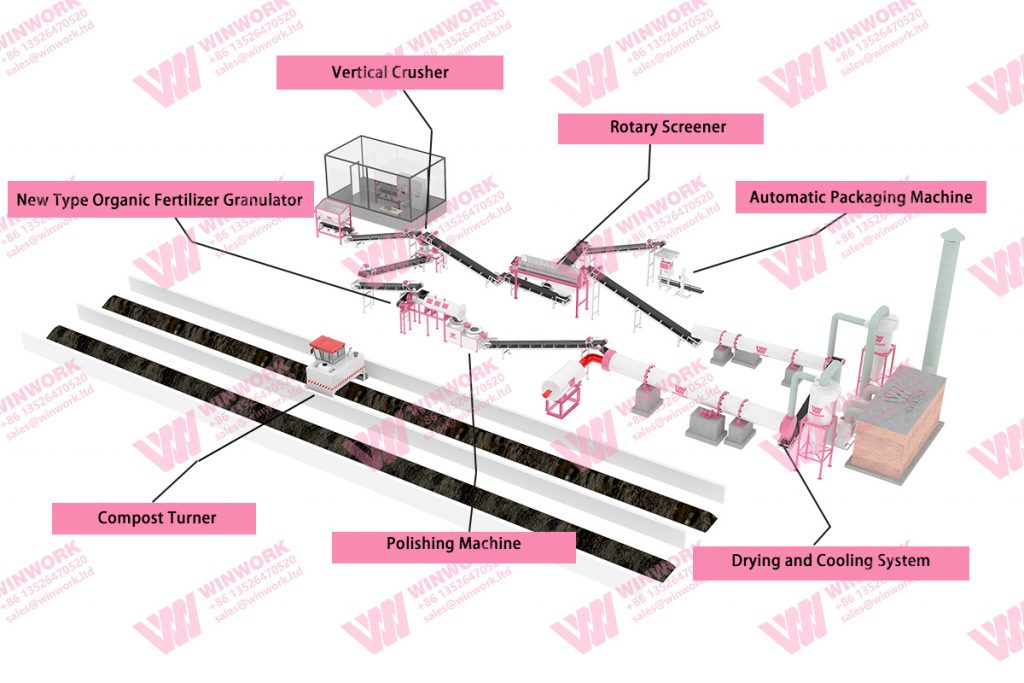
Choosing the right configuration helps new fertilizer plants match local demand while maintaining manageable production complexity.
Core Machinery for an Organic Fertilizer Production Line
Organic fertilizer production focuses on transforming biological waste—such as livestock manure, crop residues, and food processing by-products—into stable, nutrient-rich soil amendments. A complete organic fertilizer production line typically requires the following equipment:
Pre-processing Machinery: This includes crushers and mixers to homogenize raw waste materials. For instance, a robust grinding mill system is often a foundational import for processing raw materials.
Fermentation Equipment: The biological heart of the process. Compost turners are essential for aerating the organic matter, controlling temperature, and accelerating decomposition. Some advanced setups may use closed fermenters.
Granulation Equipment: To create uniform, marketable pellets. A disc granulator for fertilizer production equipment in Kenya is a popular choice, capable of processing materials with a granulation rate over 95%. As evidenced by equipment shipments to Kenya, complete organic fertilizer production lines that include granulators are in demand for processing animal manure.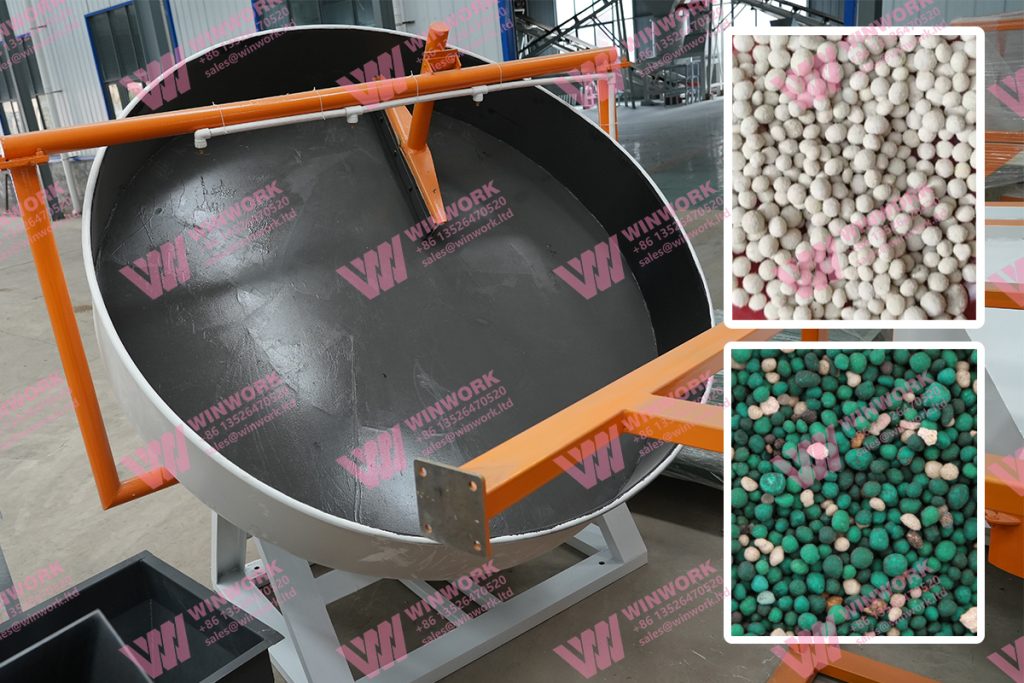
Post-processing Machinery: This includes a rotary dryer, cooler, and screening machine to achieve the correct moisture content and particle size. Finally, an automatic packaging scale bags the final product.
Production Capacity Planning for New Plants
Production capacity planning is critical for new fertilizer plants. Fertilizer production equipment in Kenya is offered in scalable designs, allowing plants to start with small or medium output and expand later. Oversized equipment often leads to underutilization and higher operating costs. A phased approach enables new plants to test the market, establish distribution channels, and gradually increase production.
Cost Control and Operational Efficiency
Cost control is a major concern for new fertilizer plants. Fertilizer production equipment in Kenya should be energy-efficient and designed for local operating conditions.
Factors such as electricity usage, labor requirements, and maintenance frequency directly affect long-term operating costs. Equipment with stable performance and simple maintenance often provides better value than lower-priced alternatives with higher downtime risk.
Common Challenges for New Fertilizer Plants
One common challenge is selecting equipment based solely on price. Low-cost fertilizer production equipment in Kenya may result in higher maintenance expenses and inconsistent product quality.
Another challenge is underestimating raw material supply stability. New plants should ensure reliable access to raw materials before finalizing equipment selection.
Proper planning and realistic expectations help new fertilizer plants avoid these early-stage issues.
Long-Term Growth and Expansion Potential
A key advantage of modern fertilizer production equipment in Kenya is its modular design. New fertilizer plants can expand production capacity or add new fertilizer types as market demand grows.
This flexibility supports long-term business development while protecting the initial investment. Equipment that adapts to changing market needs offers better long-term value.
Conclusion
Fertilizer production equipment in Kenya provides a solid foundation for new fertilizer plants seeking reliable local manufacturing. By focusing on appropriate capacity, efficient workflows, and long-term adaptability, new investors can build stable operations that support Kenya’s agricultural development. This approach also helps reduce supply risks, improve fertilizer availability, and strengthen long-term competitiveness in the local agricultural market.
For more details, please feel free to contact us.
Email: sales@lanesvc.com
Contact number: +8613526470520
Whatsapp: +8613526470520
Get A Quote