

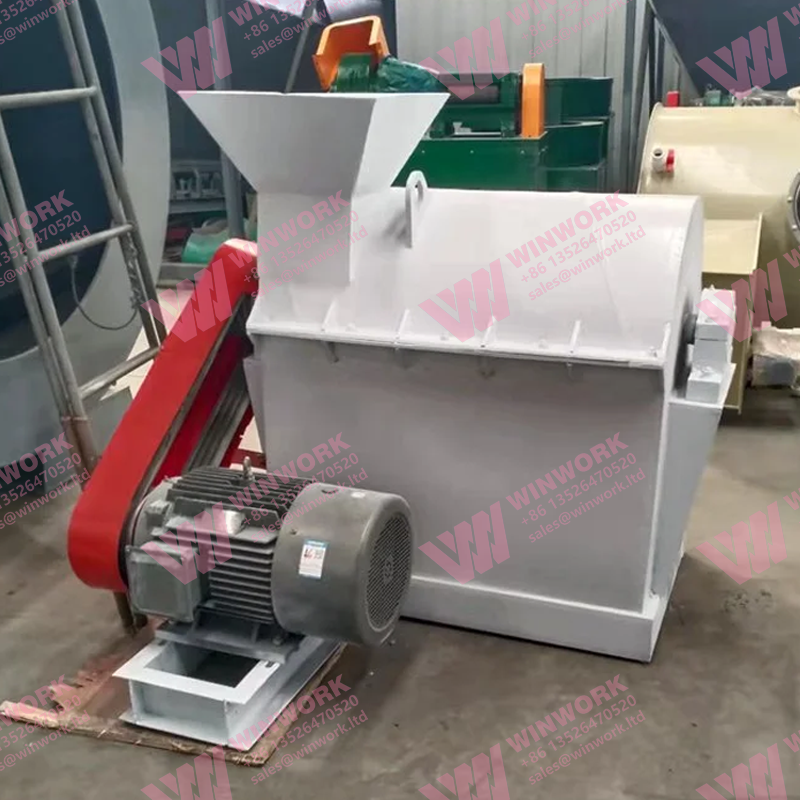
Why Crusher Selection Matters in Fertilizer Production
In fertilizer manufacturing plants, raw materials rarely meet processing requirements in their original form. Organic waste, animal manure, minerals, and compound materials must be crushed before entering mixing and granulation stages. Improper crushing equipment often leads to uneven particle size, reduced granulation efficiency, and frequent equipment failure.
Selecting the right fertilizer raw material crusher directly influences production stability, energy consumption, and final fertilizer quality. For factories aiming to improve efficiency and reduce long-term costs, crusher selection should be treated as a strategic investment rather than a simple equipment purchase.
Evaluate Raw Material Characteristics First
Every fertilizer factory processes different raw materials, and this is the foundation for choosing a fertilizer raw material crusher. Material hardness, moisture content, fiber structure, and impurity levels all affect crushing performance.
For example, organic materials such as compost and manure usually contain high moisture and fibrous components. Mineral materials like phosphate rock and limestone are harder and more abrasive. A crusher suitable for mineral materials may clog or wear rapidly when processing organic inputs.
Understanding raw material behavior allows factories to choose a fertilizer raw material crusher that delivers stable output and reduced maintenance requirements.
Match Crusher Capacity with Production Demand
Crusher capacity must align with the overall fertilizer production line. If crushing capacity is too low, material accumulation may interrupt production. If capacity is too high, unnecessary energy consumption and equipment costs increase.
When selecting a fertilizer raw material crusher, factories should clearly define:
- Required hourly output
- Maximum feed size
- Desired discharge particle size
A well-matched crusher ensures smooth material flow to mixers, granulators, and dryers, supporting continuous and efficient production.
Common Fertilizer Raw Material Crusher Types
Different crusher designs are widely used in fertilizer production, each suitable for specific materials and processing conditions. Choosing the right type ensures optimal performance from the fertilizer raw material crusher.
Vertical shaft crushers are often used for fine crushing of compound fertilizer materials. They provide uniform output size and high crushing efficiency, making them suitable for dry and brittle materials.
Semi-wet crushers are designed for materials with higher moisture content. They are commonly applied in organic fertilizer plants to process manure, sludge, and compost without clogging.
Hammer crushers rely on impact force to crush materials. They feature simple structure and easy maintenance and are suitable for medium-hard fertilizer raw materials.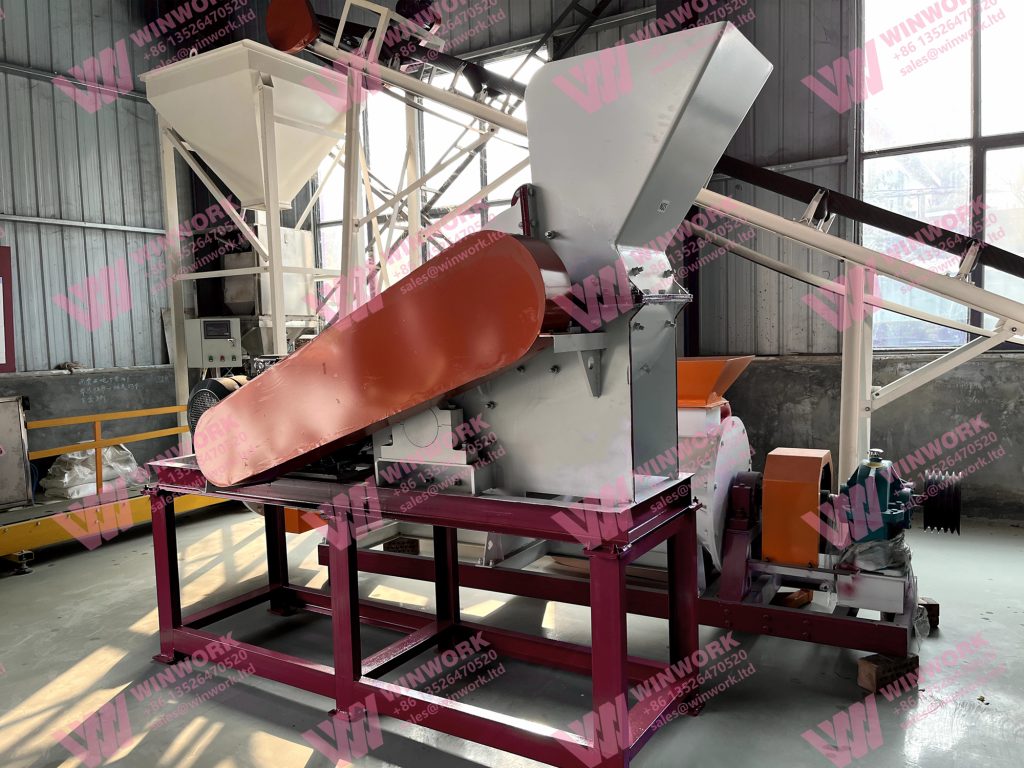
Cage Crusher
Cage crushers are frequently used in compound fertilizer production lines. They provide controlled fine crushing and stable performance, especially for bulk material processing.
Double Shaft Chain Crusher
The double shaft chain crusher is widely used in organic fertilizer processing. Rotating chains break materials effectively, making this fertilizer raw material crusher suitable for fibrous and semi-wet materials.
Evaluate Energy Efficiency and Operating Costs
Energy consumption plays a significant role in long-term production costs. A well-designed fertilizer raw material crusher should provide high crushing efficiency while minimizing power usage.
Efficient motors, optimized rotor structures, and wear-resistant components help reduce energy loss. Over time, an energy-efficient crusher lowers electricity costs and improves overall factory profitability.
Durability and Maintenance Considerations
Fertilizer production environments are often harsh, with dust, corrosion, and abrasive materials. Durability is therefore essential when choosing a fertilizer raw material crusher.
Important maintenance factors include:
- Quality of wear-resistant materials
- Ease of replacing spare parts
- Accessibility for inspection and cleaning
A crusher designed for easy maintenance reduces downtime and extends equipment service life, supporting continuous production.
Frequently Asked Questions (FAQ)
1. What materials can a fertilizer raw material crusher process?
A fertilizer raw material crusher can process organic materials such as manure, compost, sludge, and crop residues, as well as inorganic materials including phosphate rock, limestone, gypsum, and compound fertilizer components.
2. Which fertilizer raw material crusher is best for high-moisture materials?
For high-moisture materials, a semi-wet crusher or double shaft chain crusher is usually the best option, as these designs prevent clogging and ensure continuous crushing.
3. What particle size can a fertilizer raw material crusher produce?
Output particle size depends on crusher type and configuration. Most fertilizer raw material crusher machines can produce uniform particles suitable for mixing and granulation processes.
4. How often does a fertilizer raw material crusher require maintenance?
Maintenance frequency depends on material abrasiveness and operating hours. Regular inspection of wear parts such as hammers, chains, and liners is recommended for stable operation.
5. Is installation complicated for a fertilizer raw material crusher?
Installation is generally straightforward, but proper foundation, alignment, and connection with upstream and downstream equipment are essential for optimal performance.
6. How do I choose a reliable fertilizer raw material crusher manufacturer?
A reliable manufacturer should offer technical expertise, proven project experience, quality certifications, and comprehensive after-sales service.
Conclusion
Choosing the right fertilizer raw material crusher is essential for efficient fertilizer production and long-term cost control. By evaluating raw material properties, capacity requirements, crusher types, and maintenance needs, factories can select equipment that supports stable and continuous operation.
A properly selected fertilizer raw material crusher improves crushing efficiency, enhances product quality, and provides a solid foundation for sustainable fertilizer manufacturing.
For more details, please feel free to contact us.
Email: sales@lanesvc.com
Contact number: +8613526470520
Whatsapp: +8613526470520
Get A Quote