

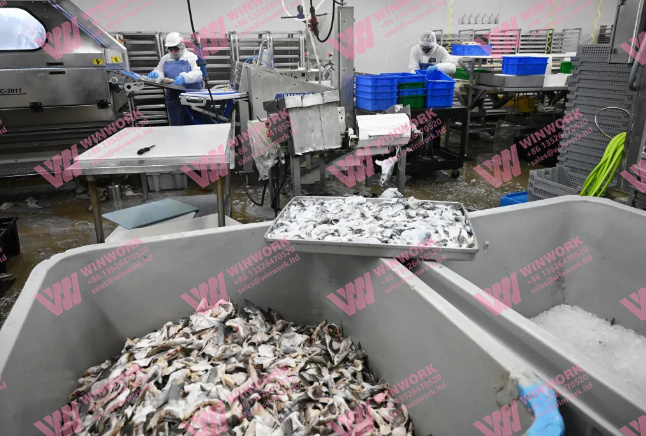
Introduction about Fish Emulsion Liquid Fertilizer
Fish emulsion liquid fertilizer has emerged as a leading organic input for sustainable agriculture. Its composition—rich in proteins, amino acids, trace minerals, and natural growth stimulants—enhances plant nutrient uptake, improves soil fertility, and supports crop resilience under stress conditions.
Compared to synthetic fertilizers, fish emulsion liquid fertilizer provides slow-release nutrition that enhances microbial activity in the soil, improves water retention, and promotes healthier root systems. The increasing demand for organic produce worldwide has further elevated its significance in modern farming systems. Farmers, agronomists, and fertilizer manufacturers are investing in efficient production technologies to meet this growing demand while maintaining high quality, stability, and environmental compliance.
The production of fish emulsion liquid fertilizer involves a combination of biological, chemical, and mechanical processes. Each stage—raw material preparation, protein hydrolysis, filtration, nutrient fortification, concentration, and packaging—requires careful attention to process parameters, equipment functionality, and safety standards.
Raw Materials and Pre-Processing
High-quality fish emulsion liquid fertilizer begins with selecting nutrient-rich raw materials. The most commonly used sources include fish processing byproducts such as heads, bones, skins, fins, and offal. These materials are naturally high in proteins, amino acids, phosphorus, calcium, and other essential nutrients.
Different fish species affect nutrient profiles. Cold-water species like mackerel, herring, and sardines are preferred due to their higher protein content and amino acid composition. The freshness of raw materials is critical, as spoilage reduces nutrient quality and can introduce unwanted microbial contamination.
Prior to processing, raw fish materials must be thoroughly cleaned to remove scales, debris, and contaminants. Grinding or mincing the materials into a fine slurry ensures uniform particle size, which increases the efficiency of hydrolysis and nutrient extraction. Water is often added during this stage to create an optimal slurry consistency. Natural stabilizers or mild acids may also be introduced to prevent premature spoilage and maintain solution integrity.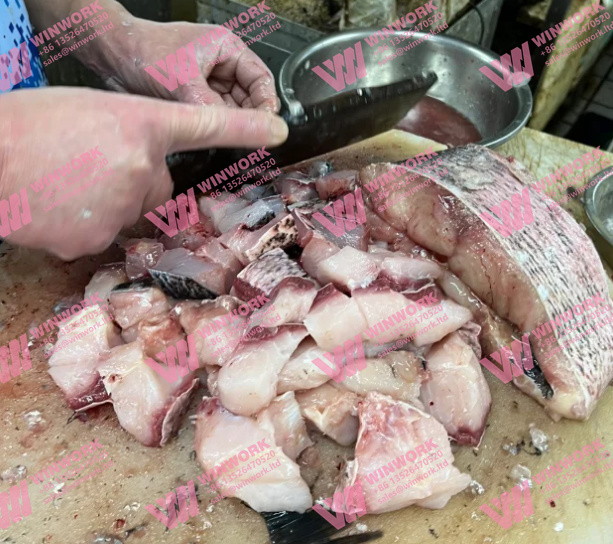
Hydrolysis: The Core Process
The central step in producing fish emulsion liquid fertilizer is hydrolysis, which breaks down proteins into soluble amino acids and peptides. Hydrolysis not only increases nutrient bioavailability but also ensures that the final product is suitable for plant uptake.
Enzymatic Hydrolysis
Enzymatic hydrolysis employs specific protease enzymes to cleave protein chains under controlled temperature and pH conditions. This method preserves the integrity of heat-sensitive amino acids and bioactive compounds. Although slower and more expensive than chemical hydrolysis, enzymatic hydrolysis produces a premium-grade fish emulsion liquid fertilizer with higher nutrient efficiency and plant growth stimulation.
Chemical Hydrolysis
Chemical hydrolysis uses mild acids, such as hydrochloric or sulfuric acid, combined with controlled heat to break down proteins more quickly. This method is cost-effective for large-scale production, but requires careful neutralization afterward to prevent excessive acidity that can harm plants. Modern facilities often combine chemical and enzymatic methods to balance production speed with nutrient preservation.
During hydrolysis, maintaining optimal temperature, agitation, and reaction time is critical. Excessive heat can degrade amino acids, while insufficient reaction time may leave proteins partially intact, reducing nutrient availability. Continuous monitoring and control of these parameters are essential for consistent quality.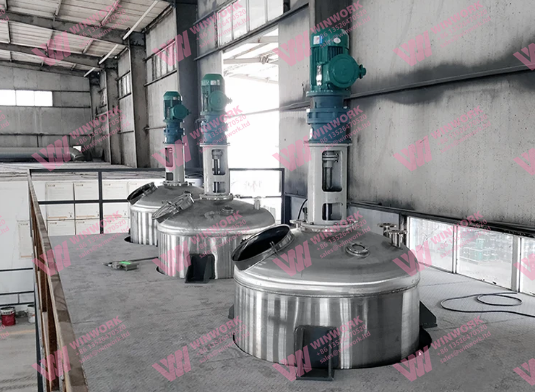
Filtration, Clarification, and Odor Control
After hydrolysis, the solution contains soluble nutrients along with insoluble residues such as bones, scales, and connective tissues. Filtration and clarification remove these solids, producing a smooth, homogeneous liquid fertilizer.
Advanced filtration systems, including mesh filters, sedimentation tanks, and centrifugal separators, ensure that no particulate matter remains in the final product. Clarification not only improves appearance but also enhances storage stability and application efficiency, particularly in automated irrigation or foliar spray systems.
Odor control is an important consideration for large-scale production. Aeration, activated carbon treatment, and enzymatic odor neutralizers are commonly employed to reduce strong fish odors, making handling, transportation, and storage more manageable. Proper odor management also increases acceptance in retail markets and residential farming.
Concentration and Nutrient Enrichment
For certain applications, fish emulsion liquid fertilizer is concentrated to increase nutrient density. Controlled evaporation removes excess water while minimizing exposure to heat-sensitive amino acids and micronutrients. Concentrated formulations allow farmers to use smaller volumes per hectare while maintaining effective nutrient delivery, reducing transport costs and environmental impact.
At this stage, additional nutrients, including nitrogen, phosphorus, potassium, and micronutrients like zinc and iron, can be incorporated. Stabilizers are added to maintain solution clarity and prevent precipitation. Careful homogenization ensures uniform nutrient distribution, resulting in a consistent, high-quality product suitable for a variety of crops and soil conditions.
Equipment Integration and Workflow
Producing fish emulsion liquid fertilizer efficiently requires integrated equipment that supports continuous production, quality consistency, and safety.
-
Hydrolysis reactors must provide precise control of temperature, pH, and agitation to ensure complete protein breakdown while preserving amino acids.
-
Filtration and clarification systems separate solids and reduce microbial load, improving shelf life and solution clarity.
-
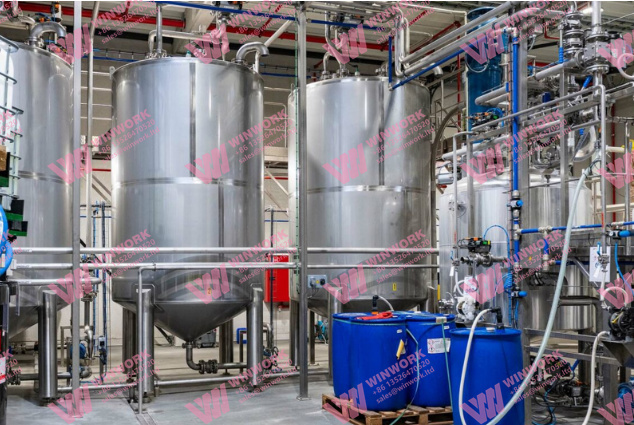
Mixing tanks and nutrient blending systems allow uniform incorporation of stabilizers and additional fertilizers.
-
Evaporation units concentrate the solution under controlled conditions, maintaining nutrient integrity.
-
Automated filling and packaging lines ensure consistent volume, hygiene, and minimal exposure to air or light, preserving product quality during storage and transport.
Digital control systems now allow real-time monitoring of temperature, pH, agitation speed, and density. This automation reduces human error, enhances reproducibility, and supports scalable production. Proper layout of equipment, combined with workflow optimization, ensures energy efficiency and operational productivity.
Quality Assurance
Rigorous quality assurance is essential for producing high-grade fish emulsion liquid fertilizer. Critical parameters include total amino acid content, nitrogen levels, pH, density, and microbial safety. Each batch should be sampled and analyzed to maintain consistency across production cycles.
Implementation of ISO-compliant quality management systems enables traceability, facilitates export readiness, and enhances brand reputation. Continuous monitoring and documentation help manufacturers identify potential deviations early, reduce waste, and ensure reliable nutrient delivery to crops.
Environmental and Safety Practices
Sustainability is a core consideration in modern fish emulsion liquid fertilizer production. Hydrolysis and filtration generate wastewater and volatile compounds that must be treated before discharge. Biological treatment systems, sedimentation tanks, and chemical neutralization processes reduce environmental impact.
Worker safety is equally important. Handling acids, enzymes, and heated solutions requires protective clothing, proper ventilation, and emergency protocols. Regular training and maintenance of corrosion-resistant equipment minimize occupational hazards. Compliance with environmental regulations and safety standards not only protects workers and surrounding ecosystems but also strengthens market trust.
Production Scale, Efficiency, and Cost Optimization
Production scales vary from small, local operations to industrial plants producing over 50 tons per day. Scaling production requires careful planning of equipment capacity, workflow efficiency, and energy management to maintain consistent quality.
Key cost factors include raw material procurement, energy, labor, and packaging. Enzymatic hydrolysis yields superior product quality but increases production cost, while chemical hydrolysis is more cost-effective for large-scale output. Advanced planning and process optimization allow manufacturers to balance quality, efficiency, and profitability.
Efficient workflow design—integrating hydrolysis, filtration, concentration, blending, and packaging—minimizes bottlenecks and reduces energy consumption. Modern plants may also implement heat recovery systems, water recycling, and automated monitoring to enhance overall operational efficiency.
Market Trends and Opportunities
The global demand for fish emulsion liquid fertilizer continues to grow as organic and sustainable farming practices expand. Farmers increasingly seek fertilizers that are nutrient-rich, environmentally safe, and easy to apply.
Technological innovations such as enzyme recycling, low-temperature concentration, and automated process monitoring improve product quality, reduce production costs, and support scalability. Companies adopting these advanced production technologies can capture both domestic and international markets, particularly in regions with strict organic certification requirements.
The trend toward crop-specific formulations and fortified fish emulsion fertilizers allows manufacturers to differentiate their products and add value. Combining high nutrient density, clarity, stability, and eco-friendly production enhances market competitiveness.
Conclusion about Fish Emulsion Liquid Fertilizer
Producing high-quality fish emulsion liquid fertilizer requires careful raw material selection, precise hydrolysis, efficient filtration, nutrient fortification, and advanced packaging. Our full production line is specially designed for fish emulsion liquid fertilizer, ensuring stable output and reliable performance throughout the process. Integrated equipment, digital monitoring, and workflow optimization ensure consistent product quality, operational efficiency, and scalability.
As organic and sustainable agriculture expands, fish emulsion liquid fertilizer remains a key solution for improving crop yield and soil health. The growing market demand for eco-friendly fertilizers further drives the development of fish emulsion liquid fertilizer worldwide. Manufacturers who invest in modern production technologies, quality assurance, and environmental compliance are well-positioned to meet global demand while promoting sustainable farming practices.
For more details, please feel free to contact us.
Email: sales@lanesvc.com
Contact number: +8613526470520
Whatsapp: +8613526470520
Get A Quote