


Why Understanding How Cat Litter Is Made Matters
The global pet care industry has grown rapidly over the past decade, and cat litter has become an essential daily product for millions of households. While consumers often focus on odor control, clumping performance, and dust levels, manufacturers and investors are more concerned with how cat litter is made on an industrial scale.
Understanding how cat litter is made helps producers improve product quality, optimize production efficiency, and meet increasingly strict environmental standards. It also allows buyers to better evaluate different types of cat litter and understand why prices, performance, and sustainability vary across products.
From traditional bentonite cat litter to modern tofu and wood-based alternatives, the basic principles behind how cat litter is made follow a structured manufacturing process. Raw materials are processed, shaped, dried, and refined to produce stable, easy-to-use pellets suitable for packaging and distribution.
Common Types of Cat Litter and Their Raw Materials
Before explaining how cat litter is made, it is important to understand the main raw materials used in the industry. Different materials require different processing methods, but the core production stages remain similar.
Bentonite Cat Litter
Bentonite cat litter is produced from natural clay with strong water absorption and clumping properties. The raw material is mined, crushed, dried, and processed into granules with uniform size. Its popularity lies in excellent clumping performance and relatively low production cost.
Tofu Cat Litter
Tofu cat litter is made from soybean fiber residue, starch, and plant-based binders. It is biodegradable, lightweight, and often flushable. Due to rising environmental awareness, tofu cat litter has become one of the fastest-growing segments in the global market.
Wood-Based Cat Litter
Wood cat litter uses sawdust, wood chips, or forestry by-products as raw materials. It offers low dust, natural odor control, and renewable sourcing, making it attractive for eco-conscious consumers.
Although materials differ, understanding how cat litter is made reveals that all types rely on controlled crushing, moisture adjustment, pellet formation, and drying.
Overview of the Cat Litter Manufacturing Process
When explaining how cat litter is made in factories, the process can be divided into several interconnected stages:
- Raw material preparation
- Crushing and mixing
- Granulation or pelletizing
- Drying and cooling
- Screening and recycling
- Optional coating and packaging
This systematic approach ensures uniform product quality and efficient large-scale production.
Raw Material Preparation and Pretreatment
The first step in how cat litter is made is raw material preparation. Raw materials must be clean, consistent, and free of contaminants to ensure smooth downstream processing.
For bentonite cat litter, raw clay is crushed and dried to reduce moisture. For tofu or wood-based litter, organic materials are screened to remove impurities such as plastic, metal, or oversized debris.
Moisture control is particularly important at this stage. Excess water can cause poor pellet formation, while overly dry materials reduce granulation efficiency. Most production lines adjust moisture levels before entering the crushing and mixing stage.
Crushing and Size Reduction
Crushing is a key stage in how cat litter is made, as it determines particle uniformity. Uniform particle size improves granulation efficiency and final pellet quality.
Industrial crushers such as hammer crushers, vertical crushers, or semi-wet crushers are commonly used depending on raw material type. For tofu and wood-based cat litter, gentle crushing preserves fiber structure while ensuring consistency.
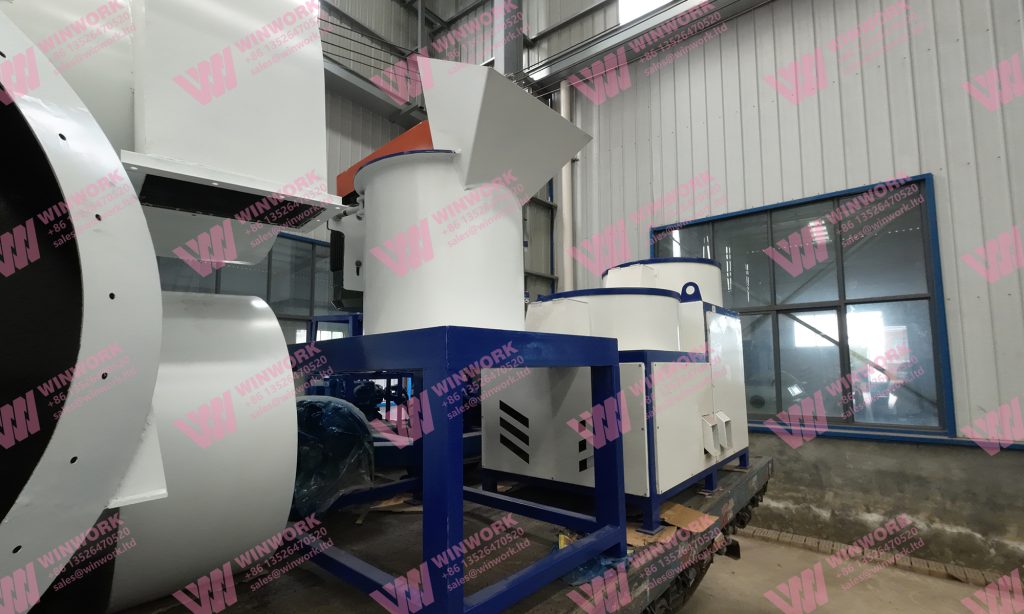
Vertical Crusher Shipments
Proper crushing reduces dust generation, improves pellet strength, and supports stable production.
Mixing and Formula Control
After crushing, materials enter the mixing stage. Commonly used mixer equipment for cat litter raw materials includes horizontal mixers, double-shaft mixers, etc. This is where binders, additives, or deodorizing agents are introduced if required.
Understanding how cat litter is made at this stage is critical for product differentiation. For example, tofu cat litter formulas often include starch-based binders to improve pellet strength and water absorption. Bentonite litter may require moisture adjustment rather than additional binders.
Uniform mixing ensures that each pellet performs consistently in terms of absorption, odor control, and durability.
Drying and Moisture Stabilization
Once pellets are formed, they must be dried to achieve structural stability. Drying is essential in how cat litter is made because moisture directly affects shelf life, odor control, and clumping behavior.
Rotary drum dryers are widely used to reduce moisture to a stable range, usually below 10%. Heat sources may include natural gas, biomass, or electric systems, depending on local conditions.
Careful temperature control prevents pellet cracking and excessive dust formation.
Cooling and Hardening
After drying, pellets remain hot and fragile. Cooling allows them to harden and stabilize before screening and packaging.
This stage of how cat litter is made improves pellet strength and reduces breakage during transport. Rotary coolers or air cooling systems are commonly applied in continuous production lines.
Screening and Particle Size Control
Screening ensures uniform pellet size, which is important for both performance and appearance. Vibrating screens separate qualified pellets from oversized or undersized material.
Oversized pellets are crushed and recycled, while fine powder is returned to the granulation stage. This closed-loop process minimizes waste and improves material utilization, an important consideration in modern cat litter manufacturing.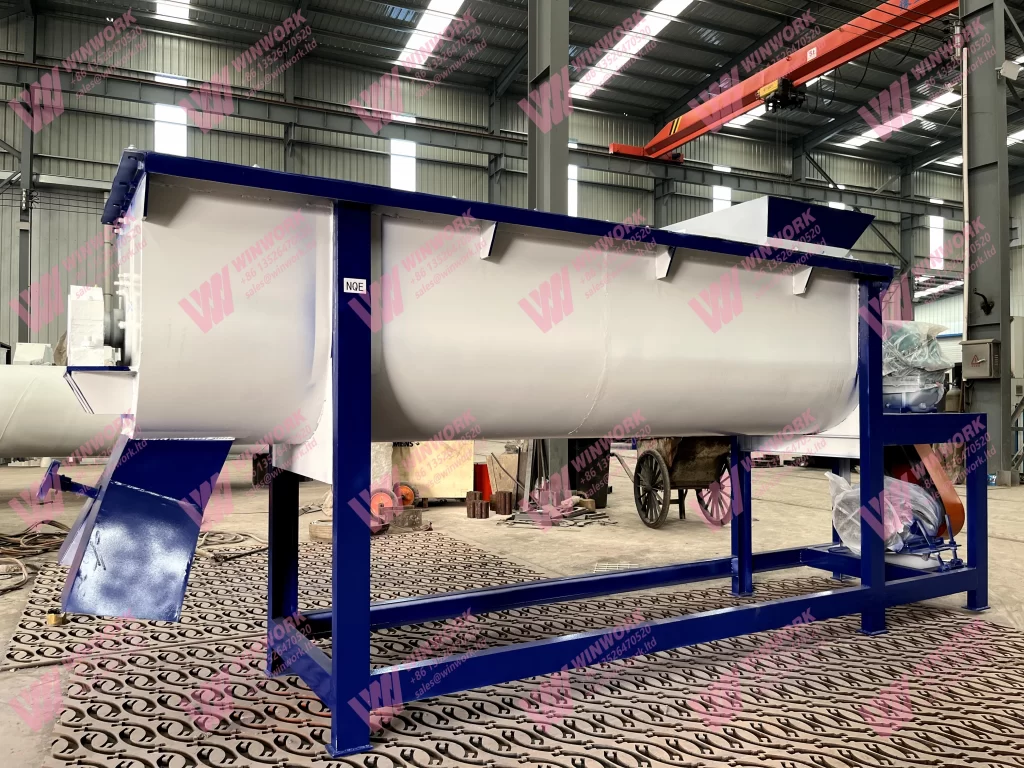
Dust Control and Quality Improvement
Dust is a critical quality concern in the production of cat litter. Excessive dust not only diminishes the user experience but can also be harmful to pets.
Dust control systems, such as cyclone collectors and bag filters, are installed at crushing, drying, and screening points. Additionally, optional pellet coating can further reduce dust while enhancing appearance and storage stability.
Packaging and Storage
The final stage in how cat litter is made is packaging. Automated packing machines weigh and bag cat litter into various sizes suitable for retail or bulk distribution.
Proper packaging protects pellets from moisture absorption and mechanical damage during transport. Storage conditions should remain dry and well-ventilated to preserve product quality.
Automation and Production Line Control
Modern factories rely on automation to improve efficiency and consistency. PLC control systems monitor temperature, moisture, motor speed, and material flow throughout the production line.
Automation reduces labor costs and ensures that how cat litter is made remains consistent across different batches and operating conditions.
Environmental and Sustainability Considerations
Sustainability is increasingly important in how cat litter is made. Biodegradable materials such as tofu and wood-based litter reduce landfill impact and appeal to eco-conscious consumers.
Dust and odor control systems help factories meet environmental regulations while improving workplace safety. Energy-efficient dryers and recycling systems further reduce operating costs and emissions.
Production Cost Factors
Several factors influence the cost of how cat litter is made:
- Raw material availability
- Energy consumption
- Equipment configuration
- Labor and maintenance
- Level of automation
Understanding these variables helps investors choose appropriate production scales and technologies.
Small-Scale vs. Large-Scale Production Lines
Small-scale cat litter production lines are typically designed for local markets, pilot projects, or niche product segments. These systems require lower initial investment, occupy less floor space, and offer greater flexibility in raw material selection and product formulation. They are well suited for startups testing new cat litter materials or serving regional demand with customized products.
In contrast, large-scale production lines are built for continuous, high-capacity operation. They support mass manufacturing with standardized quality, automated control systems, and efficient material handling. Such lines are commonly used for supplying national or international markets, where stable output, consistent pellet quality, and compliance with export regulations are essential.
Despite differences in capacity, automation, and investment level, the core principles of how cat litter is made remain consistent across all production scales. Raw material preparation, crushing, granulation, drying, and screening follow the same technical logic, with scale mainly influencing equipment size, layout, and degree of automation.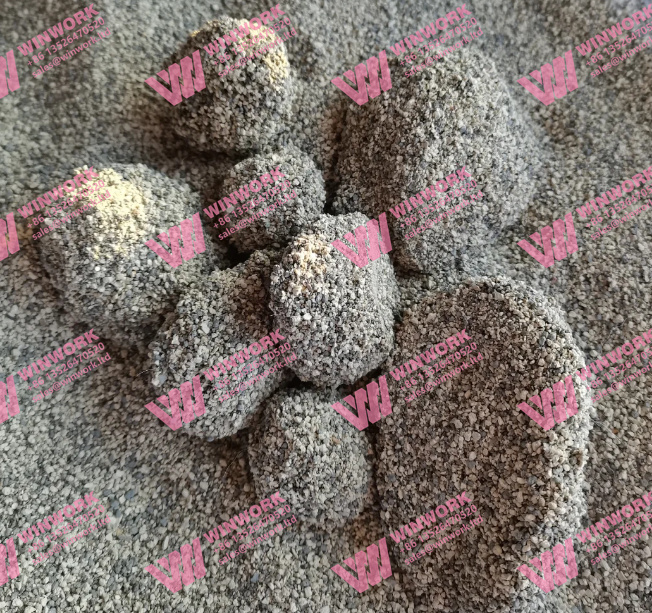
Frequently Asked Questions(FAQ) About How Cat Litter Is Made
Q1: What raw materials are commonly used to make cat litter?
Common materials include bentonite clay, tofu residue, corn, wood fiber, paper pulp, and silica gel, depending on the product type.
Q2: Is natural cat litter safer than clay-based cat litter?
Natural cat litter is often biodegradable and low-dust, making it safer for pets and environmentally friendly, though performance varies by material.
Q3: How is dust controlled during cat litter production?
Dust is reduced through enclosed crushing systems, moisture control, dust collectors, and proper screening after granulation.
Q4: What pellet size is ideal for cat litter?
Most cat litter pellets range from 2–4 mm, balancing absorption performance, clumping strength, and paw comfort for cats.
Q5: Can one production line make different types of cat litter?
Yes, with adjustable granulators and dryers, one line can produce tofu, corn, or mixed-material cat litter with minor modifications.
Q6: How is odor control achieved during production?
Odor is managed using enclosed processing, deodorizing additives, and ventilation or biofiltration systems when needed.
Q7: Are additives used in cat litter manufacturing?
Yes, natural deodorants, antibacterial agents, or binding enhancers may be added to improve performance and user experience.
Conclusion
Learning about the manufacturing process of cat litter offers important understanding of its performance, quality assurance, and environmental impact. The production involves several steps, including preparing raw materials, crushing, granulating, drying, screening, and packaging, all of which play a role in creating consistent, market-ready cat litter pellets. By choosing the right equipment, implementing automation, and managing environmental factors, producers can maintain steady production, comply with regulations, and deliver high-quality cat litter to an expanding worldwide market.
For more details, please feel free to contact us.
Email: sales@lanesvc.com
Contact number: +86 13526470520
Whatsapp: +86 13526470520
Get A Quote