

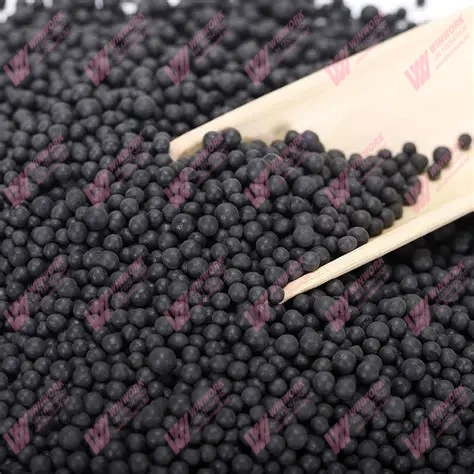
As global agriculture shifts toward sustainability, soil health and nutrient efficiency have become top priorities for farmers, agribusinesses, and fertilizer manufacturers. Among the many organic inputs available today, humic acid organic fertilizer stands out as one of the most effective and scientifically proven solutions for improving soil fertility, boosting crop yields, and reducing dependence on chemical fertilizers.
In this article, we will explore what humic acid organic fertilizer is, how it works, its key benefits and application methods, aiming to provide professional guidance for agricultural practitioners pursuing ecological planting and high-quality yields,helping them fully grasp the application value of humic acid organic fertilizer.
What is humic acid organic fertilizer?
Humic acid organic fertilizer is an organic soil amendment rich in humic substances, primarily humic acid, fulvic acid, and humin. These substances are formed through the long-term decomposition of plant and animal matter and represent one of the most active components of soil organic matter.
Unlike conventional fertilizers that mainly supply nutrients, humic acid organic fertilizer works by improving soil chemistry, biology, and physical structure, while also enhancing the efficiency of nutrients already present in the soil or added through other fertilizers.
It is commonly available in powder, granule, or liquid form and is often blended with organic nutrients such as nitrogen, phosphorus, potassium, amino acids, and beneficial microorganisms.
5 Core Secrets of Humic Acid Organic Fertilizer Boosting Soil and Crops
The excellent performance of humic acid organic fertilizer in agricultural production is mainly due to its 5 core functions, which are also the key reasons for its popularity among farmers:
- Activate soil and alleviate degradation
Humic acid has strong ion exchange capacity and adsorption capacity, which can effectively improve soil structure. Long-term application can fundamentally solve soil degradation problems and restore soil vitality.
- Promote nutrient absorption and improve fertilizer efficiency
Humic acid can form complexes with nutrients such as nitrogen, phosphorus, and potassium in the soil, preventing nutrient loss and fixing. At the same time, it can activate fixed nutrients in the soil and convert them into forms that are easily absorbed by crops. This not only improves the utilization rate of fertilizers but also ensures that crops can continuously obtain balanced nutrients, avoiding nutrient deficiency symptoms.
- Enhance crop stress resistance and reduce diseases
The active substances in humic acid can regulate the physiological metabolism of crops, enhance the activity of enzymes in crops, and improve their resistance to drought, cold, waterlogging, and diseases and insect pests.For example, under drought conditions, it can promote the development of crop root systems, improve the water absorption capacity of roots; in cold environments, it can increase the content of soluble sugars in crops, reduce the freezing point of cells, and reduce frost damage. In addition, it can also inhibit the growth of harmful bacteria in the soil and reduce the occurrence of soil-borne diseases
- Improve crop quality and increase yield
Humic acid can promote the synthesis and accumulation of beneficial substances in crops.It is an important guarantee for producing high-quality and high-yield agricultural products.
- Prolong fertilizer effect and realize low release
Humic acid has a certain slow-release effect, which can slow down the release speed of nutrients in the fertilizer. Compared with ordinary organic fertilizers, the fertilizer effect of humic acid organic fertilizer is longer, which can continuously supply nutrients for crops throughout the growth cycle. This not only reduces the number of fertilizations, saves labor costs but also avoids the problem of excessive nutrient concentration in the early stage and nutrient deficiency in the later stage.
Production process and core equipment of humic acid organic fertilizer
The production of high-quality humic acid organic fertilizer requires strict process control and professional equipment. The main production process includes raw material selection, humic acid extraction, fermentation compounding, mixing blending, and packaging. The core equipment is mainly divided into four categories:
- Humic acid extraction equipment
The key equipment for extracting humic acid from raw materials, including crushers, reactors, and separators. The crusher crushes the raw materials into fine particles to increase the extraction contact area; the reactor realizes the extraction of humic acid under the conditions of heating and adding extracted things; the separator separates the extracted humic acid solution from the residue to obtain pure humic acid raw liquid.
- Fermentation equipment
Used for fermenting organic raw materials such as crop straw and livestock manure. The core equipment is the vertical fermentation tank and horizontal fermentation tank, which ensures aerobic fermentation by turning over the materials.This step can kill harmful bacteria and insect eggs in the raw materials and generate beneficial microorganisms.

Horizontal fermentation tank
- Mixing and blending system
Used to mix humic acid raw liquid, fermented organic matter, microbial agents, and nutrient additives in a certain proportion. The twin shaft mixer is usually used, which has high mixing uniformity and can ensure that various components are fully integrated, avoiding local nutrient imbalance.
- Packaging and testing equipment
The finished product is packaged by automatic packaging machines, which can realize quantitative weighing and sealing. At the same time, testing equipment such as nutrient detectors are used to detect the humic acid content, organic matter content, and nutrient content of the finished product to ensure that the product meets the national standard.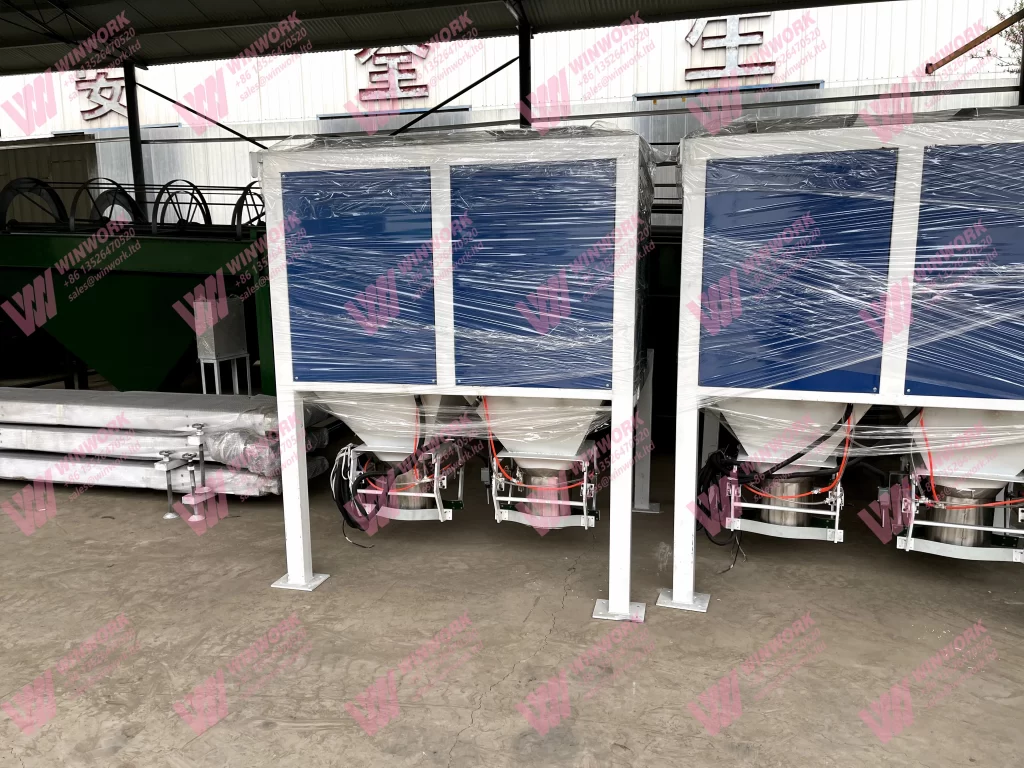
Scientific application methods of humic acid organic fertilizer
To give full play to the fertilizer effect of humic acid organic fertilizer, scientific application methods are essential. The following are practical application tips:
- Choose appropriate application methods
Common application methods include spreading, furrow application, hole application, and foliar spraying. Spreading is suitable for large-scale farmland; furrow application and hole application are suitable for cash crops such as fruit trees and vegetables, which can improve nutrient utilization efficiency; foliar spraying is suitable for the later growth stage of crops,which can quickly supplement nutrients.
- Pay attention to compatibility with other fertilizers
It can be used in combination with chemical fertilizers and biological fertilizers to complement each other and improve the overall fertilizer effect.When mixed with different fertilizers,it plays a different role.It should be noted that it should not be mixed with alkaline fertilizers to avoid reducing the activity of humic acid.
- Master application time and amount
Suitable for both base fertilizer and topdressing. Apply as base fertilizer 7-10 days before sowing/transplanting. For topdressing, apply in key growth stages with reduced dosage.
- Apply in combination with irrigation
Humic acid organic fertilizer is easy to dissolve in water. Applying it in combination with irrigation can make the nutrients penetrate into the soil more evenly, which is conducive to the absorption of crop roots. Avoid applying in rainy days to prevent nutrient loss with rainwater.
How to choose high-quality humic acid organic fertilizer
The quality of humic acid organic fertilizer directly affects the application effect. When choosing products, the following points should be paid attention to:
- Check the humic acid content
The higher the humic acid content, the better the fertilizer effect. It is necessary to check the product inspection report to confirm the content of humic acid.
- Choose regular manufacturers
Select manufacturers with good market reputation, strong technical strength, and perfect after-sales service. Regular manufacturers have strict quality control in the production process, and the product quality is more guaranteed. At the same time, they can provide professional application guidance.
- Observe appearance and smell
High-quality products are dark brown or black, with a loose texture or uniform liquid, no obvious agglomeration or sediment. It has a mild earthy smell or fermented smell, without pungent odors such as ammonia.
- Check qualification certificates
Choose products with complete certificates such as production licenses, product quality inspection reports, and organic fertilizer certifications.
Conclusion
Humic acid organic fertilizer, with its 5 core secrets of activating soil, promoting nutrient absorption, enhancing stress resistance, improving quality, and prolonging fertilizer effect, has become an important support for modern ecological agriculture. It not only solves the problem of soil degradation caused by traditional farming methods but also helps farmers achieve high-quality and high-yield agricultural production.
With the continuous deepening of the concept of sustainable agriculture, humic acid organic fertilizer will be more widely applied in agricultural production, making greater contributions to improving soil health, ensuring food safety, and promoting the green transformation of agriculture.
For more details, please feel free to contact us.
Email: sales@lanesvc.com
Contact number: +8613526470520
Whatsapp: +8613526470520

Get A Quote