

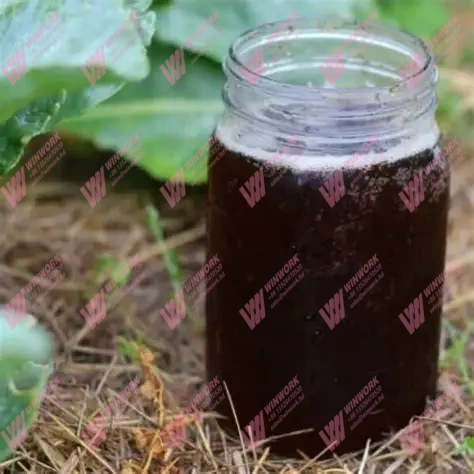
Overview of Liquid Fertilizer Production in Modern Agriculture
As agriculture shifts toward precision nutrient management and water-saving irrigation systems, liquid fertilizers have become a preferred solution across global markets. Unlike solid fertilizers, liquid formulations allow faster nutrient uptake, uniform application, and easy integration with fertigation and spraying systems. Behind this efficiency lies advanced liquid fertilizer manufacturing equipment, which enables accurate formulation, stable quality, and scalable production.
Modern fertilizer plants rely on integrated production systems that convert raw nutrient materials into homogeneous liquid products suitable for a wide range of crops and growing conditions. Understanding how this equipment operates is critical for producers seeking long-term competitiveness.
What Is Liquid Fertilizer Manufacturing Equipment?
Liquid fertilizer manufacturing equipment refers to a complete industrial system designed to produce liquid fertilizers through controlled feeding, dissolving, chelation, blending, and filling processes. These systems are engineered to handle soluble fertilizers such as nitrogen, phosphorus, potassium, and micronutrients, as well as functional additives like amino acids or organic extracts.
A standard liquid fertilizer manufacturing equipment setup ensures precise nutrient ratios, chemical stability, and consistent product performance. It also supports flexible formulation changes, allowing manufacturers to respond quickly to market demand.
Core Production Processes
Feeding System
The feeding stage is the starting point of liquid fertilizer production. Solid and liquid raw materials are accurately weighed and introduced into the system through automated or semi-automatic feeding units. Precise feeding is essential to ensure formulation accuracy and minimize material waste.
High-quality liquid fertilizer manufacturing equipment uses controlled feeding systems to maintain consistent batch quality and support continuous production.
Dissolving and Mixing
Dissolving is a critical step where solid raw materials are fully dissolved in water under controlled temperature and agitation. Efficient dissolving prevents sedimentation and ensures uniform nutrient distribution.
Mixing tanks equipped with high-speed agitators allow nutrients to dissolve completely, forming a stable solution that is ready for further processing. In advanced liquid fertilizer manufacturing equipment, temperature and mixing speed are automatically adjusted to optimize solubility.
Chelation Process
Chelation improves the availability and stability of micronutrients such as iron, zinc, and manganese. During this process, chelating agents bind with metal ions, preventing precipitation and improving plant absorption.
The chelation stage is especially important for high-quality liquid fertilizers intended for foliar spraying or fertigation. Reliable liquid fertilizer manufacturing equipment integrates precise chelation control to ensure long-term product stability and effectiveness.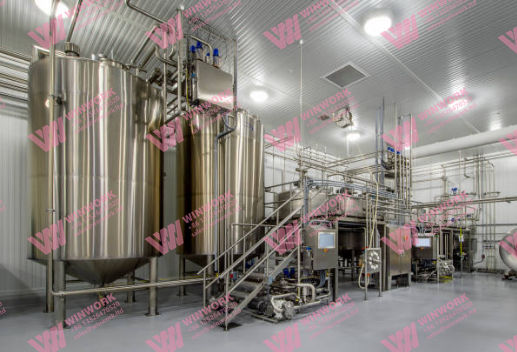
Filtration and Stability Adjustment
After chelation, the solution is filtered to remove undissolved particles or impurities. Filtration prevents clogging during application and enhances product appearance.
Stability adjustments, including pH regulation and stabilizer addition, are carried out to reduce crystallization risks during storage and transportation.
Filling and Packaging
The final step is filling, where finished liquid fertilizer is transferred into containers such as bottles, drums, or IBC tanks. Automated filling systems improve accuracy, hygiene, and production efficiency.
Modern liquid fertilizer manufacturing equipment often integrates filling, capping, and labeling systems into a single automated line, reducing labor costs and improving consistency.
Key Equipment Components
Liquid fertilizer production systems typically include mixing reactors, dosing pumps, chelation tanks, filtration units, storage tanks, and filling machines. Each component plays a specific role in maintaining product quality and production efficiency.
Well-designed liquid fertilizer manufacturing equipment uses corrosion-resistant materials and modular layouts, making maintenance easier and extending equipment lifespan.
Advantages for Modern Agriculture
The use of liquid fertilizer manufacturing equipment supports precision agriculture by enabling uniform nutrient delivery and flexible application methods. Liquid fertilizers are easily absorbed by crops, improving nutrient efficiency and reducing losses.
Additional advantages include reduced environmental impact, compatibility with automated irrigation systems, and the ability to customize formulations for different crops and growth stages. These benefits make liquid fertilizer manufacturing equipment a strategic investment for modern fertilizer producers.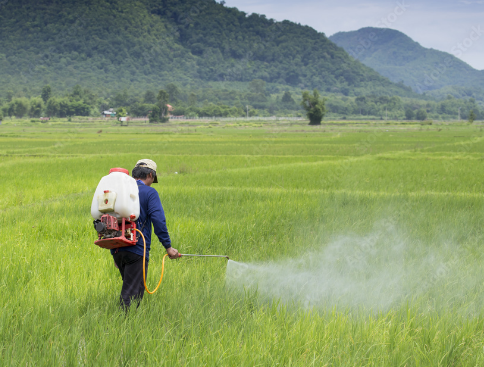
Applications Across Agricultural Markets
Liquid fertilizers produced by liquid fertilizer manufacturing equipment are widely used in open-field farming, greenhouse cultivation, orchards, and horticulture. They are suitable for staple crops, high-value vegetables, fruits, and specialty crops.
Their versatility allows manufacturers to serve diverse agricultural markets while maintaining consistent product quality.
How to Choose the Right Equipment
Selecting the right liquid fertilizer manufacturing equipment depends on several factors, including production capacity, formulation complexity, and automation level. Small and medium producers may prefer modular systems, while large factories often invest in fully automated production lines.
Key considerations include material compatibility, energy efficiency, ease of maintenance, and scalability. Working with experienced equipment suppliers can help ensure long-term reliability and compliance with industry standards.
Conclusion
Liquid fertilizer manufacturing equipment is a foundational technology in modern agriculture, enabling efficient production of high-quality liquid fertilizers. Through optimized feeding, dissolving, chelation, and filling processes, advanced systems support sustainable farming and precision nutrient management, helping producers meet evolving agricultural demands.
For more details, please feel free to contact us.
Email: sales@lanesvc.com
Contact number: +86 13526470520
Whatsapp: +86 13526470520
Get A Quote