


Introduction About Liquid Fertilizer Manufacturing Process Steps
Liquid fertilizers are widely adopted in modern agriculture due to their fast nutrient absorption, uniform application, and compatibility with irrigation systems. However, producing a stable and effective liquid fertilizer requires more than simply mixing raw materials. Manufacturers must carefully follow standardized liquid fertilizer manufacturing process steps to achieve high-quality output and consistent performance.
A well-organized production process improves product stability, reduces operational risks, and minimizes material waste. This article explains how to follow liquid fertilizer manufacturing process steps correctly, focusing on practical production control rather than complex chemical theory. It is suitable for fertilizer manufacturers, plant managers, and investors planning liquid fertilizer production lines.
Step 1: Raw Material Selection and Preparation
The foundation of high-quality output starts with raw material preparation, which is the first stage of the liquid fertilizer manufacturing process steps. Common raw materials include nitrogen, phosphorus, and potassium compounds, trace elements, water, stabilizers, and sometimes acids or organic additives.
All raw materials should be inspected for purity, compatibility, and moisture content. Solid materials must be stored in dry environments, while liquid chemicals should be kept in corrosion-resistant tanks. Accurate weighing and dosing are essential to ensure stable formulations and avoid quality fluctuations in later stages.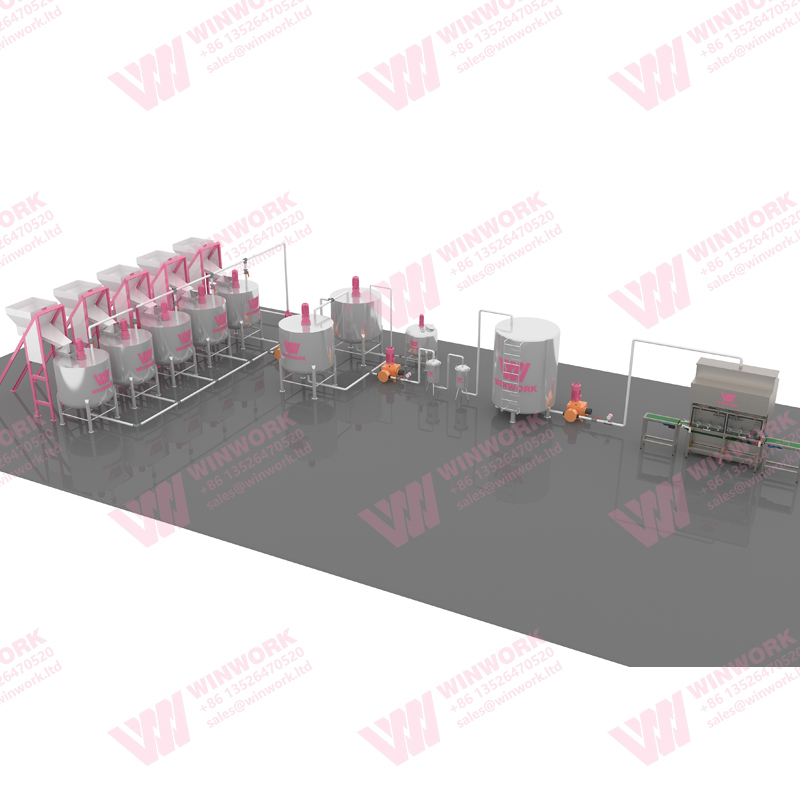
Step 2: Dissolving Solid Nutrients
Dissolving solid materials is a key operation within the liquid fertilizer manufacturing process steps. Solid nutrients such as urea or ammonium salts are gradually added into water inside a dissolving kettle.
Agitation and controlled heating help accelerate dissolution and prevent sediment formation. Proper dissolving ensures that nutrients are fully available in solution form. Incomplete dissolution can cause pipeline blockage, unstable formulations, and uneven nutrient distribution, directly affecting final product quality.
Step 3: Mixing and Chemical Reaction Control
After solids are completely dissolved, the solution is transferred into a mixing reaction tank. This stage is central to the liquid fertilizer manufacturing process steps, as it determines the final nutrient composition.
Different nutrient solutions are blended according to the formulation. Mixing speed, temperature, and pH must be precisely controlled to avoid unwanted reactions or precipitation. Uniform mixing ensures consistency between batches and improves fertilizer effectiveness in field application.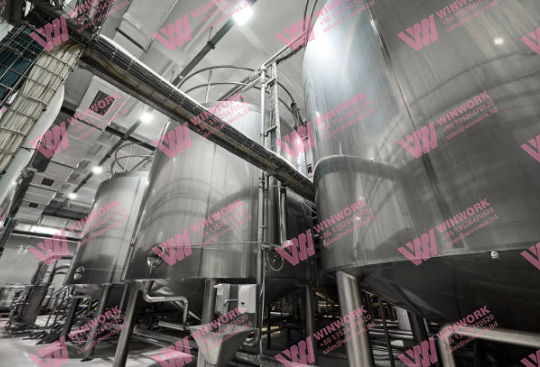
Step 4: Filtration and Clarification
Filtration is an essential quality assurance step in the liquid fertilizer manufacturing process steps. Even with proper dissolving and mixing, small insoluble particles or impurities may still be present.
A filtration system removes these particles, ensuring a clean and stable liquid product. Effective filtration protects downstream equipment such as pumps, homogenizers, and filling machines, while also improving product appearance and shelf life.
Step 5: Homogenization for Product Stability
Homogenization plays a vital role in achieving high-quality output during the liquid fertilizer manufacturing process steps. The homogenizer ensures uniform particle distribution and prevents sedimentation during storage.
This step is particularly important for compound liquid fertilizers containing micronutrients or organic components. Proper homogenization enhances storage stability, improves nutrient availability, and ensures that the fertilizer remains uniform from the first application to the last.
Step 6: Quality Inspection and Fine Adjustment
Quality inspection is a critical control point in the liquid fertilizer manufacturing process steps. Before filling, parameters such as nutrient concentration, pH value, density, and visual clarity are tested.
If results deviate slightly from the formulation, fine adjustments are made by adding water, nutrients, or stabilizing agents. This step ensures compliance with product specifications and helps maintain consistent quality across production batches.
Step 7: Automatic Filling and Packaging
Filling and packaging represent the final production phase of the liquid fertilizer manufacturing process steps. The finished fertilizer is transferred to an automatic filling machine, which accurately fills bottles, drums, or containers.
Automatic filling improves efficiency, reduces labor requirements, and minimizes contamination risks. Precise volume control ensures standardized packaging, which is essential for commercial sales and customer trust.
Step 8: Storage and Distribution Management
Proper storage and distribution are often underestimated but remain important parts of the liquid fertilizer manufacturing process steps. Finished products should be stored in sealed, corrosion-resistant storage tanks under suitable temperature conditions.
During transportation, exposure to extreme temperatures and contamination must be avoided. Well-managed logistics help preserve product quality and ensure fertilizers reach end users in optimal condition.
Key Control Points for High-Quality Output
To achieve stable and reliable results, manufacturers should focus on the following control points throughout the liquid fertilizer manufacturing process steps:
- Accurate raw material dosing
- Complete dissolution of solid nutrients
- Stable pH and temperature during mixing
- Effective filtration and homogenization
- Consistent quality inspection before filling
Monitoring these points helps prevent production issues and ensures high-quality output.
Conclusion
Following standardized liquid fertilizer manufacturing process steps is essential for producing high-quality, stable, and market-ready liquid fertilizers. Each stage—from raw material preparation and dissolving to mixing, filtration, homogenization, and filling—plays a crucial role in overall production success.
By strictly controlling every step of the liquid fertilizer manufacturing process steps, manufacturers can improve efficiency, reduce operational risks, and deliver consistent products that meet modern agricultural demands and market expectations.
For more details, please feel free to contact us.
Email: sales@lanesvc.com
Contact number: +86 13526470520
Whatsapp: +86 13526470520


Get A Quote