


Against the backdrop of global agriculture’s transformation towards high efficiency, precision, and sustainability, Liquid Fertilizer Production is emerging as a crucial supporting technology for modern farming. This article systematically introduces the concept and process of Liquid Fertilizer Production, explains the characteristics of liquid fertilizers, and highlights their significant benefits in improving nutrient use efficiency, enhancing crop growth, and saving labor costs. If you are interested in this, you can read this article to understand how this advanced technology can help modern agriculture develop towards green ecology.
What Is Liquid Fertilizer and Liquid Fertilizer Production?
Liquid Fertilizer refers to fertilizers in which nutrients are dissolved or suspended in water, allowing direct application via irrigation, spraying, or fertigation systems. Compared with solid fertilizers, liquid fertilizers are much easier to mix with water, pesticides, or other nutritional elements, offering flexible application and fast absorption. Liquid Fertilizer Production is the complete process of dissolving, emulsifying, or chelating various nutrient raw materials in scientifically determined ratios, followed by filtration, homogenization, blending, and packaging to produce stable, ready-to-use products.
Key steps in it include raw material selection and inspection, precise metering and feeding, dissolution and reaction control, pH and ion balance adjustment, addition of stabilizers or adjuvants, filtration and clarification, quality testing, and packaging. Modern Liquid Fertilizer Production often incorporates automated batching systems and online monitoring instruments to ensure consistent concentration, uniformity, and safety in every batch.
Benefits of Liquid Fertilizer Production
Fast Nutrient Absorption and High Utilization Efficiency
Nutrients in liquid fertilizers exist as ions or small molecules, enabling rapid uptake by crop roots or leaves. Formulas optimized through the Production can significantly improve the bioavailability of N, P, K, and micronutrients, reducing nutrient loss.
Convenient Application and Labor Savings
Liquid fertilizers can be delivered simultaneously with irrigation water, especially suitable for drip, sprinkler, and fertigation systems. Products from Liquid Fertilizer Production eliminate manual spreading and tillage, greatly reducing labor intensity and operation time.
Strong Compatibility and Multi-Functional Integration
Liquid fertilizers are easily mixed with pesticides, plant growth regulators, biostimulants, etc., fulfilling both nutrition and plant protection needs in a single application — an important consideration in Liquid Fertilizer Production formulation design.
Reduced Soil Compaction
Because application often occurs via liquid or irrigation systems, fewer mechanical passes are needed across fields, helping maintain loose soil structure and protect soil ecology.
Facilitates Scale and Automation Management
Large farms and greenhouses can directly access Production products through centralized blending systems, achieving unified management and data traceability, thus improving operational efficiency.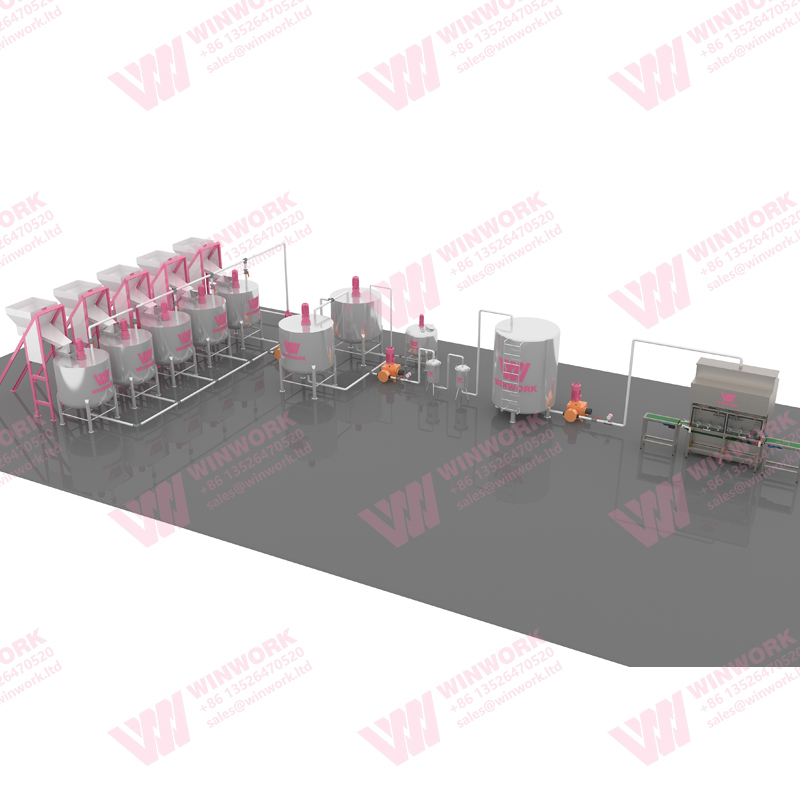
Liquid fertilizer production line process
Raw material proportioning: the liquid fertilizer production line first carries out accurate proportioning of raw materials, weighs various nutrients accurately according to the set formula, and conveys the raw materials to the mixing system through the automatic dosing system.
Mixing and Dissolving: The raw materials after proportioning enter into the mixing and dissolving tank, through the mechanical mixing and dissolving system, the nutrient elements are fully mixed and dissolved in the liquid substrate to form a uniform liquid fertilizer.
Filtering and purification: The mixed liquid fertilizer needs to go through a multi-stage filtering system to remove the impurities that may exist during the dissolution process, ensuring the purity and quality of the liquid fertilizer.
Automatic Filling: The filtered liquid fertilizer is transported to the automatic filling machine for quantitative filling. The filling process accurately controls the volume of each bottle of liquid fertilizer to avoid overflow or uneven phenomenon.
Capping and Packing: The bottles of liquid fertilizer after filling will be automatically capped and labeled and packaged through the automatic packaging system, finally forming the finished liquid fertilizer.
Quality Inspection: The production line is equipped with automated inspection equipment, which carries out strict quality inspection on each batch of products produced to ensure that each bottle of liquid fertilizer meets the national standards and the quality requirements of the enterprise.
Storage and Transportation: Qualified finished products are centrally stored through the warehousing system, and then transported to customers on demand after orders are confirmed.
Technical Essentials of this Production
Advanced Liquid Fertilizer Production emphasizes raw material purity and compatibility to prevent sedimentation, layering, or chemical reactions that could deactivate nutrients. For raw materials containing phosphorus or calcium, dissolution sequence and temperature must be controlled; micronutrients are often stabilized through chelation or complexation techniques. The process also requires attention to corrosion-resistant materials, explosion prevention measures, and environmentally sound discharge, ensuring Liquid Fertilizer Production operates safely and sustainably.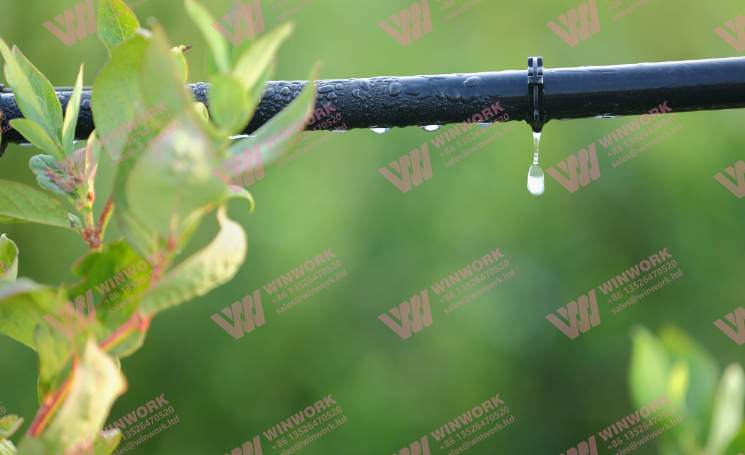
FAQ
Q1: What is Liquid Fertilizer?
A1: Liquid Fertilizer is a fertilizer in which nutrients are dissolved or suspended in water, allowing easy and fast absorption; Liquid Fertilizer Production is the industrial process of making it.
Q2: What are the main benefits of Liquid Fertilizer Production?
A2: Key benefits include fast nutrient absorption and high utilization, convenient and labor-saving application, precision control, strong compatibility, reduced soil compaction, and ease of scaling and automation — all strengths of Liquid Fertilizer Production.
Q3: What raw materials are used in Liquid Fertilizer Production?
A3: Common raw materials include water-soluble nitrogen sources (e.g., urea-ammonium nitrate solution), phosphorus sources (e.g., monopotassium phosphate), potassium sources (e.g., potassium sulfate), and chelated micronutrients, all meeting Liquid Fertilizer Production quality standards.
Q4: Is the production cycle of Liquid Fertilizer Production long?
A4: Generally completed within hours to 1–2 days, depending on formula complexity and process; Liquid Fertilizer Production enables quick turnaround to meet farming schedules.
Q5: What is the cost of Liquid Fertilizer Production?
A5: Equipment and raw material requirements are relatively high, but labor and fertilizer savings plus yield increases can offset costs, making it more economical at scale.
Conclusion
As the industrial process for manufacturing liquid fertilizers, it is profoundly changing traditional fertilization practices. With benefits such as fast nutrient absorption, convenient application, precision control, and multi-functional integration, Liquid Fertilizer Production demonstrates great advantages in boosting crop yield and quality while conserving resources and labor. Despite challenges in raw material compatibility, equipment investment, and storage-transport logistics, driven by supportive policies and continuous technological advancement, Liquid Fertilizer Production is destined to become a core tool for precision management in modern agriculture, injecting strong momentum into global high-quality and sustainable agricultural development.
For more details, please feel free to contact us.
Email: sales@lanesvc.com
Contact number: +8613526470520
Whatsapp: +8613526470520
Get A Quote