

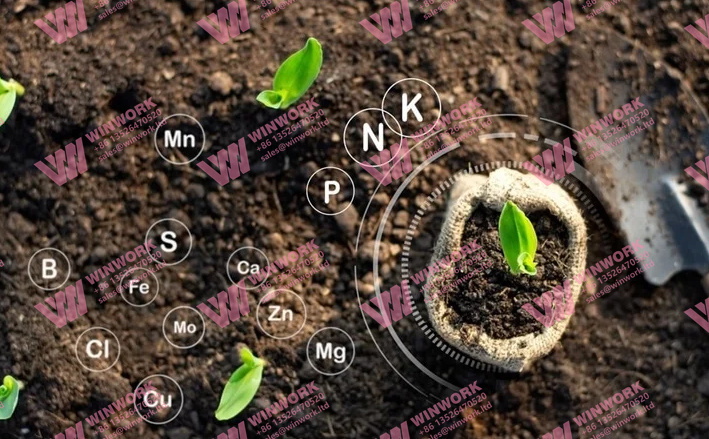
Organic and Inorganic Compound Fertilizer Granulation Experiment: Key Steps, Influencing Factors & Results Analysis
Organic and inorganic compound fertilizer, integrating the advantages of organic fertilizer and inorganic fertilizer, has become a core product in the modern agricultural fertilizer industry.The organic and inorganic compound fertilizer granulation experiment is an effective way to explore the optimal granulation parameters, solve production problems and improve product quality. This article will systematically elaborate on the organic and inorganic compound fertilizer granulation experiment, including experiment purpose, materials and equipment, experimental process, result analysis and precautions, providing a comprehensive reference for relevant researchers and production practitioners.
Purpose of organic and inorganic compound fertilizer granulation experiment
The core purpose of the organic and inorganic compound fertilizer granulation experiment is to determine the optimal technical parameters for the granulation process, so as to produce compound fertilizer granules with excellent performance. The most important thing for this experiment is to improve granulation rate and ensure the uniformity of nutrient distribution in the granules.It also aims to enhance the particle strength and optimize the production cost.
Materials and Equipment of organic and inorganic compound fertilizer granulation experiment
Experimental materials
The main materials include organic raw materials,inorganic raw materials,binders and conditioning agents.Organic raw materials usually select matured organic fertilizers such as decomposed cow manure, chicken manure, crop straw compost, which provide organic matter and trace elements. Inorganic raw materials include nitrogenous fertilizers and potash fertilizers, which are the main sources of major nutrients.Binders are used to improve the cohesiveness of materials, conditioning agents can adjust the physical properties of materials, improving the granulation effect.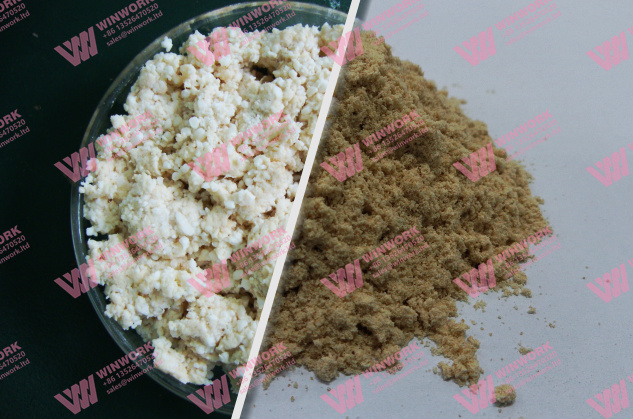
Experimental equipment
The experimental equipment mainly includes granulation equipment, auxiliary equipment and detection equipment. Granulation equipment is the core of the experiment, and common type is two-in-one granulator.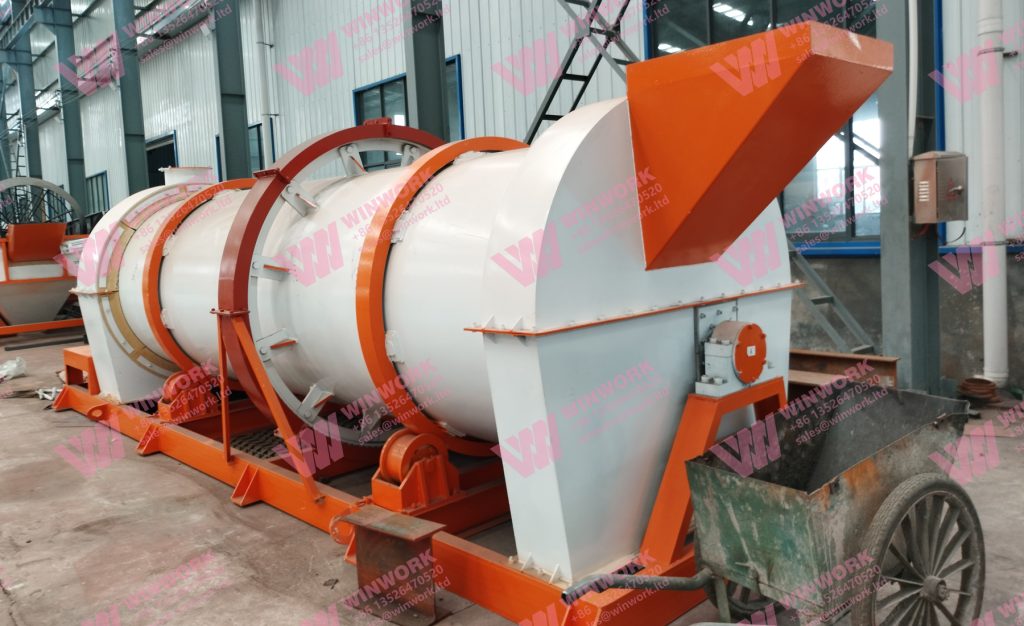
Experimental process of organic and inorganic compound fertilizer granulation
The organic and inorganic compound fertilizer granulation experiment follows a systematic process, which is divided into 6 key steps, and each step needs strict parameter control to ensure the accuracy and repeatability of the experiment:
- Raw material preparation and mixing
The first step is to weigh accurately about organic raw materials,inorganic raw materials,binders and conditioning agents using an electronic balance.Then put them in a mixer to ensure that various components are uniformly distributed.The mixing uniformity directly affects the nutrient uniformity of the final granules, so this step must be fully carried out.
- Moisture adjustment
Moisture content is an important factor affecting granulation. Too high or too low moisture will affect the experimental result.
- Granulation operation
Gradually add the adjusted materials into two-in-one granulation equipment, and observe the granulation process in real time.
Collect the newly formed wet granules and spread them evenly in a dryer. Set the drying temperature and drying time, and dry the granules until the moisture content is below 15%.
- Cooling and screening
Put the dried granules into a cooler and cool them to room temperature to avoid caking caused by high temperature and moisture absorption. Then,put the cooled granules into a screener to select out qualified ones.
- Sample detection and data recording
Using different machines to test particle size,compression strength and content of NPK of 50 randomly selected qualified granules.And record all experimental parameters and detection results in detail.
Result of organic and inorganic compound fertilizer granulation experiment
The result analysis of the organic and inorganic compound fertilizer granulation experiment is to evaluate the granulation effect through experimental data, and determine the optimal granulation parameters. The main analysis contents include the following aspects:
- Granulation rate
Granulation rate is the most intuitive indicator of granulation effect. By comparing the granulation rates under different experimental group, the parameter range with the highest granulation rate is found.
- Particle quality
Particle quality includes particle size uniformity and particle strength. If the particle strength is low, it is necessary to increase the addition amount of binder or adjust the granulation equipment parameters.
- Nutrient uniformity
Take 10 qualified granules from different parts of the sample, grind them into powder respectively, and detect the nutrient content. The relative deviation of nutrient content between different granules should be less than 5%, indicating good nutrient uniformity.
Frequently Asked Questions (FAQs) About Organic and Inorganic Compound Fertilizer Granulation Experiment
- What is the optimal moisture content range for organic and inorganic compound fertilizer granulation?
Answer: The optimal moisture content range is usually 18%-22%.
- Which binder is more suitable for organic and inorganic compound fertilizer granulation with high inorganic content?
Answer: Bentonite or attapulgite with good cohesiveness and low cost are more suitable.
- How to improve the nutrient uniformity of compound fertilizer granules in the experiment?
Answer: Extend the raw material mixing time to ensure uniform mixing of various components, and stabilize the granulation process parameters.
- Why do the granules easily crush after granulation?
Answer: The main reasons are insufficient binder addition, low extrusion pressure (for double roller granulation) or excessive drying temperature. Adjust the relevant parameters to improve particle strength.
Conclusion
The organic and inorganic compound fertilizer granulation experiment is an important technical means to promote the industrialization of high-quality compound fertilizer. With the continuous development of agricultural technology, the organic and inorganic compound fertilizer granulation experiment will be more refined and intelligent, helping to produce more efficient, environmentally friendly and high-quality compound fertilizer products, and promoting the sustainable development of modern agriculture.
For more details, please feel free to contact us.
Email: sales@lanesvc.com
Contact number: +86 13526470520
Whatsapp: +86 13526470520
Get A Quote