

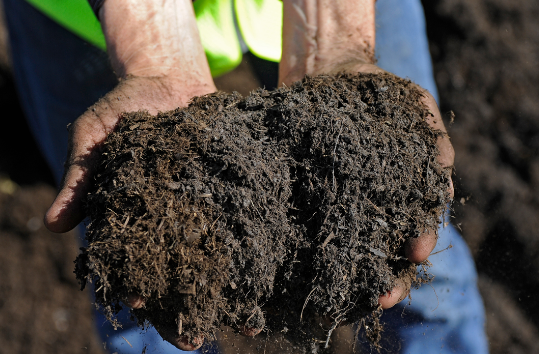
Organic fertilizer production is a practical way to turn farm waste into profit. This guide outlines the full process, key equipment, and expert tips for making high-quality organic fertilizer, showing how organic fertilizer production can boost yields and cut costs.
If you’ve ever looked at a pile of chicken manure, spoiled hay, or food scraps and thought, “There’s got to be a better use for this,” you’re not alone. That’s where organic fertilizer production comes in—a straightforward process that transforms smelly waste into nutrient-rich pellets or powders your crops will love. Whether you run a small farm or a backyard garden, mastering the basics of organic fertilizer production can slash fertilizer bills, improve soil health, and even open a new income stream.
Why Organic Fertilizer Production Makes Sense Now
Chemical fertilizers spike soil salinity, kill beneficial microbes, and rely on fossil fuels. Meanwhile, organic fertilizer production taps into renewable resources: manure, crop residues, food waste. Plus, with rising demand for “chemical-free” produce, selling your homemade organic fertilizer could be a lucrative sideline.
Overview of organic fertilizer line
Organic fertilizer production line is a combination of a series of organic material raw material processing equipment for producing granular fertilizers that are easy to pack, transport and store for a long time.
Organic fertilizer production line mainly contains turner, raw material crusher, raw material mixer, granulator, drying and cooling system, screening machine and packaging machine and other equipment, according to the production needs of the increase or decrease in the machinery, in order to achieve the final production goals.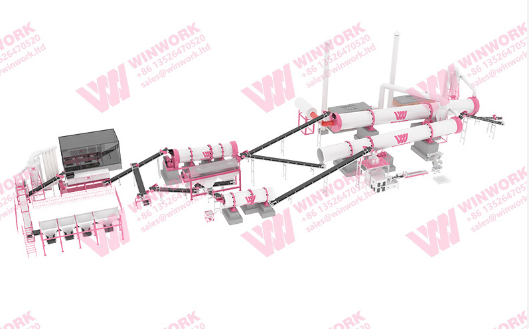
The whole process of the line
Raw material treatment: because organic waste is usually not easy to decompose, and contains some harmful substances to the soil, so it needs to be fully cooked and fermented, decomposition to remove the harmful substances, the formation of nutrient-rich humus. At this stage, the organic fertilizer production line researched and developed by our company can deal with this problem well by using compost turning machine and fermentation tank.
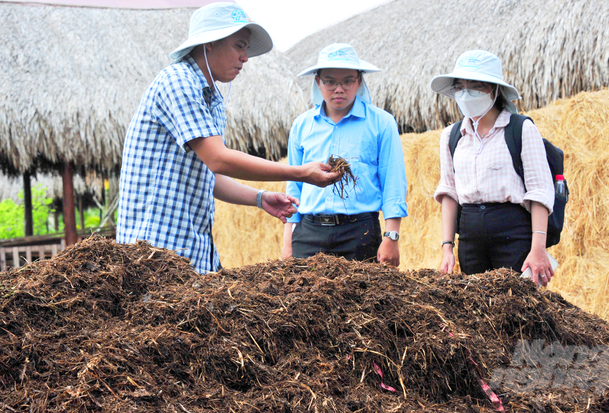
Through the compost turner, the material heap which has been sown with bacteria is turned, broken up and stirred, so as to promote the fermentation and maturation of the material, microbial growth and reproduction, and reduce the environmental pollution.
Through the fermentation tank, the material can be anaerobic, temperature-controlled treatment, to ensure that the material can be quickly fermented and ripened, the formation of organic fertilizer can be manufactured raw materials.
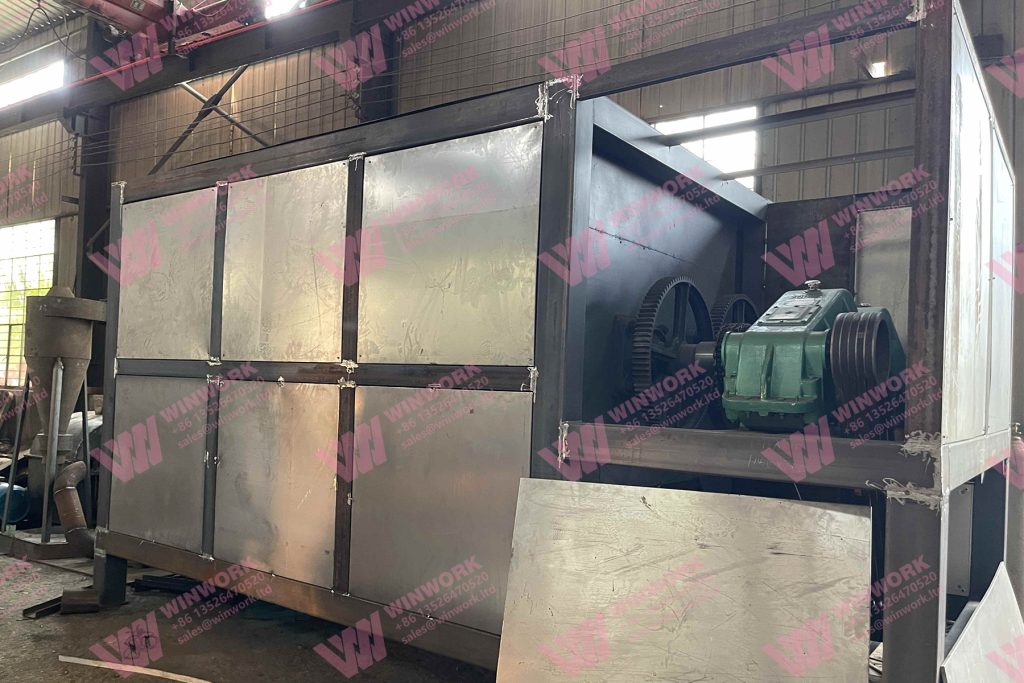
Horizontal fermentation tank
Raw material processing stage: after composting and fermentation of raw materials with rich organic matter, can effectively improve the quality of soil, and enhance the production of crops, but still not easy to save and transport, and can not be stored for a long time, we need to further processing.
The use of crusher, through the crusher internal high-speed rotating blades and chains, the fermentation of the material to complete the grinding, the formation of easy-to-handle powder, and then sent to the mixer after the full mixing and stirring, so that the material is more uniform, in this step can also add some necessary ingredients, such as additives, adhesives and so on.
Granulation: The processed powder will be sent into the churning teeth granulator through the belt conveyor, and the churning teeth rotating at high speed in the cylinder will mix, bond and cut the materials to form compact granules and push them backward to the discharge port to send them out.
Drying and cooling: By entering the dryer and cooler, the moisture of the granule is reduced and the hardness and stability of the granule is increased.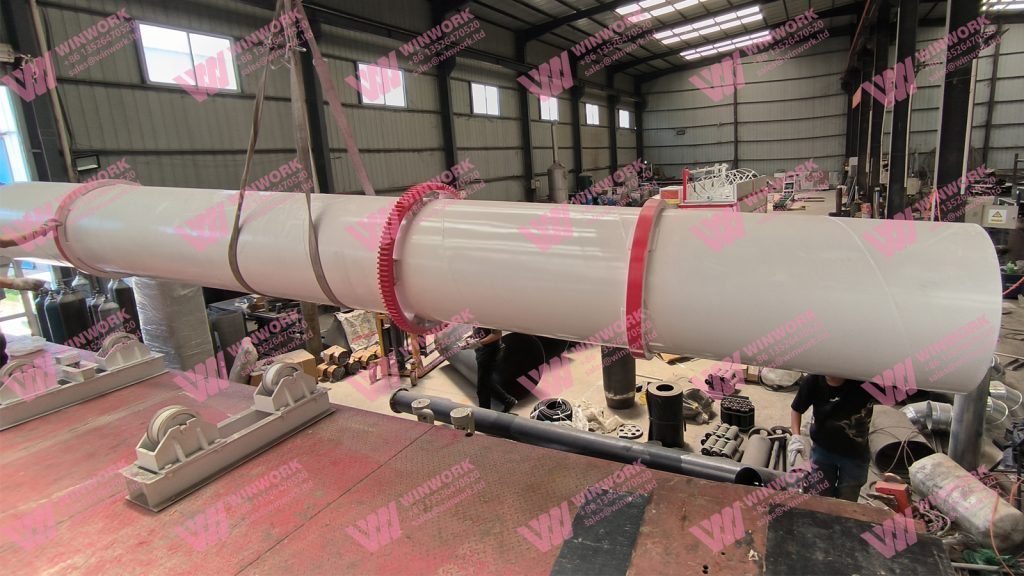
Screening: After drying, the granules enter the sieving machine to sieve out the granules that don’t meet the production standard and return them to be crushed and granulated again to improve the utilization rate, and at the same time, send out the granules that meet the production requirements.
Finished product processing: finished particles can be added according to customer demand for film wrapping machine or packaging machine, to further enhance the production effect, to ensure the quality of the finished product.
Pro Tips for Successful Organic Fertilizer Production
Test small batches first: Adjust carbon/nitrogen ratios before scaling up.
Monitor moisture: Compost should be 50–60% water; pellets 10–15%.
Start simple: A crusher, mixer, and composter are enough for a small farm. Add granulation later.
Brand your product: “GreenEarth Compost” sounds more appealing than “Manure Pellets.”
FAQ
Q1: Can I use just one type of manure for organic fertilizer production?
A: Yes, but results vary. Chicken manure is high in nitrogen (great for leafy crops), while cow manure is milder. Mixing with carbon sources like straw balances the nutrients.
Q2: How long does organic fertilizer production take?
A: Composting takes 2–3 months; granulation adds 1–2 weeks. Total time depends on scale and climate.
Q3: Do I need a permit to sell homemade organic fertilizer?
A: Regulations vary by country/state. In many places, selling unbranded compost requires no permit, but certified organic fertilizer needs lab testing and labeling.
Q4: Why do my pellets crumble?
A: Likely too little binder or over-drying. Add 1–3% bentonite and reduce dryer temperature.
Q5: Can I use food waste in organic fertilizer production?
A: Yes! Fruit/veggie scraps work well, but avoid meat/dairy (attracts pests). Mix with carbon materials to prevent odors.
Q6: How do I know if my compost is ready?
A: It should be dark, crumbly, and smell earthy. No original manure odor = ready for organic fertilizer production’s next steps.
Q7: Is organic fertilizer production messy?
A: Not if managed well! Enclose compost piles, use covered conveyors, and clean equipment regularly.
Q8: Can I automate organic fertilizer production?
A: Yes! from automatic compost turners to robotic baggers, tech exists for every budget. Start manual, upgrade as profits grow.
Q9: What’s the ROI for organic fertilizer production?
A: Small farms often break even in 1–2 years. Selling at $200–$400/ton, profits depend on local demand and production volume.
Q10: Where can I learn more?
A: Local agricultural extensions, online courses, or equipment suppliers often offer workshops on organic fertilizer production.
Conclusion
Organic fertilizer production isn’t just eco-friendly—it’s a smart business move. By converting waste into a valuable product, you’re cutting costs, improving soil, and meeting the booming demand for sustainable farming inputs. Whether you start with a simple compost pile or invest in a full granulation line, every step in organic fertilizer production brings you closer to a greener, more profitable farm. So grab your crusher, fire up the mixer, and turn today’s trash into tomorrow’s treasure.
For more details, please feel free to contact us.
Email: sales@lanesvc.com
Contact number: +8613526470520
Whatsapp: +8613526470520
Get A Quote