

Introduction
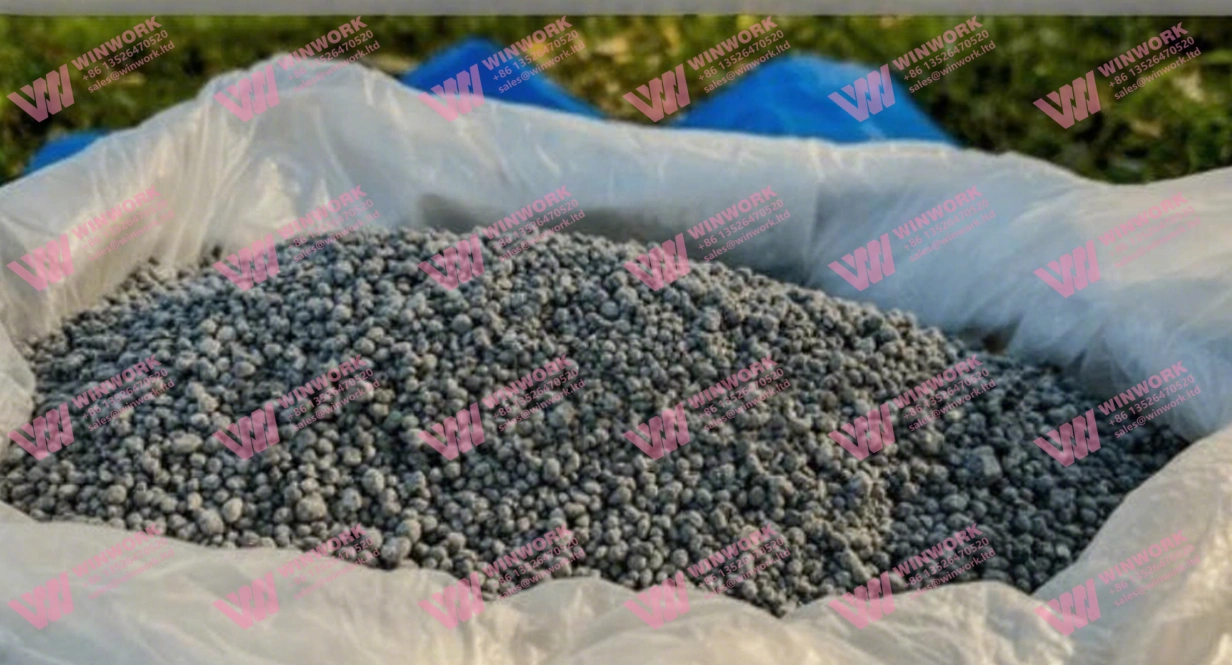
The demand for phosphate fertilizers continues to grow as agriculture seeks to maintain soil fertility and crop yields. A phosphate fertilizer production line is a comprehensive system designed to process raw phosphate rock and other nutrient materials into finished fertilizer granules. By integrating raw material handling, granulation, drying, cooling, screening, and packaging, manufacturers can produce high-quality fertilizers suitable for a variety of crops. This article provides an in-depth look at the working principle, equipment selection, production considerations, and operational best practices of a modern phosphate fertilizer production line.
Raw Materials Used in Phosphate Fertilizer Production
The foundation of any phosphate fertilizer production line is the raw materials. High-quality raw materials ensure uniform granulation and nutrient availability in the final product. Common materials include:
-
Phosphate rock: The primary source of phosphorus. Depending on chemical composition, it may require pre-treatment such as crushing or acidulation.
-
Limestone or dolomite: Added to adjust pH and improve soil compatibility.
-
Ammonia or ammonium compounds: Provide nitrogen in compound fertilizers.
-
Potash: Included in NPK formulations for balanced nutrition.
-
Additives and binders: Enhance granulation, improve particle strength, and reduce dust.
Each raw material must be carefully measured and pre-processed to meet the specifications of the production line. Particle size distribution, moisture content, and chemical composition play a key role in granule quality and production efficiency.
Crushing and Grinding Process
Before granulation, raw phosphate rock and other solid materials must be crushed and ground to a fine particle size. This step ensures that materials can mix uniformly and react efficiently in subsequent steps.
Equipment used in this stage may include:
-
Jaw crushers or hammer crushers: Reduce large rocks to manageable sizes.
-
Ball mills or vertical mills: Further grind the material to a powder suitable for granulation.
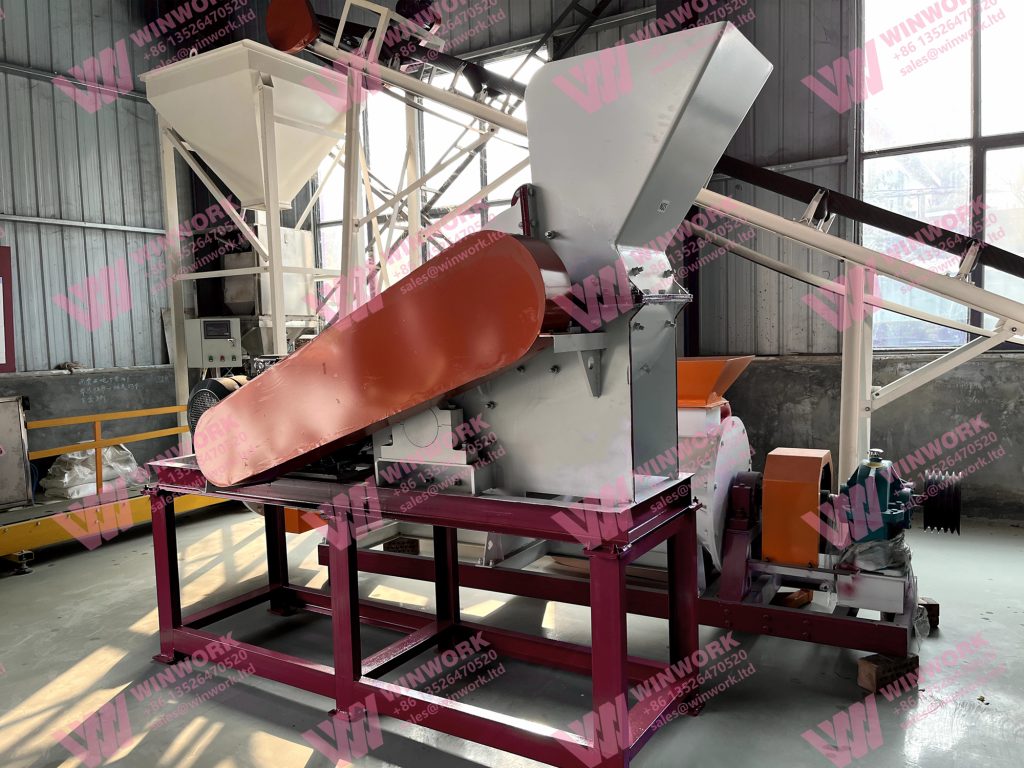
Proper crushing and grinding not only improve the granule uniformity but also enhance the chemical reactivity of phosphate rock, which is especially important for compound fertilizers.
Mixing and Homogenization
Once raw materials are ground, they are transported to a fertilizer mixer. Uniform mixing ensures that every granule contains the desired nutrient composition.
Key considerations in this stage:
-
Mixing ratio: Accurate proportioning of phosphate rock, nitrogen sources, and other components.
-
Mixing time: Sufficient to achieve homogeneity without over-grinding.
-
Moisture content: Essential for successful granulation; typically maintained at 15–20% depending on equipment type.
Well-mixed materials contribute directly to granulation efficiency and final granule quality.
Granulation in a Phosphate Fertilizer Production Line
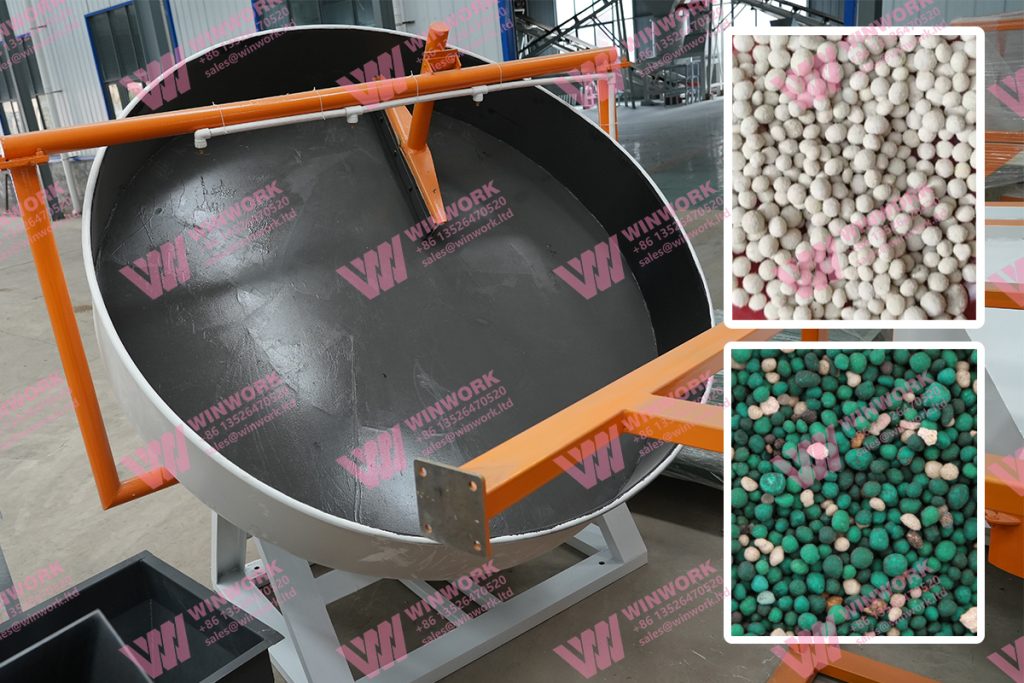
Granulation is the heart of a phosphate fertilizer production line, where powdered raw materials are transformed into solid granules. There are several common granulation methods:
-
Uses a disc granulator with adjustable angle and rotation speed.
-
Material rolls along the disc, gradually forming spherical granules.
-
Allows precise control of granule size and uniformity.
Rotary Drum Granulation
-
Large cylindrical drums rotate continuously.
-
Suitable for high-capacity production and can handle sticky or wet materials.
-
Produces slightly less uniform granules compared with disc granulators but is ideal for large-scale operations.
Wet Granulation
-
Moisture and binders are added to fine powder, enhancing adhesion.
-
Produces strong, durable granules and is widely used in phosphate fertilizer lines.
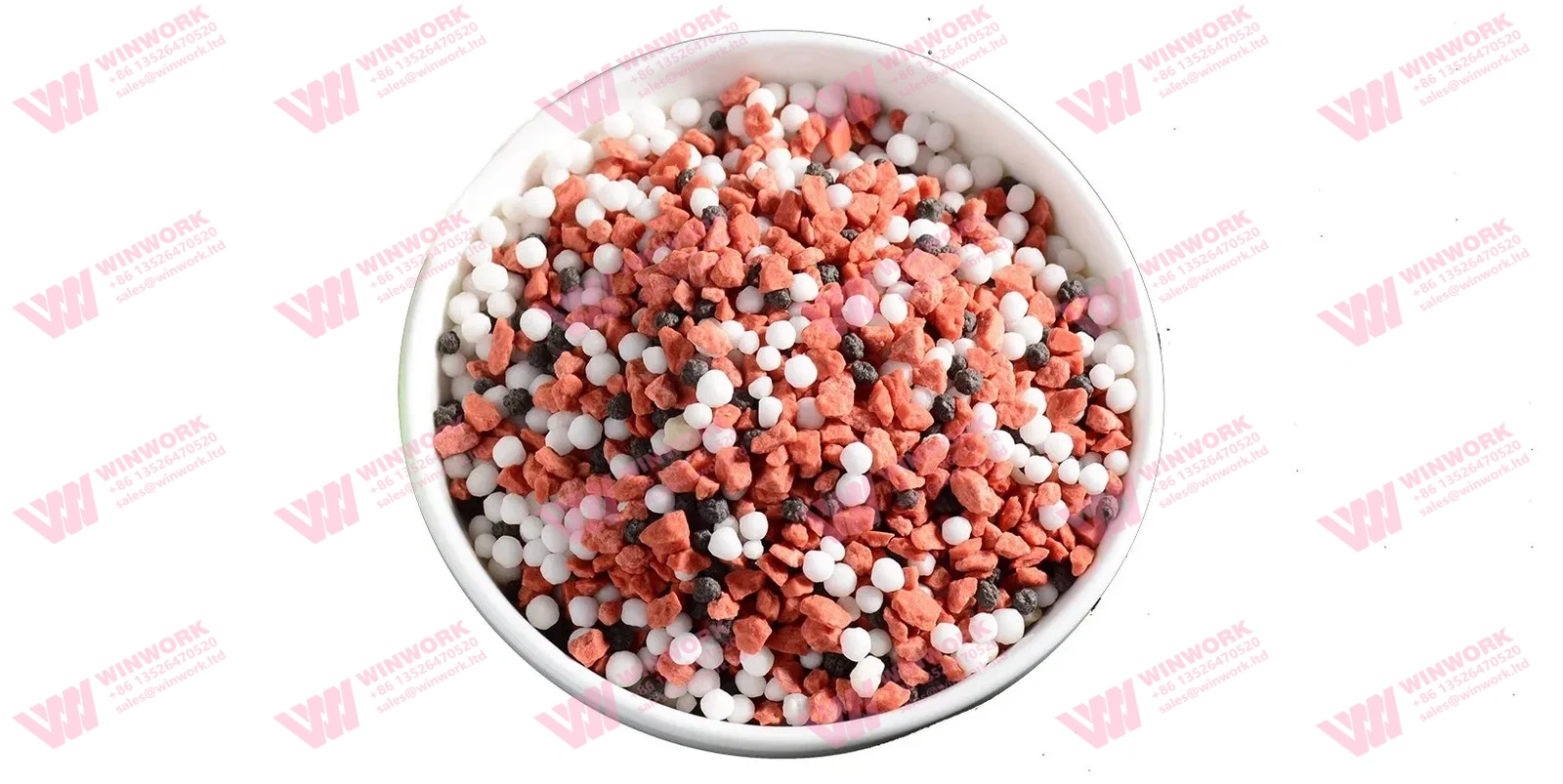
Granulation parameters, such as rotation speed, moisture content, and disc/drum angle, must be carefully controlled to achieve the desired granule size, typically 2–5 mm for commercial phosphate fertilizers.
Drying and Cooling of Granules
After granulation, the phosphate fertilizer granules contain excess moisture, which must be removed before storage or packaging. This step uses:
-
Rotary dryers: Hot air removes moisture from granules. Temperature control is critical to prevent nutrient degradation.
-
Cooling equipment: After drying, granules are cooled using rotary coolers or fluidized beds to ambient temperature, preventing clumping and ensuring product stability.
Drying and cooling are essential to maintain granule integrity, prevent caking, and prepare the product for screening and storage.
Screening and Size Classification
Screening separates granules based on size and removes undersized or oversized particles. Common equipment includes vibration screen machine and rotary screen machine.
-
Oversized granules: Returned to the granulator for reprocessing.
-
Undersized granules: Often recycled with fresh material to improve efficiency.
Consistent granule size is vital for uniform nutrient application in the field and is a key quality parameter for commercial fertilizers.
Coating and Surface Treatment
Some phosphate fertilizer production lines include a coating step:
-
Reduces dust generation during transport and handling.
-
Improves granule appearance and prevents moisture absorption.
-
Common coating materials: clay, polymers, or anti-caking agents.
Surface treatment ensures long shelf life and enhances customer satisfaction.
Integration of the Production Line
A modern phosphate fertilizer production line integrates all stages into a continuous, automated workflow:
-
Raw material crushing and grinding
-
Homogeneous mixing
-
Granulation
-
Drying and cooling
-
Screening
-
Coating (optional)
-
Packaging
Automation can include conveyors, feed rate control, moisture monitoring, and real-time process adjustments. Proper integration ensures stable production, consistent quality, and efficient resource use.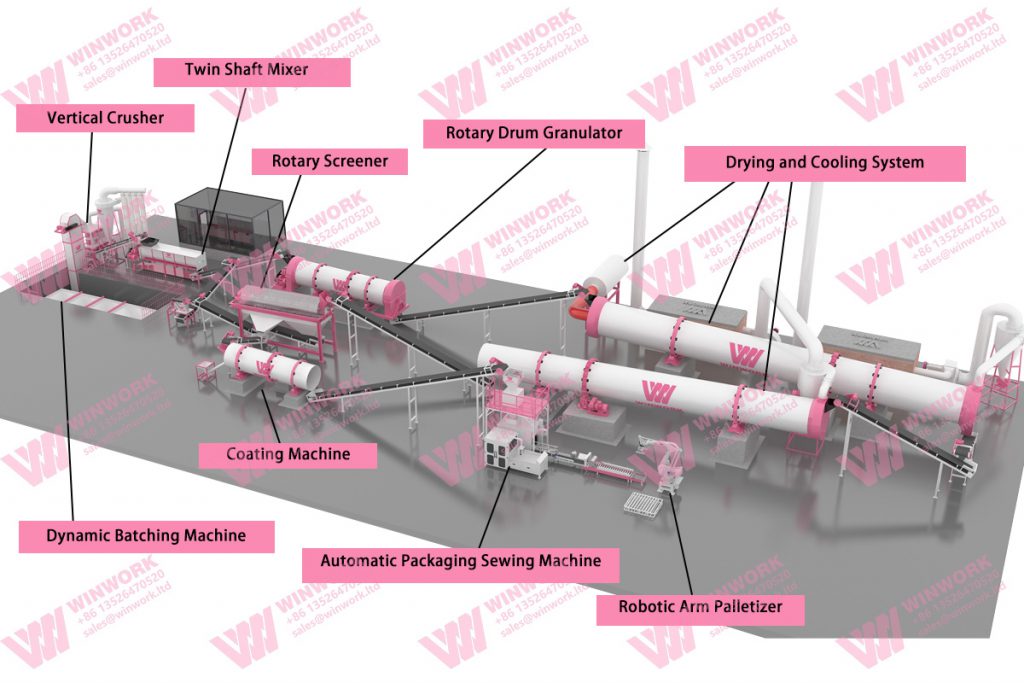
Comparison with Other Fertilizer Production Lines
Phosphate fertilizer production lines can be compared to:
-
Compound fertilizer production lines: Emphasize NPK balance, often require more complex mixing and granulation control.
-
Organic fertilizer production lines: Focus on bio-organic materials, typically use lower temperature granulation and fermentation steps.
-
Single nutrient mineral lines: Simpler, less flexible than phosphate lines but lower initial investment.
Phosphate lines require specialized equipment for handling abrasive phosphate rock and controlling granulation parameters, which distinguishes them from other fertilizer production processes.
Operational Considerations and Maintenance
Efficient operation of a phosphate fertilizer production line depends on:
-
Regular inspection of crushers, mills, and granulators.
-
Monitoring moisture content to prevent clumping or low granule strength.
-
Maintenance of drying and cooling systems to prevent overheating or granule breakage.
-
Proper lubrication and alignment of moving parts.
A preventive maintenance program reduces downtime and ensures consistent production quality.
Environmental and Safety Considerations
Phosphate fertilizer production involves dust, fine powders, and potential chemical exposure. Key practices include:
-
Dust collection systems in crushing and grinding areas.
-
Closed-loop conveyors to minimize material loss.
-
Proper storage of raw phosphate and finished granules to prevent contamination.
-
Safe handling of acidulated or treated phosphate products.
Compliance with environmental and safety regulations ensures sustainable operation.
Industrial Applications and Market Relevance
Phosphate fertilizers are essential for crops like wheat, corn, rice, and vegetables. Production lines can be customized to:
-
Produce single superphosphate (SSP) or triple superphosphate (TSP) fertilizers.
-
Serve large-scale agricultural operations or regional fertilizer markets.
-
Adjust granule size and nutrient composition according to soil and crop requirements.
A well-designed phosphate fertilizer production line supports flexible production and reliable supply to meet market demands.
Future Trends in Phosphate Fertilizer Production
The future of phosphate fertilizer production focuses on:
-
Automation and real-time process monitoring.
-
Energy-efficient dryers and coolers to reduce operational costs.
-
Advanced granulation technologies for improved particle uniformity.
-
Sustainable sourcing of phosphate rock and environmentally friendly production methods.
These developments enhance operational efficiency, product quality, and environmental compliance.
Conclusion About Phosphate Fertilizer Production Line
A phosphate fertilizer production line is a comprehensive system that converts raw phosphate rock and other materials into high-quality granules. Proper integration of crushing, mixing, granulation, drying, cooling, screening, and optional coating ensures uniform nutrient distribution, consistent granule size, and efficient operation. By investing in reliable equipment, controlling process parameters, and maintaining preventive maintenance, manufacturers can achieve high productivity and long-term operational success. Phosphate fertilizer production lines remain essential for meeting the growing demand for phosphorus in modern agriculture.
For more details, please feel free to contact us.
Email: sales@lanesvc.com
Contact number: +8613526470520
Whatsapp: +8613526470520
Get A Quote