

Introduction
Compound fertilizers are vital in modern agriculture, providing crops with essential nutrients like nitrogen, phosphorus, and potassium. As agricultural efficiency and sustainability become increasingly important, understanding the differences between powdered vs granular compound fertilizer is crucial for farmers, agribusinesses, and fertilizer manufacturers.
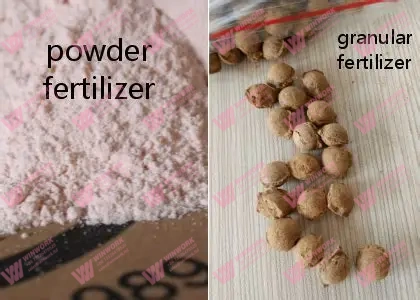
Powdered compound fertilizer offers quick nutrient release and easy soil incorporation, while granular compound fertilizer provides convenient application, better storage stability, and uniform nutrient distribution. Choosing between powdered vs granular compound fertilizer impacts crop performance, soil health, fertilizer application methods, and production strategies.
This article compares powdered vs granular compound fertilizer across seven dimensions, including nutrient composition, production processes, equipment requirements, application methods, storage, cost, and environmental considerations. Manufacturers and farmers alike can use this guide to optimize fertilizer selection, production line design, and operational efficiency.
Nutrient Composition and Release between powdered vs granular compound fertilizer
Powdered Compound Fertilizer
Powdered compound fertilizers are finely ground and mixed, allowing nutrients to be readily available for plant uptake. The small particle size ensures quick dissolution in soil, which is ideal for rapid nutrient absorption. However, powdered fertilizers may be more prone to nutrient loss through volatilization or leaching if not applied carefully.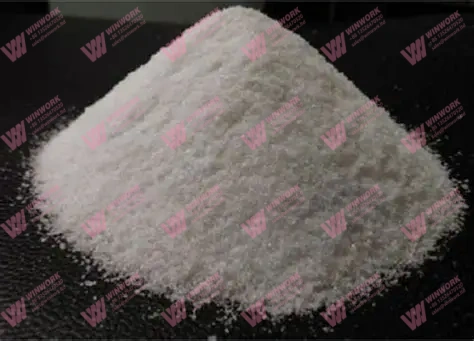
Granular Compound Fertilizer
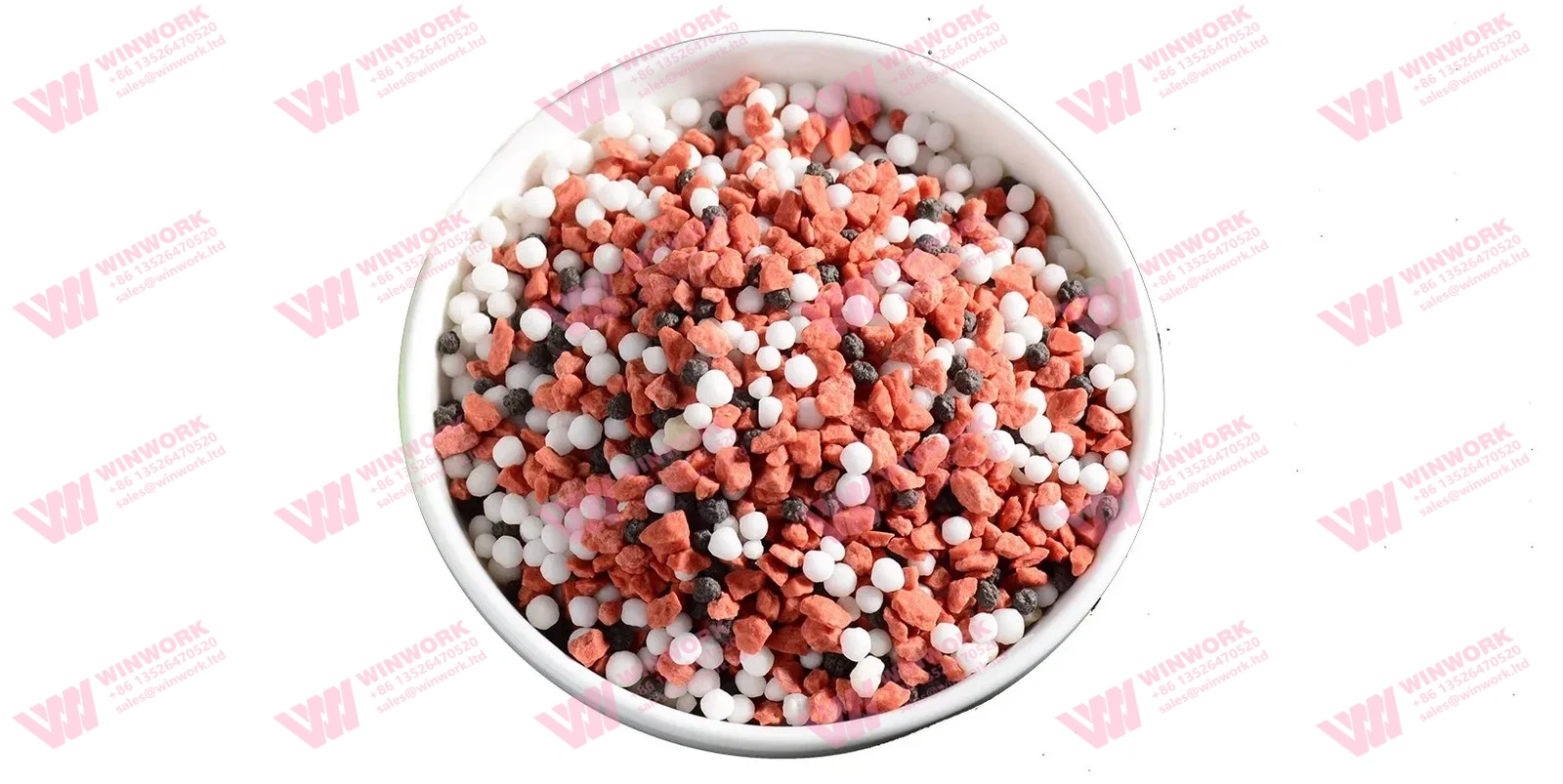
Granular compound fertilizers consist of dense, uniform pellets that release nutrients gradually over time. Granules are often coated or compacted to improve nutrient stability and reduce loss. The slow-release characteristics allow for better long-term soil fertility management and reduce the need for frequent applications.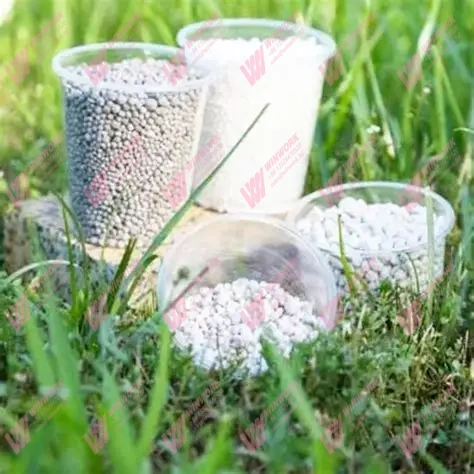
Summary: Powdered fertilizers excel at quick nutrient availability, while granular fertilizers prioritize controlled nutrient release and long-term soil management.
Production Process Differences between powdered vs granular compound fertilizer
Though the whole process between powdered vs granular compound fertilizer is same in a certain way,there are still some differences between powdered vs granular compound fertilizer.
Powdered Fertilizer Production
Raw Material Crushing: Raw materials are crushed into fine powders using hammer, vertical, or horizontal crushers. This step ensures uniform particle size, which is essential for consistent nutrient distribution.
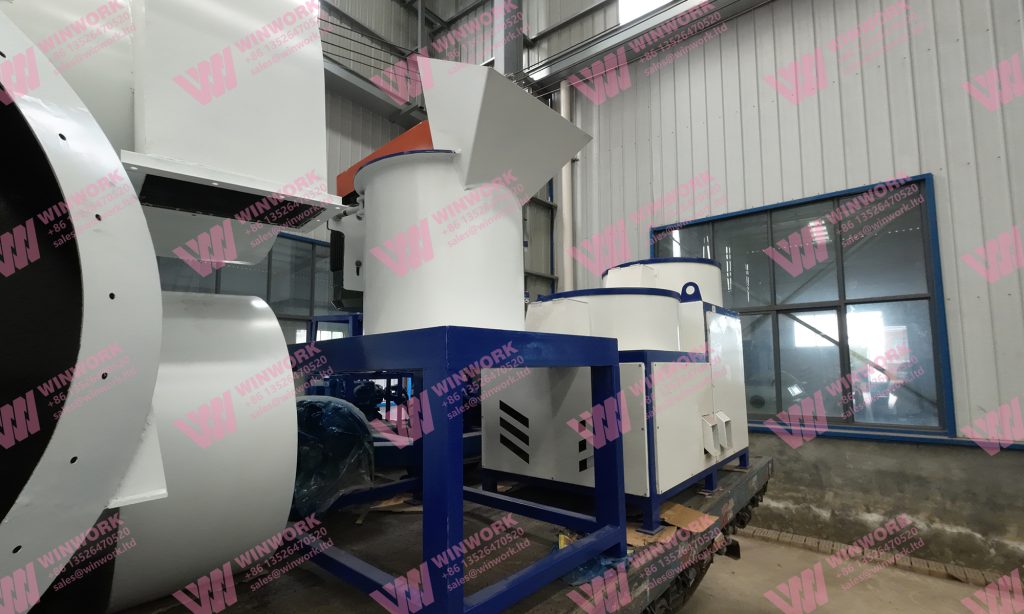
Automatic Batching: Crushed powders are weighed and proportioned using an automatic batching machine. This ensures precise nutrient ratios, reduces manual errors, and maintains consistency across batches.
Mixing: Mixers such as double shaft or horizontal mixers thoroughly combine powdered nutrients. Uniform blending prevents nutrient segregation and ensures each batch meets crop requirements.
Screening: Vibrating screeners or rotary screeners remove unqualified particles and impurities. This guarantees a smooth, homogeneous powder and protects downstream equipment from damage.
Packing: Automated packaging machines fill, seal, and label fertilizer bags. Proper packaging prevents moisture absorption and facilitates transport to storage or the market.
Powdered production lines are simpler, require less energy, and are suitable for small to medium-scale operations. This flexibility allows manufacturers to quickly adjust formulations for different crops or soils.
Granular Fertilizer Production
Dynamic Batching: Before mixing, raw materials are proportioned with a dynamic batching system. This system adjusts ratios in real time to maintain precise nutrient composition for large-scale production.
Mixing: Homogeneous blending of raw materials is performed using large double-shaft mixers or horizontal mixers. This step ensures precise nutrient ratios before granulation.
Granulation: Rotary drum, disc, or double roller granulators form powders into uniform granules. Granulation improves fertilizer handling, reduces dust, and increases storage stability.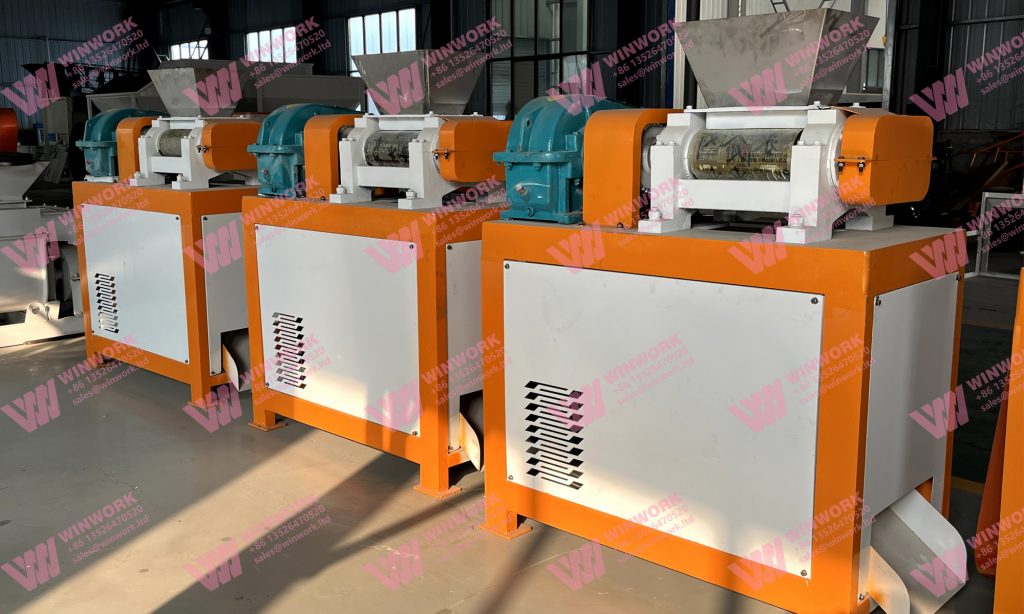
Drying: Rotary dryers remove excess moisture from freshly formed granules. Proper drying prevents caking and microbial growth, extending shelf life.
Cooling: Granules are cooled in rotary coolers. Cooling stabilizes granule structure and prevents breakage during handling.
Screening: Screening machines separate granules by size, recycling oversized or undersized particles. This step ensures consistent product quality and reduces material waste.
Coating (Optional): Coating machines apply anti-caking or nutrient coatings to improve storage stability. Coated granules maintain nutrient content and resist moisture absorption.
Packing: Granular fertilizers are packed using automated bagging machines with moisture-proof bags. Proper packaging prevents damage during transport and ensures market-ready products.
Granular production lines are more complex, require higher energy input, and are designed for large-scale continuous production. Despite higher costs, they produce market-preferred, easy-to-handle fertilizers.
Equipment Differences between powdered vs granular compound fertilizer
Due to differences between powdered vs granular compound fertilizer in the production process,the main equipment also has a huge distinction.
Powdered Fertilizer Equipment
Crushers: Reduce raw materials to fine powders. They improve blending efficiency and prevent nutrient segregation.
Fertilizer Batching Machine: Precisely weighs and proportionates raw materials before mixing, ensuring accurate nutrient ratios.
Mixers: Ensure uniform nutrient distribution. Efficient mixers shorten production time and improve product consistency.
Screeners: Maintain consistent particle size. They protect packaging machines and prevent clumping in storage.
Packaging Machines: Automate bagging and reduce labor. High-speed machines maintain product quality and output efficiency.
Granular Fertilizer Equipment
Dynamic Batching System: Continuously adjusts raw material ratios in real time before mixing to maintain precise nutrient composition.
Granulators: Rotary drum, disc, or double roller granulators form uniform pellets. Granulators handle high moisture and fibrous materials efficiently.
Rotary Dryers and Coolers: Remove moisture and stabilize granules. They prevent caking and improve hardness for transport and storage.
Screening Machines: Separate granules by size for uniformity. Oversized or undersized pellets are recycled back into production.
Coating Machines: Optional application of anti-caking or nutrient coatings. They enhance shelf life and protect granules from moisture.
Conveyors: Automated material handling throughout the production line. Conveyors improve workflow and reduce manual labor.
Key Insight: Powdered production equipment is simpler and lower cost, while granular production equipment is larger, more complex, and energy-intensive but produces easier-to-handle and marketable granules.
Application Methods between powdered vs granular compound fertilizer
Powdered Fertilizer
Quick soil integration: Can be broadcast manually or with spreaders, ideal for mixing directly into soil before planting.
Easy formulation adjustment: Automatic batching ensures precise nutrient ratios for different crops and soils.
Fast nutrient availability: Provides immediate nutrients for crops, supporting early growth stages effectively.
Granular Fertilizer
Precision and durability: Suitable for mechanical spreaders systems, granules maintain nutrient concentration until dissolved.
Dynamic batching for consistency: A dynamic batching system ensures uniform mixing of raw materials before granulation.
Slow-release and labor-saving: Granules release nutrients gradually, reducing frequent applications and labor costs.
Tip: Combining powdered and granular fertilizers can optimize crop nutrition—quick-release powders for immediate needs and granules for long-term supply.
Storage and Handling between powdered vs granular compound fertilizer
Powdered Fertilizer: Sensitive to moisture, powdered fertilizer must be stored in airtight, dry environments. Improper storage leads to caking, nutrient loss, and reduced efficiency.
Granular Fertilizer: Dense granules are less prone to moisture damage and easier to handle. Granular fertilizers allow bulk storage and safer transportation over long distances.
Summary: Granular fertilizers have better logistics advantages, while powdered fertilizers require careful storage management to preserve quality.
Cost Considerations between powdered vs granular compound fertilizer
Powdered Fertilizer: Lower initial equipment and energy costs; suitable for smaller operations or experimental production. Automated mixers and crushers reduce labor requirements.
Granular Fertilizer: Higher production line costs due to granulators, dryers, and coolers. Despite higher investment, granules yield better market acceptance and long-term profitability.
Insight: Investment in granular fertilizer production is justified for large-scale operations targeting professional agricultural markets, while powdered lines are ideal for flexible, smaller-scale production.
Environmental Implications between powdered vs granular compound fertilizer
Powdered Fertilizer: Faster nutrient release increases risk of leaching and runoff if applied improperly. Proper soil incorporation and timing are critical for minimizing environmental impact.
Granular Fertilizer: Slow-release granules reduce nutrient loss and improve efficiency. They support sustainable agriculture and minimize greenhouse gas emissions.
Sustainable farming strategies benefit from using both fertilizer types strategically, enhancing nutrient efficiency and reducing ecological impact.
Conclusion
Understanding powdered vs granular compound fertilizer is essential for manufacturers, farmers, and agribusiness investors.Powdered fertilizers offer rapid nutrient availability, lower equipment costs, and simpler production lines while granular fertilizers provide uniform, stable pellets, better storage, precise application, and long-term soil fertility benefits.
Choosing between the two depends on production scale, market demands, equipment investment, and environmental considerations. Integrated approaches combining powdered and granular fertilizers can maximize yield, efficiency, and sustainability.
For manufacturers, investing in appropriate production lines and equipment ensures high-quality fertilizer output and long-term competitiveness in the agricultural market.
For more details, please feel free to contact us.
Email: sales@lanesvc.com
Contact number: +86 13526470520
Whatsapp: +86 13526470520
Get A Quote