

Introduction
For decades, the default solution for boosting crop yields was a simple recipe: buy a bag of chemical fertilizer, spread it on the field, and watch the plants grow. It seemed like a quick fix, but farmers are discovering a hidden cost. That bag of synthetic nutrients might feed the plant for a season, but it quietly starves the soil underneath. The movement toward replacing chemical fertilizers with organic methods is changing that equation.
It’s not just an environmental choice; it’s a financial one. By swapping out salts and synthetics for living, breathing compost and manure-based nutrients, you can rebuild your soil, cut input costs, and even earn government payments for doing the right thing. Isn’t this a win-win situation? This is how it works in Replacing Chemical Fertilizers with Organic one.

What Are Chemical Fertilizers, and Why Are They a Short-Term Fix?
Chemical fertilizers—often called “synthetic” or “inorganic”—are manufactured products. They contain concentrated nutrients like nitrogen (N), phosphorus (P), and potassium (K) in forms that plants can absorb immediately. Examples include urea, ammonium nitrate, and superphosphate. While some may not fully understand specific chemical elements, this is not a concern. The key point is to recognize that this refers to chemical synthesis rather than natural ecological processes.
They work fast. You apply them, and within days, plants green up and shoot upward. It is a quickly way to nutrient your crops to make crops grow bigger and gain more fruits and harvests, you may not know if you use this chemical fertilizer, your soil will cry for help.
As that speed comes with strings attached. Over time, these fertilizers leave behind salts that damage soil structure and kill beneficial microbes. Heavy rains wash unused nutrients into waterways, causing pollution and wasting your money. Worst of all, the soil becomes dependent on these inputs, losing its natural fertility and organic matter. It’s a short-term boost with long-term consequences. This is how it works in Replacing Chemical Fertilizers with Organic one.
What Is Organic Fertilizer, and Why Is It a Long-Term Investment?
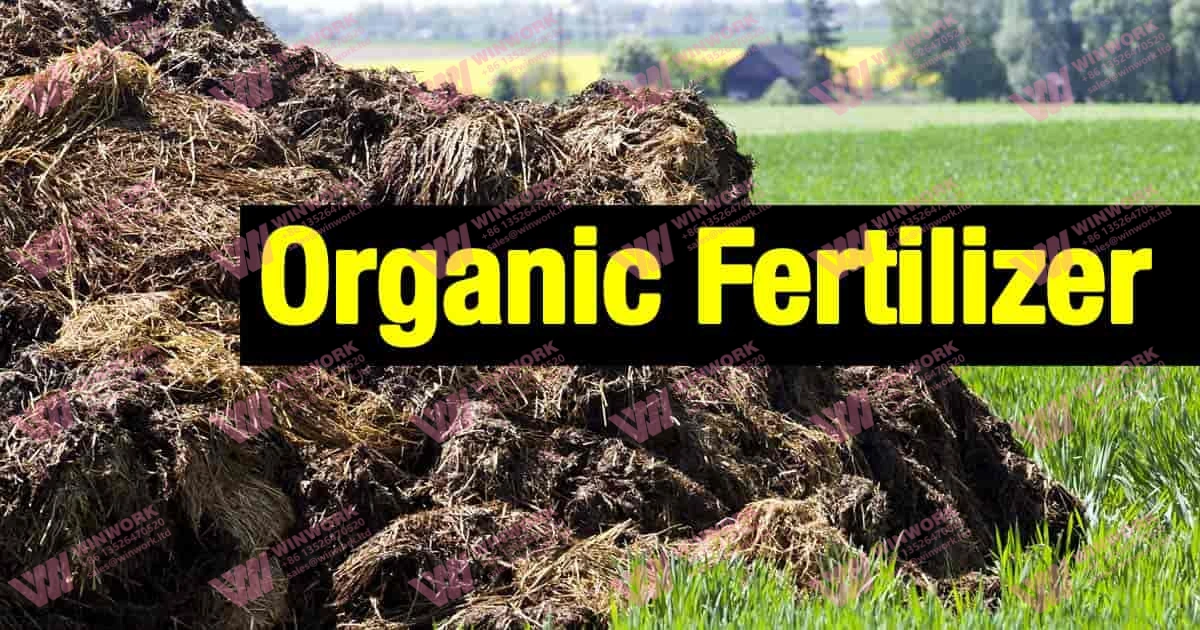
Organic fertilizers are derived from natural sources—think compost, manure, bone meal, or seaweed. They release nutrients slowly as they break down, feeding both the plant and the soil ecosystem.
These are natural substances rather than synthetic compounds produced through chemical agents. Organic fertilizers are therefore safer to use and simpler to apply, posing significantly lower risks to both humans and plants, as well as to soil health. Notably, humans do not absorb excessive chemicals, ensuring no adverse effects on bodily functions. This is how it works in Replacing Chemical Fertilizers with Organic one.
The soil remains unaffected by chemical alterations in its pH balance, resulting in healthier and more stable soil conditions.
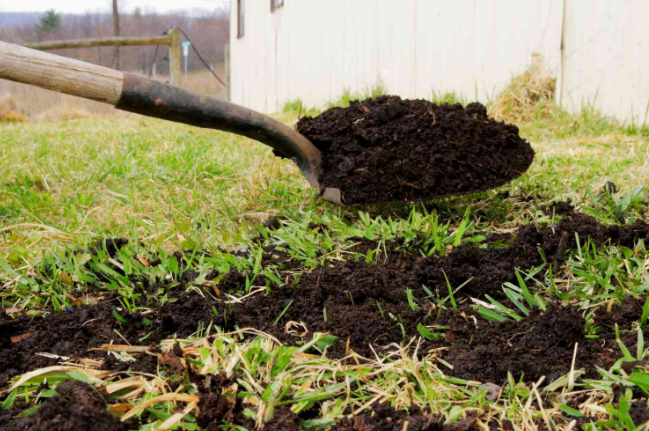
Unlike chemical fertilizers, organic options improve soil structure by adding organic matter, which helps soil hold water and air. They support beneficial bacteria and fungi, creating a healthy environment for roots. Nutrients are released gradually, so plants get a steady supply instead of a quick burst followed by starvation.
This fundamental difference is why replacing chemical fertilizers with organic is more than a substitution—it’s a system upgrade that builds resilience. Moreover, it provides significant long-term nutritional support for the soil.
The Stark Differences Between Chemical and Organic Fertilizers
When comparing replacing chemical fertilizers with organic, the contrasts are clear. Chemical fertilizers are manufactured in factories, act immediately, but degrade soil health over time. They pose high environmental risks through runoff and salinity.
Organic fertilizers come from natural materials, work slowly, and build soil vitality. They have minimal environmental impact and lower long-term costs.
This demonstrates that chemical fertilizers exhibit faster efficacy and more rapid results compared to organic fertilizers, achieving significant effects with minimal application.
However, excessive use of chemical fertilizers may inadvertently lead to seedling scorching. Organic fertilizers primarily demonstrate long-term effects without compromising soil structure.
Chemical fertilizers give plants a quick drink; organic fertilizers teach the soil to fish. One creates dependency; the other fosters independence. This is how it works in Replacing Chemical Fertilizers with Organic one.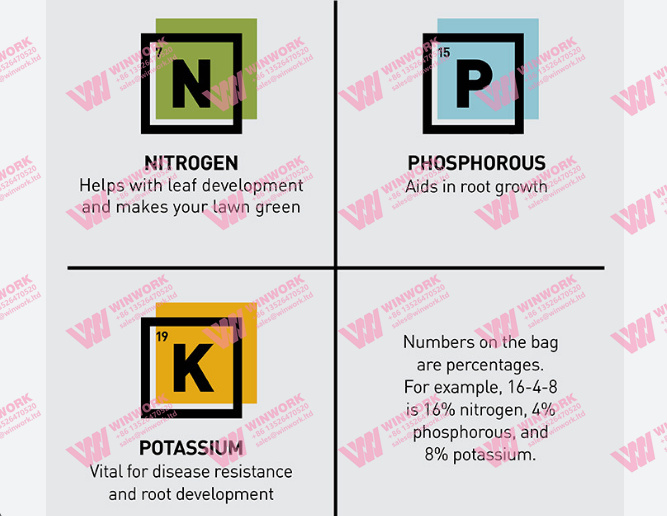
Why Governments Are Paying Farmers to Switch
The most important one reason is that we should protect our environment, using organic fertilizers can reduce the waste and turn waste into fertilizers that helpful to the crops and as well as the fields. This is how it works in Replacing Chemical Fertilizers with Organic one.
You might wonder why agencies are so keen on replacing chemical fertilizers with organic. The answer is public health and environmental protection. This is how it works in Replacing Chemical Fertilizers with Organic one.
Chemical runoff from farms contributes to algae blooms, dead zones in oceans, and contaminated drinking water. Municipalities and taxpayers foot the bill for cleanup.
To reverse this, governments offer direct payments for farmers who adopt organic practices. They provide free technical support from agronomists on composting and soil management. Certification programs let you charge premium prices for organic crops.
These incentives make replacing chemical fertilizers with organic not just feasible but profitable. This is how it works in Replacing Chemical Fertilizers with Organic one.
This demonstrates that it is essentially a win-win approach, offering greater benefits than drawbacks for both individual farmers and the government.
The Equipment That Makes the Switch Easy
Transitioning to organic doesn’t mean abandoning technology. In fact, the right tools make replacing chemical fertilizers with organic smoother and more scalable.
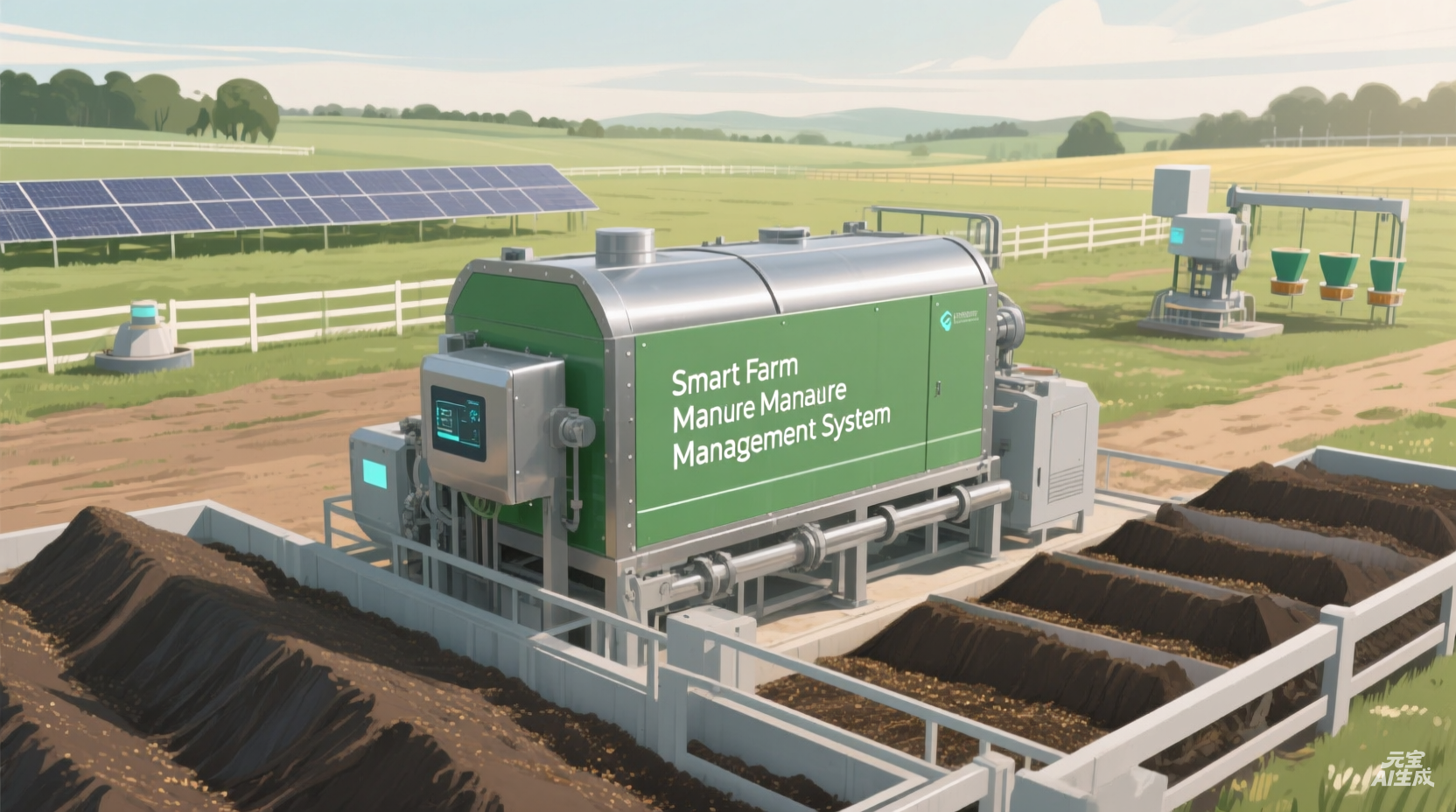
A compost turner speeds up decomposition of manure and plant waste into nutrient-rich compost.
A solid-liquid separator prepares manure by removing excess water, making composting faster and cleaner. This is how it works in Replacing Chemical Fertilizers with Organic one.
A rotary drum granulator converts compost into uniform pellets for easy application and higher sale value. Subsurface drip systems apply liquid organic fertilizers directly to the root zone, preventing waste and odor. Manure spreaders ensure even distribution of raw or partially composted organic matter.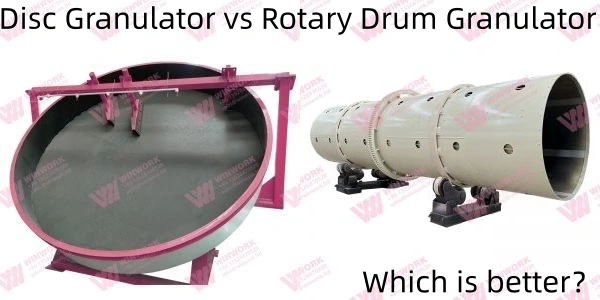
Detail Steps for Organic Fertilizer
First the raw materials are very important.
Animal waste: chicken dung, cow dung, horse dung, sheep dung, animal hair, etc.
Agricultural waste: plant straw (corn stalks, wheat straw, etc.), rice husk, rice straw, grass ash, etc.
Industrial waste: medicine residue, sugar residue, soybean meal, cotton meal, cassava residue, wine lees, oil residue, etc.
Municipal waste: sludge, kitchen waste and so on. This is how it works in Replacing Chemical Fertilizers with Organic one.
The above organic raw materials can be manufactured through a series of organic fertilizer processing, not only to reduce the harm caused by the accumulation of such harmful substances, but also to turn waste into treasure and environmental protection, is a new trend in agricultural development.
And then the detail steps of the process for organic fertilizier.
Raw material treatment: because organic waste is usually not easy to decompose, and contains some harmful substances to the soil, so it needs to be fully cooked and fermented, decomposition to remove the harmful substances, the formation of nutrient-rich humus.
At this stage, the organic fertilizer production line researched and developed by our company can deal with this problem well by using compost turning machine and fermentation tank.
Through the compost turner, the material heap which has been sown with bacteria is turned, broken up and stirred, so as to promote the fermentation and maturation of the material, microbial growth and reproduction, and reduce the environmental pollution. This is how it works in Replacing Chemical Fertilizers with Organic one.
Through the fermentation tank, the material can be anaerobic, temperature-controlled treatment, to ensure that the material can be quickly fermented and ripened, the formation of organic fertilizer can be manufactured raw materials.
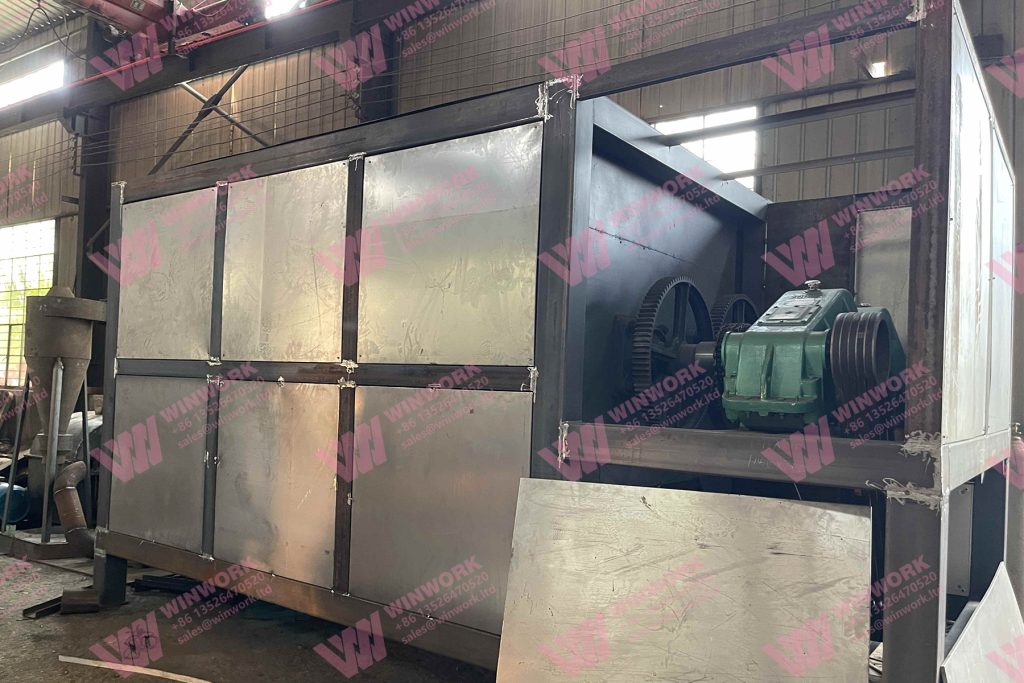
Horizontal fermentation tank
Raw material processing stage: after composting and fermentation of raw materials with rich organic matter, can effectively improve the quality of soil, and enhance the production of crops, but still not easy to save and transport, and can not be stored for a long time, we need to further processing.
The use of crusher, through the crusher internal high-speed rotating blades and chains, the fermentation of the material to complete the grinding, the formation of easy-to-handle powder, and then sent to the mixer after the full mixing and stirring, so that the material is more uniform, in this step can also add some necessary ingredients, such as additives, adhesives and so on.
Granulation: The processed powder will be sent into the churning teeth granulator through the belt conveyor, and the churning teeth rotating at high speed in the cylinder will mix, bond and cut the materials to form compact granules and push them backward to the discharge port to send them out.
Drying and cooling: By entering the dryer and cooler, the moisture of the granule is reduced and the hardness and stability of the granule is increased.
Screening: After drying, the granules enter the sieving machine to sieve out the granules that don’t meet the production standard and return them to be crushed and granulated again to improve the utilization rate, and at the same time, send out the granules that meet the production requirements.
Finished product processing: finished particles can be added according to customer demand for film wrapping machine or packaging machine, to further enhance the production effect, to ensure the quality of the finished product. This is how it works in Replacing Chemical Fertilizers with Organic one.
The Real-World Benefits of Replacing Chemical Fertilizers with Organic
Farmers who commit to replacing chemical fertilizers with organic see gains beyond the soil. Their fertilizer costs plummet after the initial setup. Organic crops command a significant premium in the marketplace. Healthy soil retains more water, meaning plants survive droughts better. This is how it works in Replacing Chemical Fertilizers with Organic one. Stronger soils require less pest control and watering. Perhaps most importantly, they stay ahead of tightening regulations on chemical use.
Real Farm Example: The Ramirez Vegetable Farm
The Ramirezes grew lettuce and tomatoes on 50 acres. Their chemical fertilizer bill hit $18,000 a year, and yields were inconsistent. Five years ago, they began replacing chemical fertilizers with organic by composting crop residues and manure.
Their fertilizer costs dropped to under $4,000 annually. Soil organic matter rose from 1.8% to 4.5%. They earned a 30% price premium for certified organic vegetables. “Switching to organic wasn’t just the right thing for the land—it saved us money and opened new markets,” says Miguel Ramirez.
FAQ: Your Questions About Replacing Chemical Fertilizers with Organic Answered
Q1: Will my yields drop if I stop using chemicals?
A: Initially, maybe. But over two to three seasons, soil health rebounds, and yields often exceed previous levels thanks to stronger root systems and better water retention.
Q2: Is organic fertilizer more expensive upfront?
A: The raw materials like manure and compost can be free or low-cost. The main investment is equipment like compost turners. Long-term, it’s far cheaper.
Q3: How do I know how much organic fertilizer to apply?
A: Soil testing is key. Organic nutrients release slowly, so you apply based on what the soil needs over time, not immediate plant demand.
Q4: Can I mix organic and chemical fertilizers?
A: Yes, in transition. Many farmers use a hybrid approach while building soil health, gradually shifting to full organic.
Q5: Does this work for all crops?
A: Yes. From row crops to orchards, the principles of replacing chemical fertilizers with organic apply universally. This is how it works in Replacing Chemical Fertilizers with Organic one.
Q6: How long does it take to see benefits?
A: Soil structure improves in one to two years. Full benefits—higher yields, lower costs—show up by year three.
Q7: What if I don’t have enough manure or compost?
A: You can source local organic amendments like bone meal, kelp, or certified compost from municipal facilities.
Q8: Will organic fertilizers attract pests?
A: Not if managed correctly. Proper composting kills weed seeds and pathogens. Healthy soil also supports beneficial insects that control pests. This is how it works in Replacing Chemical Fertilizers with Organic one.
Q9: How do I get certified organic?
A: Certification requires documentation of practices and a transition period, usually three years. Your local USDA office can guide you.
Q10: Where can I learn more about government incentives?
A: Contact your regional Natural Resources Conservation Service (NRCS) office. They administer grants for farmers pursuing replacing chemical fertilizers with organic.
Conclusion
The myth that chemical fertilizers are the only path to high yields is crumbling. By embracing replacing chemical fertilizers with organic methods, you invest in a soil ecosystem that works for you year after year. The initial effort pays off in lower costs, higher market prices, and a healthier environment. With the right equipment and support, this switch isn’t just possible—it’s the smartest move for the future of your farm. This is how it works in Replacing Chemical Fertilizers with Organic one.
For more details, please feel free to contact us.
Email: sales@lanesvc.com
Contact number: +8613526470520
Whatsapp: +8613526470520
Get A Quote