

Introduction
Imagine you’ve spent months composting manure, carefully aerating it, and waiting for it to mature. You’re left with a pile of dark, crumbly, nutrient-rich compost. It’s fantastic for your soil, but try selling a 40-pound sack of loose dirt to a homeowner. It’s messy, hard to handle, and looks unprofessional. This is where the magic of a rotary drum granulator comes in. By understanding the rotary drum granulator working principle, you can take that same compost and turn it into uniform, dense, premium-grade fertilizer pellets that command a much higher price. It’s the final, crucial step in turning waste into a truly marketable product. Here are the Rotary Drum Granulator Working Principle.
What is a Rotary Drum Granulator?
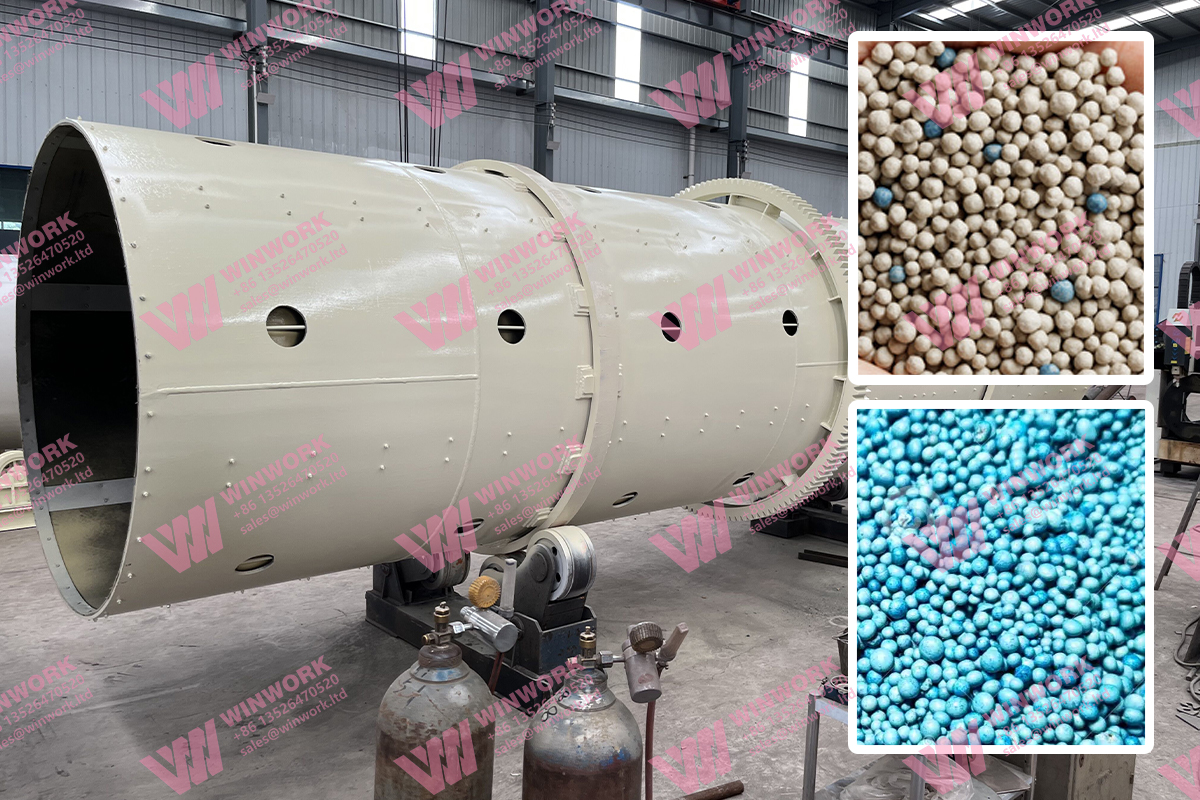
In simple terms, a rotary drum granulator is a large, slightly inclined metal cylinder that rotates. You pour in your fine, powdery compost (the fines), and as the drum turns, it rolls, tumbles, and gently fuses these particles together into small, hard balls or granules. This process is called agglomeration. It’s the same principle that makes snowballs stick together, but on an industrial scale and with the help of a binding agent. Mastering the rotary drum granulator working principle is key to producing a high-quality, salable fertilizer.
Rotary drum granulator is a kind of high efficient molding machinery, which can process raw materials into specific shapes of particles. As the core equipment of compound fertilizer production line, rotary drum granulator is suitable for cold and hot granulation as well as large-scale production of high, medium and low concentration compound fertilizer. Here are the Rotary Drum Granulator Working Principle, you can simply learn from it.
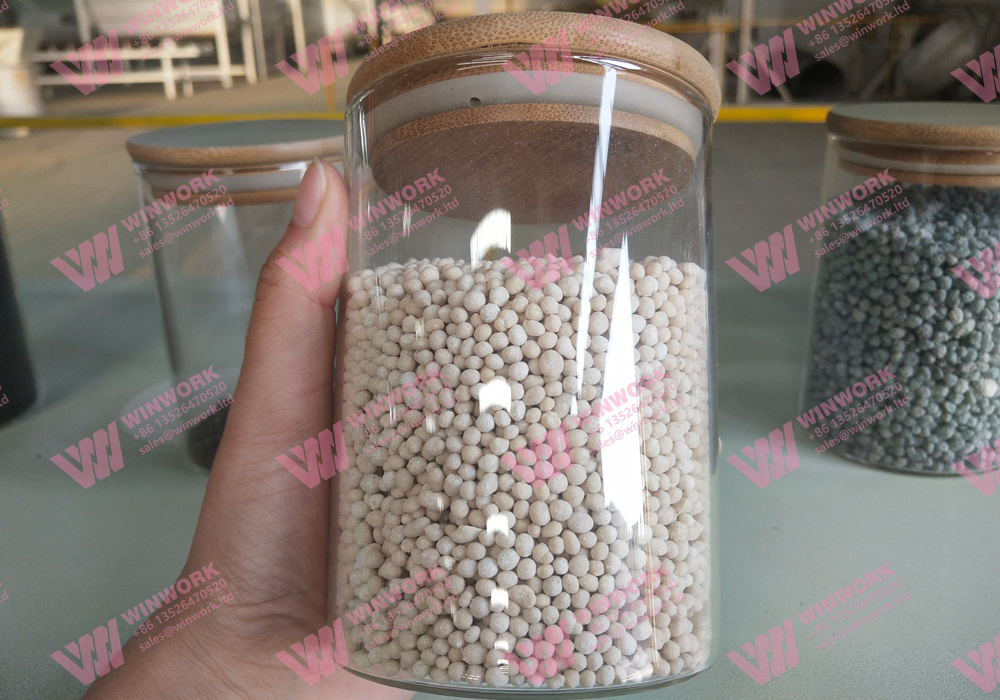
Rotary drum granulator finished granules
The Core of the Matter: The Rotary Drum Granulator Working Principle
The rotary drum granulator working principle is all about motion, moisture, and pressure. It’s surprisingly elegant. Here’s how it works, step-by-step:
Loading the Ingredients: You start by mixing your powdered compost with a binder, usually a small amount of clay, bentonite, or even a liquid solution like molasses water. This binder is the “glue” that will hold the granules together. This mixture is fed into the rotating drum. Here are the Rotary Drum Granulator Working Principle. Reading carefully and you will find this kind of machine is as simple as you think just. So just be brave to start learn of it.
The Rolling Action: As the drum rotates on its axis, internal flights (or baffles) lift the material and then let it cascade down through the air inside the cylinder. This constant rolling and tumbling action is the heart of the rotary drum granulator working principle. It’s not a violent crushing force; it’s a gentle, persistent massage.
Granule Formation: During this rolling process, the fine particles are pressed against each other. The binder activates and acts as a glue, fusing the particles at their contact points. Over several minutes, these fused clumps grow from tiny seeds into marbles, and then into the final, pea-sized pellets. And the Rotary Drum Granulator Working Principle is important as well.
Controlled Discharge: The drum is set at a slight angle. As the newly formed pellets roll towards the lower end, a discharge screen allows only the correctly sized granules to fall out. Any undersized “fines” or oversized “lumps” are sent back to the beginning to be reprocessed. This ensures a consistent, high-quality product. After reading this, you will understand the rotary drum granulator working principle.
The Working Principle
Rotary drum granulator is a kind of high efficient molding machinery, which can process raw materials into specific shapes of particles. And the working principle is very easy while important.
1. Material Entry
The material firstly enters into the cylinder of the drum granulator through the feeding end. The feeding system ensures that the material enters the cylinder evenly and continuously, avoiding the accumulation or uneven flow of material. Here are the Rotary Drum Granulator Working Principle.
2. Moisturizing and chemical reaction
Inside the cylinder, a certain amount of water or steam is sprayed to the material through nozzles to humidify the material. This step is the key of agglomerated wet granulation, through the addition of water, the surface of the material is moistened to promote its internal chemical reaction, so that the basic fertilizer reacts under certain liquid phase conditions to produce a viscous substance.
3. Barrel rotation
The cylinder is driven by the main motor, which is transmitted to the reducer through the belt and pulley, and then the power is transmitted to the main shaft through the reducer. The folio gear on the main shaft meshes with the large gear ring fixed on the body, so that the cylinder realizes phase rotation. The rotating motion of the cylinder makes the materials tumble and move continuously inside it. Here are the Rotary Drum Granulator Working Principle.
4. Particle formation
In the process of rotating drum granulator cylinder, wet materials due to centrifugal force and friction inside the cylinder, the material particles generated between the squeezing pressure, and gradually agglomerate into balls. The liner (rubber or acid-resistant stainless steel) inside the cylinder is designed with a special surface structure, which can help the material to automatically remove scars and de-tumorize during the rotating process, ensuring the quality and uniform shape of the particles. Here are the Rotary Drum Granulator Working Principle.
With the continuous rotation of the cylinder, the particles gradually increase in size and form finished particles of a certain size. In this process, the continuous addition of materials and the continuous movement of the cylinder make the production of pellets can be carried out continuously, suitable for mass production.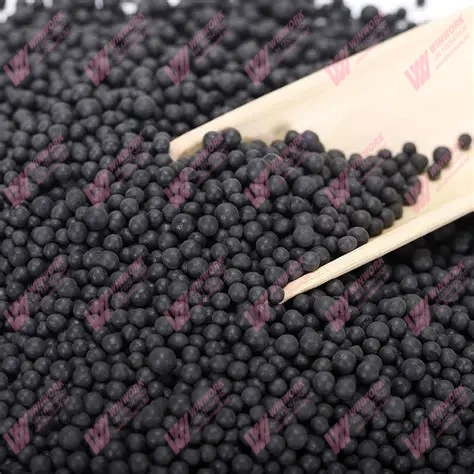
6. Discharge
The finished pellets are discharged through the discharge opening of the cylinder. In order to ensure the quality of the granules, the discharge system is designed with a screening device, which can return the granules that do not meet the specifications back to the cylinder for re-pelletizing, so as to ensure that the finished granules are uniform and of good quality. This is the Rotary Drum Granulator Working Principle. Don’t you think it is easy and useful and helpful to operate it?
The finished granules that meet the specifications are transported to the next process for packaging or further processing through conveyor belts or other conveyor systems.
The whole granulation process of Rotary Drum Granulator is highly automated, which reduces manual intervention and improves production efficiency, and at the same time ensures the stability and consistency of product quality. Here are the Rotary Drum Granulator Working Principle.
Its main mode of work is agglomerated wet granulation, through a certain amount of water or steam, so that the basic fertilizer in the cylinder after wetting fully chemical reaction, in a certain liquid-phase conditions, with the help of the cylinder’s rotary movement, so that the material particles between the extrusion pressure agglomeration into a ball.
Why Bother? The Benefits of Using a Rotary Drum Granulator
Understanding the rotary drum granulator working principle is one thing; knowing why you should use one is another. The benefits are what make this machine a worthwhile investment:
Dramatically Higher Profits: Loose compost sells for $30-$50 per ton. Uniform, bagged pellets can sell for $150-$300 per ton. That’s a 5x to 10x increase in value.
Professional Appearance: Pellets look clean, consistent, and trustworthy. Customers—from homeowners to commercial growers—will pay more for a product that looks professional. The rotary drum granulator working principle is essential for starters to follow up this kind of working.
Easy Application: Pellets don’t blow away in the wind or get washed away by rain. They can be applied with standard fertilizer spreaders, making them user-friendly.
Reduced Storage & Shipping Costs: Pellets are denser than loose compost, so you can fit more product in the same shipping container or storage shed.
Slower Nutrient Release: The granule structure protects the nutrients inside, resulting in a slow-release effect that feeds plants over a longer period.
The Essential Equipment for a Rotary Drum Granulator Setup
To successfully apply the rotary drum granulator working principle on your farm, you need a small ecosystem of supporting equipment:
Rotary Drum Granulator: The star of the show. Available in various sizes, from small lab units to massive production models. Here are the Rotary Drum Granulator Working Principle.
Binder Mixer or Agent Applicator: A simple tank and pump system to evenly coat the compost fines with the binding liquid before they enter the drum.
Drum Dryer (Optional but Recommended): After granulation, the pellets are soft and moist. A rotary dryer uses hot air to harden them, making them durable enough for bagging and transport.
Drum Cooler: Following the dryer, a cooler brings the pellets down to ambient temperature, preventing them from sweating and caking in the bag.
Screening Machine: To sort the finished pellets by size and send the “fines” back for regranulation.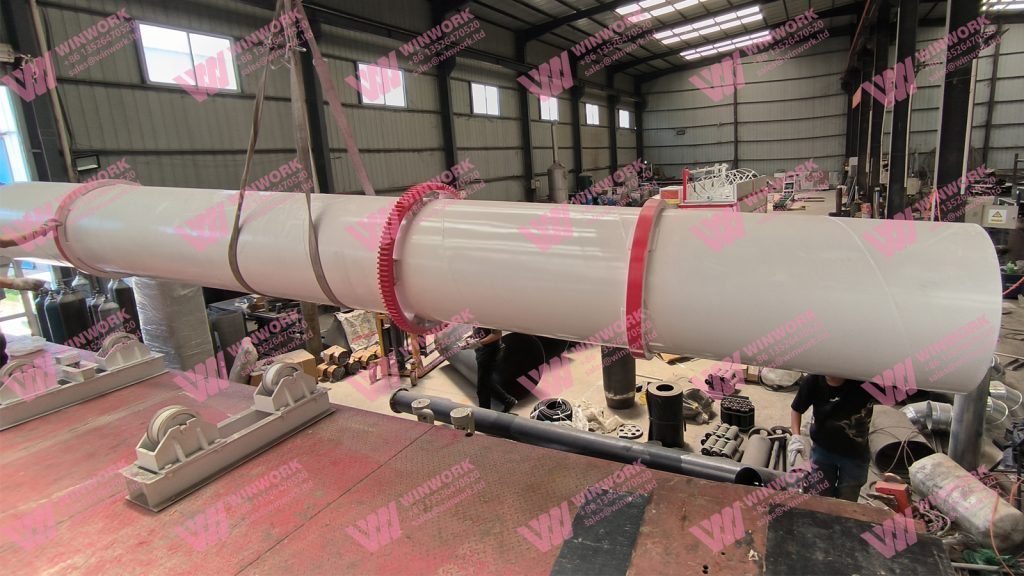
Real Farm Example
The Davies run a 100-cow dairy. They had a thriving composting business but struggled to move their loose product. They invested in a small rotary drum granulator to capitalize on the rotary drum granulator working principle. Here are the Rotary Drum Granulator Working Principle.
They began producing 2 tons of premium pellets per week.
They sold the pellets to local garden centers and landscapers for $220 per ton.
Their monthly revenue from fertilizer sales tripled.
“It was the rotary drum granulator working principle that finally unlocked the real value of our compost,” says Sarah Davies. “We went from selling a commodity to selling a branded product.”
FAQ: Your Questions About the Rotary Drum Granulator Working Principle Answered
Q1: Is the granulation process violent?
A: No, it’s surprisingly gentle. The rotary drum granulator working principle relies on tumbling and rolling, not crushing. This preserves the nutrients in the compost.
Q2: What kind of binder do I need?
A: Bentonite clay is the most common and affordable. Molasses water works well and can even add a small amount of extra energy for plants. The right binder is key to the rotary drum granulator working principle.
Q3: Do I need a dryer and cooler?
A: For small-scale, on-farm use, you can sometimes skip them if you let the pellets air-dry. However, for a commercial product that needs to be stored or shipped, a dryer and cooler are essential for durability.
Q4: How much does a machine like this cost?
A: Prices range widely. A small, 1-ton-per-hour unit can cost around $5,000-$8,000. Industrial-scale models can cost $50,000 or more. The return on investment, however, is typically very fast.
Q5: Can I use this for other materials besides compost?
A: Absolutely! The rotary drum granulator working principle is used for making fertilizer from animal manure, sewage sludge, and even chemical powders.
Q6: What if my compost is too dry?
A: You’ll need to add more liquid binder. The material should have the consistency of damp sand for the granulation process to work correctly.
Q7: How do I know if my pellets are the right size?
A: A standard screen size is 2-4 mm. Anything that falls through is “fines,” and anything that doesn’t is “overs.” Both are recycled.
Q8: Does this process kill pathogens?
A: The granulation process itself doesn’t generate high heat. The sterilization happens during the prior composting phase. The granulator simply forms the already-safe compost into pellets.
Q9: Where can I buy one?
A: Many manufacturers in China and India specialize in these machines. You can also find them through online agricultural equipment marketplaces.
Conclusion
The journey from manure to money doesn’t end with a pile of compost. The final, most profitable leap is understanding and applying the rotary drum granulator working principle. By transforming loose, messy material into clean, uniform, premium-grade pellets, you unlock a new level of income and marketability for your farm. It’s a simple piece of equipment that delivers a powerful return, proving that the best innovations are often the simplest ones.
For more details, please feel free to contact us.
Email: sales@lanesvc.com
Contact number: +8613526470520
Whatsapp: +8613526470520c’c

Get A Quote