

Introduction
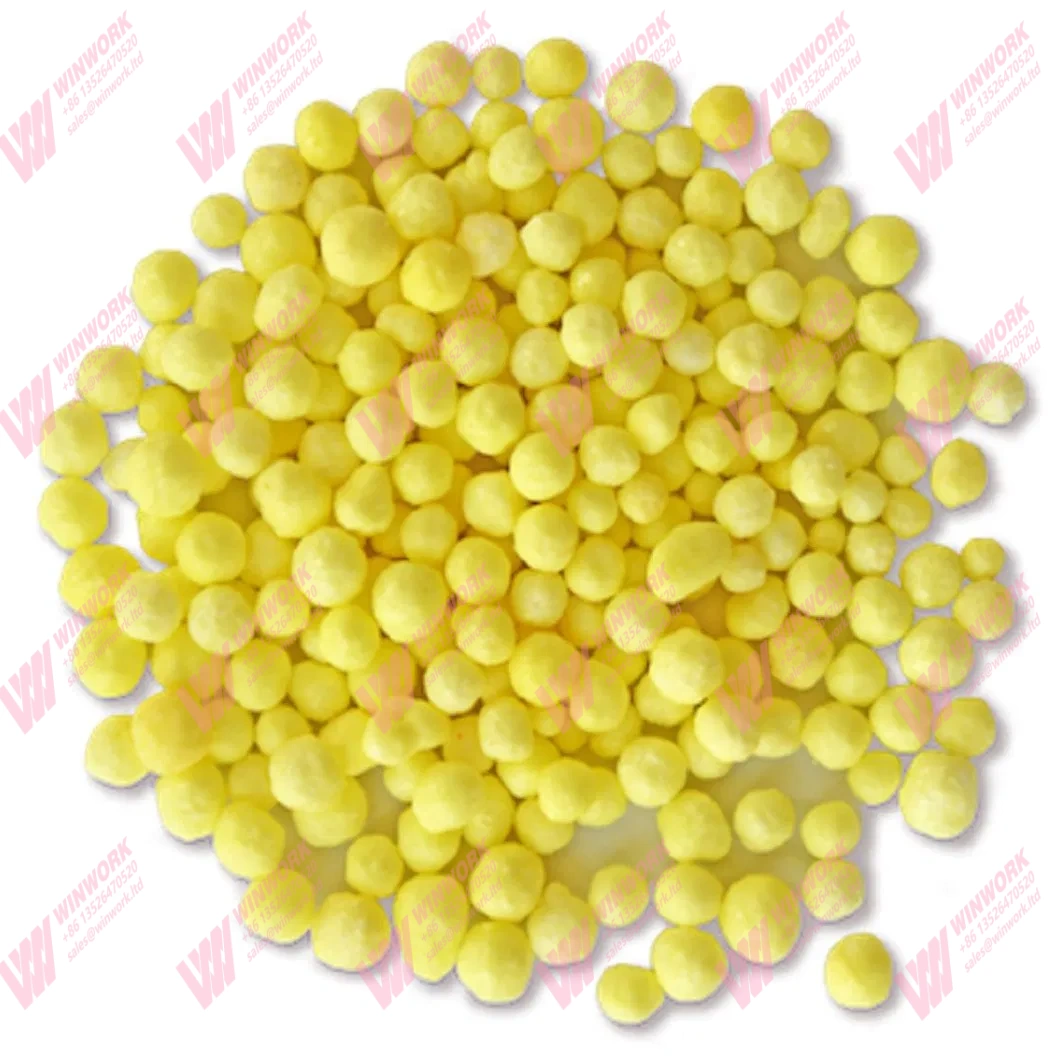
Sulfur coated urea has become one of the most widely applied controlled-release nitrogen fertilizers in modern agriculture. By forming a sulfur barrier around urea granules, nutrient release is extended, nitrogen loss is reduced, and fertilizer efficiency is significantly improved. To achieve stable industrial output and consistent coating quality, manufacturers must focus on optimized SCU coating fertilizer production systems.
A well-structured production setup does not simply melt sulfur and spray it onto urea. It requires coordinated control of temperature, material flow, coating dynamics, cooling rate, and environmental protection. Every stage directly affects coating thickness, product durability, and nutrient release performance.
This article provides a comprehensive technical overview of SCU production, explaining process design, equipment integration, layout principles, cost control, and quality improvement methods.
Market Background of Sulfur Coated Urea Manufacturing
Agricultural practices increasingly emphasize efficiency and sustainability. Traditional urea dissolves quickly after soil application, which often leads to nitrogen volatilization and leaching. Sulfur coated urea addresses this issue by slowing nutrient release.
To meet large-scale demand, fertilizer manufacturers must implement a stable and continuous production system. Production consistency is essential because uneven coating directly affects nutrient release curves and market acceptance.
A reliable manufacturing process enables producers to:
Achieve uniform sulfur coverage
Improve nitrogen utilization efficiency
Reduce dust and breakage
Enhance mechanical strength
Meet domestic and export standards
Process Flow of the Coating System
The core function of the system is to apply molten sulfur evenly onto finished urea granules and then solidify the coating layer.
- The typical workflow includes:
- Urea screening and feeding
- Sulfur melting and temperature stabilization
- Rotary coating
- Cooling and solidification
- Final screening
- Packaging
Each stage must operate in a synchronized and continuous manner. Temperature fluctuation, unstable feeding, or inconsistent drum speed may result in uneven coating thickness.
Modern industrial systems are designed for continuous processing rather than batch operation, improving efficiency and reducing labor requirements.
Key Equipment in the Production System
Efficient operation depends on proper equipment coordination. Each system plays a specific role in maintaining coating quality and output stability.
Urea Feeding and Preparation
Before coating begins, urea granules must be uniform in size and free from dust. Vibrating screens remove broken particles and fines. Stable feeding ensures even distribution inside the coating drum.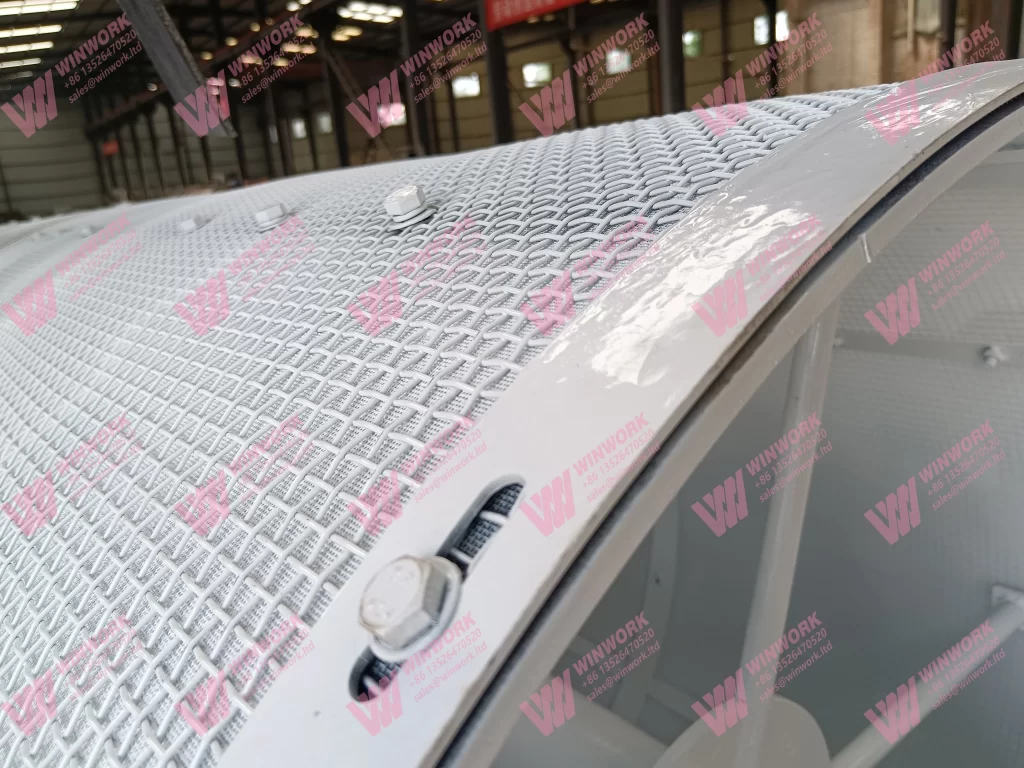
Consistent material flow is essential for stable production performance.
Sulfur Melting System
Sulfur is solid at room temperature and must be heated to a controlled liquid state. The melting tank typically includes:
- Heating coils
- Temperature control sensors
- Insulation layer
- Agitation mechanism
Precise temperature control is one of the most critical factors in the coating process. If sulfur viscosity fluctuates, spray uniformity will be affected, leading to inconsistent layer thickness.
Rotary Coating Drum
The coating drum is the core unit of SCU coating fertilizer production. Urea granules tumble inside the rotating cylinder while molten sulfur is sprayed through controlled nozzles.
Coating quality depends on:
-
Drum rotation speed
-
Spray rate
-
Retention time
-
Internal lifting structure
Balanced tumbling motion ensures that each granule receives even sulfur coverage.
Cooling System
After coating, granules must cool rapidly to stabilize the sulfur shell. Rotary coolers or fluidized bed coolers are commonly used in industrial sulfur coated urea manufacturing systems.
Effective cooling prevents particle agglomeration and preserves coating integrity. Airflow volume and direction are carefully adjusted to match production capacity.
Screening and Recycling
Screening equipment separates qualified granules from oversized or undersized particles. In integrated production systems, recycled materials are returned to the process to improve utilization efficiency.
This closed-loop design reduces raw material waste and stabilizes the overall production flow.
Dust Collection and Ventilation
Although dust generation is lower compared with granulation systems, environmental management remains important. A professional setup includes localized exhaust systems and dust collectors.
Proper ventilation ensures safe working conditions and reduces sulfur vapor accumulation.
Layout Optimization in SCU Coating Fertilizer Production
A rational layout improves efficiency and lowers energy consumption. In typical SCU coating fertilizer production, equipment follows a straight-line sequence:
Urea storage → Screening → Coating drum → Cooling → Screening → Packaging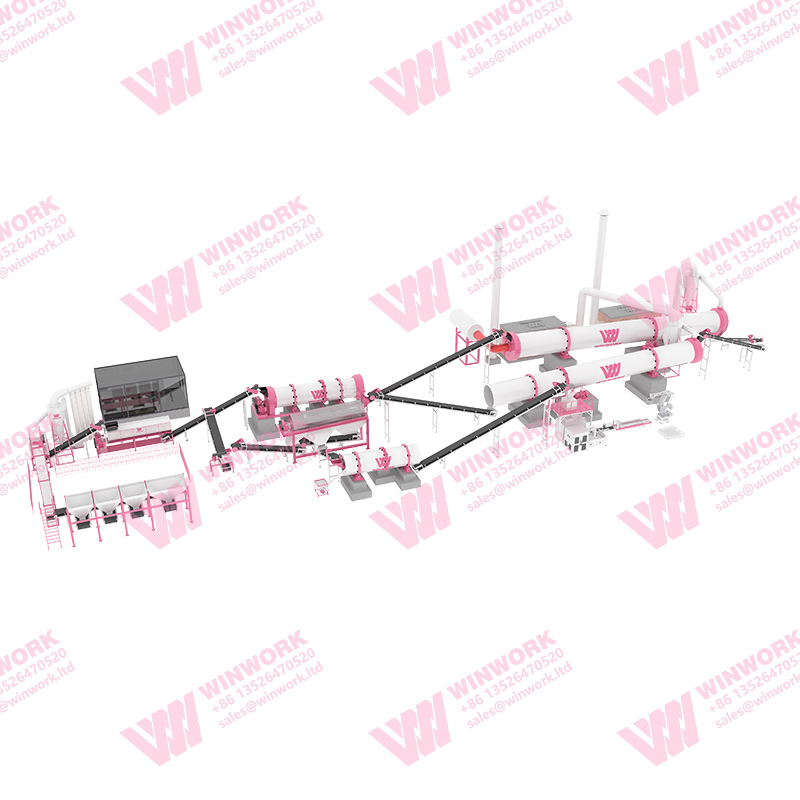
Key layout principles include:
-
Short transfer distance
-
Clear maintenance pathways
-
Isolated sulfur melting zone
-
Adequate airflow circulation
Efficient layout planning ensures smooth material movement throughout the SCU coating fertilizer production system.
Quality Control in SCU Coating Fertilizer Production
Uniform sulfur thickness is the primary quality indicator in SCU coating fertilizer production.
Important control parameters include:
-
Sulfur temperature stability
-
Spray flow consistency
-
Drum rotation speed
-
Cooling time
-
Granule size distribution
Regular sampling and laboratory testing confirm that nutrient release performance meets agricultural requirements.
Energy Efficiency and Operating Cost
Energy consumption in SCU coating fertilizer production mainly comes from sulfur heating and airflow systems.
Efficiency can be improved through:
-
Insulated melting tanks
-
Optimized burner design
-
Variable frequency motor control
-
Heat retention structures
Reducing energy loss lowers long-term operational cost. In addition, accurate spray control minimizes sulfur waste and improves raw material efficiency.
Capacity Planning and Scalability
Industrial SCU coating fertilizer production systems are available in different capacities, typically from 1 to 10 tons per hour.
When designing a plant, engineers consider:
-
Market demand
-
Utility load capacity
-
Future expansion possibilities
-
Workshop space availability
Installation and Commissioning
Proper installation determines the long-term stability of SCU coating fertilizer production.
Key steps include:
-
Aligning the coating drum
-
Calibrating spray nozzles
-
Testing temperature sensors
-
Balancing airflow
Commissioning ensures that coating thickness, drum speed, and cooling rate meet design standards before full operation begins.
Maintenance Considerations
Routine maintenance supports stable SCU coating fertilizer production.
Common maintenance tasks involve:
-
Cleaning nozzles
-
Inspecting drum lining
-
Monitoring heating elements
-
Checking motor condition
Preventive maintenance reduces unexpected shutdowns and protects coating precision.
Investment Perspective
The investment required for SCU coating fertilizer production depends on:
-
Production capacity
-
Automation level
-
Equipment quality
-
Environmental requirements
Although initial capital cost may be moderate, sulfur coated urea typically offers higher market value compared with conventional urea. Stable SCU production enhances competitiveness and supports long-term profitability.
Future Trends in SCU Coating Fertilizer Production
As sustainable agriculture continues to expand, SCU coating fertilizer production is evolving toward:
-
Higher automation
-
Improved coating precision
-
Lower energy consumption
-
Intelligent monitoring systems
Digital process control and data tracking will further improve product consistency and transparency in fertilizer manufacturing.
Conclusion
Efficient SCU coating fertilizer production is essential for manufacturing high-quality sulfur coated urea. From sulfur melting and precision coating to cooling, screening, and packaging, each stage must operate in coordination.
By optimizing process parameters, layout structure, and automation systems, manufacturers can achieve stable output, uniform sulfur thickness, and controlled energy consumption.
For fertilizer producers seeking to expand into the controlled-release market, investing in advanced SCU production technology represents a strategic step toward sustainable growth and higher product value.
For more details, please feel free to contact us.
Email: sales@lanesvc.com
Contact number: +8613526470520
Whatsapp: +8613526470520
Get A Quote