


Introduction
Walk into any sheep barn during lambing season, and you’ll see the challenge: mountains of pellets and waste wool. For too long, farmers have seen this as a liability—something to be scraped out, hauled away, or spread raw on frozen fields, causing runoff and neighbor complaints. But what if that same fluffy waste could be transformed into “black gold”? The answer lies in mastering the art of sheep manure fermentation into organic fertilizer.
This isn’t just about cleaning up the barn; it’s about plugging into a circular economy. By focusing on sheep manure fermentation into organic fertilizer, you can eliminate pollution, drastically cut your fertilizer bills, and create a premium product that sells for top dollar. Let’s break down exactly how this works.
Why Focus on Sheep Manure Fermentation into Organic Fertilizer?
Sheep manure is unique. Unlike cow manure, it’s drier and pelletized, which makes it easier to handle. However, raw sheep manure is “hot”—it’s very high in nitrogen and can burn plants if applied directly. The process of sheep manure fermentation into organic fertilizer solves this problem by stabilizing the nutrients. The benefits are huge:
Zero Pollution: Prevents water contamination from raw runoff.
Kills Weed Seeds: The high heat of fermentation destroys seeds that sheep pass through their digestive system.
Cost Savings: Replaces expensive synthetic fertilizers.
High Income Potential: Premium organic fertilizer sells for $150-$300 per ton.
The Step-by-Step Guide to Sheep Manure Fermentation into Organic Fertilizer
The magic happens through controlled microbial action. Here is the simple, low-cost method:
Step 1: Collection and Pre-Conditioning
The first step in sheep manure fermentation into organic fertilizer is gathering the waste. Because sheep manure is already in pellet form, you might think you can skip ahead—but don’t. You need to add a “bulking agent” like straw, sawdust, or dry leaves. This adds carbon and creates air pockets. Aim for a mix that is roughly 3 parts carbon (straw) to 1 part nitrogen (manure).
Step 2: The Fermentation Phase (The Heart of the Process)
The Horizontal Fermentation Tank is a state-of-the-art equipment designed for the effective aerobic fermentation of organic waste, agricultural residues, sludge, and other compostable materials. Unlike vertical tanks, the horizontal design allows for larger capacity and more uniform fermentation.
The Horizontal Fermentation Tank is widely used in the production of organic fertilizers and compost, offering numerous advantages in terms of efficiency, control, and environmental impact.
This is where the transformation occurs. You build the mixture into long piles (windrows) and introduce beneficial microbes. The key tool here is a Compost Turner.
You run the turner through the piles every 3-5 days. This adds oxygen, which is critical for aerobic fermentation. The pile will heat up to 60-70°C (140-160°F). This high temperature is the signature of successful sheep manure fermentation into organic fertilizer—it sterilizes the material, killing pathogens and parasites.
This phase lasts for about 2-3 weeks until the temperature stabilizes.
Step 3: Curing and Maturation
After the high-heat phase, the material needs to “cure” for another 3-4 weeks. During this time, the compost cools down and becomes biologically stable. The result is a dark brown, crumbly, earthy-smelling substance. This final product of sheep manure fermentation into organic fertilizer is now safe to handle and gentle on plants.
Step 4: Granulation for Maximum Profit
Want to make real money? Don’t just sell it loose. Feed the finished compost into a Flat Die Pelletizer. This machine compresses the material into uniform, dense pellets that look professional and are easy to bag and transport. This step turns your farm waste into a premium retail product.
New type organic fertilizer granulator, also known as churning teeth granulator, is a kind of high-efficiency molding equipment, simple principle, fast granulation speed.
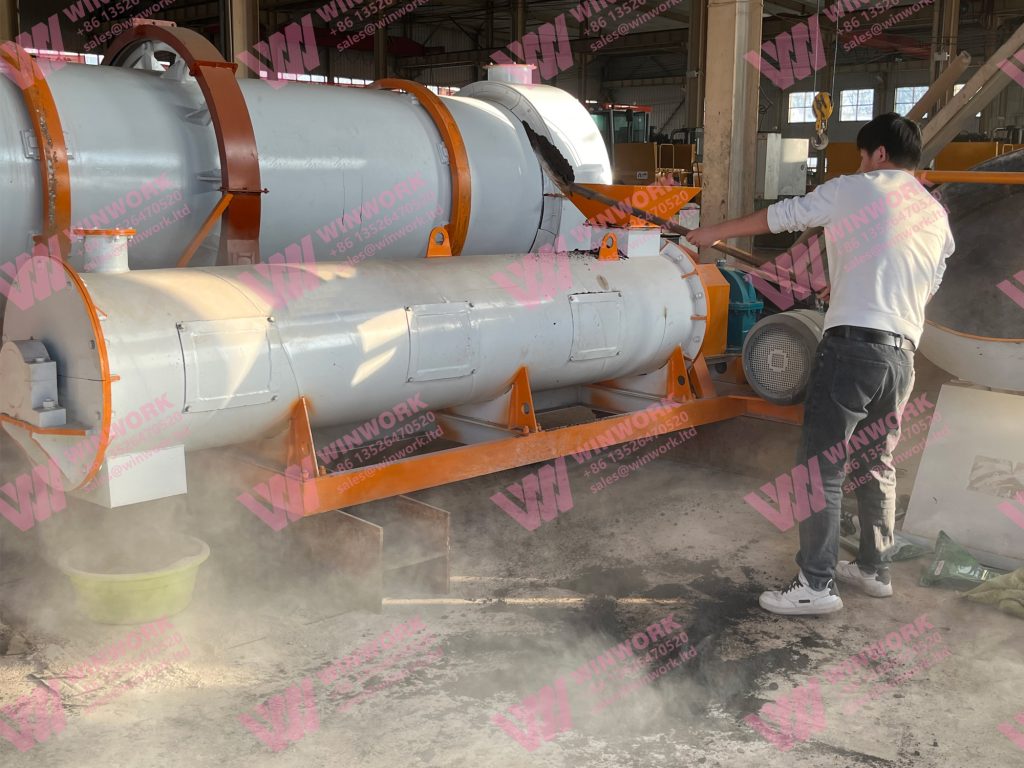
New type organic fertilizer granulator using high-speed rotating mechanical mixing force and the resulting aerodynamic force, so that the fine powdery material in the machine continuously to achieve the process of mixing, granulation, spheroidization and densification, so as to achieve the purpose of high-quality granulation.
Essential Low-Cost Equipment
You don’t need a massive budget to start. The core equipment for sheep manure fermentation into organic fertilizer includes:
Straw Shredder/Crusher: To chop up carbon sources into small pieces ($800-$1,500).
Self-Propelled Compost Turner: The most important machine. It aerates the pile to maintain high heat ($3,000-$8,000).
Flat Die Pelletizer: To make the final, marketable pellets ($2,000-$4,000).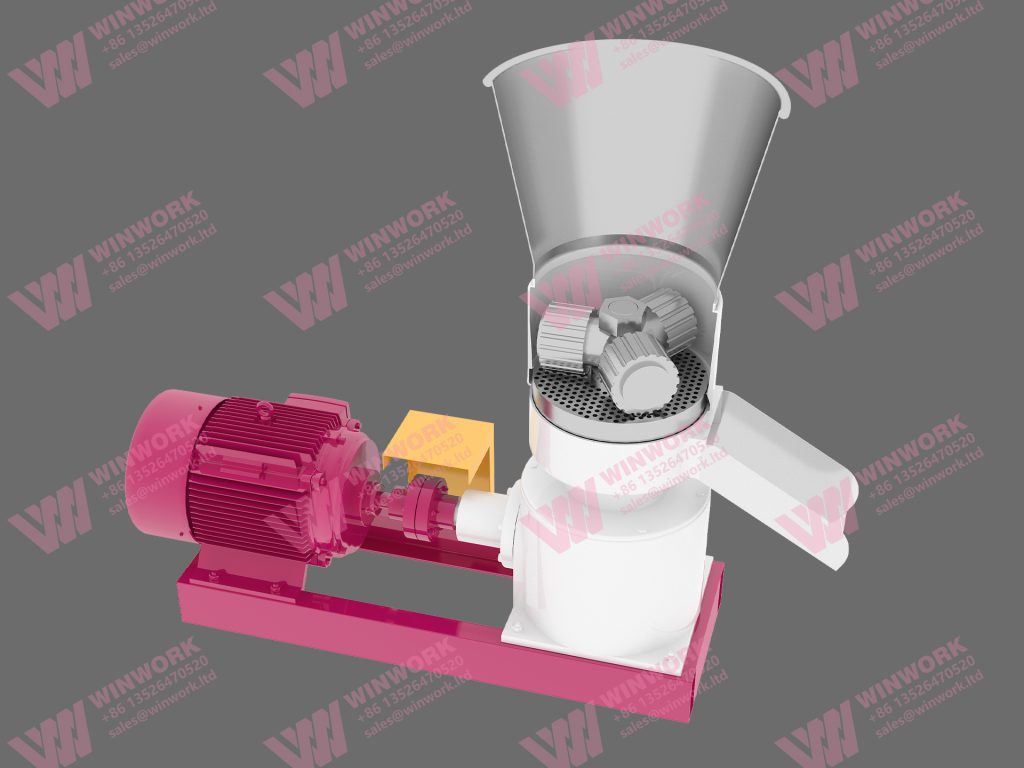
Vibrating Screen (Optional): To remove any large, undecomposed sticks for a perfect final product ($1,000-$2,000).
Rotary Screener is a kind of efficient and durable screening equipment, which is widely used in mining, chemical industry, coal, building materials, metallurgy and other industries for grading and screening of materials.
Rotary Screener separates the materials effectively through the rotating movement of the drum, with high screening precision and large handling capacity, and has the advantages of simple structure, convenient operation and low maintenance cost.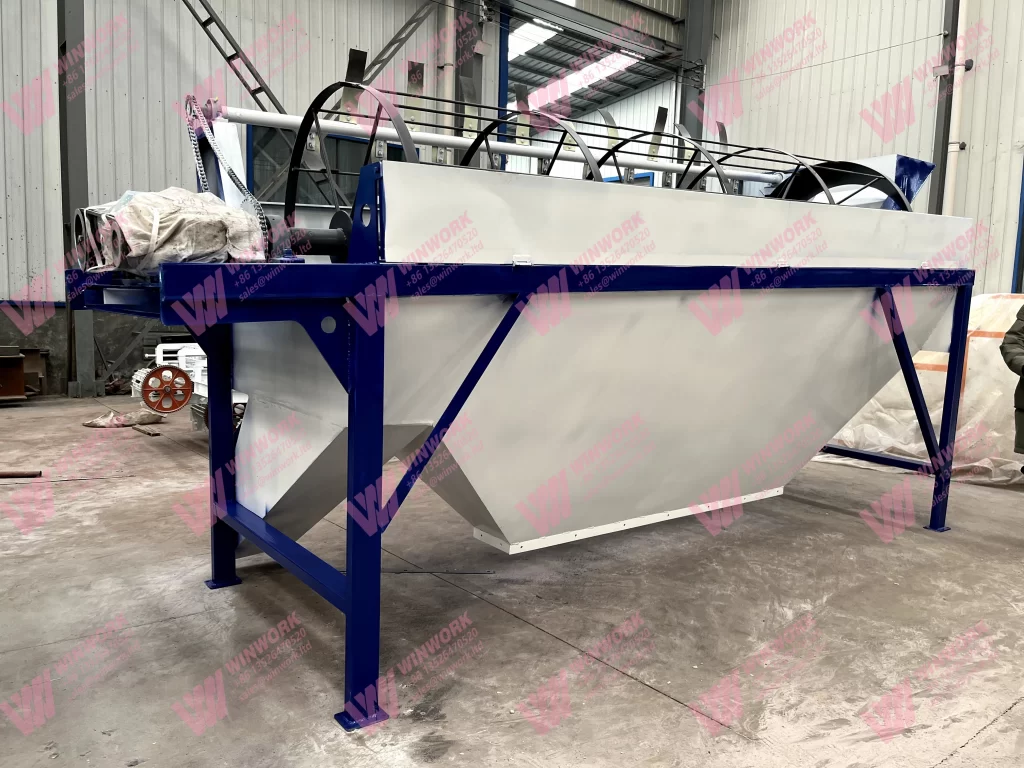
Real Farm Example
The Petersons run a 300-ewe sheep ranch. They used to pay $350 a month to have manure hauled off-site. After investing $12,000 in a small-scale system for sheep manure fermentation into organic fertilizer, their lives changed.
Their hauling costs dropped to zero.
They stopped buying $4,000 worth of chemical fertilizers annually.
They sold 25 tons of pelletized fertilizer to local vineyards for $180/ton.
Their annual profit increased by over $9,000. “Sheep manure fermentation into organic fertilizer was the best decision we ever made,” says Maria Peterson. “It cleaned up the ranch and paid for our new truck.”
FAQ: Your Questions About Sheep Manure Fermentation into Organic Fertilizer Answered
Q1: Is sheep manure better than cow or chicken manure?
A: It depends. Sheep manure is drier and less smelly than pig or chicken manure, making it easier to handle. It has a better nutrient balance than cow manure. The fermentation process makes it safe for all plants.
Q2: How long does sheep manure fermentation into organic fertilizer take?
A: The active fermentation (high heat) takes about 15-20 days with regular turning. Curing takes another 30 days. So, you’re looking at a 45-50 day cycle.
Q3: Do I need to add special microbes?
A: Not necessarily. If you mix manure with straw, native microbes will start the process. However, adding a commercial starter culture can speed things up significantly.
Q4: Will this attract flies or rodents?
A: If done correctly, no. The high heat of the fermentation process kills fly larvae and eggs. A properly managed pile is actually inhospitable to pests.
Q5: Can I do this in the winter?
A: Yes, but it will be slower. You can insulate the piles with tarps or build a simple greenhouse over them to maintain the necessary heat for sheep manure fermentation into organic fertilizer.
Q6: What if my pile doesn’t heat up?
A: This usually means it’s too dry or lacks nitrogen. Add water until it feels like a wrung-out sponge, or add more fresh manure. Then, turn it with the compost turner.
Q7: Is the pelletizer necessary?
A: It’s not strictly necessary, but it dramatically increases your profit margin. Loose compost is a commodity; pellets are a premium product.
Q8: How do I know when the fermentation is finished?
A: The material will be dark brown, crumbly, and smell like fresh earth. There should be no ammonia or rotten egg smell. The original sheep pellets should no longer be recognizable.
Q9: Can I mix sheep manure with other manures?
A: Absolutely. Mixing sheep manure with a little chicken manure can boost the nitrogen content, making the final fertilizer even more potent.
Q10: Where can I sell the finished fertilizer?
A: Local organic farmers, vineyards, nurseries, and landscapers are all eager customers for the product of sheep manure fermentation into organic fertilizer.
Conclusion
The days of viewing sheep manure as a disposal problem are officially over. By mastering the simple, effective process of sheep manure fermentation into organic fertilizer, you are not just cleaning your barn—you are building a more resilient, profitable, and environmentally friendly farm. The equipment is affordable, the method is proven, and the market for high-quality organic fertilizer is booming. Stop paying to get rid of manure, and start making money from it today.
For more details, please feel free to contact us.
Email: sales@lanesvc.com
Contact number: +8613526470520
Whatsapp: +8613526470520
Get A Quote