

Introduction
The overwhelming smell from chicken manure is more than a nuisance; it strains community relations and poses environmental risks. Finding real, solutions for stinky chicken farm waste that actually work is crucial for any farm’s sustainability and social license to operate. Effective solutions for stinky chicken farm waste that actually work must be safe, reduce pollution, and ideally turn a cost center into profit. Let’s explore the proven solutions for stinky chicken farm waste that actually work.
Source Reduction: The First Line of Defense for Stinky Chicken Farm Waste
The most effective solutions for stinky chicken farm waste that actually work start by preventing odor at the source.
Feed Additives: This method addresses the issue at its source by adding additives to the feed, thereby reducing the odor in the chickens’ feces after consumption. Adding probiotics, enzymes, or yucca extract to chicken feed improves digestion. This reduces the amount of undigested protein and sulfur compounds in manure—the primary precursors to bad smells. It’s a foundational, cost-effective part of any plan for solutions for stinky chicken farm waste that actually work.
Litter-Based Management: Switching from water-flush systems to dry manure handling immediately reduces the volume of wet slurry, which is the main source of anaerobic decomposition and intense odors. This is a key operational change among solutions for stinky chicken farm waste that actually work.
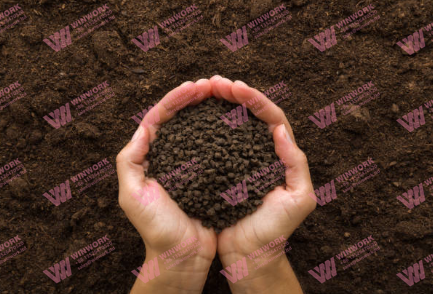
Using composting methods
The most effective method for odor removal is to prevent fecal accumulation, allowing rapid decomposition and fermentation. If your compost pile volume is substantial, it is recommended to purchase a turning equipment.
The Horizontal Fermentation Tank is a state-of-the-art equipment designed for the effective aerobic fermentation of organic waste, agricultural residues, sludge, and other compostable materials. Unlike vertical tanks, the horizontal design allows for larger capacity and more uniform fermentation.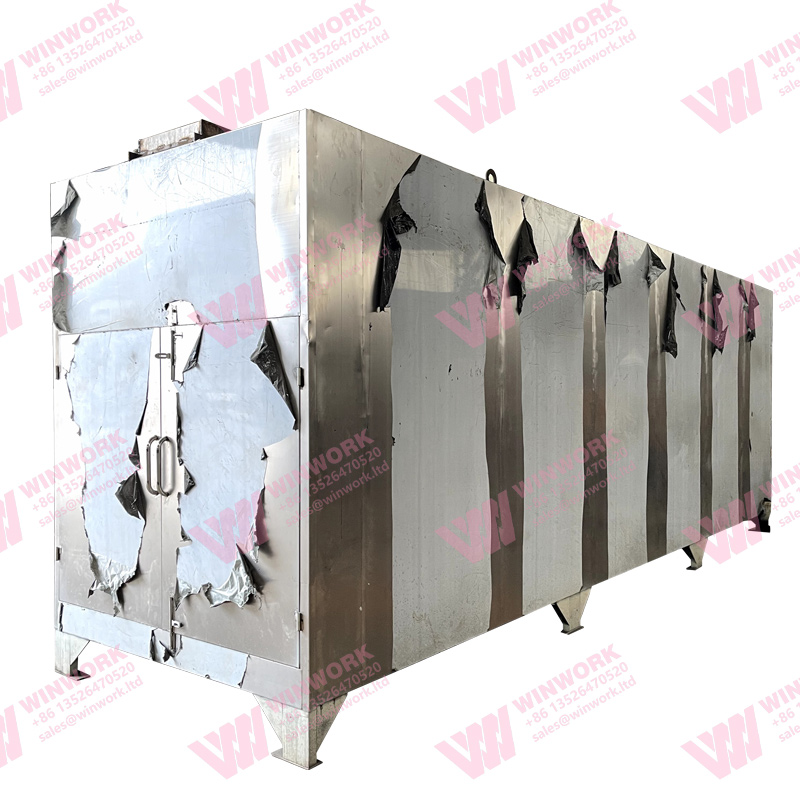
The Horizontal Fermentation Tank is widely used in the production of organic fertilizers and compost, offering numerous advantages in terms of efficiency, control, and environmental impact.
Crawler compost turner is an advanced compost turning equipment, specially designed for compost fermentation process, with the advantages of high efficiency, stability, easy operation and so on.
Crawler compost tumbler realizes automatic operation through crawler walking system, which is the necessary equipment for producing organic fertilizer granules and widely used in organic fertilizer production line.
The Vertical Fermentation Tank is a specialized unit designed for efficient aerobic fermentation of organic waste, agricultural residues, sludge and other compostable materials. This fermenter features a vertical structure and a compact design that maximizes space utilization while providing excellent mixing and aeration capabilities. It is widely used in the production of organic fertilizers, compost and other bio-products with the advantages of high efficiency and reduced environmental pollution.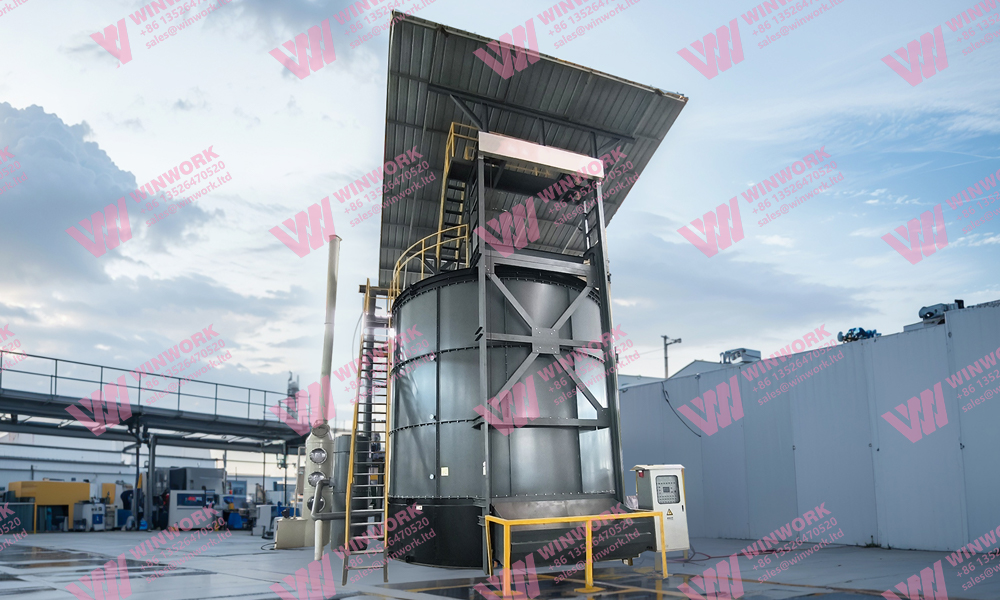
These are equipment can help you gain the solutions for stinky chicken farm waste.
Specialized Odor-Control Equipment and Additives
Biofilters and Scrubbers: For enclosed barn air or the exhaust from in-vessel composters, biofilters are a top solution for stinky chicken farm waste that actually works. They pass the odorous air through a moist, organic medium (like wood chips or peat) teeming with bacteria that biologically degrade the odor molecules. Chemical scrubbers use a liquid spray to absorb odors and are another effective solution for stinky chicken farm waste that actually works in specific settings.
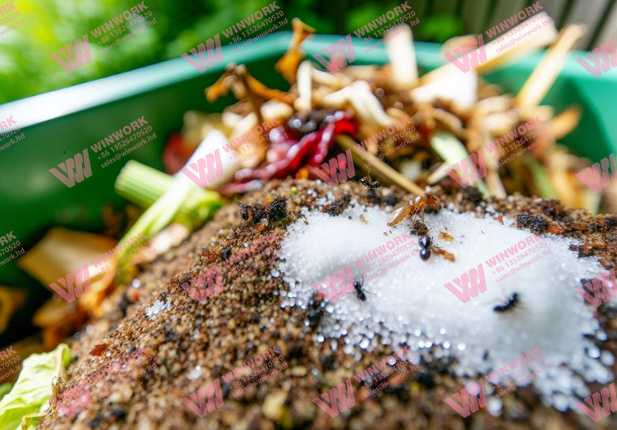
Manure Covers and Additives: For storage lagoons or piles, semi-permeable covers can trap gases, which are then treated. Applying limestone or alum to manure can lower the pH, locking ammonia in a non-gaseous form. These are practical, interim solutions for stinky chicken farm waste that actually work to reduce immediate emissions.
Advanced Processing: Creating High-Value Products
The ultimate solutions for stinky chicken farm waste that actually work convert the problem into a profit.
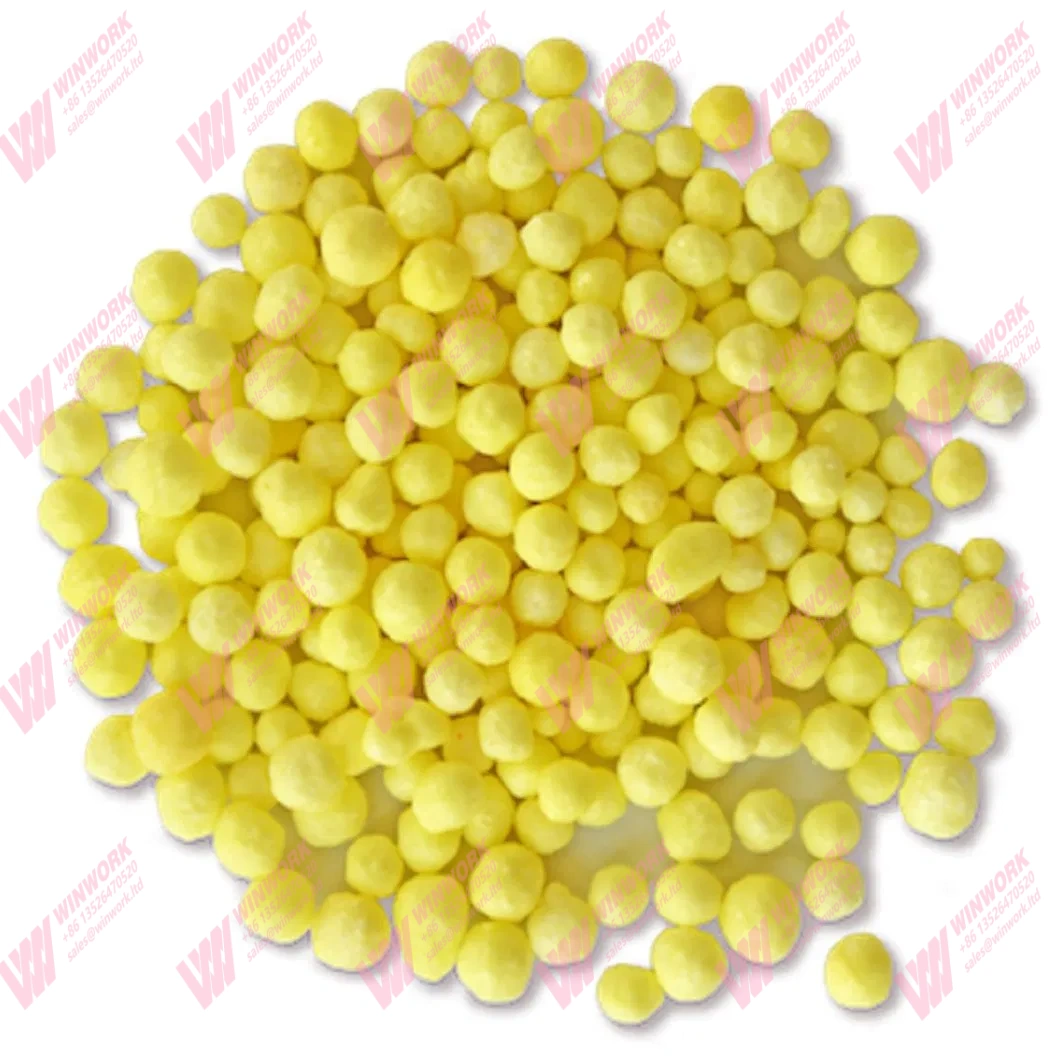
Pelletizing for Fertilizer: Dried and composted manure can be pelletized using a fertilizer pellet mill. The high-temperature process during pelleting further sterilizes the material and creates a dense, easy-to-handle, and virtually odor-free product that can be bagged and sold. This represents a high-value end point for solutions for stinky chicken farm waste that actually work.
Black Soldier Fly Larvae Bioconversion: This innovative solution for stinky chicken farm waste that actually works uses insects. BSFL efficiently consume fresh manure, drastically reducing its volume and odor within days. The outputs are valuable larval protein (for animal feed) and “frass” (a nutrient-rich fertilizer). It’s a rapid, space-efficient solution for stinky chicken farm waste that actually works and creates multiple revenue streams.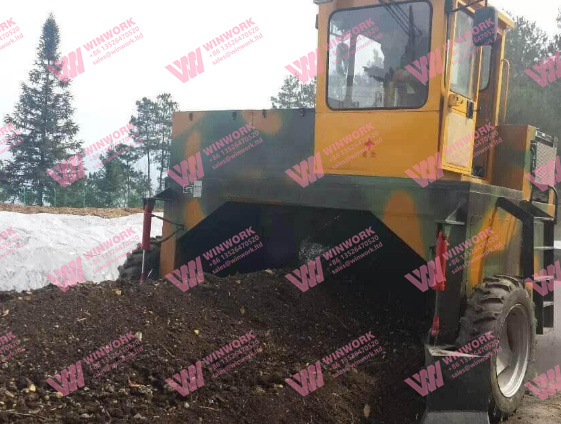
FAQ
Q1: What is the single most effective thing I can do to reduce smells?
A: The most impactful of the solutions for stinky chicken farm waste that actually work is to get the manure out of a wet, anaerobic state as fast as possible. Implement dry litter management or frequent removal, and immediately mix it with dry, carbonaceous bedding to start the composting process. Stopping anaerobic decomposition stops the worst smells.
Q2: Are these solutions safe for my chickens and the environment?
A: Yes, the solutions for stinky chicken farm waste that actually work outlined here are based on biological and physical processes. Composting creates a safe, stable product. BSFL conversion is natural. Proper biofiltration cleans the air. These methods are far safer and more sustainable than allowing raw manure to pollute the air and water.
Q3: As a small-scale farmer, what’s the cheapest “solution that actually works”?
A: The most accessible of the solutions for stinky chicken farm waste that actually work for a small farm is dedicated, managed composting. Designate a composting area downwind. Religiously mix every load of manure with 2-3 parts straw or leaves. Keep the pile moist but not soggy, and turn it weekly. This requires more labor than money but is a proven solution for stinky chicken farm waste that actually works.
Q4: How do I handle the smell during the processing itself?
A: Even good compost can have an odor when disturbed. To manage this, locate your composting site strategically, turn piles on less windy days, and consider using a compost turner that minimally disturbs the pile surface. For in-vessel systems, ensure the exhaust is connected to a biofilter. This operational care is part of complete solutions for stinky chicken farm waste that actually work.
Q5: Will turning manure into pellets or selling compost make me money?
A: Absolutely. This transforms the solution for stinky chicken farm waste that actually works from a cost to an investment. Bagged compost or fertilizer pellets have significant market value with gardeners, landscapers, and organic farmers. While there are costs for equipment, bags, and marketing, many farms find it to be a profitable enterprise that justifies the initial outlay for the equipment that makes these solutions for stinky chicken farm waste that actually work possible.
Conclusion
In conclusion, offensive chicken farm odors are a solvable problem. By implementing a combination of solutions for stinky chicken farm waste that actually work—starting with source control, moving to active composting, and potentially advancing to pelletizing or insect bioconversion—farms can eliminate a major environmental and social burden. The key is to move beyond temporary fixes and adopt integrated, biologically-based solutions for stinky chicken farm waste that actually work and that align with the goal of producing a useful, marketable end product. Investing in these proven solutions for stinky chicken farm waste that actually work is an investment in the farm’s future, its community relations, and its bottom line.
For more details, please feel free to contact us.
Email: sales@lanesvc.com
Contact number: +8613526470520
Whatsapp: +8613526470520
Get A Quote