

What Constitutes a Complete NPK Fertilizer Production Line?
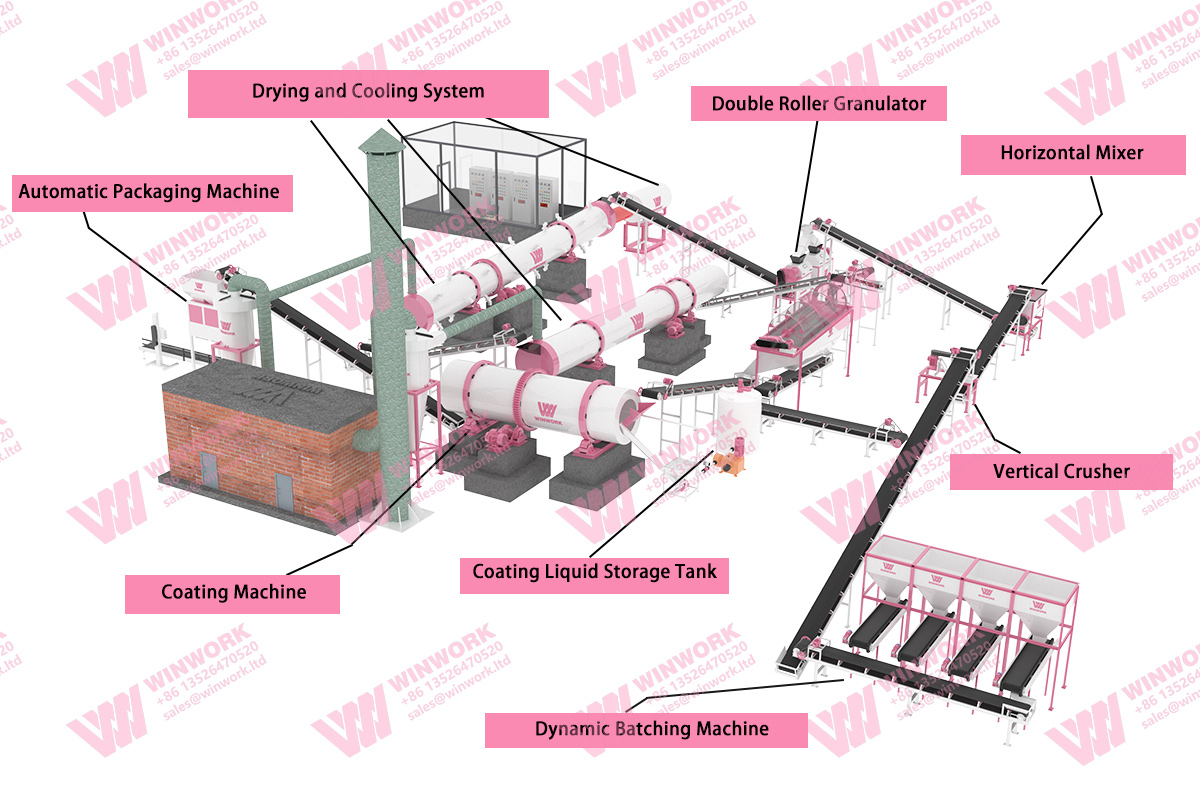
A NPK Fertilizer Production Line Equipment consists of multiple interconnected equipment units working in harmony. The core components include automatic batching systems, feeding equipment, mixers, granulators, dryers, coolers, screening machines, coating equipment, and packaging systems. Each piece of equipment plays a critical role in transforming raw materials into finished NPK fertilizer products with precise nutrient ratios and uniform particle size.
Key Equipment Types in NPK Fertilizer Production
1. Automatic Batching Systems
Automatic batching equipment ensures precise proportioning of raw materials according to specific NPK formulations. These systems can handle various materials including urea, ammonium phosphate, potassium chloride, and trace elements. Dynamic automatic batching machines are ideal for continuous production, while static systems offer higher precision for quantitative batching. Modern systems feature DCS automatic control for accurate measurement and consistent quality.
2. Feeding Equipment
Feeding systems transport raw materials from storage to the production line. Belt feeders, screw feeders, and vibrating feeders are commonly used to ensure continuous and uniform material supply. These systems maintain consistent feeding rates, preventing production interruptions and ensuring stable operation of downstream equipment.
3. Mixing Equipment
Horizontal mixers and vertical mixers in the NPK fertilizer production line are essential for thorough blending of different components. Mixers ensure uniform distribution of nutrients throughout the material, creating consistent NPK formulations. Horizontal mixers are widely used in chemical and fertilizer industries for their efficient mixing capabilities and versatility across various material types.
4. Granulation Equipment
Granulators are the heart of NPK fertilizer production line, shaping mixed materials into uniform granules. Rotary drum granulators are the most common choice, capable of producing 1,000-4,000 kg/hour with customizable particle sizes. These machines feature polymer lining plates for automatic cleaning and corrosion resistance. Disc granulators are also popular for their simple operation and low maintenance costs, making them suitable for small to medium enterprises.
5. Drying Systems
Rotary drum dryers reduce moisture content to below 2-3%, making granules harder and easier to store. These systems use hot air to evaporate moisture, ensuring product stability during storage and transportation. Drying equipment is often lined with SS304 stainless steel for extended service life and improved heat transfer efficiency.
6. Cooling Systems
After drying, rotary coolers in the NPK fertilizer production line reduce particle temperature to prevent clumping during storage and transportation. Cooling systems use ambient air or forced air circulation to bring the granules to room temperature, ensuring product quality and preventing moisture absorption.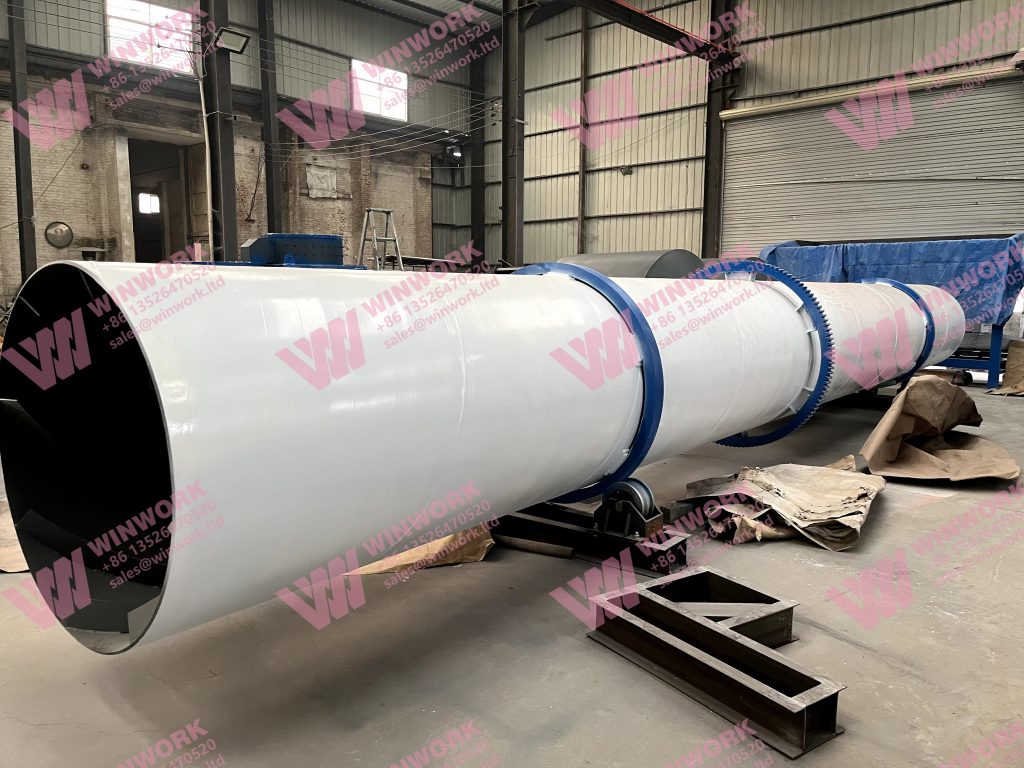
7. Screening Equipment
Rotary screening machines separate qualified granules from oversized or undersized particles, with the latter returned for re-granulation. Screening equipment ensures uniform particle size distribution, which is crucial for consistent application rates and crop response.
8. Coating Equipment
Coating machines apply protective coatings to finished granules, reducing nutrient loss and improving slow-release properties. These systems enhance product appearance and functionality while maintaining consistent quality. Coating can include anti-caking agents, dust suppressants, and slow-release coatings.
9. Packaging Systems
Automatic packing machines complete the production process by packaging finished products into bags with precise weight control. These systems include automatic folding and sewing capabilities, with palletizers available for stacking packaged products.
What Are the Production Capacity and Investment Considerations?
NPK fertilizer production lines are available in various capacities to meet different market needs. Small-scale plants typically process 1-5 tons per day, medium-scale 5-20 tons per day, and large-scale facilities can handle 20+ tons per day. Investment costs range from $50,000-$200,000 for small plants to $500,000-$2,000,000+ for large-scale operations, depending on automation level and equipment specifications.
Quality Standards and Certifications
Professional NPK fertilizer production line equipment should comply with ISO 9001 for quality management and ISO 14001 for environmental management. CE certification ensures equipment safety and compliance with European standards. Additionally, production lines must meet local environmental regulations for emissions, noise control, and waste management.
Frequently Asked Questions (FAQs) About The NPK Fertilizer Production Line
1.What technical support is typically provided by equipment manufacturers?
Reputable manufacturers offer comprehensive support services including technical consultation, process design, installation guidance, operator training, and after-sales maintenance. These services ensure proper equipment operation, process optimization, and long-term performance reliability. Many manufacturers also provide spare parts supply, regular maintenance services, and technical upgrades to keep the production line running efficiently.
2.Can I buy just one machine instead of a full line?
Yes. We sell all our fertilizer production line equipment individually. Many of our clients start with one or two key machines, like a compost turner or a crusher, and then expand their production line over time as their business grows. We are here to support you at every stage.
3.What are the main advantages of using a complete NPK fertilizer production line?
A complete NPK fertilizer production line offer several key advantages: they ensure precise nutrient formulation with consistent quality, enable efficient and continuous production, reduce labor costs through automation, improve product appearance and functionality through coating and packaging, and ensure compliance with environmental and quality standards. These systems also allow for scalability and flexibility in production capacity to meet changing market demands.
Conclusion
NPK fertilizer production line equipment represents a sophisticated integration of mechanical, chemical, and automation technologies. By selecting the right combination of equipment types and configurations, manufacturers can achieve efficient production, consistent product quality, and sustainable operations. Whether establishing a new production facility or upgrading existing equipment, understanding the essential equipment components and their functions is crucial for success in the competitive fertilizer manufacturing industry.
For more details, please feel free to contact us.
Email: sales@lanesvc.com
Contact number: +86 13526470520
Whatsapp: +86 13526470520
Get A Quote