

Introduction
Walk through any farm after the harvest, and you’ll see the leftovers: mountains of corn stalks, rice husks, sawdust, and weeds. For generations, this “trash” was either burned, releasing harmful smoke into the atmosphere, or hauled away at a cost. But today, the smartest farmers are looking at these piles and seeing dollar signs. The practice of using agricultural waste as fertilizer is revolutionizing small and medium-sized farms, turning a liability into one of the most profitable assets on the land.
This isn’t just about being “green”; it’s about being smart with your resources. By using agricultural waste as fertilizer, you cut out the middleman, slash your input costs, and create a closed-loop system where your farm feeds itself. Let’s break down exactly how you can implement this strategy.
Why Using Agricultural Waste as Fertilizer Makes Financial Sense
Think about the typical expenses on a farm: buying synthetic fertilizers, paying for fuel, and disposing of waste. These are all outgoing cash flows. The moment you switch to using agricultural waste as fertilizer, you flip the script.
First, you stop buying chemical fertilizers, which have become notoriously expensive due to supply chain issues and energy costs. Second, you save money on waste removal. Third, you improve your soil structure, which means you need less water and fewer pesticides over time. It is a triple win that leads to true agricultural self-sufficiency.
The Core Method: How to Turn Trash into Black Gold
The process of using agricultural waste as fertilizer relies on one magical word: decomposition. However, doing it right requires a bit more science than just piling stuff up. Here is the step-by-step method:
Step 1: Carbon and Nitrogen Balancing
Not all waste is created equal. Fresh grass clippings or green leaves are “Greens” (high in Nitrogen). Straw, corn stalks, and wood chips are “Browns” (high in Carbon). The secret to successful using agricultural waste as fertilizer is mixing them in the right ratio—roughly 3 parts Brown to 1 part Green. This balance feeds the microbes that do the work of breaking down the material.
Step 2: Shredding and Sizing
Big sticks and long stalks take forever to decompose. To speed things up, you need to chop them down. A Wood Chipper or a High-Speed Hammer Mill is essential here. By reducing the particle size, you increase the surface area for microbes to attack, drastically cutting down the composting time.
Horizontal crusher, also known as horizontal semi-wet material crusher, is a kind of crushing equipment specially designed to deal with high humidity, organic materials, especially suitable for organic fertilizer production in the material pre-treatment.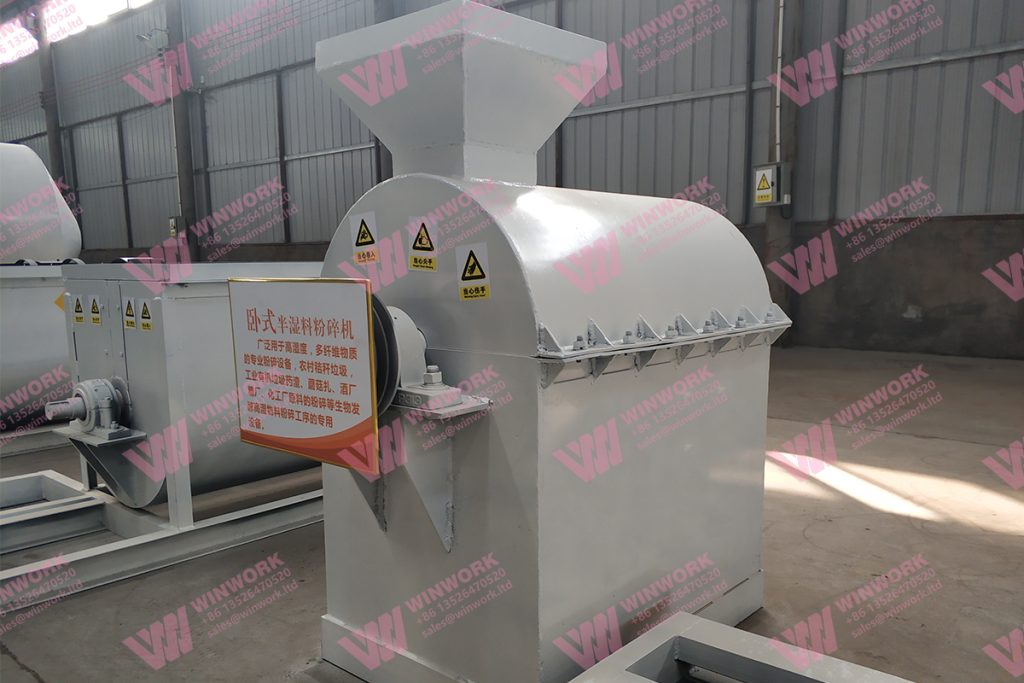
Step 3: Fermentation and Composting
Now you build your pile. Using a Compost Turner (a simple machine that looks like a giant rototiller), you mix the shredded waste. This introduces oxygen, which is crucial for aerobic decomposition. Within a few weeks, the pile will heat up to over 60°C (140°F). This heat sterilizes the waste, killing off weed seeds and pathogens. This high-temperature stage is the most critical part of using agricultural waste as fertilizer safely and effectively.
The Horizontal Fermentation Tank is a state-of-the-art equipment designed for the effective aerobic fermentation of organic waste, agricultural residues, sludge, and other compostable materials. Unlike vertical tanks, the horizontal design allows for larger capacity and more uniform fermentation.
The Horizontal Fermentation Tank is widely used in the production of organic fertilizers and compost, offering numerous advantages in terms of efficiency, control, and environmental impact.
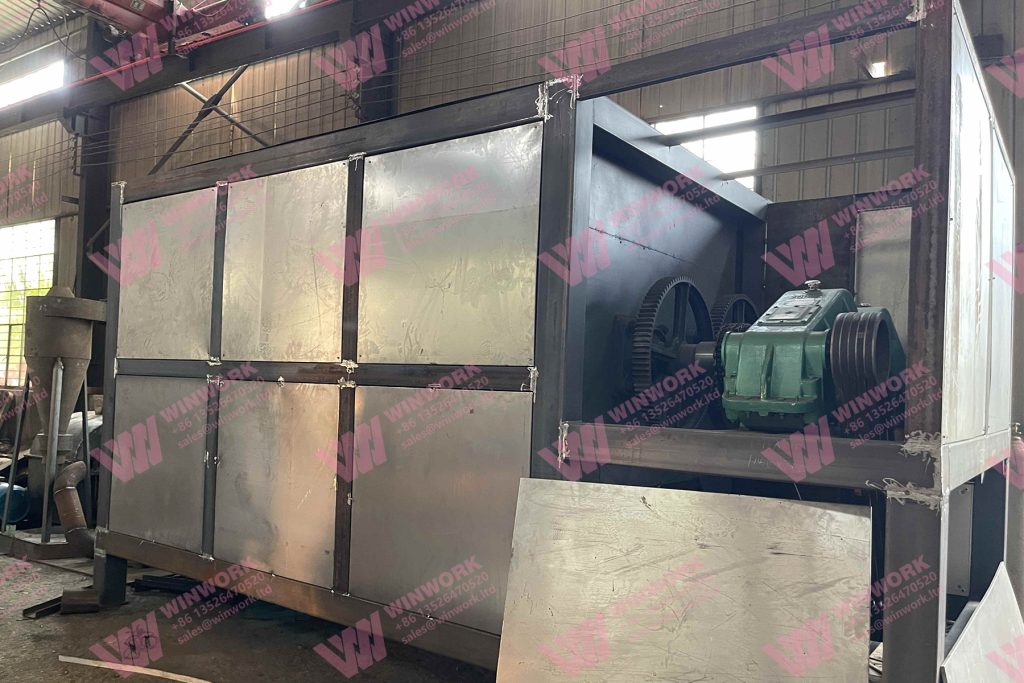
Horizontal fermentation tank
Step 4: Granulation for Market Value
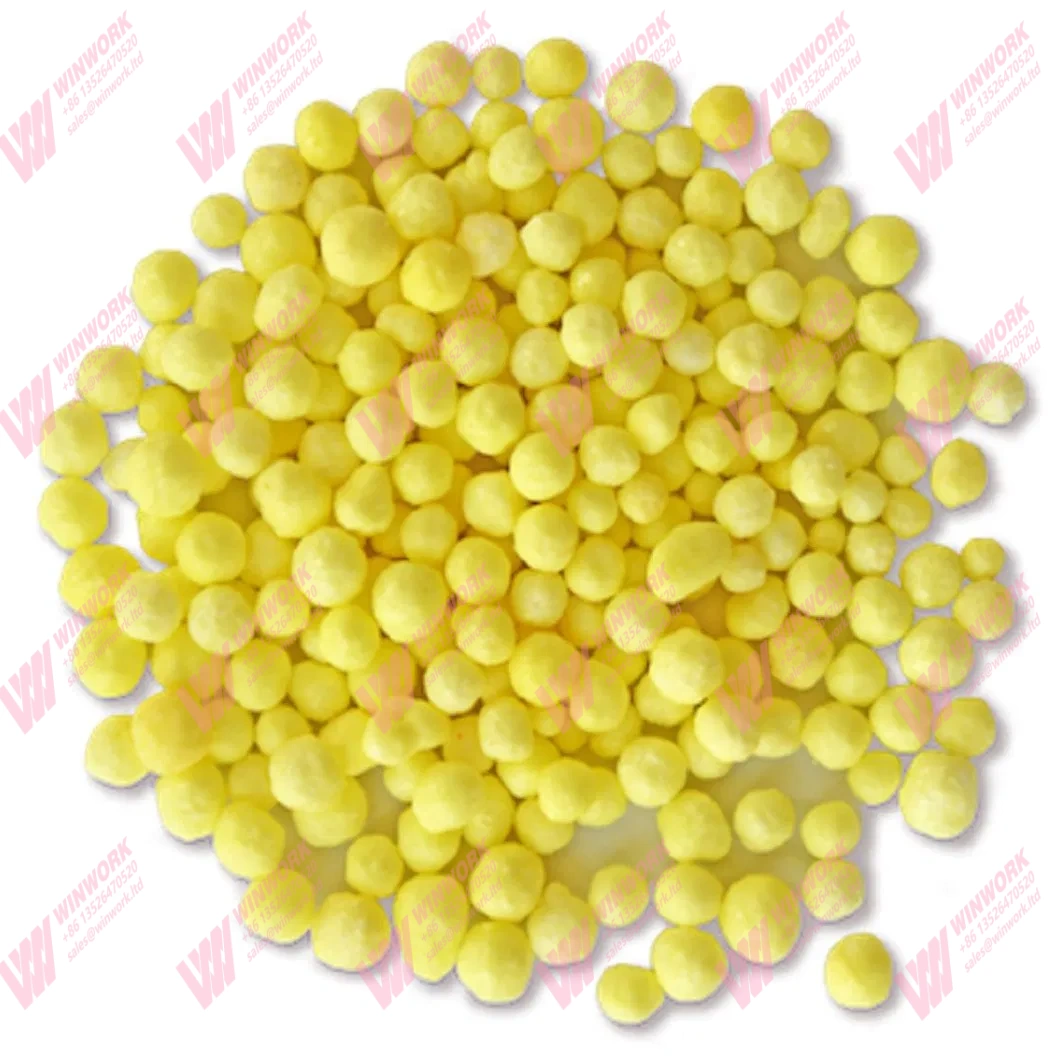
Once the compost is dark, crumbly, and smells like earth, you have a product. If you want to maximize profit, don’t just sell it loose. Use a Flat Die Pellet Machine to press the compost into uniform pellets. These pellets are easy to bag, transport, and apply, allowing you to charge a premium price. This step elevates using agricultural waste as fertilizer from a hobby into a serious business.
New type organic fertilizer granulator, also known as churning teeth granulator, is a kind of high-efficiency molding equipment, simple principle, fast granulation speed.
New type organic fertilizer granulator using high-speed rotating mechanical mixing force and the resulting aerodynamic force, so that the fine powdery material in the machine continuously to achieve the process of mixing, granulation, spheroidization and densification, so as to achieve the purpose of high-quality granulation.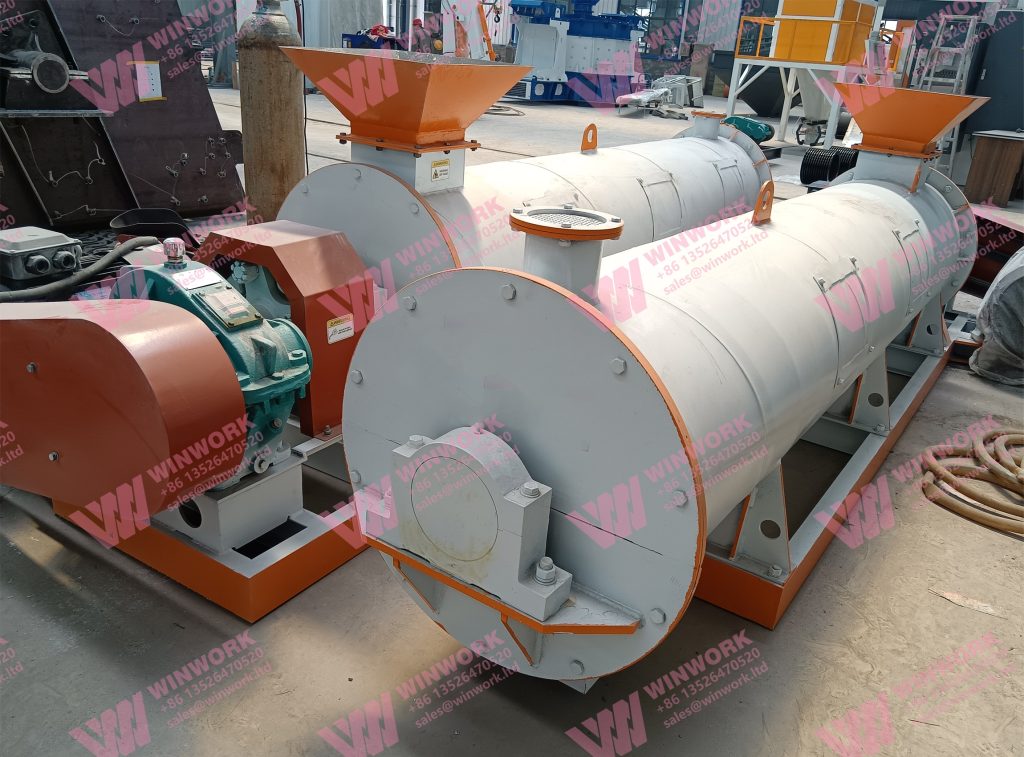
Essential Low-Cost Equipment for Using Agricultural Waste as Fertilizer
You don’t need a million-dollar factory to get started. Here are the key pieces of equipment that make this process feasible:
Tractor-Mounted Rotary Mower/Shredder: Perfect for collecting and chopping crop residues directly in the field.
Hammer Mill Crusher: For tougher materials like corn cobs or branches, this machine pulverizes them into a fine powder.
Moving Floor Composter / Windrow Turner: This is the heart of the operation. It ensures your piles get the air they need without back-breaking manual labor.
Organic Fertilizer Granulator: If you plan to sell, this machine is a must-have for creating professional-grade pellets.
Screening Machine: To remove any large, undecomposed chunks before bagging, ensuring a consistent, high-quality product.
Case Study
Mr. Wang runs a 20-acre apple orchard. Every year, he spent over $5,000 on chemical fertilizers and struggled with poor soil. Last year, he started using agricultural waste as fertilizer generated from his own pruned branches and fallen leaves, mixed with some chicken manure from a neighbor.
He bought a used hammer mill and a small compost turner for under $4,000 total. Within six months, he produced 30 tons of premium organic fertilizer. He used half on his own trees and sold the other half to a nearby vineyard for $150 per ton. His soil health improved dramatically, his apples were sweeter, and he completely eliminated his fertilizer bill. For him, using agricultural waste as fertilizer was the key to saving his family business.
FAQ: Common Questions About Using Agricultural Waste as Fertilizer
Q1: What counts as “agricultural waste”?
A: Anything leftover from farming! This includes straw, rice husks, corn stalks, sugarcane bagasse, cottonseed hulls, sawdust, fruit peels, vegetable trimmings, and animal manure. The key is balancing different types of waste for effective decomposition.
Q2: Will using agricultural waste as fertilizer attract pests?
A: If done incorrectly (like just piling fresh manure), yes. But when you follow the proper method of using agricultural waste as fertilizer—specifically the high-heat composting stage—it kills fly larvae and weed seeds, resulting in a clean, pest-free product.
Q3: How long does it take to make fertilizer?
A: With the right equipment (shredder + turner), the hot composting phase takes about 15-20 days. Curing takes another 30 days. So, you can go from waste to usable fertilizer in under 60 days.
Q4: Is this cheaper than buying chemical fertilizer?
A: Absolutely. The main costs are the initial equipment purchase and fuel for the machines. After that, the raw material is free. The long-term savings of using agricultural waste as fertilizer are enormous compared to the recurring cost of synthetics.
Q5: Can I use this method for my home garden?
A: Yes! The principle of using agricultural waste as fertilizer works at any scale. For a home garden, you can skip the heavy machinery and just use a shovel to turn your piles, though it will take more physical effort.
Q6: Do I need to add anything to the pile?
A: Sometimes. If your waste is very dry (all browns), you might need to add water to reach the moisture level of a wrung-out sponge. If it’s too wet, add more dry straw.
Q7: What is the ideal size for particles when using agricultural waste as fertilizer?
A: For fast composting, aim for particles smaller than 5 cm (2 inches). Smaller is generally better for accelerating the process.
Q8: Can I sell this fertilizer legally?
A: For small-scale, local sales, you usually don’t need a special license, but your product should be mature compost (dark and crumbly). Always check your local agricultural regulations regarding labeling and sales.
Q9: What if my compost pile doesn’t heat up?
A: This usually means the Carbon-Nitrogen ratio is off, or it’s too dry. Add some “greens” (like fresh grass) and water, then turn it with a compost turner to introduce oxygen.
Q10: Is using agricultural waste as fertilizer good for the environment?
A: It’s fantastic. It prevents open burning of fields (a major cause of air pollution) and reduces methane emissions from decomposing waste in landfills. It also sequesters carbon in the soil.
Conclusion
The era of viewing agricultural leftovers as useless trash is over. The strategy of using agricultural waste as fertilizer is a proven path toward agricultural resilience. It empowers farmers to reduce their dependence on volatile external markets for fertilizers and energy. By investing in simple, robust machinery and understanding the basic principles of decomposition, any farmer can transform their waste stream into a revenue stream. Start looking at your waste differently today, because using agricultural waste as fertilizer is not just good farming—it’s smart business.
For more details, please feel free to contact us.
Email: sales@lanesvc.com
Contact number: +8613526470520
Whatsapp: +8613526470520
Get A Quote