Introduction
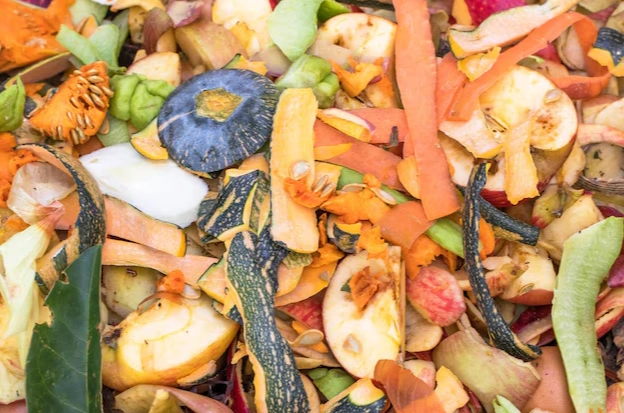
Fruit processing can generate large amounts of peels, pulp residues, pomace, and other organic by-products. Juice factories, wineries, fruit-processing plants, and food manufacturers may need to handle these materials continuously. Instead of viewing them only as waste, businesses can explore ways to recover their organic value and turn suitable residues into useful products.
fruit peel and pomace liquid fertilizer production line
Fruit peel and pomace liquid fertilizer production line technology provides one possible route for processing these organic residues into a liquid fertilizer product. Depending on the raw material characteristics and the final fertilizer formulation, the process may include pretreatment, fermentation or extraction, mixing, filtration, storage, filling, and packaging.
The idea also fits into the broader concept of residue valorization. The FAO describes residue valorization as turning food-processing by-products and other discarded materials into new resources and products.
So, what does it take to turn fruit-processing residues into liquid fertilizer? What equipment is needed, and what should you consider before investing in a production line? This guide explains the main points.
Why Are Fruit Peels and Pomace Worth Processing?
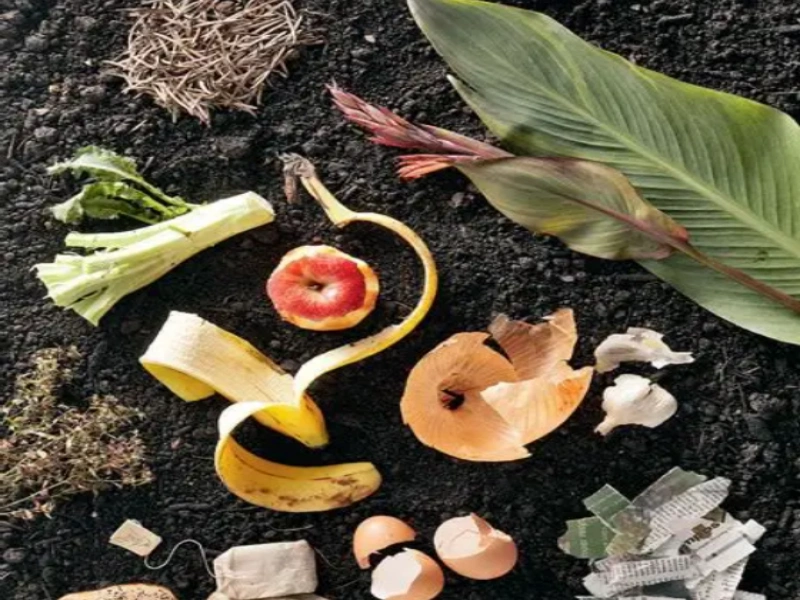
Fruit peels and pomace are organic materials generated during different stages of fruit processing. Their composition can vary significantly depending on the fruit type, processing method, moisture content, and storage conditions.
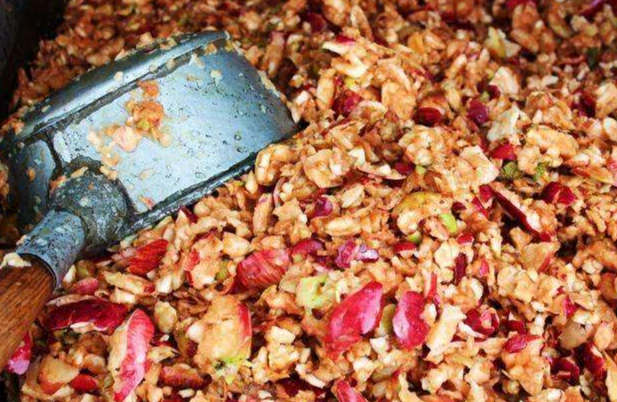
For example, citrus processing may generate large quantities of peel, while apple juice production can generate apple pomace. Grape processing can also produce grape pomace containing skins, pulp, and seeds.
Rather than sending all these residues directly to disposal, some businesses may investigate agricultural resource recovery. FAO notes that food-processing by-products can be valorized into new products and resources as part of circular approaches in agrifood systems.
This does not mean that every type of fruit waste can simply be placed into a fertilizer machine and immediately become finished fertilizer. Raw material testing, processing conditions, and the desired final product all matter.
A properly designed fruit peel and pomace liquid fertilizer production line therefore starts with understanding the feedstock rather than choosing equipment first.
What Types of Fruit Waste Can Be Used?
A potential fruit-waste fertilizer project can involve many different raw materials.
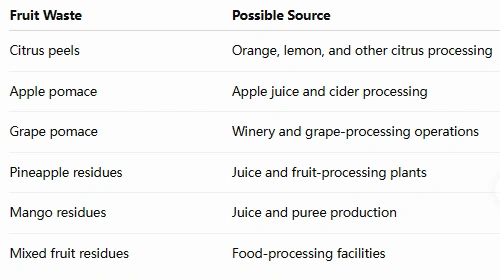
However, raw material names alone are not enough to design a fruit peel and pomace liquid fertilizer production line.
The equipment manufacturer may need information such as:
- moisture content
- particle size
- organic solid content
- acidity
- fiber content
- impurity level
- daily material volume
- seasonal availability
These factors can influence whether crushing, fermentation, extraction, mixing, filtration, heating, or other processing stages are required.
How Does a Fruit Peel and Pomace Liquid Fertilizer Production Line Work?
The process used for fruit waste depends on the characteristics of the raw materials and the target fertilizer. A typical production concept may include the following stages:
Raw Material Preparation → Fermentation or Extraction → Mixing → Filtration → Formulation → Storage → Filling → Packaging
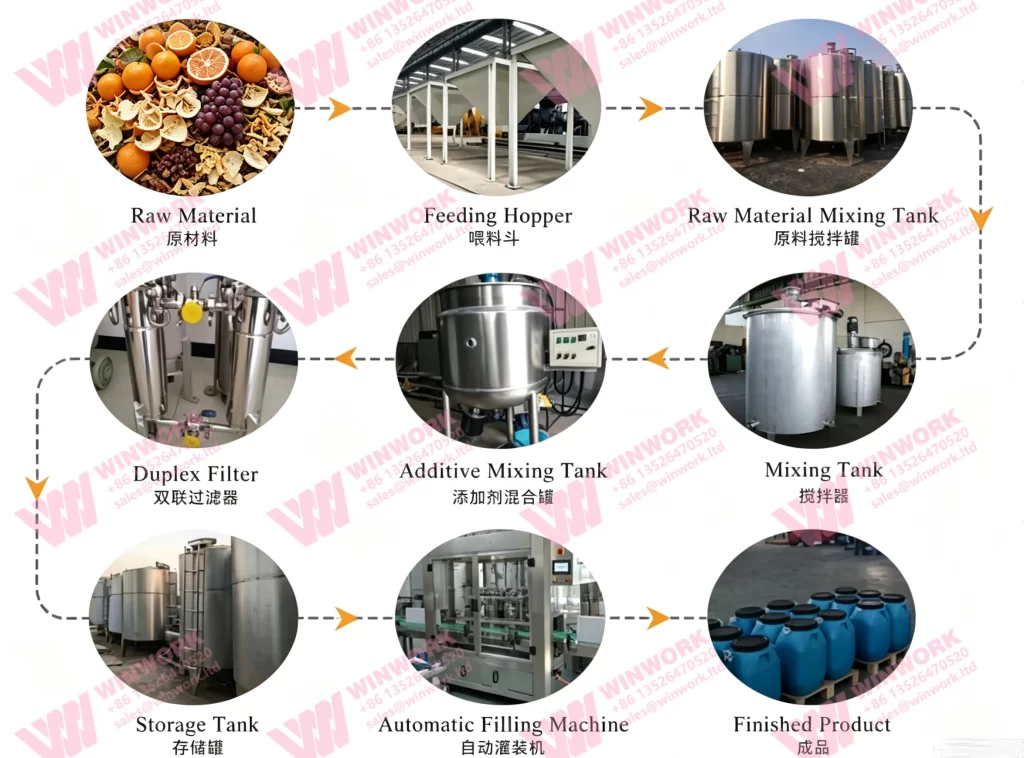
Fruit Peel and Pomace Liquid Fertilizer Production Line
Raw Material Preparation
The first step is to prepare the fruit residues for subsequent processing. Depending on the feedstock, this may involve sorting, impurity removal, crushing, shredding, or other pretreatment operations.
The purpose is to make the feedstock more suitable for the following process rather than simply reducing its size.
Fermentation or Extraction
Some fruit residues may require biological or other processing before they are used in a liquid fertilizer formulation. The appropriate method depends on the raw material and the final product.
For this reason, the process should be developed around actual project conditions instead of using one fixed processing formula for every fruit residue.
After the material has been suitably processed, liquid components and other required ingredients can be mixed according to the fertilizer formulation.
WINWORK’s liquid fertilizer production line is designed to integrate raw material proportioning, mixing and dissolving, filtration, filling, and packaging. The company’s listed mixing-tank capacity ranges from 500 to 10,000 liters, with stirring methods selected according to material characteristics.
Filtration
Filtration is important when the fertilizer liquid contains unwanted solid particles.
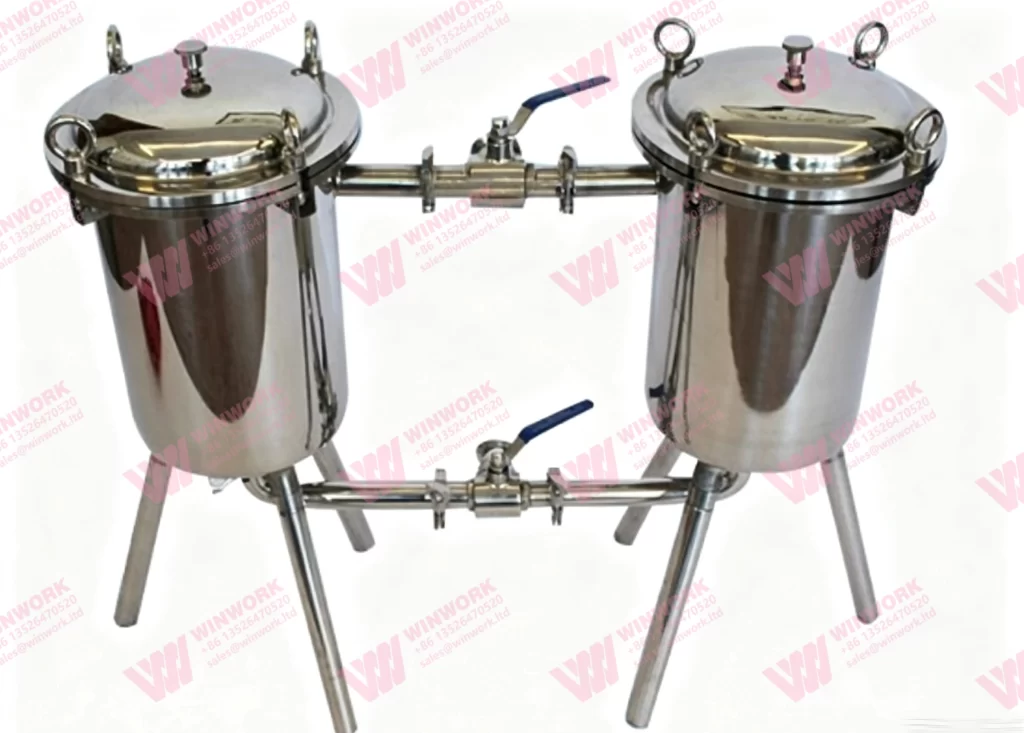
A filtration system can help remove particles before the liquid moves to storage or filling equipment. WINWORK currently lists filtration precision of 0.1–10 micron for its liquid fertilizer production line, with the filtration configuration customized according to requirements.
The appropriate filtration level should be determined according to the actual liquid characteristics and product requirements.
Storage, Filling, and Packaging
After processing and filtration, the liquid fertilizer can be transferred to storage tanks before filling.
The final filling and packaging stage may include:
Storage Tank → Pump → Filling Machine → Capping → Labeling → Packaging
This allows the fertilizer to move from processing to a finished packaged product in a more systematic way.
What Equipment Does a fruit peel and pomace liquid fertilizer production line Need?
The equipment configuration depends on the processing route, but a complete project may involve several key machines.
A crusher can be used during pretreatment when the feedstock requires particle-size reduction or size adjustment.
Fermentation or Processing Equipment
When the selected process requires fermentation or extraction, the corresponding equipment can be incorporated into the production line.
The exact configuration should be determined after evaluating the raw material and intended fertilizer product.
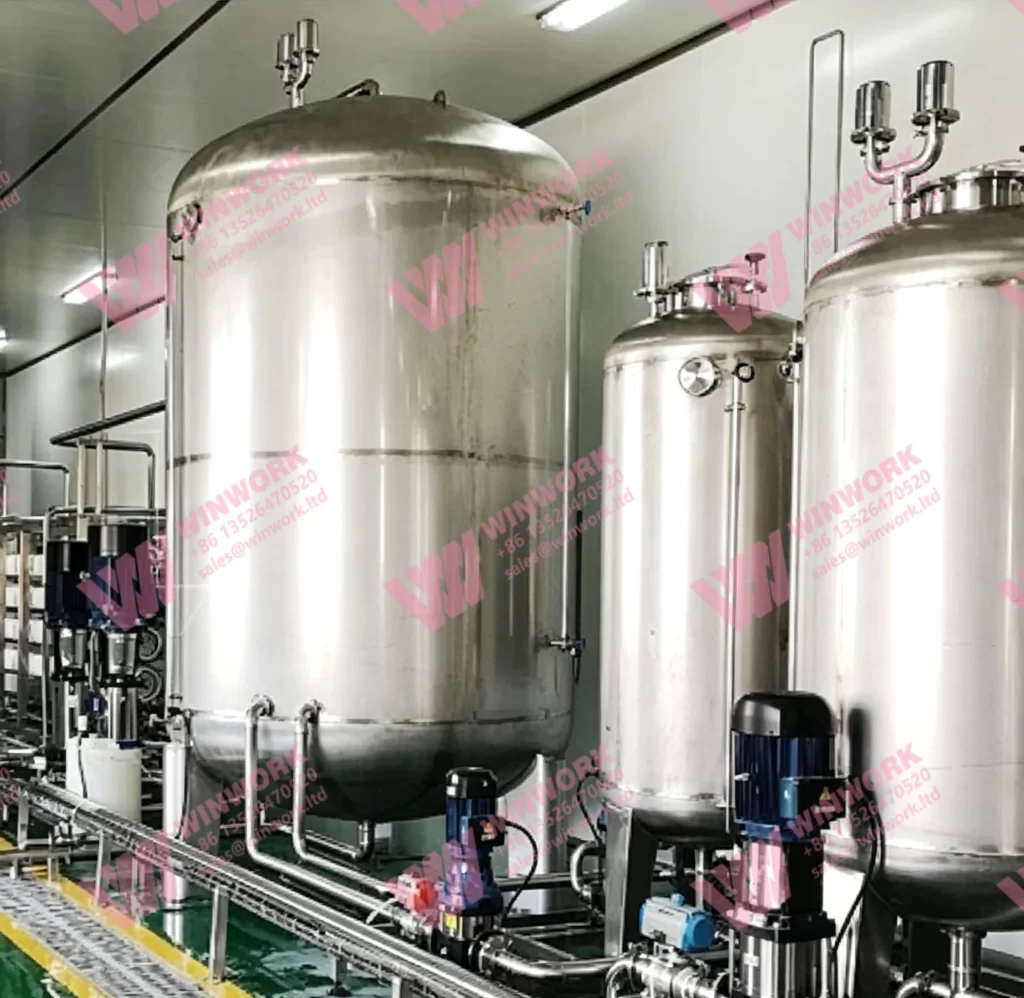
Mixing Tank
Mixing tanks are used to combine processed liquid materials and formulation ingredients.
WINWORK lists stainless-steel equipment options and mixing tanks with capacities from 500 to 10,000 liters for its liquid fertilizer production line.
Filtration System
The filtration section helps separate unwanted particles from the fertilizer liquid before storage or filling.
Storage Tank
Storage tanks provide temporary holding capacity between processing and packaging stages.
Automatic Filling Machine
A filling machine can be used to portion the finished liquid fertilizer into bottles, containers, or other packages.
PLC Control System
A centralized control system can coordinate different stages of the production process. WINWORK describes its liquid fertilizer production line as incorporating a PLC control system for production-line operation.
What Should You Consider Before Setting Up the Production Line?
Setting up a fruit peel and pomace liquid fertilizer production line is not simply a matter of purchasing several machines. The process should begin with project information.
Raw Material Characteristics
Start by identifying:
- fruit type
- moisture content
- daily quantity
- particle size
- solid content
- acidity
- impurity level
This information helps engineers understand which pretreatment and liquid-processing equipment may be necessary.
Production Capacity
Production capacity should be based on the available raw materials and expected fertilizer output.
Final Fertilizer Formula
The intended final product is another key factor.
A project may target an organic liquid fertilizer or another formulated liquid fertilizer product. The required ingredients, mixing conditions, filtration needs, and packaging system can differ depending on the formulation.
Filtration Requirements
Fruit-processing residues can introduce suspended solids into the process. Therefore, filtration requirements should be considered together with the desired final product.
Workshop Layout
Before purchasing equipment, also consider:
- available workshop area
- equipment arrangement
- power supply
- water supply
- storage space
- finished-product packaging area
A well-planned fruit peel and pomace liquid fertilizer production line should fit both the production process and the available site.
What Are the Benefits of Processing Fruit Waste into Liquid Fertilizer?
The main attraction of fruit-waste processing is the possibility of recovering value from materials that would otherwise require disposal or further management.
FAO highlights waste recovery, nutrient recycling, and residue valorization as important elements of circular approaches in food and agriculture.
The US EPA also describes managed organic-waste processing as a way to turn food waste into useful products and recover organic matter and nutrients.
For a properly designed fruit peel and pomace liquid fertilizer production line, potential benefits include:
Better Use of Organic Residues
Fruit-processing residues can become feedstock for another production process instead of being treated only as disposal materials.
More Systematic Processing
A production line can connect preparation, mixing, filtration, storage, and filling into a more organized workflow.
More Consistent Mixing and Filtration
Controlled equipment can help maintain repeatable processing conditions from batch to batch, depending on the selected system and operating procedures.
Potential for Value-Added Products
Turning processing residues into a formulated fertilizer product may create another product stream for businesses with suitable raw materials and market demand.
How Can a fruit peel and pomace liquid fertilizer production line Be Customized?
Not every fruit-processing project needs exactly the same equipment.
For example, a plant processing high-moisture citrus residues may have different requirements from a facility handling grape pomace or mixed fruit residues.
A customized production line can therefore be designed around several variables:
Raw Material → Processing Method → Production Capacity → Formula → Filtration → Packaging
Our fertilizer machinery solutions can be customized according to site conditions, raw materials, and capacity. Our liquid fertilizer equipment page also lists customization of equipment specifications, materials, and functions according to customer requirements.
Why Work with a Fertilizer Machinery Manufacturer?
When a project involves several connected stages, equipment compatibility becomes an important consideration.
Instead of selecting every machine independently, working with a fertilizer machinery manufacturer can allow the equipment configuration to be considered as a complete process.
For a fruit peel and pomace liquid fertilizer production line, this may include:
- raw material pretreatment
- processing or fermentation
- mixing
- filtration
- storage
- filling
- packaging
- control system integration
Conclusion
Fruit-processing residues do not always have to remain simple waste materials. With suitable processing methods, fruit peels, pomace, and other organic residues can be considered as potential feedstocks for fertilizer production.
A fruit peel and pomace liquid fertilizer production line can connect raw material preparation, processing, mixing, filtration, storage, and filling into a complete production system. However, the right equipment configuration depends on the actual feedstock, production capacity, fertilizer formulation, filtration requirements, and workshop conditions.
For businesses considering a new project, the first step is to understand the raw materials and final product requirements. From there, the production process and equipment can be designed around real operating conditions.
If you are planning to process fruit peels, pomace, or other food-processing residues into liquid fertilizer, WINWORK can discuss the required production capacity, processing route, equipment configuration, and customization options with you.
For more details, please feel free to contact us.
Email: sales@lanesvc.com
Contact number: +8613526470520
Whatsapp: +8613526470520
Your choice is the best recognition for us!
Get A Quote