

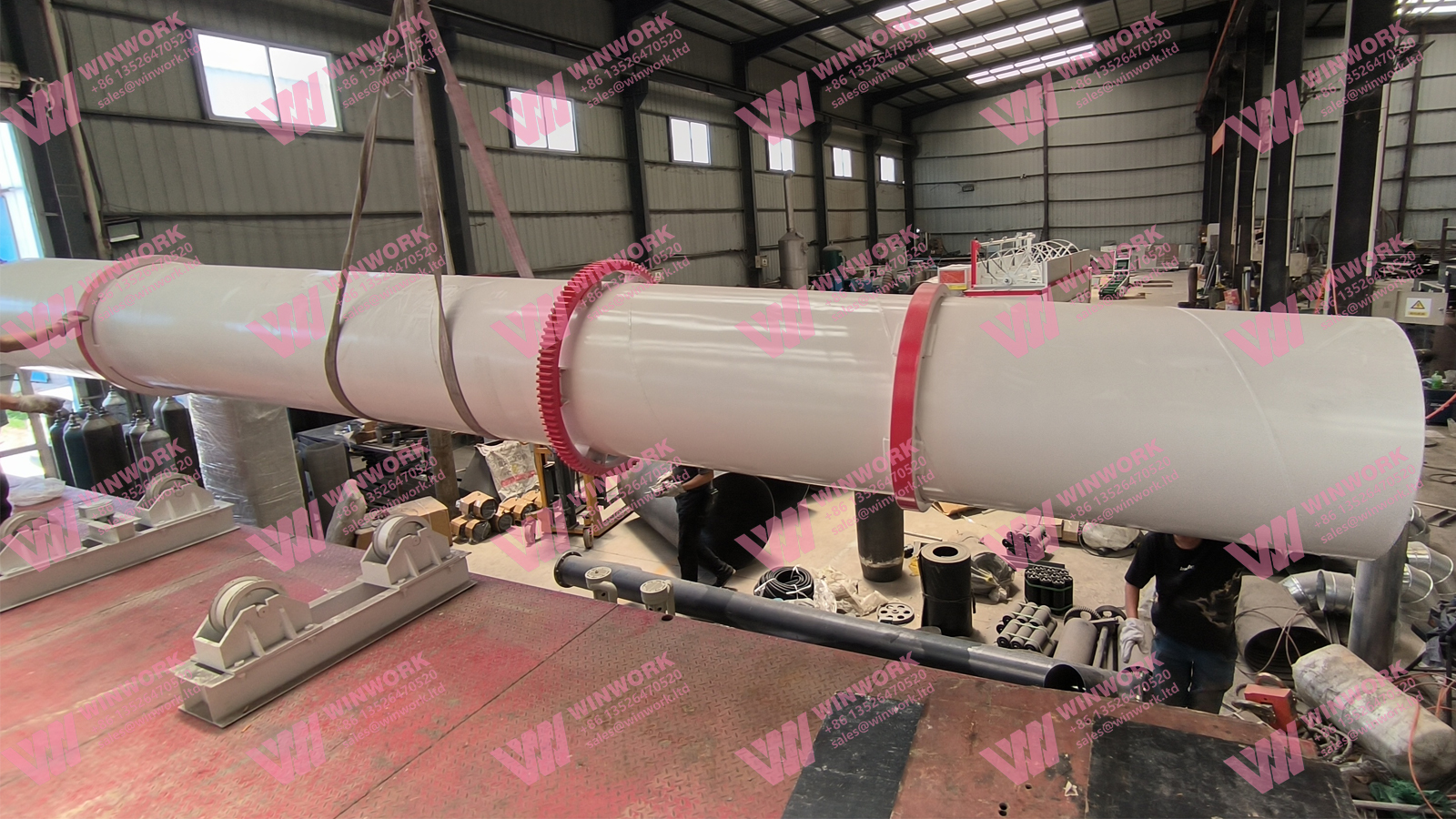
A rotary drum dryer is an important piece of equipment in many industrial drying processes, especially in organic fertilizer, compound fertilizer, and NPK fertilizer manufacturing. By reducing excess moisture in wet materials, it helps prepare products for subsequent processing, storage, and packaging. Choosing the right drying equipment is therefore essential for maintaining a stable and efficient production process.
Understanding how a rotary drum dryer works, where it should be installed in a fertilizer production line, and what auxiliary equipment it requires can help manufacturers make better equipment decisions. This guide explains its working principle, main applications, production line position, supporting equipment, and key considerations before purchasing.
1. What Is a Rotary Drum Dryer?
A rotary drum dryer is an industrial machine designed to remove moisture from suitable solid materials through heat transfer and continuous movement inside a rotating drum. It is commonly used when a production process requires the moisture content of bulk materials or fertilizer granules to be reduced before further handling.
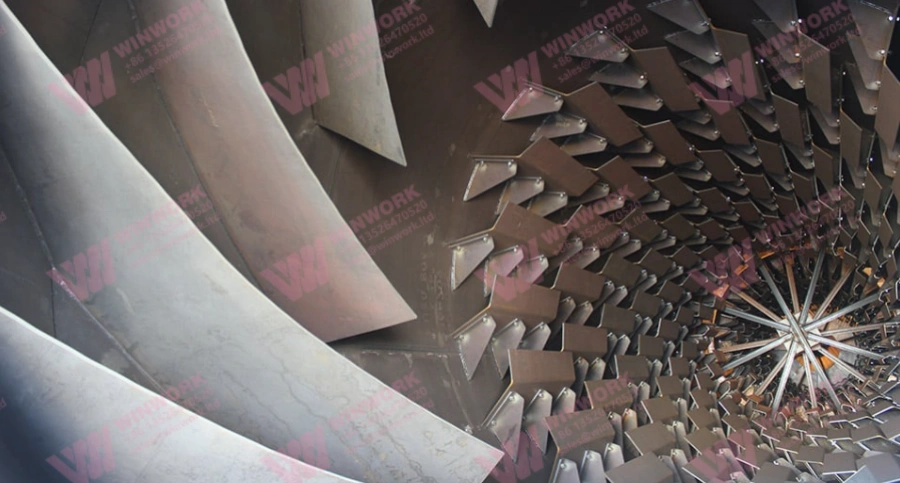
The main structure generally includes a cylindrical drum, lifting flights, a drive system, supporting rollers, feeding and discharging sections, and sealing components. The drum rotates slowly while the material moves through it. Internal lifting flights raise and distribute the material, increasing its exposure to the drying air.
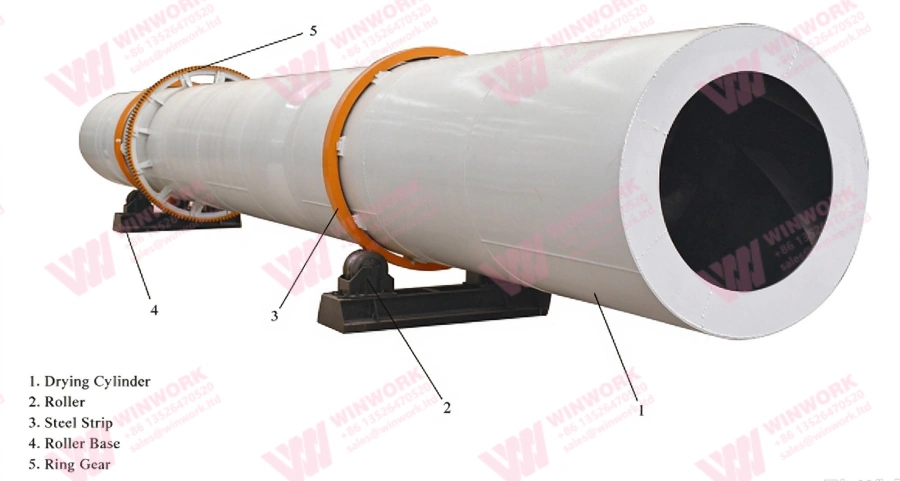
Depending on the material and process requirements, the machine can use different heating arrangements, including direct contact with hot air or an indirect heating system. The appropriate design depends on factors such as material moisture, heat sensitivity, required output, and the desired final moisture content.
In fertilizer manufacturing, a rotary drum dryer is often selected for continuous processing and integration with other production equipment. However, its performance depends on the complete drying system rather than the drum alone. The heat source, airflow, feeding rate, and material characteristics must work together to achieve consistent results.
2. How Does a Rotary Drum Dryer Work?
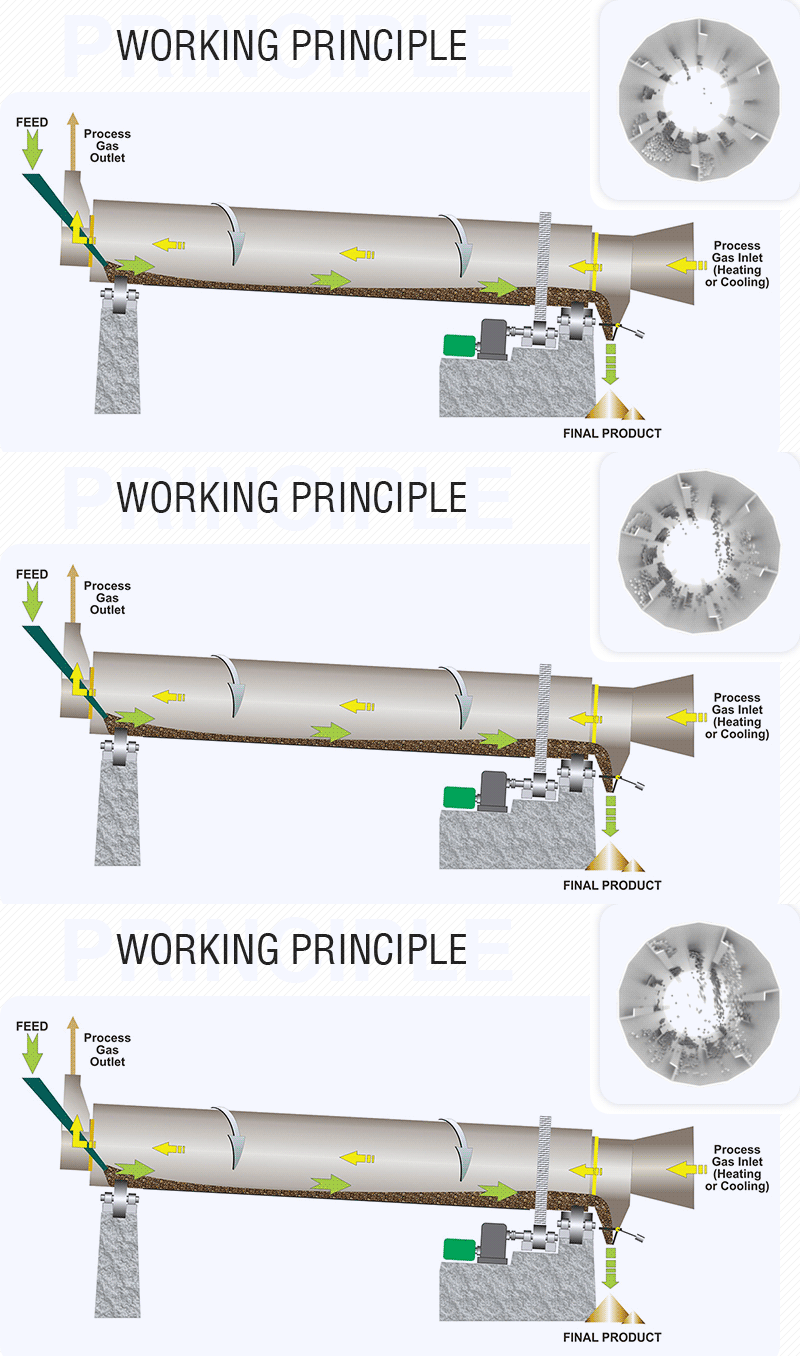
The drying process starts when wet material is fed into the rotating drum, usually through a conveyor or another suitable feeding device. A controlled supply of hot air provides the heat needed to evaporate moisture from the material.
As the drum rotates, internal lifting flights repeatedly raise the material and allow it to fall through the hot air. This lifting and tumbling action helps expose more of the material surface to the drying medium. At the same time, the drum’s inclination and rotation help move the material toward the discharge end.
Heat transfers from the hot air to the wet material, causing moisture to evaporate. The amount of moisture removed depends on several operating conditions, including the initial moisture content, material particle size, inlet air temperature, airflow, drum speed, and residence time. These factors must be considered together rather than adjusted independently.
After passing through the drum, the dried material leaves through the discharge section and moves to the next processing stage. In fertilizer production, this may be a cooling system, depending on the process design.
A well-configured rotary drum dryer should provide suitable drying conditions without unnecessarily damaging the material. For fertilizer granules, the operating conditions need to account for particle strength, temperature sensitivity, and the moisture level required for downstream handling. Appropriate dust collection and exhaust arrangements are also important for managing dust generated during drying.
3. The Role of a Rotary Drum Dryer in a Fertilizer Production Line
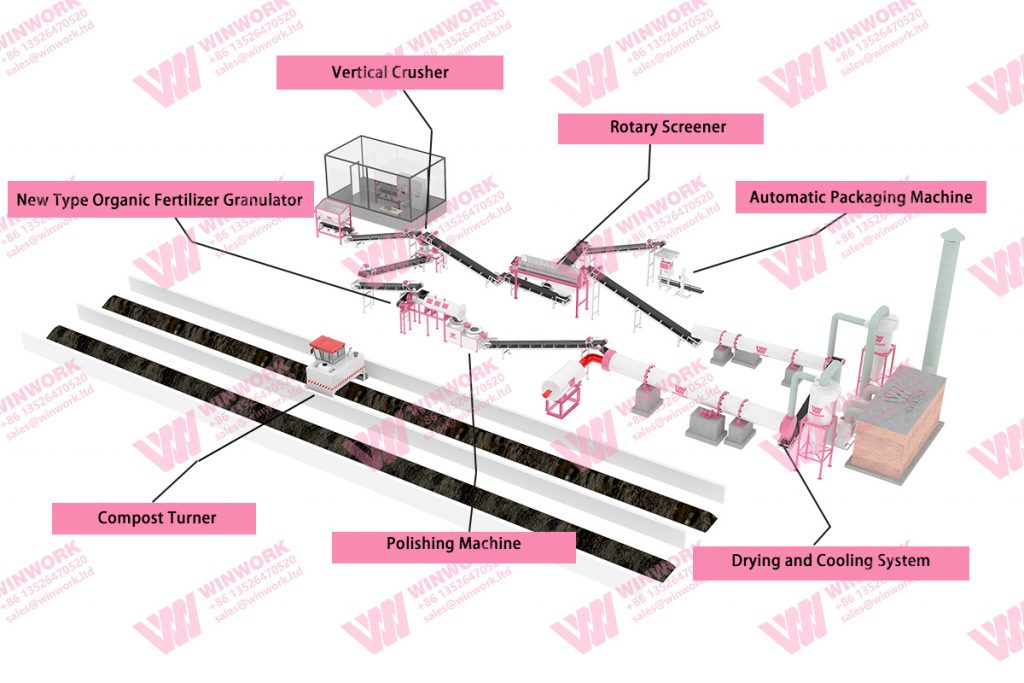
In many fertilizer production lines, the dryer is installed after granulation and before cooling and screening. This position allows freshly formed granules to undergo moisture reduction before entering the next stages of processing.
Why is this arrangement important? Granulated fertilizer may retain excess moisture after forming. If the material moves directly into subsequent operations without sufficient drying, the moisture can contribute to particle sticking, caking, screening difficulties, or handling problems during storage. Drying helps bring the granules closer to the moisture condition required by the following process.
The drying stage must also be coordinated with the equipment before and after it. If the feeding rate is too high for the dryer, the material may not receive sufficient drying time. If downstream equipment cannot handle the discharge rate, material may accumulate and interrupt production. Matching the capacities of connected machines helps maintain a more stable workflow.
Installation space is another important consideration. A rotary drum dryer is generally a large industrial machine, and the complete installation may require additional room for its heat source, conveyors, dust collection system, and maintenance access. Before purchasing, buyers should confirm the machine’s overall dimensions and check whether the factory floor has enough space for installation, operation, inspection, and maintenance. Planning the layout in advance can help avoid costly adjustments later.
4. What Equipment Works with a Rotary Drum Dryer?
A complete drying system usually requires several auxiliary machines. The exact configuration depends on the material, production capacity, heating method, and layout of the factory.
Feeding and conveying equipment transfers wet material into the drum at a controlled rate. Belt conveyors and other suitable conveying devices can be selected according to the material’s characteristics and the distance between machines. Stable feeding helps the dryer operate under more consistent conditions.
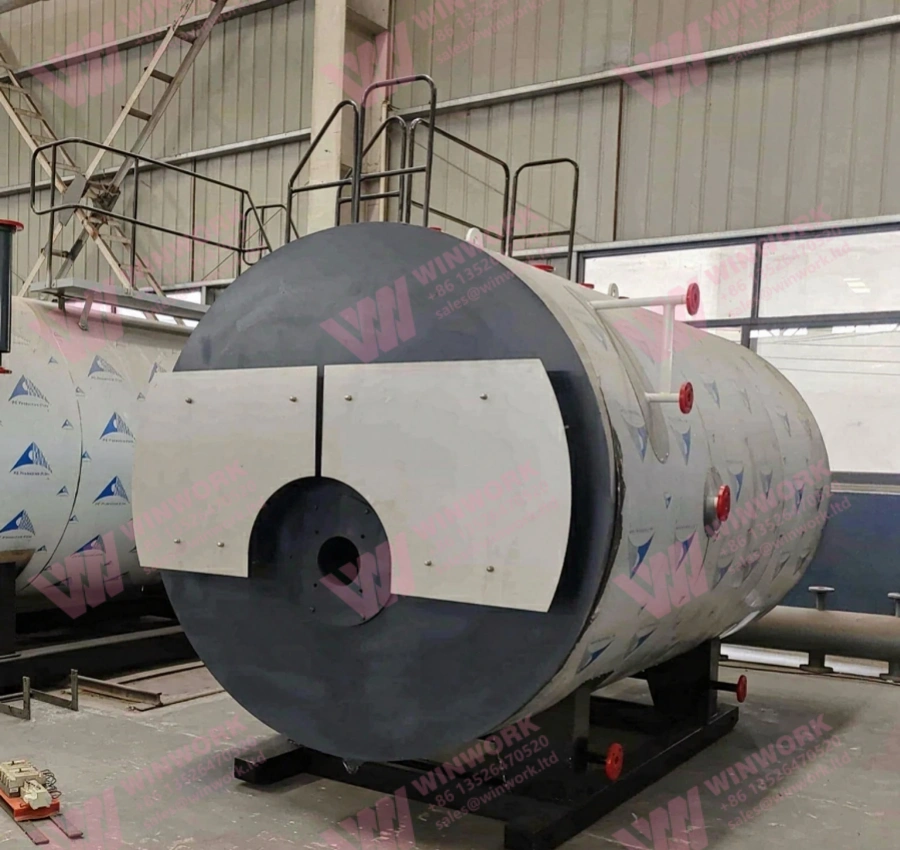
A hot air furnace or another suitable heat source. A hot air furnace provides the heat required for the rotary drum dryer and can be equipped with different combustion systems according to fuel availability and project requirements. For example, a fuel burner can be combined with the hot air furnace when diesel or other liquid fuels are used. Natural gas burners and biomass burners are also common options for providing heat for drying processes. The suitable heat source should be selected based on local fuel conditions, operating costs, and drying requirements.
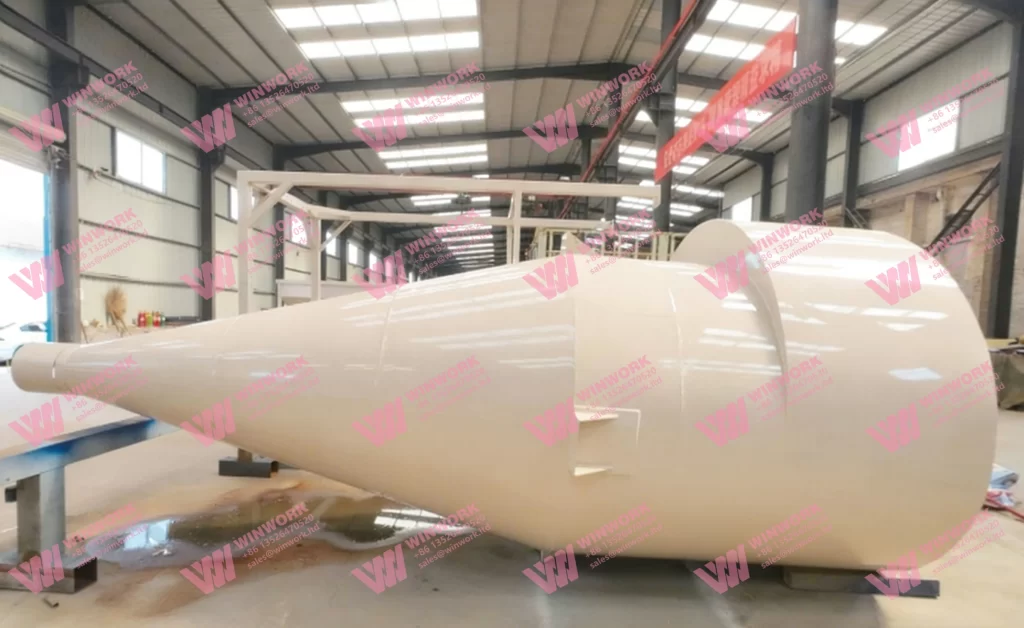
A dust collection system helps capture airborne dust generated during feeding, drying, and material discharge. The design may include suitable ducting, a cyclone, a bag filter, or other dust-control equipment, depending on the process and applicable environmental requirements.
Screening and packaging equipment can complete the downstream stages by separating granules according to size and preparing the finished product for storage or shipment.
When planning a fertilizer project, buyers can explore fertilizer production equipment and production line solutions from WINWORK and identify which machines may be relevant to their process. The final configuration should be confirmed according to the material, required capacity, and plant layout.
5. Applications of a Rotary Drum Dryer
A rotary drum dryer can be used in different industries when the material and process are suitable for this type of drying system. In fertilizer manufacturing, its main role is to reduce moisture before the product moves to later processing stages.
Organic fertilizer production: Organic fertilizer materials may contain considerable moisture depending on their composition and previous processing. Where the material is suitable for drum drying, the machine can help reduce moisture and prepare it for subsequent cooling, screening, or packaging. The operating conditions should be selected according to the material’s properties and the required final moisture content.
Compound fertilizer production: Granulated compound fertilizer may require drying to achieve the moisture condition needed for handling and storage. The drying system should be coordinated with granulation and downstream equipment to support stable production.
NPK fertilizer manufacturing: In NPK production, the dryer can be incorporated into a line that processes fertilizer granules. Its capacity and operating conditions should be matched to the upstream granulator, the moisture level of the incoming material, and the required output.
Other industrial materials: Depending on its design, a rotary drum dryer may also process selected agricultural materials, biomass, minerals, and other bulk solids. Not every material is suitable for the same drying arrangement, so material testing and process evaluation may be necessary before choosing the equipment.
Across these applications, the key is to select a drying solution based on the actual material and production requirements rather than relying on nominal capacity alone.
6. How to Choose a Suitable Rotary Drum Dryer
Before purchasing a rotary drum dryer, buyers should evaluate several factors to ensure that the equipment fits the intended production process.
First, identify the material to be dried and determine its initial and target moisture contents. These details influence the required heat input and drying time. Material particle size, flowability, and sensitivity to heat should also be considered.
Second, estimate the required processing capacity and confirm that the dryer can work with the granulator and downstream equipment. The entire line should be assessed as a system rather than as a collection of machines with unrelated capacity ratings.
Third, consider the heat source, dust-control requirements, energy availability, and expected operating conditions. The factory layout is equally important. Check the machine dimensions, access routes for delivery, installation space, foundation requirements, and clearance needed for inspection and maintenance.
Finally, provide the supplier with accurate information about the material, moisture levels, target output, and available installation area. This allows the supplier to evaluate the process and recommend a more appropriate configuration.
Conclusion
A rotary drum dryer plays an important role in many fertilizer production processes by reducing moisture before subsequent handling and processing. Understanding its working principle, position in the production line, supporting equipment, and installation requirements can help buyers plan a more suitable drying system. Before making a purchase, consider material properties, required capacity, equipment compatibility, and available floor space. A properly selected rotary drum dryer can support a more consistent and practical fertilizer manufacturing process.
Get A Quote