

Introduction
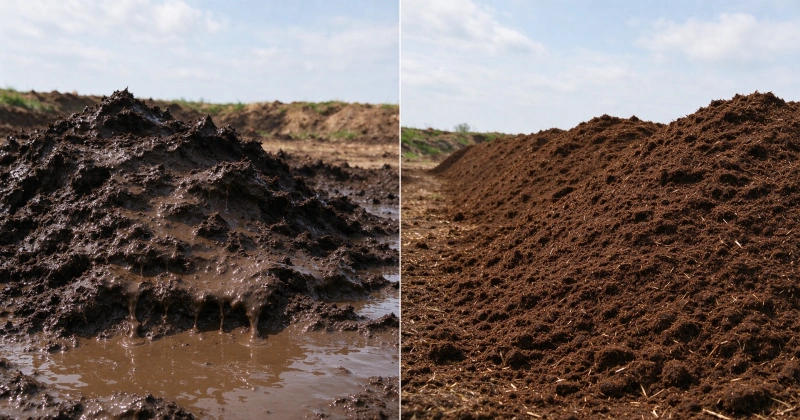
If you’ve ever shoveled fresh manure onto your garden or fields, you probably expected rich, dark soil and healthy plants. Instead, you got a surprise bonus: a stubborn flush of new weeds popping up weeks later. You can observe that these weeds have almost completely overgrown your manure bed, which will absorb nutrients from the manure and adversely affect the growth of other plants.
That’s the work of weed seeds that rode in with the manure, survived the journey, and found perfect conditions to sprout. For farmers and gardeners alike, this is a frustrating and costly problem. The solution lies in proven methods for inactivating weed seeds in manure—strategies that destroy or deactivate those seeds before they ever reach your soil.

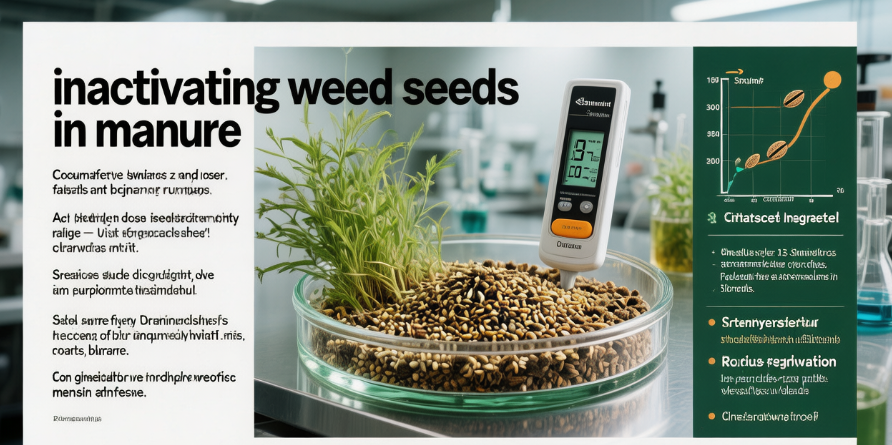
inactivating weed seeds in manure
Why Manure Contains Viable Weed Seeds
To understand methods for inactivating weed seeds in manure, you first need to know why they’re there. Livestock consume forage, grain, and pasture that contain weed seeds. Not all of these seeds are digested; many pass through the animal intact or only lightly damaged. When the manure is collected and stored, those seeds remain alive, dormant but ready to germinate once they’re spread on warm, moist ground.
Some manure sources are worse than others:
Straw-bedded manure often carries seeds from grasses and broadleaf weeds.
Pasture-fed manure can contain a wide variety of weed species native to the grazing area.
Hay or silage residues in manure may have higher seed viability.
Without treatment, every load of raw manure is essentially a mixed bag of fertilizer and future weeds. So now you want to start inactivating weed seeds in manure.
The Risks of Ignoring Weed Seeds in Manure
Leaving weed seeds active in manure leads to several problems:
Increased weed pressure requiring extra herbicide use or manual removal.
Crop yield loss as weeds compete for nutrients, water, and light.
Escalated management costs for tillage, spraying, and labor.
Loss of organic certification in regulated markets, since viable weed seeds violate quality standards.
Weeds exhibit strong growth capabilities and can proliferate significantly with minimal nutrients. Therefore, prolonged neglect of weed control not only adversely affects the growth of other crops but also results in the wasteful consumption of nutrients from soil and fertilizers, thereby compromising the survival of subsequent crop yields.
That’s why applying effective methods for inactivating weed seeds in manure is essential for sustainable farming. So now you want to start inactivating weed seeds in manure.
The Most Reliable Methods for Inactivating Weed Seeds in Manure
There’s no single trick that works in every situation, but combining approaches gives the best results. Here are the most trusted methods for inactivating weed seeds in manure:
High-Temperature Composting
This is the gold standard. When compost piles reach and sustain temperatures between 55–70°C (131–158°F) for several days, the heat kills most weed seeds. The key is consistent turning to distribute heat evenly. A properly managed compost pile is one of the most effective methods for inactivating weed seeds in manure.
Using high temperature can increase the speed of inactivating weed seeds in manure.
Aerobic Digestion Through Regular Turning
Even if temperatures don’t hit the peak range, frequent turning introduces oxygen, stimulating microbial activity that degrades seed coats. This method complements heat composting and adds an extra layer of security. So now you want to start inactivating weed seeds in manure.
Thermal Drying
Using a rotary dryer or solar drying system to rapidly remove moisture from manure can desiccate weed seeds, rendering them non-viable. This works best for solid manure and is often paired with composting.
Ensiling or Anaerobic Storage
Storing manure in sealed, airtight silos or covered pits for several months deprives seeds of oxygen and exposes them to acidic, volatile fatty acids produced during fermentation. Many weed seeds cannot survive these conditions.
Pelletizing and Steam Treatment
In advanced systems, manure is pelletized and exposed to steam or hot air, which penetrates the pellets and destroys seeds. This is common in commercial fertilizer production and can be adapted for on-farm use.
Equipment Showcase
Crawler compost turner is an advanced compost turning equipment, specially designed for compost fermentation process, with the advantages of high efficiency, stability, easy operation and so on.
Crawler compost tumbler realizes automatic operation through crawler walking system, which is the necessary equipment for producing organic fertilizer granules and widely used in organic fertilizer production line. So now you want to start inactivating weed seeds in manure.
The aerator machine can perform long-term turning and spreading of manure, ensuring that the material has extensive contact with air. This will reduce the rate of decay and thus prevent the growth of weeds.
Horizontal crusher, also known as horizontal semi-wet material crusher, is a kind of crushing equipment specially designed to deal with high humidity, organic materials, especially suitable for organic fertilizer production in the material pre-treatment.
Horizontal crusher adopts a unique double-stage rotor structure, can effectively deal with high humidity materials, such as livestock and poultry manure, city garbage, crop residues and so on. It has high crushing efficiency, even material size, no blockage, no sticking phenomenon, and is one of the indispensable key equipments in organic fertilizer production line.
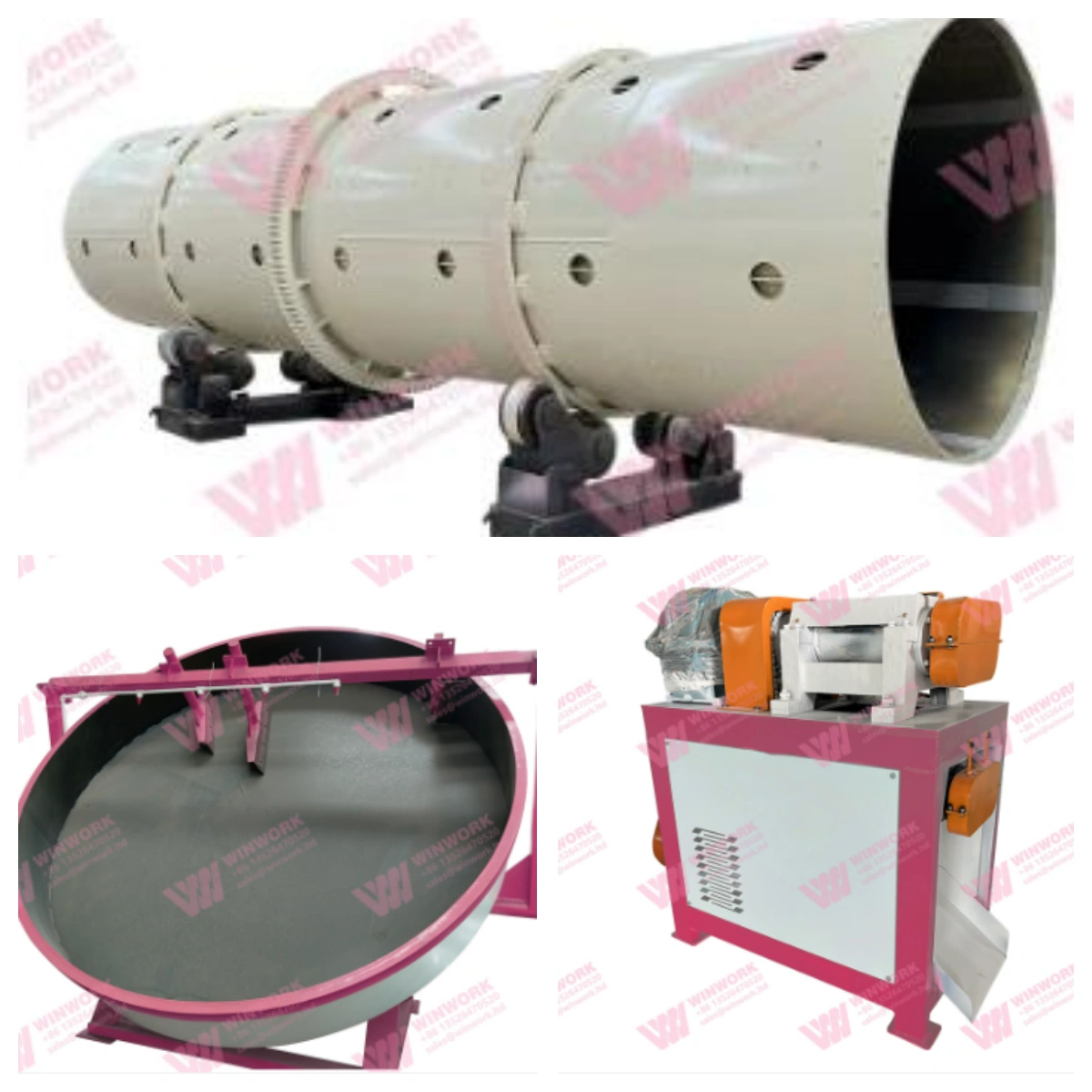
The rotary drying and cooling machine is a kind of high-efficiency equipment integrating drying and cooling, which is widely used in chemical industry, fertilizer, mining industry, building materials and other industries.
The rotary drying and cooling machine realizes the continuous drying and cooling process of materials in the same body, which saves space and equipment investment and simplifies the process. So now you want to start inactivating weed seeds in manure.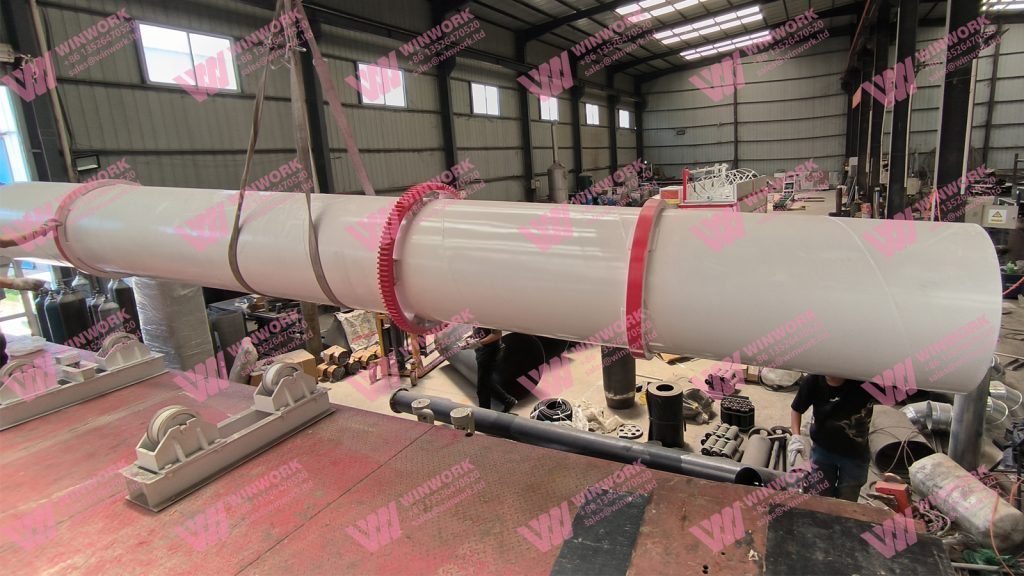
The rotary drying and cooling machine has the advantages of large processing capacity, strong adaptability, easy operation and maintenance, energy saving and environmental protection, etc. It is an indispensable and important equipment in the production of fertilizers.
The Benefits of Killing Weed Seeds Before Application
When you apply proven methods for inactivating weed seeds in manure, the benefits multiply:
Cleaner Fields – Fewer weeds mean less competition for your crops.
Lower Herbicide Needs – Reduced reliance on chemical weed control.
Higher Crop Yields – More nutrients go to your plants, not to weeds.
Certification Readiness – Meets organic and quality standards for compost and fertilizer.
Long-Term Soil Health – Less disturbance from tillage and spraying preserves soil structure.
Real Farm Example: The Lawson Vegetable Operation
The Lawsons grow organic carrots and lettuce on 30 acres. For years, spreading raw cow manure led to rampant weed outbreaks, especially from dock and purslane seeds. After consulting with an agronomist, they adopted a strict composting protocol using a compost turner and temperature monitoring. They maintained 60°C for five consecutive days, turning the pile three times. The result? No viable weed seeds in their finished compost, cleaner fields, and a 15% yield increase. “Finding the right methods for inactivating weed seeds in manure was the missing link in our soil fertility program,” says co-owner Karen Lawson. So now you want to start inactivating weed seeds in manure.
FAQ: Your Questions About Methods for Inactivating Weed Seeds in Manure Answered
Q1: How do I know if my compost killed the weed seeds?
A: Perform a germination test. Take a sample of finished compost, spread it in pots with potting soil, and observe for several weeks. No growth means the seeds are inactive.
Q2: Can I use fresh manure if I spread it and till it in immediately?
A: Tilling alone won’t reliably kill seeds. Many will survive and sprout later. Composting or drying is safer.
Q3: What temperature is needed to kill weed seeds?
A: Sustained temperatures above 55°C for several days will kill most common weed seeds. Some resistant species may need higher heat or longer exposure.
Q4: Does freezing kill weed seeds in manure?
A: Freezing can damage some seeds, but many survive and will germinate after thawing. It’s not a dependable method for inactivating weed seeds in manure.
Q5: How long should I compost to ensure seed death?
A: A minimum of 3–6 months with proper turning and heat monitoring is recommended. Longer is better.
Q6: Can I mix manure with other waste to improve seed kill rates?
A: Yes. Adding high-carbon materials like straw or wood chips improves heat retention and microbial activity in composting.
Q7: Are all weed species equally hard to kill?
A: No. Some seeds have thick coats and higher heat tolerance. A diverse composting approach covers more species.
Q8: Will anaerobic storage alone kill all seeds?
A: It kills many, but not all. Combining it with composting or drying improves reliability.
Q9: Can I solar-dry manure to kill seeds?
A: Solar drying works if you achieve rapid, thorough drying in hot weather. It’s a low-cost method for inactivating weed seeds in manure but depends on climate.
Q10: Where can I get a compost turner or temperature probe?
A: Agricultural equipment dealers and online farm supply stores carry these tools. Your local extension office can recommend models suited to methods for inactivating weed seeds in manure.
Conclusion
Weed seeds in manure are a hidden threat to crop productivity, but they don’t have to ruin your fertilization efforts. By applying proven methods for inactivating weed seeds in manure—especially high-temperature composting, proper turning, drying, and anaerobic storage—you can neutralize these seeds before they ever reach your fields. The right equipment makes these methods easy to implement on any scale, and the payoff is cleaner land, higher yields, and fewer headaches.
For more details, please feel free to contact us.
Email: sales@lanesvc.com
Contact number: +8613526470520
Whatsapp: +8613526470520
Get A Quote