

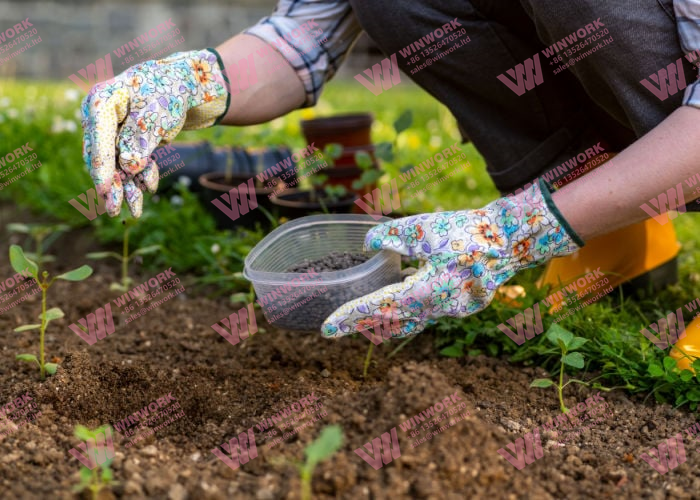
I am a farmer, not a professional fertilizer manufacturer.
My farm raises chickens and cattle, so I have always had plenty of organic material available. For a long time, however, the manure was also one of the biggest problems on my farm.
Every day, more chicken manure and cow manure accumulated.
I needed space to store it, workers had to move it, and the smell became difficult to manage. I knew that manure could be valuable organic fertilizer material, but I did not want to invest a large amount of money into a fertilizer factory without knowing whether the idea would work.
So I decided to start small.
My first goal was not to build a large commercial fertilizer plant. I simply wanted to use the manure already available on my farm and test whether I could turn it into a useful granular fertilizer product.
After researching different equipment options, I chose a Low-cost organic fertilizer production line with a basic configuration and relatively small production capacity.
I also decided not to invest in a complicated fermentation system at the beginning.
Instead, I started with natural fermentation, using the resources and space already available on my farm.
That decision helped me keep my initial investment low.
And, fortunately, the first production tests worked much better than I expected.

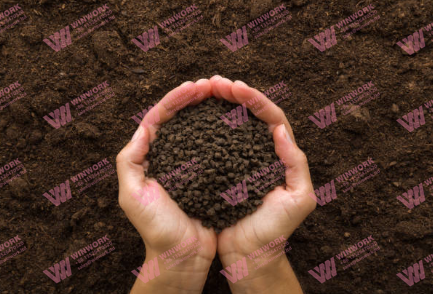
Converting chicken Farm Manure into Fertilizer
Why I Chose a Low-cost Organic Fertilizer Production Line
My situation was different from that of a large fertilizer company.
I already had the raw materials.
I had chicken manure.
I had cow manure.
I had farmland and enough space to begin processing the material.
What I did not have was a large investment budget.
Because of this, I started looking specifically for a Low-cost organic fertilizer production line.
I wanted a system that could handle the essential production stages without adding equipment that I did not immediately need.
My idea was simple:
Start small → Test the fertilizer → Learn the process → Confirm the market → Expand later.
This approach also reduced my financial risk.
Instead of investing heavily at the beginning, I could use the first stage to find out how well my own manure performed as fertilizer raw material and how much fertilizer I could realistically produce.
My First Step: Natural Fermentation of Chicken and Cow Manure
Before I thought about granulation equipment, I had to deal with the most important raw material issue: the manure needed to be properly fermented.
I decided to start with natural fermentation.
I did not purchase a compost turner at the beginning.
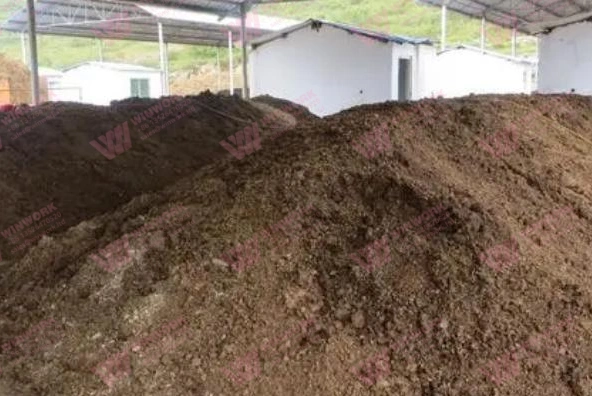
Instead, I collected the chicken manure and cow manure, arranged the material into fermentation piles, and allowed the organic material to ferment naturally.
This was one of the biggest reasons I was able to keep my initial Low-cost organic fertilizer production line investment under control.
I already had the raw material.
I already had space on the farm.
So I used the conditions I already had before buying additional equipment.
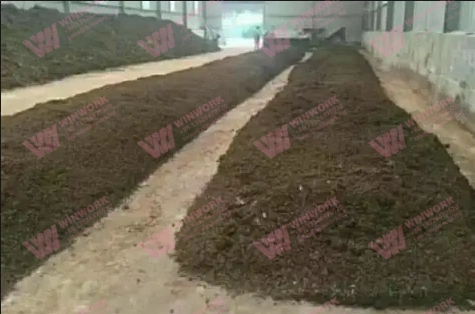
During fermentation, I paid attention to moisture and the condition of the compost pile. The material needs suitable moisture and oxygen conditions for effective aerobic fermentation.
I also monitored the pile and manually turned it when necessary.
This was not the fastest approach.
But for my small initial production, it was affordable and manageable.
How Long Did I Ferment the Manure?
For my initial tests, I allowed the chicken and cow manure to ferment for approximately 20–30 days.
I do not consider 20–30 days to be a fixed number for every farm.
The actual fermentation period can vary depending on:
- Raw material composition
- Moisture content
- Ambient temperature
- Pile size
- Oxygen availability
- Turning frequency
- Local climate
In warmer conditions with suitable moisture and aeration, fermentation can progress more quickly.
In colder conditions, it may take longer.
For my small-scale operation, I preferred to give the material enough time rather than rush the process.
The goal was to obtain properly fermented organic material that was suitable for the next processing stages.
This was especially important because I wanted the first Low-cost organic fertilizer production line test to reflect a realistic farm production process rather than simply processing fresh manure.
My First Low-cost Organic Fertilizer Production Line
Once the manure had been properly fermented, I could move on to fertilizer production.
I did not start with a large production line.
My initial configuration focused on the basic operations I actually needed:
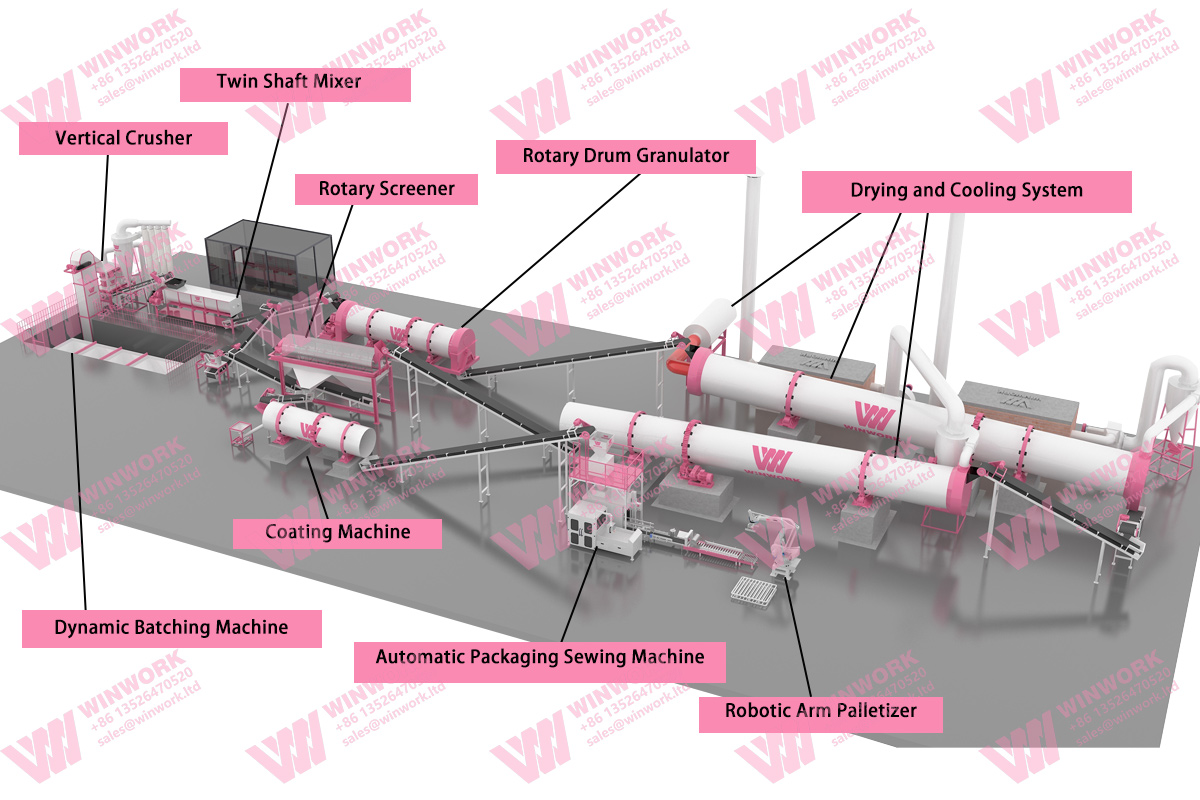
Fermented Manure → Crushing → Mixing → Granulation → Screening
Depending on the moisture level and final product requirements, drying and cooling can also be incorporated into the production process.
The important thing for me was keeping the first system simple.
I did not need to buy every machine available.
I needed the machines that solved my immediate production problems.
That is what I mean when I describe my setup as a Low-cost organic fertilizer production line.
Low-cost does not mean buying random cheap machines.
It means starting with a configuration that matches your current raw materials, production capacity, and budget.
The Equipment in My Low-cost Organic Fertilizer Production Line
Crusher
After fermentation, the organic material was not always perfectly uniform.
There could still be larger lumps in the material.
A crusher helped reduce the particle size and prepare the material for more consistent mixing and granulation.
This was a simple but important part of my Low-cost organic fertilizer production line, because properly prepared material made the next stages easier.
Mixer
The mixer helped create a more uniform mixture before granulation.
This was important because the raw materials could vary in moisture and physical characteristics.
A good mixture gives the granulator a more consistent feed.
Granulator
The granulator was the key machine for turning the prepared organic material into fertilizer granules.
This changed the product significantly.
Loose manure and powdered organic material can be difficult to handle.
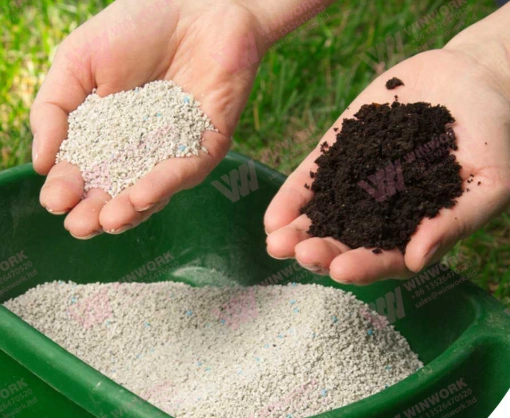
Granules are much easier to transport, store, package, and apply.
For my Low-cost organic fertilizer production line, choosing the appropriate granulation equipment was therefore one of the most important decisions.
Screening Machine
Not every granule produced by the granulator had exactly the same size.
The screening machine separated particles according to size.
Suitable granules could continue toward the finished-product stage, while oversized or undersized material could be recycled depending on the process design.
How I Produced Organic Fertilizer
My production process was straightforward.
Step 1: Collect the Manure
I collected chicken manure and cow manure from the farm.
Because I already had livestock, this was the biggest cost advantage of my project.
I did not have to purchase the main organic raw materials from outside suppliers.
Step 2: Natural Fermentation
The manure was placed into fermentation piles and allowed to ferment naturally.
For my initial production, this generally took around 20–30 days, depending on weather and material conditions.
I manually monitored and turned the piles when necessary.
Step 3: Crushing
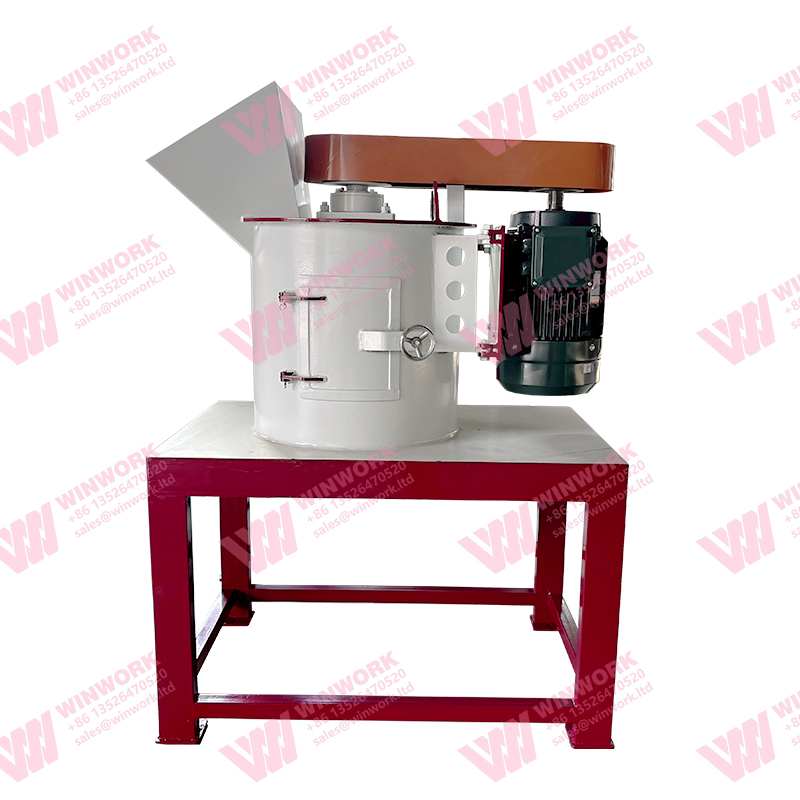
After natural fermentation, I used a vertical crusher as part of my Low-cost organic fertilizer production line to break up larger lumps in the chicken and cow manure.
vertical-crusher
Step 4: Mixing
Next, I used a horizontal mixer to mix the crushed manure evenly. If I needed to add other organic materials or adjust the fertilizer formulation, I could also add them during this stage.

Step 5: Granulation
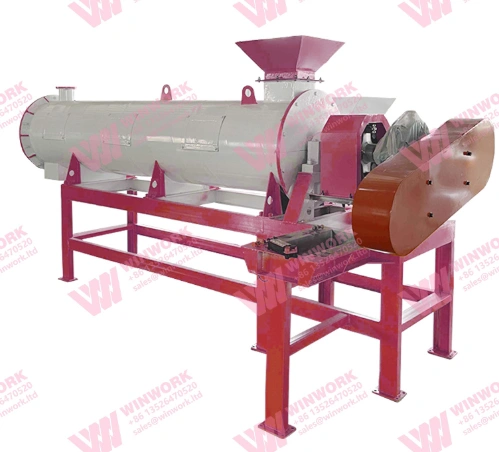
For granulation, I chose a stirring tooth granulator, also known as a new type organic fertilizer granulator. I considered it suitable for my fermented chicken and cow manure and for my initial production capacity of around 2–3 t/h.
This was the key machine that turned the prepared organic material into uniform fertilizer granules that were easier to handle, transport, and apply.
Step 6: Screening
After granulation, I used a rotary screen machine to separate qualified fertilizer granules from oversized and undersized particles. This helped me obtain a more consistent final product.

Step 7: Natural Drying and Cooling
To keep my initial investment low, I did not buy a dryer or cooler. Instead, I spread the fertilizer granules out for natural drying in the sun and allowed them to cool naturally afterward.
Once the granules had reached a suitable condition, I simply bagged the finished fertilizer.
This simple process allowed me to start my 2–3 t/h Low-cost organic fertilizer production line with only the essential equipment I needed.
What I Learned From My First Production Tests
The first thing I learned was that having manure available does not automatically mean you have good fertilizer feedstock.
Raw material preparation matters.
Fermentation matters.
Moisture matters.
Particle size matters.
Mixing matters.
And the granulation process matters.
I initially thought the most important decision would be choosing the granulator.
After actually producing fertilizer, I realized that the entire process works as a chain.
If the fermented material is not prepared properly, the crushing and mixing stages become more difficult.
If the mixture is inconsistent, granulation becomes more difficult.
If granulation is unstable, screening produces more fines or oversized particles.
This is why a Low-cost organic fertilizer production line still needs to be designed as a complete system.
Why My Low-cost Organic Fertilizer Production Line Started Small
Starting with a Low-cost organic fertilizer production line gave me the opportunity to learn without making a major investment.
I Used My Own Raw Materials
Chicken manure and cow manure were already available on my farm.
I Used Natural Fermentation
Instead of buying a compost turner immediately, I used a simple fermentation method and manually managed the piles.
I Started With Basic Equipment
I focused on the machines required for crushing, mixing, granulation, and screening.
I Tested Before Expanding
I could see how the fertilizer performed before deciding whether a larger investment made sense.
I Learned the Process
The small production stage gave me practical experience with moisture, raw material preparation, granulation, screening, and product handling.
Most importantly, the results were good.
The fertilizer could be used on my own farmland, and I began to see potential for producing more than my farm required.
That was when my idea changed from solving a manure problem to building a larger fertilizer production business.
Expanding Production: Adding a Compost Turner
As production increased, the first part of the process started to become the bottleneck.
It was not the granulator.
It was the fermentation stage.
When I was processing a small amount of manure, manually turning the fermentation piles was manageable.
But as the amount of chicken and cow manure increased, manual turning became more labor-intensive and took more time.
That is when I started considering a compost turner.
A compost turner can help mix and aerate fermentation materials more efficiently than manual turning.
This means that when expanding from a small Low-cost organic fertilizer production line to a larger production system, adding a compost turner can help improve the efficiency of the upstream fermentation process.
The important point is that I did not need the compost turner when I first started.
I added it when my production volume justified it.
That is the approach I would use again.
Start with the equipment you need today, but choose a production concept that allows you to add equipment tomorrow.
Why I Chose WINWORK
When I started looking for fertilizer machinery, I wanted more than a machine supplier.
I wanted a manufacturer that could understand the relationship between my raw materials, production capacity, and equipment configuration.
This was one reason I chose to work with WINWORK.
WINWORK provides fertilizer machinery and production-line solutions, including fertilizer granulators, crushers, mixers, screening machines, and other equipment used in fertilizer production.
The company also provides production-line solutions based on factors such as raw materials, production capacity, and customer requirements.
For farmers starting with a Low-cost organic fertilizer production line, this is important.
The cheapest individual machine is not necessarily the cheapest production solution.
A machine that does not match your raw materials or production process can create additional problems later.
A better approach is to start with your actual raw material and production requirements and then build the equipment configuration around them.
You can learn more about WINWORK’s fertilizer machinery and production solutions here:
WINWORK – Whosale Fertilizer Production Machine in China
Final Thoughts
I started with chicken manure, cow manure, limited space, and a limited budget.
I did not know whether fertilizer production would become an important part of my farm business.
That is why I chose a Low-cost organic fertilizer production line and started with a small production capacity.
For the first stage, natural fermentation was enough for my needs.
I allowed the manure to ferment for roughly 20–30 days, while adjusting the process according to the material and weather conditions.
Then I used basic equipment for crushing, mixing, granulation, and screening.
The results gave me the confidence to continue.
Now my production requirements are increasing.
Instead of continuing to manually manage larger fermentation piles, I can add a compost turner to improve fermentation efficiency and reduce labor.
This is how I think a small farm should approach fertilizer production:
Start with what you already have.
Keep the first investment under control.
Test the production process.
Learn from the actual results.
Then expand the equipment as production grows.
For me, the Low-cost organic fertilizer production line was not the final destination.
It was the first step from a farm waste problem toward a larger organic fertilizer production opportunity.
And that is exactly why I believe starting small can be a practical approach for farmers who already have their own source of organic raw materials.
Get A Quote