

Introduction
Tired of your valuable fertilizer turning into immovable boulders in the bag? You are not alone. This comprehensive guide dives deep into the world of anti-caking fertilizer production equipment, revealing how the right machinery can save your profits, protect your product quality, and keep your customers happy. We break down the technology, the process, and answer your burning questions about keeping fertilizer free-flowing.
The Nightmare of the “Fertilizer Boulder”‘
Imagine this: You’ve spent months perfecting your fertilizer blend. The nutrients are balanced, the granulation is perfect, and the price is right. You ship it to the distributor, feeling confident. A few weeks later, the complaint call comes in. “The bags are solid. We can’t pour it. We need hammers to break it open.”
This is the nightmare of caking. It is the silent profit killer in the agricultural industry. When fertilizer absorbs moisture from the air or gets crushed under its own weight, the granules fuse together. For the farmer, it means clogged spreaders and uneven application. For you, the manufacturer, it means returned goods, wasted product, and a damaged reputation.
The solution isn’t just adding more chemicals; it is about integrating superior anti-caking fertilizer production equipment into your production line. This isn’t just a luxury add-on; in today’s competitive market, it is a necessity for survival.
What Exactly is Anti-caking Fertilizer Production Equipment?
At its core, anti-caking fertilizer production equipment refers to a specialized line of machinery designed to apply a protective coating—either liquid or powder—onto the surface of finished fertilizer granules. Think of it like waxing a car. The wax creates a barrier between the paint and the elements. Similarly, this equipment creates a barrier between the fertilizer granule and the moisture in the air.
The star of the show is usually the Rotary Coating Machine (often called a Drum Coating Machine). But it doesn’t work alone. A complete system usually involves:
The Mixer/Coater: Where the magic happens.
Horizontal mixer is a kind of high-efficiency mixing equipment widely used in chemical, pharmaceutical, food, building materials and other industries.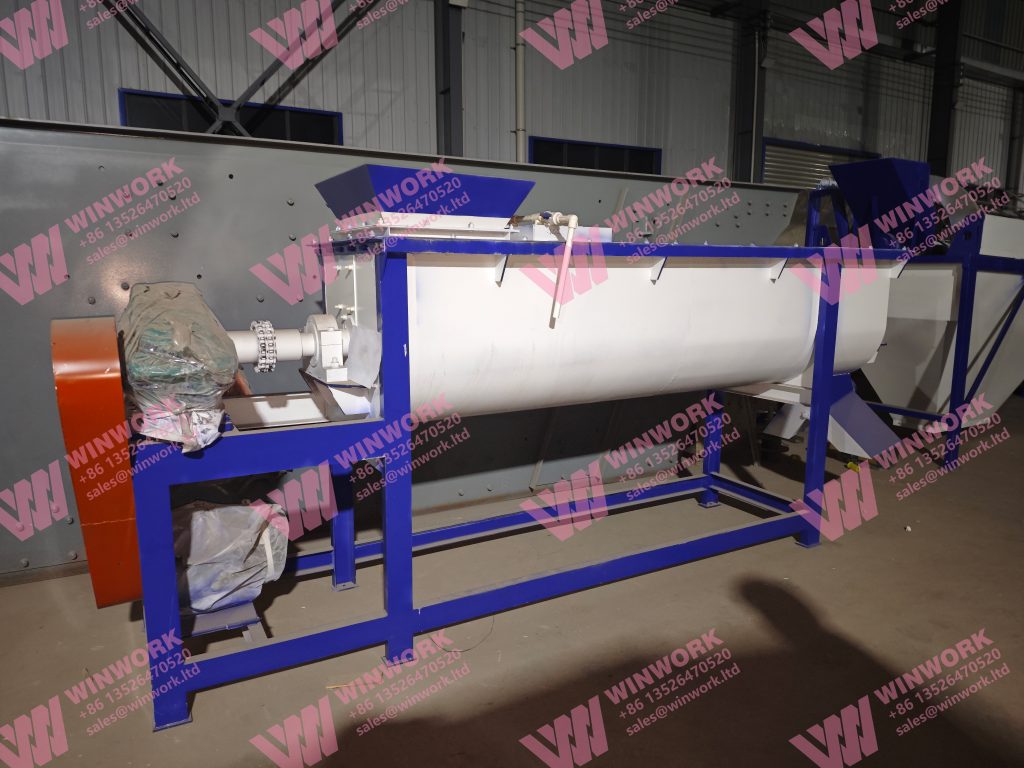
It is mainly used for mixing many kinds of materials evenly, especially suitable for mixing powdery and granular materials, and also suitable for adding liquid to the mixing process. Horizontal mixer has a compact structure, easy operation, high mixing efficiency, and can realize high quality uniform mixing in a short time, which is an indispensable equipment in fertilizer production line.
Fertilizer coating machine is often used for particle processing of powdery and granular materials. It is widely used in pharmaceuticals, chemicals, food, laboratories, tablets, pills, sugar coatings, and fertilizer granules, and can also be used in scientific research units to trial-produce new drugs.
As the pot rotates clockwise, the fertilizer rolls, rubs and adheres to the fertilizer coating agent in the pot, gradually gathering into spherical particles, and continues to roll and grow. The granular material rolls in the pot, and the coating agent fully coats the particles. Through the liquid spraying device, the coating agent and the particles are fully integrated, changing the color of the particles. Equipped with a heating device, it can remove moisture from the surface of the particles and accelerate the particle coating process.
The Liquid System: Tanks and pumps to melt and spray anti-caking agents (like amine or mineral oil), which is beneficial for the caking fertilizer.
The Powder System: Augers and hoppers to dust the granules with powders (like talc or diatomaceous earth).
The Control Panel: To ensure everything runs at the perfect speed and ratio. All the equipment is controlled intelligently to ensure a more precise range.
When you invest in high-quality anti-caking fertilizer production equipment, you are investing in a controlled environment where every single granule gets a uniform “raincoat.”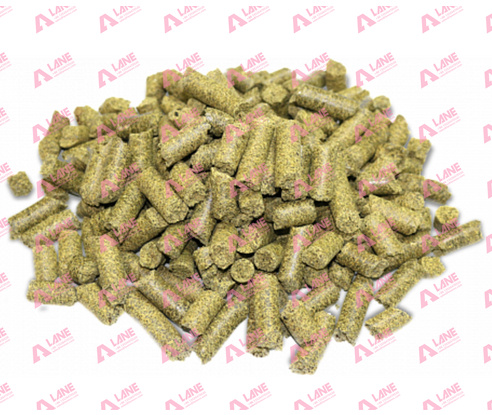
The Science of the Non-Stick Coating
Double roller granulator is the key equipment in compound fertilizer production line and npk production line, featuring advanced technology, reasonable design, compact structure, strong practicability and low energy consumption. This is Anti-caking Fertilizer Production Equipment.
Double roller granulator and the corresponding auxiliary equipment supporting, can form a small production line, with a certain capacity, to achieve continuous, mechanized production. Roller extrusion granulator adopts superior formula, no need to dry, can be produced at room temperature. The product can be rolled and shaped once, so that its quality can meet the requirements of technical indexes of compound fertilizer. This is Anti-caking Fertilizer Production Equipment.
Double roller granulator is suitable for the production of high, medium and low concentration of special compound fertilizers required by various crops, which is a newer product of energy saving and consumption reduction in the compound fertilizer industry.
Why do we need machines for this? Can’t we just dump some powder in a barrel and roll it? You could, but the results would be disastrously uneven. Professional anti-caking fertilizer production equipment utilizes the principle of tumbling friction. This is Anti-caking Fertilizer Production Equipment.
As the large drum rotates, the fertilizer granules tumble over each other, creating a fluidized bed. At the precise moment of maximum movement, the spraying system activates. High-pressure nozzles atomize the liquid anti-caking agent into a fine mist. Because the particles are bouncing around, every single one gets hit by the mist. This is Anti-caking Fertilizer Production Equipment.
Rotary drum granulator is a kind of high efficient molding machinery, which can process raw materials into specific shapes of particles. As the core equipment of compound fertilizer production line, rotary drum granulator is suitable for cold and hot granulation as well as large-scale production of high, medium and low concentration compound fertilizer.
Then comes the powder. The anti-caking fertilizer production equipment introduces a fine dust that sticks to the now-tacky surface of the granule. This powder acts as a physical barrier, ensuring that even if two granules touch, they won’t fuse together. It’s a high-speed, high-precision dance that human hands simply cannot replicate.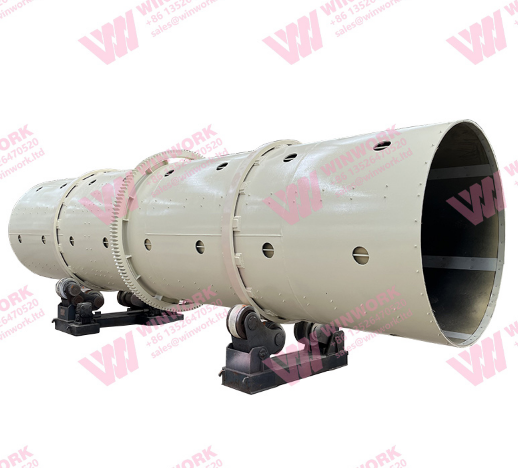
Why Your Current Method is Costing You Money
Many small-scale producers try to skip the specialized anti-caking fertilizer production equipment. They rely on manual mixing or cheap, repurposed cement mixers. Here is why that is a false economy:
Wasted Additive: Without proper atomization, you use 30% more anti-caking agent to get the same coverage. That is pure cash down the drain.
Clumping: Uneven coating leads to “naked” spots on the granules. These spots act as magnets for moisture, leading to结块 (caking) within weeks.
Customer Churn: Farmers talk. If your fertilizer is the one that jams their $50,000 spreader, they will switch to a competitor who uses proper anti-caking fertilizer production equipment to ensure free-flowing product.
Upgrading your line is not an expense; it is a cost-saving measure that pays for itself through reduced waste and higher customer retention.
Key Features to Look For in Your Next Machine
Not all anti-caking fertilizer production equipment is created equal. When you are shopping for your factory, keep an eye out for these critical features:
Variable Frequency Drives (VFD): You need to control the speed of the drum. Different fertilizers (urea vs. compound) require different tumbling speeds.
Corrosion Resistance: Fertilizers are corrosive. Look for machines with polypropylene liners or stainless steel contact parts. Cheap paint will peel off in months, and rust will contaminate your product.
Precision Spraying: The pump should be adjustable. You need to control the droplet size. Too big, and it wets the fertilizer (causing caking); too small, and it drifts away as dust.
Dust Collection Ports: A good anti-caking fertilizer production equipment setup includes ports to connect to your dust collection system, keeping your factory floor clean and your workers safe.
The Production Process: Step-by-Step
Let’s walk through what happens inside a modern anti-caking fertilizer production equipment line:
Granulation & Drying: Your fertilizer is already made into granules and dried to a low moisture content (usually below 2%).
Cooling: The granules are cooled. This is crucial because hot granules will cause the anti-caking oil to evaporate or degrade.
The Coating Drum: The cool, dry granules enter the rotating drum of the anti-caking fertilizer production equipment.
Liquid Application: As the granules tumble, the liquid agent is sprayed on.
Powder Application: Immediately after the liquid, the powder is dusted on to “set” the coating.
Discharge: The now perfectly coated, free-flowing fertilizer exits the machine and heads to the packaging line.
This seamless integration ensures that the “anti-caking window” is utilized effectively. The moment the fertilizer is stable enough to handle, the anti-caking fertilizer production equipment locks in that stability.
Maintenance: Keeping the “Anti” in Anti-Caking
Owning the best anti-caking fertilizer production equipment is only half the battle; maintaining it is the other half. Because the materials being handled are sticky and corrosive, neglect will kill your machine fast.
Nozzle Checks: Clogged nozzles are the enemy. Check your spray nozzles daily. A single clogged nozzle creates a streak of uncoated fertilizer that will ruin an entire batch.
Liner Inspections: If you have a polypropylene liner, check for cracks. Sharp fertilizer granules can puncture the liner, allowing corrosive material to eat away at the steel drum underneath.
Gear Greasing: The large ring gear that turns the drum takes a lot of stress. Keep it well-greased to avoid catastrophic mechanical failure.
Regular maintenance of your anti-caking fertilizer production equipment ensures consistent quality and prevents costly downtime during peak seasons.
The Environmental and Economic Impact
Using advanced anti-caking fertilizer production equipment isn’t just good for your business; it’s good for the planet. When fertilizer cakes up and gets thrown away, the energy used to mine the potash, process the phosphate, and run the granulation plant is wasted. By preventing waste through better coating, you are reducing the carbon footprint of your operation.
Furthermore, coated fertilizers often have better handling characteristics, reducing dust in the field. This protects the respiratory health of the farmers applying your product. It’s a win-win scenario that starts with the right anti-caking fertilizer production equipment.
FAQ: Your Questions Answered
Q1: Can I use the same Anti-caking fertilizer production equipment for both liquid and powder agents?
A: Yes, most modern machines are hybrid. They come with both a liquid spraying system (pump and nozzles) and a powder dusting system (auger and hopper). You can use one, or both simultaneously depending on your formula.
Q2: How much Anti-caking fertilizer production equipment do I need for my factory?
A: It depends on your tonnage. A small farm co-op might only need a 1-ton-per-hour machine, while a large industrial plant might need a 20-ton-per-hour system. The key is matching the drum volume to your production speed so the fertilizer has enough “residence time” to get fully coated.
Q3: Is the coating from the Anti-caking fertilizer production equipment safe for organic farming?
A: It depends on the agent you use, not the machine. The anti-caking fertilizer production equipment is just the applicator. You can load it with organic-approved agents like vegetable-based oils or kaolin clay to meet organic standards.
Q4: My fertilizer is still caking even with the machine. What is wrong?
A: Usually, this is a “process” issue, not an “equipment” issue. Check three things: 1. Is your fertilizer cool enough? (Heat causes caking). 2. Is your moisture content too high before coating? (The machine can’t fix wet fertilizer). 3. Are your nozzles clogged? (Leading to bare spots).
Q5: Can this equipment handle very fine powders?
A: Yes, but you need a dust collection system. Fine powders can create dust clouds. Good anti-caking fertilizer production equipment is designed to work in tandem with cyclone dust collectors to keep the workspace safe.
Conclusion
In the world of fertilizer manufacturing, “good enough” is no longer good enough. Your customers demand a product that flows freely from the bag to the field, regardless of humidity or storage time. By integrating professional anti-caking fertilizer production equipment into your line, you eliminate the risk of caking, reduce waste, and build a brand known for reliability. Don’t let your profits turn into rocks—invest in the right technology today and keep your business flowing smoothly.
For more details, please feel free to contact us.
Email: sales@lanesvc.com
Contact number: +8613526470520
Whatsapp: +8613526470520

Get A Quote