

Introduction
When comparing tofu vs bentonite cat litter, most discussions focus on clumping, dust, odor control, absorption, and environmental characteristics. These factors are important when selecting a finished product, but manufacturers need to consider another question: how does the selected material affect the production process and equipment configuration?
Tofu cat litter and bentonite cat litter are based on very different raw materials. Tofu cat litter is generally produced from plant-based materials, while bentonite cat litter is based on mineral clay. As a result, their material preparation, moisture control, forming, drying, screening, and packaging requirements can be different.
For manufacturers planning a new cat litter factory, this distinction matters. A production line should not simply be selected according to the product name. It should be designed around the actual raw material, formulation, target particle size, production capacity, moisture requirements, and finished-product specifications.
This guide compares tofu vs bentonite cat litter from both a product and manufacturing perspective, with particular attention to the equipment and process flow required for each type.

Tofu and Bentonite Cat Litter Start With Different Raw Materials
One of the main differences in tofu vs bentonite cat litter is the raw material used for manufacturing.
Tofu Cat Litter Uses Plant-Based Materials
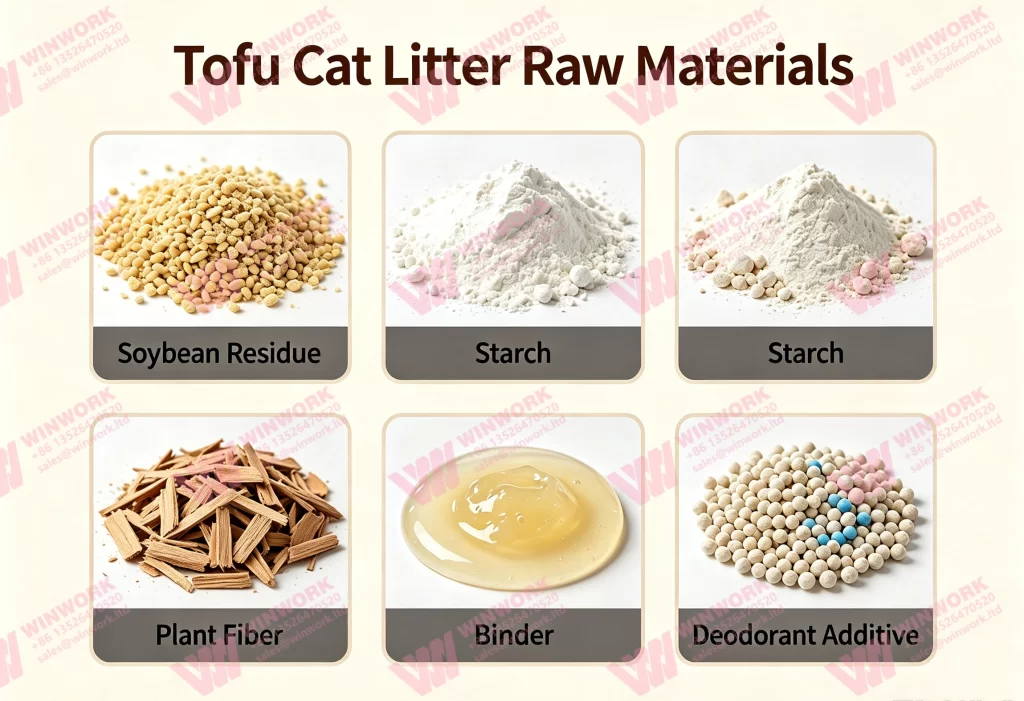
Tofu cat litter is commonly associated with plant-based materials such as soybean byproducts, plant fibers, starch, and other functional ingredients. Depending on the formulation, manufacturers may also add binders, deodorizing materials, or other additives.
The production process therefore focuses heavily on preparing and mixing the plant-based ingredients before forming them into pellets.
The condition of the raw material can affect the required equipment. Moisture content, particle size, fiber structure, and formulation all need to be considered when designing the production line.
Bentonite Cat Litter Uses Bentonite Powder
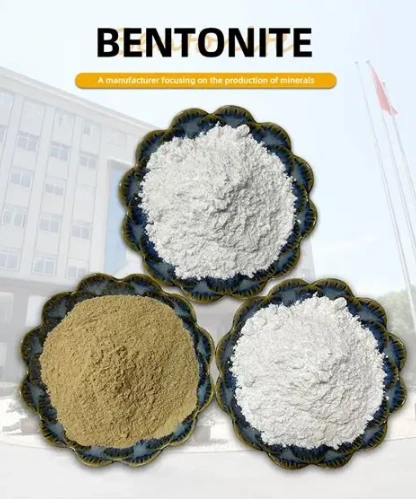
In tofu vs bentonite cat litter production, bentonite cat litter is made from bentonite powder, a mineral-based material known for its absorbency and clumping properties. During production, the powder is mixed with water and other ingredients before being formed into cat litter granules.
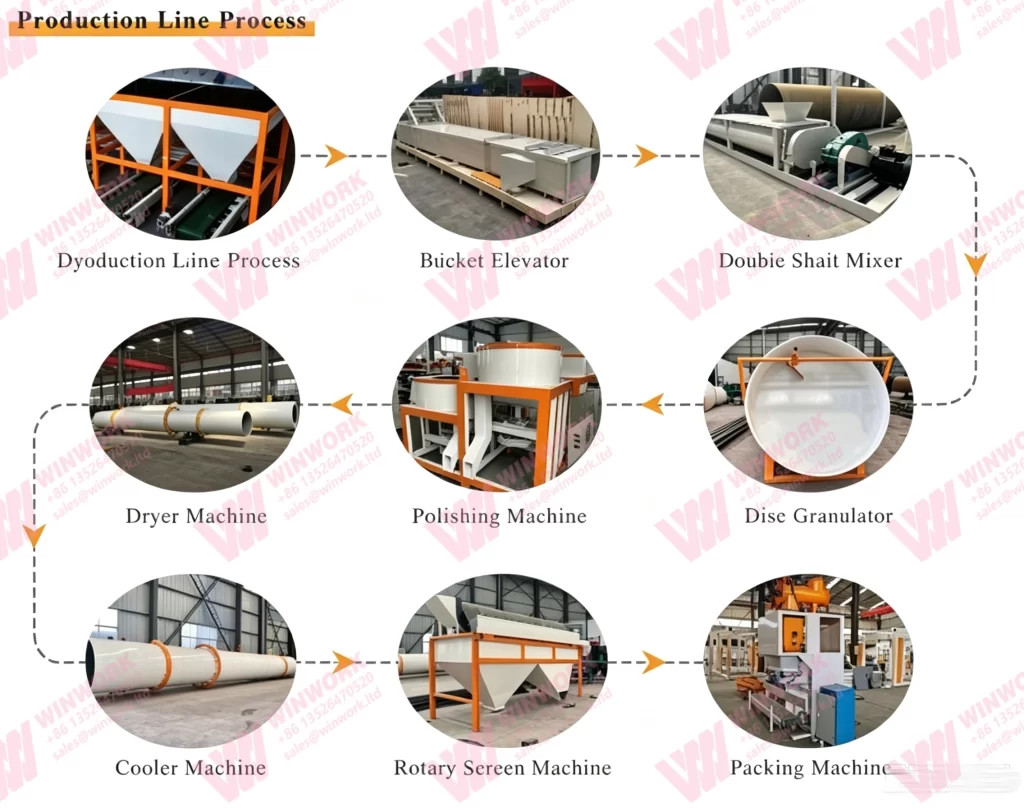
The production process generally includes mixing, moisture conditioning, granulation, drying, cooling, screening, and packaging. The exact equipment configuration depends on the raw material characteristics, target particle size, production capacity, and finished-product requirements.
Tofu vs Bentonite Cat Litter: 7 Differences That Affect Production
When comparing tofu vs bentonite cat litter for manufacturing, several differences can affect the production process and equipment configuration.
Raw Material Characteristics
Tofu vs bentonite cat litter involves two different raw-material systems: tofu cat litter is based on plant-derived materials, while bentonite cat litter uses mineral-based materials. Plant fibers and mineral powders behave differently during mixing, moisture conditioning, and granulation.
Therefore, the same machine configuration may not produce identical results for both materials.
Clumping Performance
Bentonite is widely used in clumping cat litter because certain bentonite formulations can form strong clumps after absorbing moisture. Tofu cat litter can also be formulated to provide clumping performance, but the result depends on its raw materials and formulation.
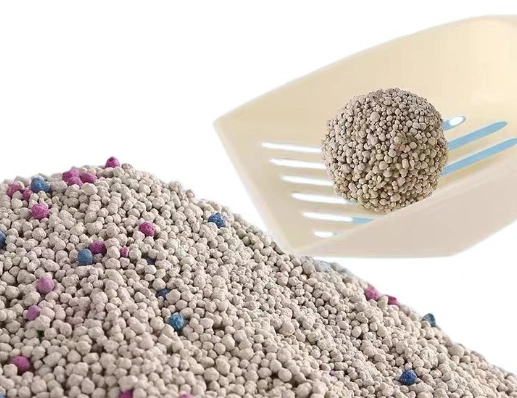
Bentonite Cat Litter 
For manufacturers, this means that the forming process and additives need to be considered together rather than selecting equipment based only on the product name.
Particle Size
Finished cat litter is usually sold within a specific particle-size range.
Particle size affects:
- Product appearance
- Dust level
- Packaging consistency
- User experience
- Screening requirements
The production line therefore needs an appropriate granulation and screening system.
Dust and Fines
Excessive fines can affect product quality and create additional dust during handling.
Screening equipment can separate qualified granules from oversized or undersized particles. Depending on the process, off-size material may be returned for further processing.
Moisture Requirements
Moisture is one of the key process variables in many pelletizing and granulation systems.
For both tofu and bentonite cat litter, the manufacturer needs to control the relationship between:
Raw Material Moisture → Mixing → Granulation → Drying → Final Moisture
The exact parameters depend on the formulation and equipment.
Product Weight and Bulk Density
Plant-based and mineral-based cat litter can have different bulk densities and handling characteristics.
This affects:
- Storage
- Conveyor selection
- Packaging
- Transportation
- Warehouse capacity
The packaging system should therefore be selected according to the final product and required bag size.
Production Cost and Equipment Configuration
Raw material price is only one part of total manufacturing cost.
A production project also needs to consider:
- Equipment investment
- Energy consumption
- Drying requirements
- Labor
- Packaging
- Maintenance
- Production capacity
- Factory layout
This is why two cat litter projects with similar output can still require different production line configurations.
How Material Choice Changes the Cat Litter Production Process
The raw material is one of the main factors that determines the production route for tofu vs bentonite cat litter.
The production process for tofu vs bentonite cat litter can be summarized as two different routes:
Plant-Based Raw Materials → Preparation → Mixing → Pelletizing → Drying → Cooling → Screening → Packaging
For bentonite cat litter made from purchased powder, the process can be:
Purchased Bentonite Powder → Mixing → Moisture Conditioning → Granulation → Drying → Cooling → Screening → Packaging
These are general process flows rather than fixed formulas. The actual equipment configuration should be adjusted according to raw material condition, formulation, target particle size, production capacity, and finished-product requirements.
This difference is especially important for bentonite projects. A manufacturer that purchases ready-to-process bentonite powder may not need the same raw-material preparation equipment as a project that starts with larger mineral material.
Tofu Cat Litter Production: Equipment From Raw Material to Finished Pellets
When comparing tofu vs bentonite cat litter production, tofu cat litter usually requires several stages to transform plant-based raw materials into stable pellets.
Raw Material Preparation
Depending on the raw material, preparation may include crushing, shredding, grinding, or screening.
The purpose is to make the material suitable for consistent mixing and subsequent pelletizing.
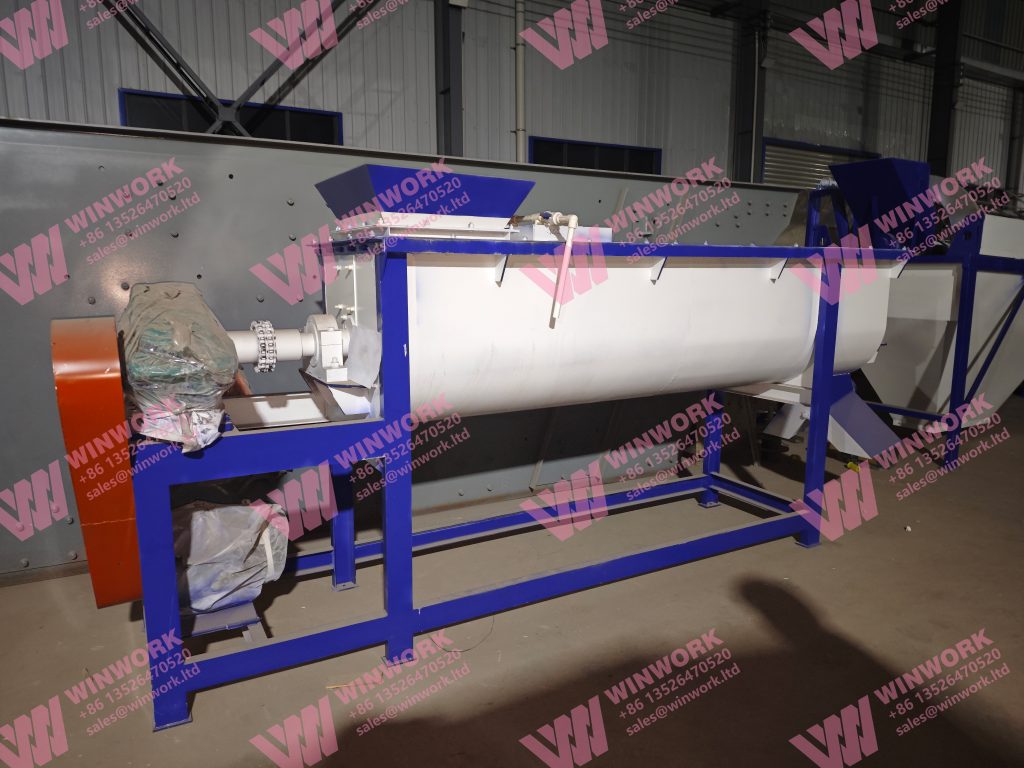
A mixer combines the main raw materials with water, binders, starch, deodorizing ingredients, or other additives according to the formulation.
Uniform mixing is important because inconsistent material distribution can lead to differences in pellet quality.
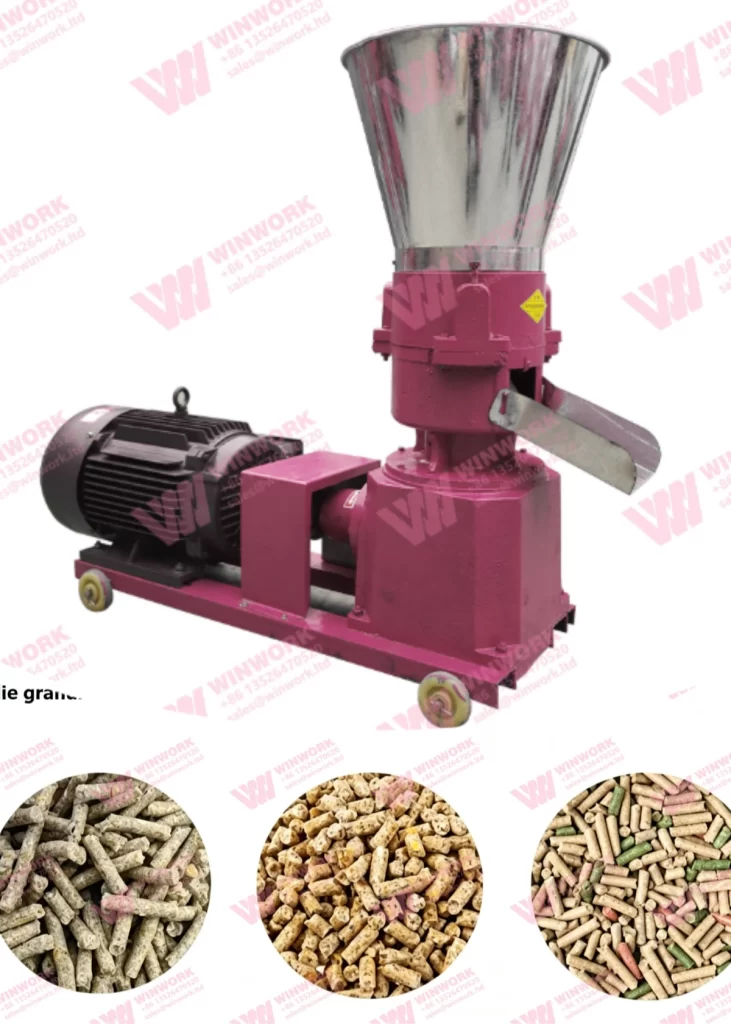
After mixing, the material needs to be formed into pellets.
The selected pelletizing equipment should match the desired particle size, raw material characteristics, and production capacity.
Freshly formed pellets may contain more moisture than the final product specification allows.
A drying system reduces excess moisture, while cooling stabilizes the pellets before screening and packaging.
Screening and Packaging
The screening stage separates qualified pellets from oversized or undersized particles.
Qualified pellets can then be conveyed to the packaging machine for weighing and bagging.
If you are planning a dedicated plant for this material, a tofu cat litter production line can be configured according to your raw materials, output, and finished-product specifications.
Bentonite Cat Litter Production: From Bentonite Powder to Finished Granules
For tofu vs bentonite cat litter production, the bentonite route starts with bentonite powder and focuses on mixing, moisture conditioning, granulation, drying, cooling, and screening.
Start With Purchased Bentonite Powder
This is an important point when designing a production line for tofu vs bentonite cat litter.
If the customer purchases bentonite powder with a suitable particle size, the production process can begin with feeding and mixing.
There is no need to automatically add a crusher simply because the final product is bentonite cat litter.
A crusher or additional preparation equipment may only be necessary when the incoming material requires size reduction, de-agglomeration, or other pretreatment.
Mixing and Moisture Conditioning
The bentonite powder is mixed with water and, depending on the formulation, other additives.
The purpose is to achieve a consistent material condition suitable for the following granulation stage.
The required moisture level depends on the raw material and production process, so it should be determined through process testing rather than applying one fixed value to every project.
Granulation: Turning Bentonite Powder Into Cat Litter Granules
Granulation is the key forming stage.
The powder needs to be converted into particles with the required:
- Size
- Shape
- Density
- Strength
- Product consistency
The choice of granulation equipment depends on the characteristics of the bentonite powder, target capacity, particle size, and finished-product requirements.
Drying and Cooling
After granulation, the wet or conditioned granules may require drying to reach the required final moisture level.
The drying system should be selected according to:
- Feed moisture
- Production capacity
- Required final moisture
- Granule characteristics
- Energy requirements
After drying, cooling helps bring the product to a suitable temperature for screening and packaging.
Screening and Packaging
The dried granules enter the screening stage.
Qualified granules continue to packaging, while oversized or undersized particles can be returned to the appropriate part of the process when the system is designed for recycling.
Can One Cat Litter Production Line Produce Both Tofu and Bentonite?
In some projects, the differences between tofu vs bentonite cat litter can be considered when designing a flexible production system.However, this does not mean that every machine can be shared without modification.
Some equipment may be shared, such as:
- Conveyors
- Drying systems
- Cooling systems
- Screening equipment
- Packaging equipment
Other sections may need different configurations because tofu-based and bentonite-based materials behave differently during preparation and forming.
For example, the raw-material preparation system and granulation parameters may need to change between products.
Therefore, whether one system can produce both types should be evaluated based on:
- Raw materials
- Product formulation
- Production capacity
- Particle size
- Moisture
- Production schedule
- Required automation level
The goal is not simply to make one machine perform every function. The goal is to create a practical production system that can operate consistently.
Choosing a Cat Litter Production Line by Capacity
Production capacity is another major factor when selecting equipment.
A smaller production line may be suitable for a new manufacturer that wants to enter the market with a controlled output. A larger line may be more appropriate for established manufacturers that already have stable demand.
For example, a 1–2 T/H cat litter production line can provide a flexible production scale for manufacturers that are starting or expanding gradually.
For higher output requirements, a 5 T/H cat litter production line can be configured for continuous production of bentonite, tofu, and other cat litter formulations. WINWORK’s current 5 T/H solution is presented as a configurable system for different cat litter materials and formulations.
The correct capacity should be determined from expected sales, working hours, raw material supply, factory space, and future expansion plans rather than selecting the largest available machine.
What Should You Tell a Cat Litter Equipment Manufacturer?
Before requesting a production-line quotation for tofu vs bentonite cat litter, providing detailed project information can make equipment selection much more accurate.
A manufacturer will normally need to understand:
Raw Material
Tell the equipment supplier whether you use bentonite powder, plant-based materials, soybean byproducts, or another material.
Production Capacity
For example:
- 1 T/H
- 2 T/H
- 5 T/H
- 10 T/H
Finished Pellet Size
Specify the target particle size if available.
Moisture
Provide the approximate raw-material moisture and required final moisture when known.
Packaging
Typical requirements may include different bag weights and packaging formats.
Factory Conditions
Available space, power supply, workshop layout, and other site conditions can affect equipment arrangement.
The more accurate the input information, the easier it is to develop a practical production-line configuration.
From Material Selection to a Complete Cat Litter Production Line
There is no universal production line for tofu vs bentonite cat litter that is suitable for every manufacturer.
A tofu cat litter project may require a different raw-material preparation and pelletizing system from a bentonite project. Even two bentonite projects can require different configurations if one customer purchases ready-to-use bentonite powder while another starts with a different raw-material form.
The production-line design should therefore follow this logic:
Raw Material → Formulation → Process → Equipment → Capacity → Finished Product
This approach helps avoid unnecessary equipment and allows manufacturers to build a system around their actual production requirements.
WINWORK provides customized cat litter production line solutions according to factors such as raw materials, production capacity, particle size, site conditions, and finished-product requirements.
Frequently Asked Questions
What is the difference between tofu and bentonite cat litter?
Tofu cat litter is generally made from plant-based materials, while bentonite cat litter is based on mineral clay. Their raw-material characteristics, forming behavior, moisture requirements, and production processes can therefore differ.
What is the difference between tofu vs bentonite cat litter?
There is no universal answer. The appropriate product depends on the target market, formulation, desired product characteristics, raw-material availability, and manufacturing requirements.
Can bentonite cat litter be made from bentonite powder?
Yes. Purchased bentonite powder can be used as the starting material for a bentonite cat litter production line when its specifications are suitable for the intended process.
Does bentonite cat litter production require crushing?
Not necessarily. If the purchased bentonite powder already meets the required particle-size specification, crushing may not be needed.
What machines are used for tofu vs bentonite cat litter production?
The equipment depends on the material. A tofu cat litter system may require raw-material preparation and pelletizing equipment, while a bentonite system may focus on mixing, moisture conditioning, granulation, drying, cooling, screening, and packaging.
What machine is used to make tofu cat litter?
Depending on the raw material, a tofu cat litter system may include raw-material preparation equipment, a mixer, pelletizing equipment, dryer, cooler, screener, conveyor, and packaging equipment.
Can one production line produce different types of cat litter?
It can be possible, but the answer depends on the materials, formulations, equipment configuration, cleaning requirements, production schedule, and desired capacity.
How much does a cat litter production line cost?
The cost depends on capacity, equipment configuration, automation level, raw materials, drying requirements, packaging system, and other project specifications. A customized quotation is more meaningful than a single standard price.
Conclusion
Understanding tofu vs bentonite cat litter is only the first step for a manufacturer planning a new production project.
The more important step is connecting the selected material with the appropriate processing route and equipment configuration.
For tofu cat litter, the production line may focus on plant-based raw-material preparation, mixing, pelletizing, drying, cooling, and screening.
For bentonite cat litter, many projects can start directly from purchased bentonite powder. If the powder already meets the required specifications, the production line may not need a crushing stage and can instead focus on mixing, moisture conditioning, granulation, drying, cooling, screening, and packaging.
For manufacturers comparing tofu vs bentonite cat litter, the right production-line configuration is therefore not determined by the product name alone. It should be based on the customer’s actual raw materials, formulation, capacity, target particle size, moisture requirements, factory conditions, and finished-product specifications.

Get A Quote