Introduction
When planning a fertilizer production project, many investors start with one question: How many tons of fertilizer do I want to produce per hour?
If the target is 3 tons per hour, purchasing a 3-ton/hour fertilizer granulator machine may seem like the obvious decision. However, the rated capacity of a granulator does not necessarily represent the amount of finished fertilizer you can package and sell.
Consider a production workshop that aims to manufacture 24 tons of finished fertilizer per day. The owner plans to operate for eight hours and therefore needs a production capacity of 3 tons per hour. He finds a fertilizer granulator machine advertised with a capacity of 3 tons per hour and assumes that it will meet the production target.
But there is another question: Can the rest of the production line handle the same amount of material?
After granulation, fertilizer may still need drying, cooling, screening, and packaging. Some particles will be too large or too small and must be returned for further processing. If the dryer or screening equipment cannot keep up, the granulator may have to slow down or stop.
This is why choosing a fertilizer granulator machine should involve more than comparing the capacity figures on equipment brochures. You need to calculate the actual material flow and understand how each machine works within the complete production process.
What Does a 3-Ton/Hour Capacity Actually Mean?
Before comparing equipment, it is important to understand what the manufacturer means by 3 tons per hour.
For a fertilizer granulator machine, the stated capacity usually refers to the amount of material processed under particular operating conditions. It does not automatically mean that the machine will produce 3 tons of qualified, packaged fertilizer every hour.
The actual output depends on several factors:
- Raw material characteristics and moisture content.
- Material feeding stability.
- Granulation method and operating parameters.
- The proportion of qualified granules after screening.
- The amount of material returned for reprocessing.
For example, imagine a fertilizer factory using a double roller granulator to process a dry NPK powder mixture.
The machine may process 3 tons of material per hour under suitable conditions. However, the final product still needs to pass through a screening system. Oversized particles may need crushing, while undersized particles may return to the granulator or another granulation stage.
The quantity entering the machine and the quantity leaving the factory as qualified fertilizer are therefore two different figures.
When discussing capacity with a fertilizer granulator machine manufacturer, always ask whether the quoted figure refers to fresh material input, total machine throughput, or finished product output.
This small clarification can prevent major misunderstandings during equipment purchasing.
Fertilizer Granulator Machine Capacity: A Practical Production Calculation
Let’s use a simple production example to understand why a 3-ton/hour machine may not be sufficient for a factory targeting 3 tons of finished fertilizer per hour.
Assume the following production conditions:
-
Target finished fertilizer production: 3 tons per hour.
-
Daily operating time: 8 hours.
-
Daily finished production target: 24 tons.
-
First-pass qualified product yield: 80%.
- Material returned for further processing: 20%.
These figures are illustrative planning assumptions, not guaranteed performance figures for every fertilizer production process.
If only 80% of the material passing through the granulation and screening process becomes qualified product on the first pass, the total material throughput required is:
3 ÷ 80% = 3.75 tons/hour
This means the production system needs to handle approximately 3.75 tons of material per hour to obtain 3 tons of qualified product, assuming the remaining 20% is recovered and returned to the process.
The material flow can be illustrated as follows:
- Total material processed: 3.75 tons/hour.
- Qualified product: 3 tons/hour.
- Recycled material: 0.75 tons/hour.
The recycled material is not necessarily waste. It can be returned to the production process after suitable handling.
However, it still occupies equipment capacity. The feeding system, conveyors, granulation equipment, and screening arrangement must be designed to handle this additional circulation.
This is one reason why selecting a fertilizer granulator machine based only on the desired finished output can result in an undersized production system.
In practice, the required capacity should also account for raw material variations, equipment downtime, cleaning, and maintenance.
Why the Dryer and Screening Machine Can Limit Your Production
A fertilizer granulator does not work independently. Its actual operating performance depends heavily on the equipment before and after it.
Two areas deserve particular attention: drying and screening.
The Dryer Must Match the Granulator
Wet granulation processes often produce granules that need drying before cooling and packaging.
Suppose your granulator produces 3.75 tons of wet material per hour, but your dryer can only handle 2.5 tons per hour under the actual operating conditions.
What happens?
The granulator may need to reduce its feeding speed, or wet material will accumulate between the two machines. Neither situation is ideal for continuous production.
Dryer capacity also depends on more than the weight of the incoming material.
For example, consider a hypothetical process in which 3.75 tons of wet granules enter the dryer every hour with 25% moisture content. The target moisture content after drying is 5%.
The incoming material contains:
- Dry solids: 3.75 × 75% = 2.8125 tons.
- Water: 3.75 × 25% = 0.9375 tons.
Assuming no solids loss, the final product weight at 5% moisture would be approximately:
2.8125 ÷ 95% = 2.96 tons.
Therefore, the dryer must remove approximately 0.79 tons of water per hour.
This calculation shows why a dryer should be selected according to the moisture entering the machine and the required moisture level at the outlet, rather than simply matching the granulator’s nominal tonnage.
Screening Capacity Affects Finished Product Output
Screening is another important part of fertilizer production.
Not every granule leaving the granulator will have the desired size. For example, a factory may want finished particles between 2 mm and 4 mm.
A screening machine separates the material into different size ranges:
- Qualified granules: sent to cooling and packaging.
- Undersized particles: returned for further processing.
- Oversized particles: crushed before being recycled.

If the screening machine cannot process the incoming material quickly enough, the entire production line will be affected.
When selecting a fertilizer granulator machine, you should therefore check the screening capacity and recycling arrangement at the same time.
A high-capacity granulator paired with an undersized screening machine is not a balanced production solution.
Does Your Raw Material Require a Different Granulation Process?
Another important consideration is the raw material itself.
Two factories may both want to produce 3 tons of fertilizer per hour, but their equipment requirements can be completely different because their materials have different physical properties.
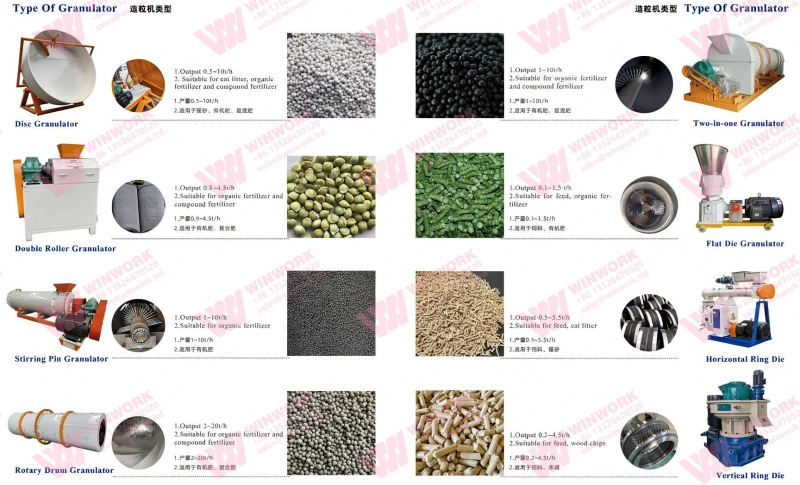
For example, dry NPK powder, composted chicken manure, and moisture-adjusted organic fertilizer mixtures cannot always use the same granulation method.
The following examples can help narrow down the equipment selection.
Dry NPK Powder Mixtures
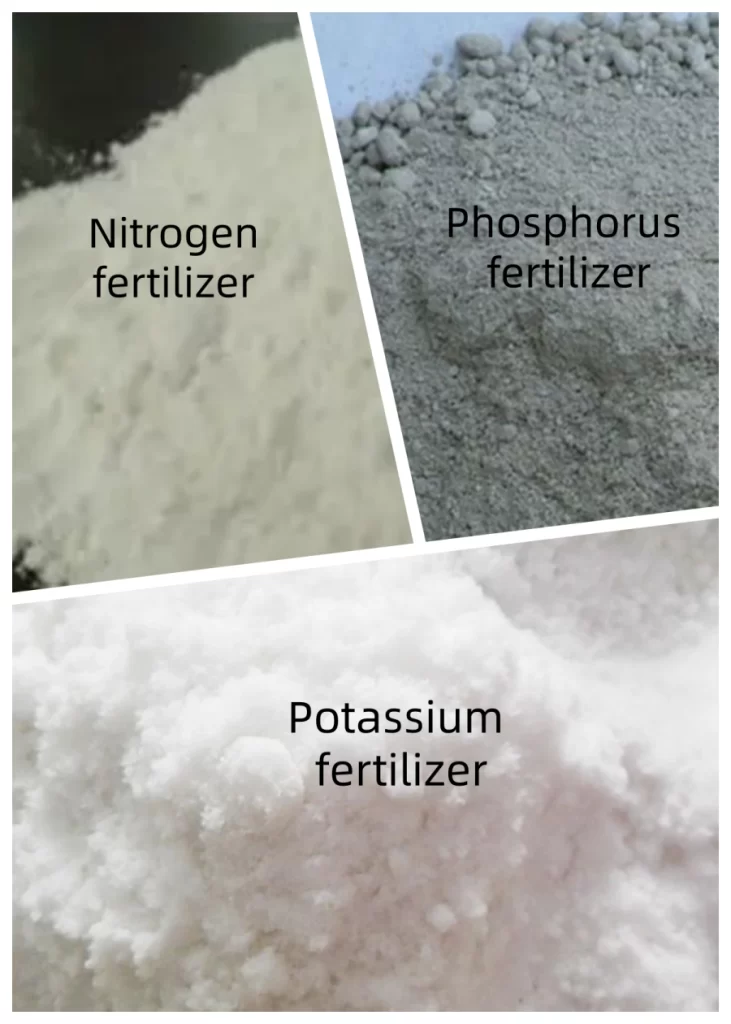
For relatively dry and well-mixed NPK powder, a double roller granulator may be worth considering.
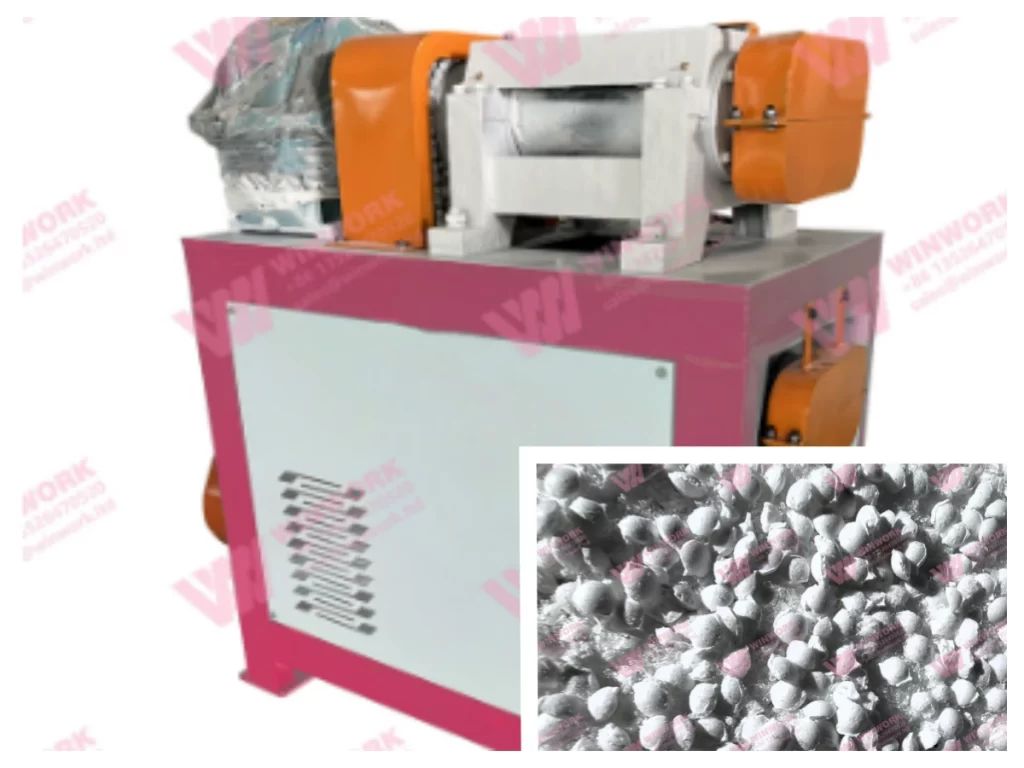
This machine uses two rollers to compress powder into compacted material, which is subsequently crushed or processed into granules of the required size.
It is particularly relevant to dry granulation processes where the material can form a stable compact under pressure.
However, the formulation matters. Some mixtures require adjustments to particle size, moisture, or binder content to achieve sufficient granule strength.
Composted Chicken Manure
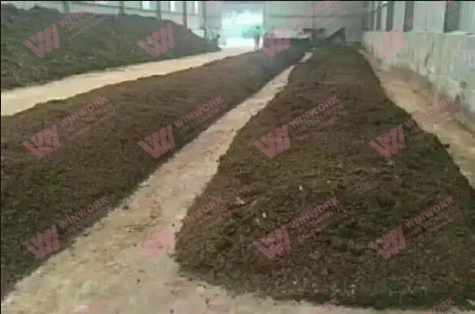
Composted chicken manure is commonly used as an organic fertilizer raw material.
Depending on its moisture content, fiber content, decomposition condition, and binding properties, a disc granulator or rotary drum granulator may be suitable.
A disc granulator can be considered when the prepared material has suitable moisture and binding characteristics for rolling into granules.
A rotary drum granulator may be considered for larger continuous production processes using suitable wet-granulation formulations.
Before selecting either machine, check whether the compost needs additional crushing, mixing, moisture adjustment, or binder addition.
Organic Fertilizer Powder
Organic fertilizer powder made from composted livestock manure or other organic materials may have different granulation requirements depending on its formulation.
If the material is suitable for wet granulation, disc or drum granulation may be options.
For certain prepared materials that are suitable for extrusion, flat die or ring die granulators may also be considered.
The important point is that the machine should match the physical properties of the prepared material, not just the product name.
A reliable fertilizer granulator machine selection process should therefore begin with a material assessment and, where possible, an actual granulation test.
What Should You Ask a Fertilizer Granulator Machine Manufacturer Before Buying?
Once you have established the production target, you can start comparing equipment suppliers.
Instead of asking only for the price of a fertilizer granulator machine, prepare a few technical questions.
Can you test my actual raw materials?
This is one of the most useful questions to ask.
Different materials can behave differently during granulation. If possible, provide the manufacturer with a representative sample of your prepared material and request a test.
Observe the resulting granules, including their size distribution, appearance, and strength. Also ask how much material was processed during the test and under what operating conditions.
What is the actual capacity for my material?
A machine’s advertised capacity may be based on a particular material and operating condition.
Ask the manufacturer to clarify the expected throughput for your specific formulation, rather than relying entirely on a general capacity range.
What happens to oversized and undersized particles?
Find out how the production line handles screening and recycling.
Ask whether oversized particles require a separate crusher and whether undersized material can be returned directly to the granulation process.
What additional equipment will I need?
A fertilizer granulator machine may be only one part of the project.
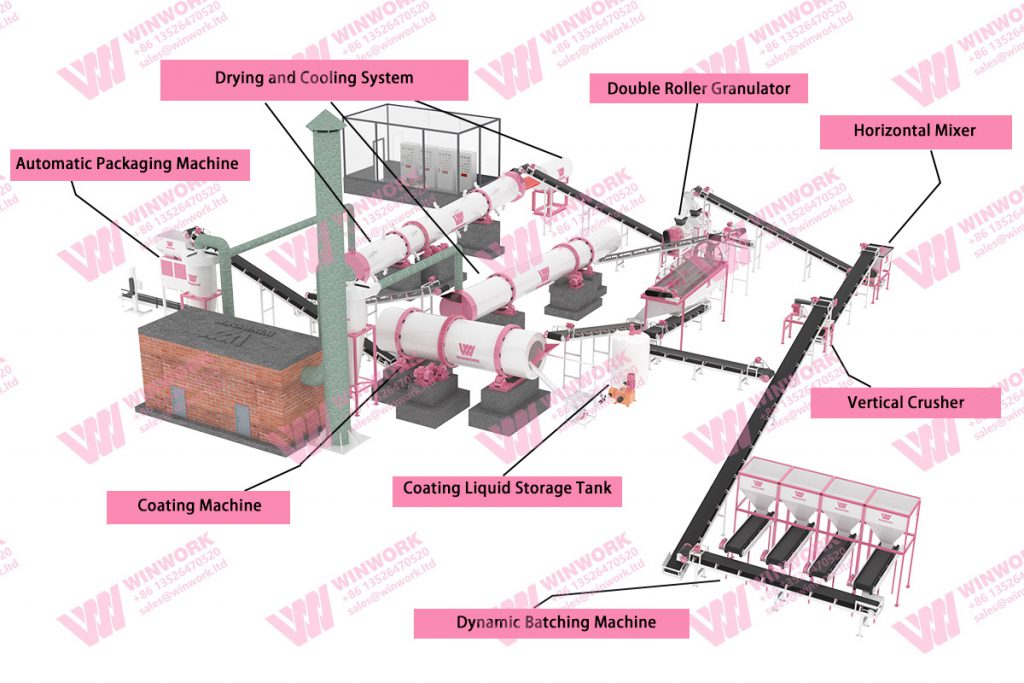
Depending on the process, you may also need a crusher, mixer, dryer, cooler, screening machine, conveyor, and packaging system.
Request a process flow diagram and an equipment list before confirming the order.
What are the maintenance requirements?
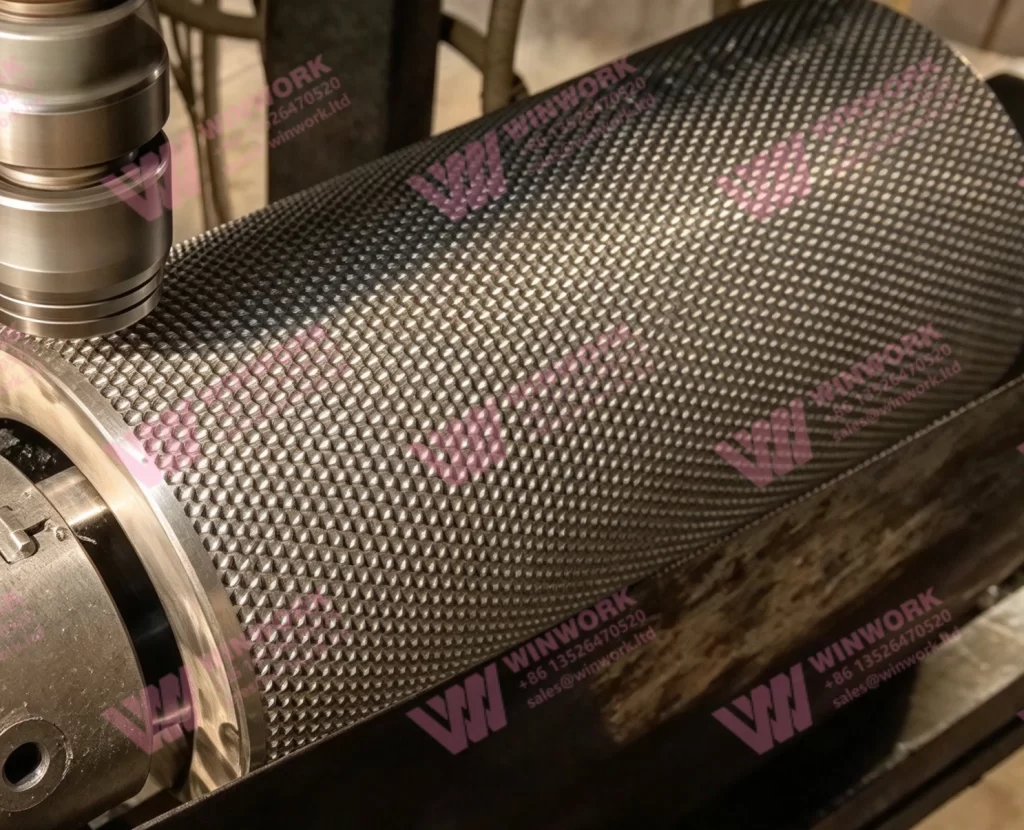
Ask about roller wear, disc lining, bearings, motors, and other components relevant to the selected model.
You should also check the availability of spare parts and the recommended maintenance intervals.
These details affect operating costs over the entire service life of the equipment.
Should You Buy a Larger Fertilizer Granulator Machine?
Choosing a larger machine is not always the safest decision.
An oversized machine may increase the initial investment, electricity consumption, and space requirements. If the factory cannot supply enough prepared material, the equipment may operate below its intended capacity.
On the other hand, choosing a machine that is too small can restrict future production and create bottlenecks when demand increases.
For example, a factory currently producing 2 tons per hour may expect to expand to 4 tons per hour within two years.
In this situation, it may be worth considering whether the feeding system, conveyors, dryer, screening equipment, and workshop layout can accommodate future expansion.
However, purchasing a larger granulator alone will not solve the problem if the other equipment remains undersized.
The right fertilizer granulator machine should fit both the current production target and a realistic expansion plan.
Before making a final decision, compare at least three factors:
- Current required finished output.
- Actual material throughput, including recycled material.
- Available capacity of the supporting equipment.
This approach gives you a more realistic basis for comparing different machine models and investment costs.
At WINWORK, we understand that choosing the right fertilizer granulator machine requires considering the entire production process, not just the machine’s rated capacity. Whether your target is 3 tons of finished fertilizer per hour or a larger production capacity, we can help you select suitable equipment based on your raw materials, output requirements, and production conditions. From crushing, mixing, and granulation to drying, cooling, screening, and packaging, WINWORK can provide matching equipment and complete production line solutions. We can also help address common challenges such as excessive material recycling, insufficient drying capacity, uneven granule sizes, and production bottlenecks. Our goal is to help you achieve stable output and build a fertilizer production line that meets your actual needs.
Conclusion
A 3-ton/hour fertilizer granulator machine may look suitable on paper, but its rated capacity does not guarantee 3 tons of qualified fertilizer every hour.
The actual production result depends on the raw materials, granulation process, recycling rate, drying requirements, screening capacity, and the performance of the complete production line.
Before purchasing equipment, calculate your required finished output, estimate the total material throughput, and check the capacity of every major machine in the process.
Most importantly, ask the manufacturer to evaluate your actual raw materials and provide a suitable equipment configuration.
The best fertilizer granulator machine is not necessarily the largest or most expensive model. It is the one that can consistently produce the required fertilizer granules while working efficiently with the rest of your production system.
For more details, please feel free to contact us.
Email: sales@lanesvc.com
Contact number: +8613526470520
Whatsapp: +8613526470520
Get A Quote