

Introduction: Granulation Is Only One Part of NPK Fertilizer Production
When people discuss NPK fertilizer manufacturing, the granulator often receives most of the attention. It is the machine that turns prepared materials into fertilizer granules, making the production process visible and easy to understand. However, the work required to produce a consistent batch of NPK fertilizer starts much earlier.
Before materials reach the granulator, several operations must take place. Urea, monoammonium phosphate (MAP), diammonium phosphate (DAP), potassium chloride, potassium sulfate, and other ingredients need to be stored, fed, weighed, and proportioned. These materials do not all have the same nutrient content, particle size, or flow characteristics. Their quantities must be controlled before they enter the mixing process.
This is where an NPK Fertilizer Batching System becomes an important part of the production line. It manages the quantities of individual raw materials and delivers them to the next processing stage according to the selected fertilizer formulation.
For a manufacturer producing NPK 15-15-15, 16-16-16, or 20-10-10 fertilizer, the raw material combination and feeding quantities may differ from one product to another. Operators cannot simply pour several ingredients into a mixer and expect the finished fertilizer to meet the required nutrient specification. Each ingredient needs a defined quantity, and the feeding and weighing equipment must work together.
An NPK Fertilizer Batching System connects raw material storage with weighing, feeding, and mixing operations. Its job is not to form fertilizer granules directly. Instead, it prepares a properly proportioned material mixture for the equipment that follows.
Understanding what happens before granulation helps fertilizer manufacturers identify where production problems begin, how different machines work together, and why the batching section deserves attention when planning a new NPK fertilizer production line.
What Happens When NPK Raw Materials Arrive at the Factory?
The first stage begins when raw materials are delivered to the fertilizer plant. Before any batching operation starts, the materials need to be unloaded, identified, and placed in their designated storage areas.
A typical NPK production plant may use several nitrogen, phosphorus, and potassium sources. Urea is commonly used as a nitrogen source, while MAP and DAP supply phosphorus and also contribute nitrogen. Potassium chloride and potassium sulfate are common potassium sources. Limestone, bentonite, or other additives may also be included in certain formulations.
These materials have different physical properties, so storing them together without separation would create unnecessary handling and quality problems. In a normal production arrangement, each ingredient is kept in a designated storage bin, silo, or storage area. This allows operators to identify the material, manage inventory, and feed the correct ingredient into the production process.
Storage conditions also affect the next operation. Urea, for example, can absorb moisture and form lumps during storage. Fine powdered materials may produce dust during unloading and transfer. Some granular materials flow relatively freely, while others may discharge unevenly if moisture accumulates or material builds up around the hopper outlet.
These are not just warehouse concerns. A material that does not flow smoothly from its storage bin can interrupt the feeding process. If a feeder receives material irregularly, the weighing equipment may struggle to maintain the required feeding rate.
After storage, materials are transferred toward the batching section. Depending on the plant layout, this movement may involve bucket elevators, belt conveyors, screw conveyors, or other conveying equipment. The selected arrangement depends on the material form, transfer distance, equipment layout, and required throughput.
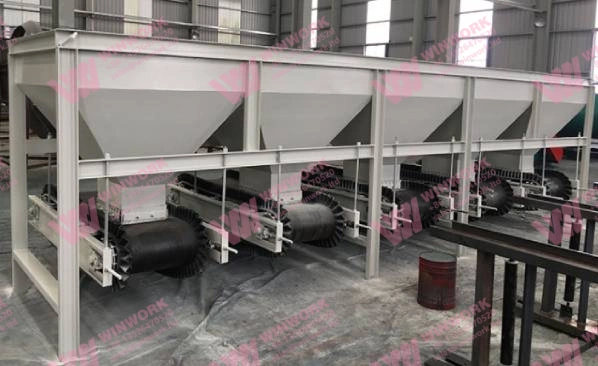
An NPK Fertilizer Batching System starts working when these stored ingredients are released into their respective feeding and weighing routes. Each material needs to reach the correct feeding point without being mixed with another ingredient too early.
For example, a plant producing several NPK formulations may need separate storage and feeding arrangements for urea, MAP, DAP, and potassium chloride. When the production schedule changes, operators can adjust the feeding quantities without manually separating a large mixed pile of raw materials.
This arrangement also makes material inventory easier to manage. Operators can compare the quantity of each ingredient entering production with the amount remaining in storage. When material consumption differs from the production record, they have a clearer starting point for checking the cause.
Before selecting an NPK Fertilizer Batching System, manufacturers should therefore understand the materials entering the plant, how they are stored, and how they move toward the weighing section. A well-organized material-handling arrangement makes the subsequent batching operation easier to manage.
How Does an NPK Fertilizer Batching System Prepare Materials for Granulation?
After raw materials have been stored and transferred to the production area, the next task is to deliver the correct quantity of each ingredient. This is the main responsibility of the NPK Fertilizer Batching System.
The process generally involves controlled feeding, weighing, proportioning, and discharging. Although the equipment arrangement can differ between production lines, the objective remains the same: deliver the required amount of each raw material before the ingredients enter the mixing stage.
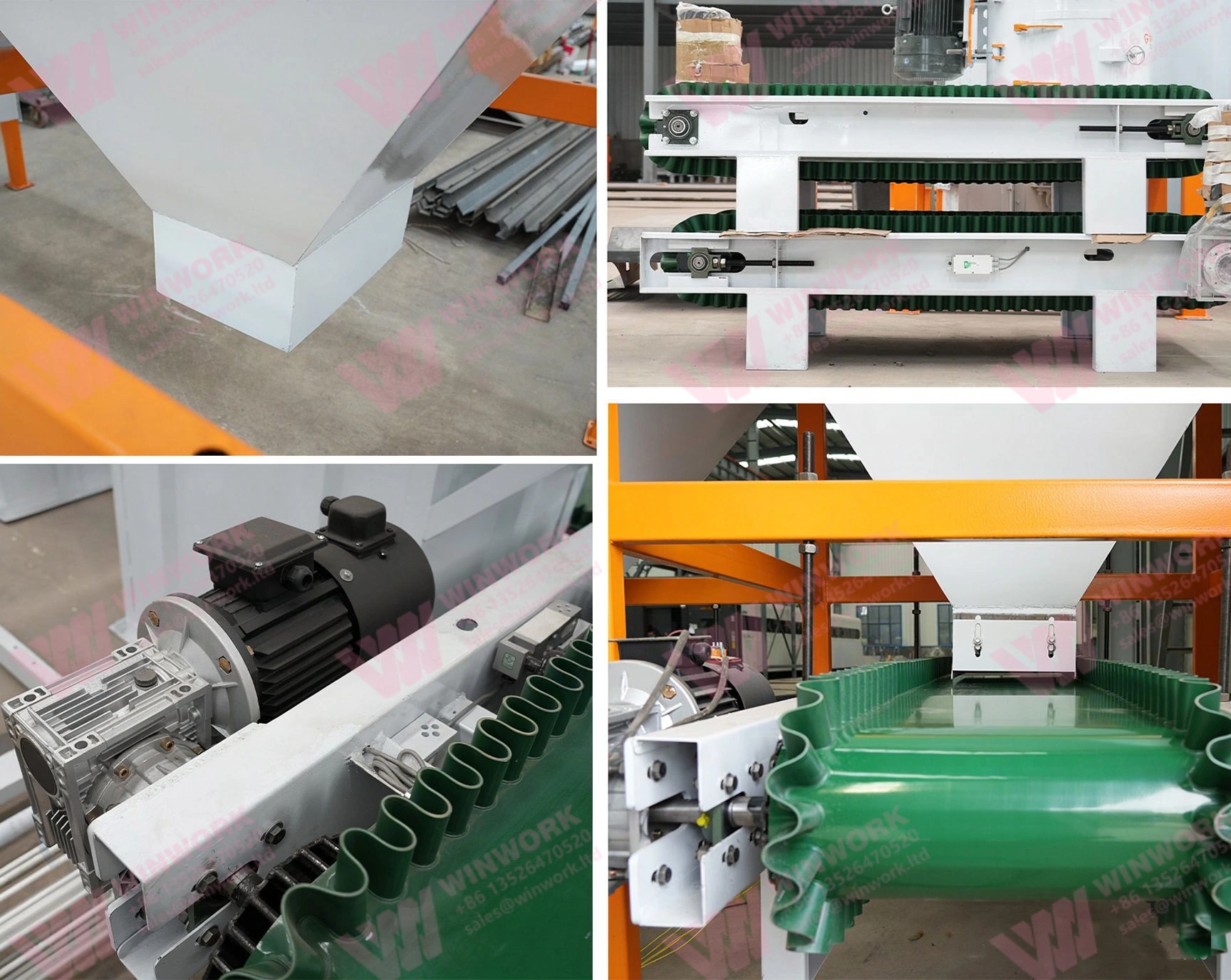
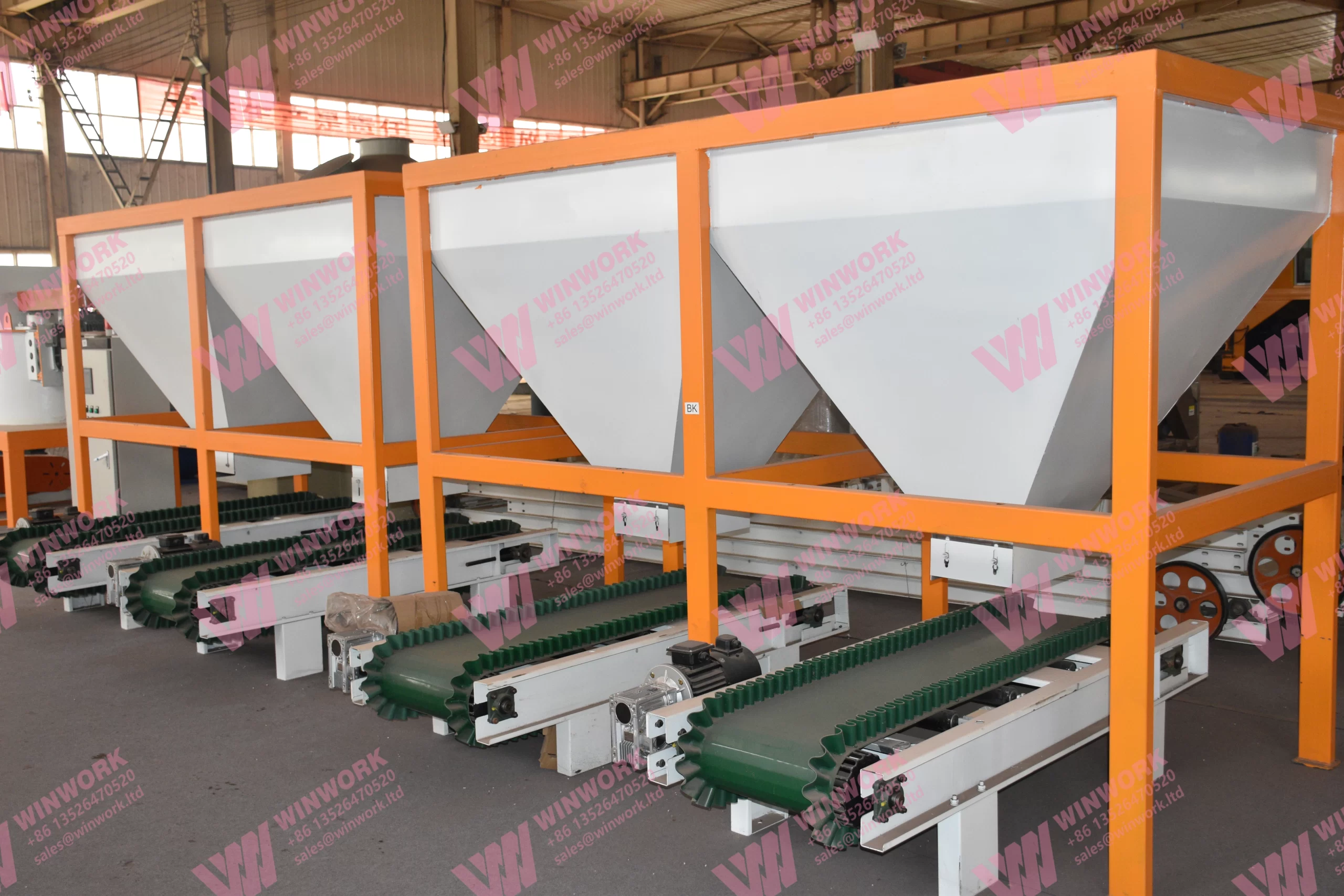
The process starts with the feeding equipment installed beneath or near the storage bins. A feeder controls how quickly material leaves its storage point. Belt feeders are commonly used for suitable granular materials, while screw feeders can be used for powders and other materials that need enclosed transportation. The feeder type is selected according to the material’s flow characteristics and the plant’s handling arrangement.
The raw material then reaches a weighing unit. In a batch weighing arrangement, a weighing hopper receives a defined quantity of material. Load cells measure the weight, and the weighing instrument sends the measurement to the control system.
The operator or production control system sets the required quantities according to the approved fertilizer formulation. When the measured quantity approaches its target, the feeder slows down or stops according to the control settings. This helps prevent excessive feeding caused by material continuing to fall after the stopping signal.
An NPK Fertilizer Batching System may use several weighing units or a shared weighing arrangement, depending on the production design. In a multi-hopper system, different ingredients can be weighed through separate units. In other arrangements, materials are measured in sequence using a common weighing device.
For example, consider a factory producing NPK 15-15-15 fertilizer. The formulation requires nitrogen, phosphorus, and potassium sources in quantities calculated from the nutrient content of the selected raw materials. Urea, MAP or DAP, and potassium chloride may be used in the formulation.
The number 15-15-15 represents the guaranteed nutrient analysis, commonly expressed as nitrogen, available phosphate (P₂O₅), and soluble potash (K₂O). It does not mean that the factory should add 15 kilograms of each raw material for every 100 kilograms of fertilizer. The actual ingredient weights must be calculated from the nutrient grades of the materials being used.
Once the required quantities have been established, the NPK Fertilizer Batching System controls the feeding and weighing sequence. Each ingredient is measured and discharged into the designated transfer route. The materials then move toward the mixing machine.
A production line that manufactures several formulations also needs a way to manage different batching settings. For example, NPK 15-15-15 and NPK 20-10-10 have different nutrient targets, so the quantities of their nitrogen, phosphorus, and potassium sources must change. A control system with recipe storage can help operators select the required formulation and apply its corresponding target weights.
This is particularly useful for factories that change products according to seasonal demand or customer orders. Instead of repeatedly calculating and entering every quantity manually, operators can use stored production recipes, provided the control system supports this function.
The equipment also needs to respond to the actual movement of materials. A weighing instrument may measure correctly, but an unstable feeder can still cause inconsistent batch quantities. Material remaining inside a discharge chute can also enter the next batch if the system is not properly cleared.
For this reason, an NPK Fertilizer Batching System should be understood as a coordinated group of machines rather than a weighing scale alone. Storage bins, feeders, weighing hoppers, conveyors, sensors, and control equipment all contribute to the batching process.
If you want to learn more about how automatic feeding, weighing, and control work together, you can also read our guide to the automatic batching system. It explains how weighing deviations, unstable feeding, and equipment coordination affect fertilizer production.
Once the required raw materials have been weighed and discharged, the batching stage is complete. However, the ingredients are not necessarily ready to enter the granulator immediately. They usually need to pass through a mixing stage first.
What Happens Between Batching and Granulation?
The material leaving the batching section contains the ingredients required by the selected formulation. However, having the correct total weight does not automatically mean that the materials are evenly distributed.
This is why the mixing machine is positioned between batching and granulation in many NPK fertilizer production lines.
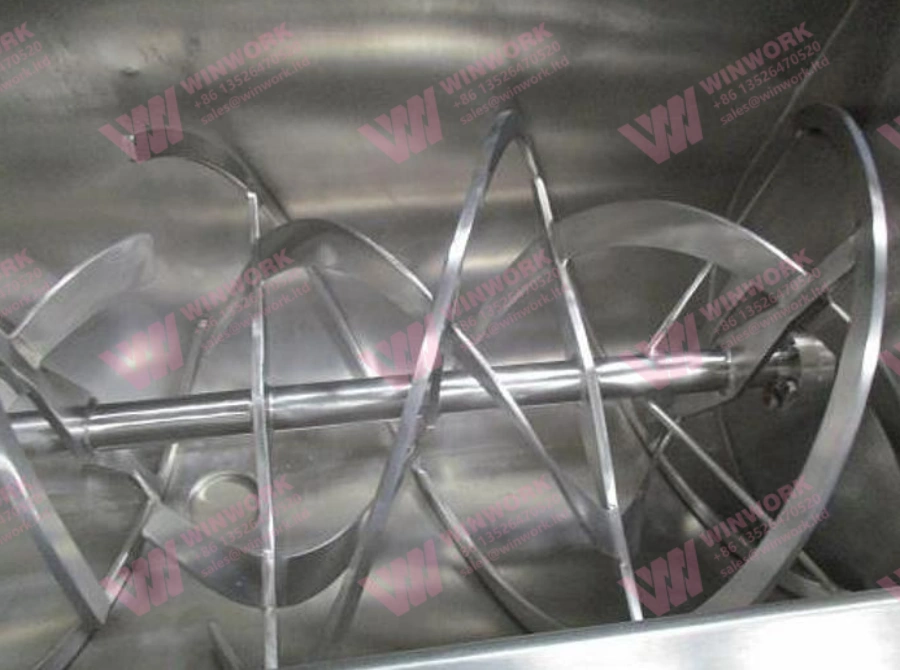
After weighing and proportioning, the raw materials are transferred into a mixer. Depending on the production design, this may be a horizontal mixer, a double-shaft mixer, or another type of industrial mixing equipment.
The mixer distributes the different ingredients throughout the material. Its purpose is to reduce local differences in composition so that the mixture entering the granulator has a more consistent distribution of nutrients and raw materials.
Consider a batch containing urea, MAP, and potassium chloride. If these ingredients are delivered in the correct quantities but remain unevenly distributed, different portions of the mixture may contain different proportions of nitrogen, phosphorus, and potassium sources. The mixing operation helps distribute these ingredients more evenly before further processing.
The performance of the mixing stage is affected by several practical factors. These include the amount of material loaded into the mixer, mixing time, the physical properties of the ingredients, and the design of the mixing equipment.
Overloading a mixer can reduce the available space for material movement. On the other hand, insufficient mixing time may leave some ingredients concentrated in particular areas. Differences in particle size and bulk density can also influence how materials distribute during mixing.
Moisture is another factor that deserves attention. Raw materials entering a dry mixing process should not contain excessive moisture that causes unwanted sticking or buildup. Material that adheres to the mixer wall or discharge outlet can reduce the effective working volume and create cleaning problems during product changeovers.
After mixing, the material is discharged and conveyed to the granulation section. Some production processes introduce water, steam, or a binder during granulation, while others use different granulation methods. The material condition required at the granulator therefore depends on the selected process.
An NPK Fertilizer Batching System does not control every aspect of mixing or granulation. However, it provides the starting material quantities for these downstream operations. If the initial proportions are incorrect, the mixer cannot change the actual nutrient content simply by distributing the ingredients more evenly.
Likewise, a granulator cannot correct an incorrect fertilizer formulation. It can shape the prepared material into granules, but it does not independently determine the correct nitrogen, phosphorus, and potassium content.
This explains why batching, mixing, and granulation need to be treated as connected production stages. Each machine has a different responsibility, and problems in an earlier stage can create additional work for the next one.
For fertilizer manufacturers, the connection between these stages is particularly important when production runs continuously. The feeding rate from the batching section must match the handling capacity of the mixer and the material demand of the granulator. If the upstream section supplies material too quickly, the mixer may become overloaded. If feeding is too slow, the granulator may not receive enough prepared material to maintain its intended production rate.
A properly coordinated NPK Fertilizer Batching System therefore contributes to a more stable material supply for the entire granulation process.
How Do Batching Problems Affect the Final NPK Fertilizer?
Many production problems become visible only after the material has passed through several machines. A fertilizer batch may show inconsistent nutrient results, irregular granules, or unexpected material consumption. Although these issues can have different causes, the batching stage is one of the places operators should examine.
The first concern is nutrient proportion. NPK fertilizer is manufactured to meet a specified nutrient analysis. If one raw material is underfed or overfed, the proportions of nitrogen, phosphorus, or potassium sources can deviate from the intended formulation.
For example, a feeding interruption involving the nitrogen source may change the ingredient balance of a batch. If the problem is not detected, the affected material may continue into the mixer and granulator. Subsequent processing cannot automatically restore the original nutrient ratio.
The second concern is mixing consistency. Incorrect feeding quantities can make it harder to produce a uniform mixture. Even when the mixer operates normally, it is distributing the ingredients that enter it. It cannot compensate for a missing quantity of a particular raw material.
The third concern is production continuity. A blocked storage outlet, unstable feeder, or weighing error can interrupt the supply of material to the mixer. Operators may need to stop the equipment, remove a blockage, check the weighing records, or repeat part of the batching process.
Material buildup is another practical issue. Fine powders may collect around hopper outlets, conveyor transfer points, and equipment connections. If material is released suddenly after a blockage, the feeding rate may change sharply. This can create a difference between the intended quantity and the actual quantity delivered.
When the plant switches from one NPK formulation to another, leftover material also needs attention. Residual urea, phosphate, potassium sources, or additives inside the mixer and transfer equipment may enter the next production batch. This is particularly important when the next formulation has a different nutrient target or uses different ingredients.
A good operating routine includes checking storage outlets, inspecting feeder operation, confirming weighing readings, and clearing material from transfer points when necessary. Production records should also show the target and actual quantities of the ingredients used in each batch.
An NPK Fertilizer Batching System with suitable monitoring and recording functions makes it easier to trace these problems. Operators can compare the target weight with the recorded weight, identify which ingredient showed a deviation, and investigate whether the cause came from feeding, weighing, or material discharge.
It is also important to distinguish nutrient consistency from physical granule quality. Batching affects the composition of the material entering the granulation process, but finished granule size, strength, moisture, and appearance are also influenced by the granulator, binder, moisture control, drying temperature, and screening operation.
For instance, irregular granule sizes may be related to the granulation drum or pan, material moisture, or the return of undersized and oversized particles. These problems should not automatically be blamed on the batching equipment.
The value of an NPK Fertilizer Batching System is that it helps control one important part of the production process: the amount of each ingredient entering the line. It provides a more measurable starting point for the mixing and granulation stages.
From Batching to Finished Granules: How the Complete NPK Production Line Works
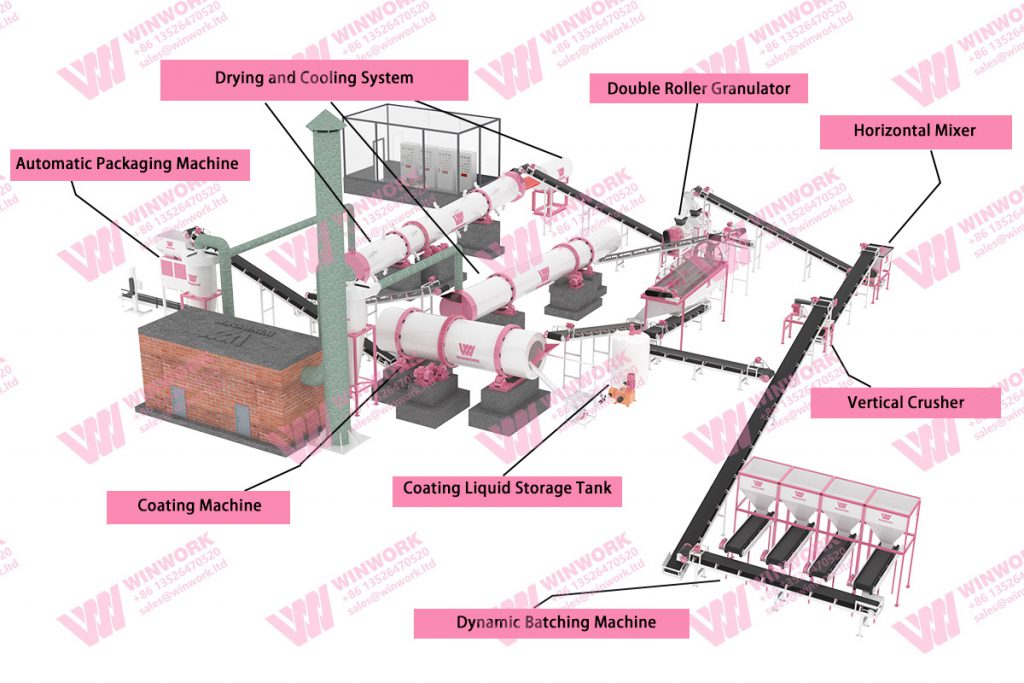
Fertilizer Production Line
After the batching and mixing operations are completed, the prepared material moves into the granulation section. At this point, the production line begins transforming the mixed raw materials into a product that can be dried, screened, and packaged.
The type of granulator depends on the production process. Rotary drum granulators are commonly used in compound fertilizer production lines. Disc granulators are another option for suitable formulations and production arrangements. Roller press granulators can be used in dry granulation processes where materials are compacted under pressure without the same wet granulation approach.
The selected granulator receives the prepared mixture and forms it into particles. In wet granulation, moisture or a liquid binder may help particles adhere and grow. In dry granulation, mechanical pressure forms compacted material that is subsequently processed into granules.
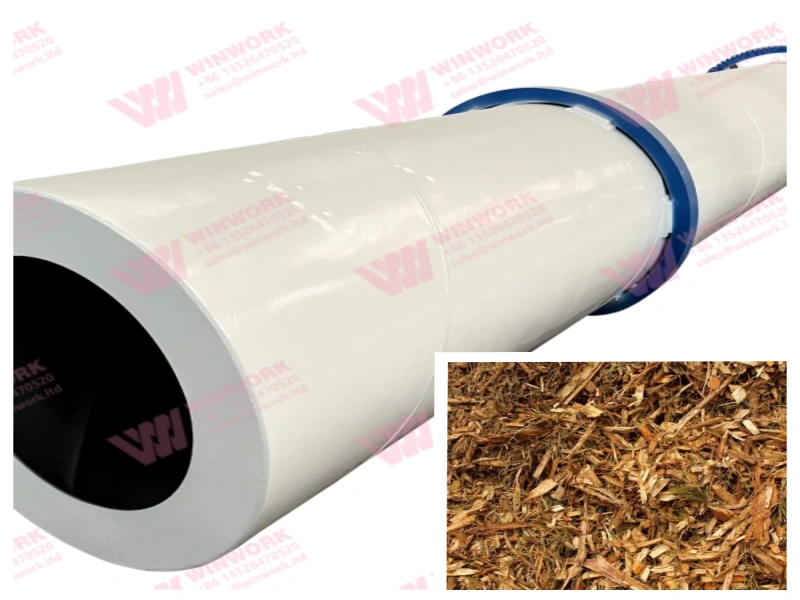
Once the granules leave the granulator, they may contain more moisture than the finished product specification allows. A rotary dryer is therefore commonly installed after the granulation section in wet-process production lines. Hot air passes through the drying equipment and removes excess moisture from the granules.
The dried material then enters a screening machine. The screen separates particles according to size. Oversized particles may be crushed and returned to the production process, while undersized particles can be recycled for further granulation. The correctly sized granules continue toward the final processing section.
Some production lines also include a coating machine. Coating materials can be applied to reduce caking, improve the surface condition, or provide other product-specific functions. The finished fertilizer is then transferred to the packaging machine, where it is weighed and packed into bags for storage and transportation.
Throughout this process, the NPK Fertilizer Batching System remains the starting point for raw material proportioning. The mixing machine distributes the ingredients, the granulator forms particles, the dryer controls moisture, and the screening machine separates granules by size. These machines cannot replace one another because each performs a different production task.
For a manufacturer planning a new NPK fertilizer plant, the batching section should therefore be considered together with the rest of the production line. The number of raw material storage bins, feeding capacity, weighing arrangement, mixing capacity, and granulator throughput all need to work together.
For an existing factory, the same principle applies when production capacity increases. Installing a larger granulator alone may not increase actual plant output if the batching and mixing sections cannot provide enough prepared material. The bottleneck may be located before the granulator rather than inside it.
An NPK Fertilizer Batching System is therefore not simply an auxiliary machine placed at the beginning of the production line. It is part of the material control process that connects raw material storage with the main production equipment.
At WINWORK, fertilizer production equipment can be considered as part of a complete production arrangement, from raw material handling and batching to mixing, granulation, drying, screening, and packaging. The objective is to ensure that each section can work with the next one instead of operating as an isolated machine.
Before investing in an NPK fertilizer production line, manufacturers should prepare information about their target fertilizer formulations, raw material types, expected hourly output, and existing factory layout. These details help determine the required storage, feeding, weighing, and downstream processing equipment.
The granulator may be the machine that gives fertilizer its final shape, but the production process begins much earlier. An NPK Fertilizer Batching System prepares the ingredients, controls their quantities, and supplies the mixing section with the materials needed for the next stage.
When raw materials are stored, fed, weighed, and transferred in an organized way, the entire production line has a more reliable starting point. That is what happens before your fertilizer enters the granulator.
Get A Quote